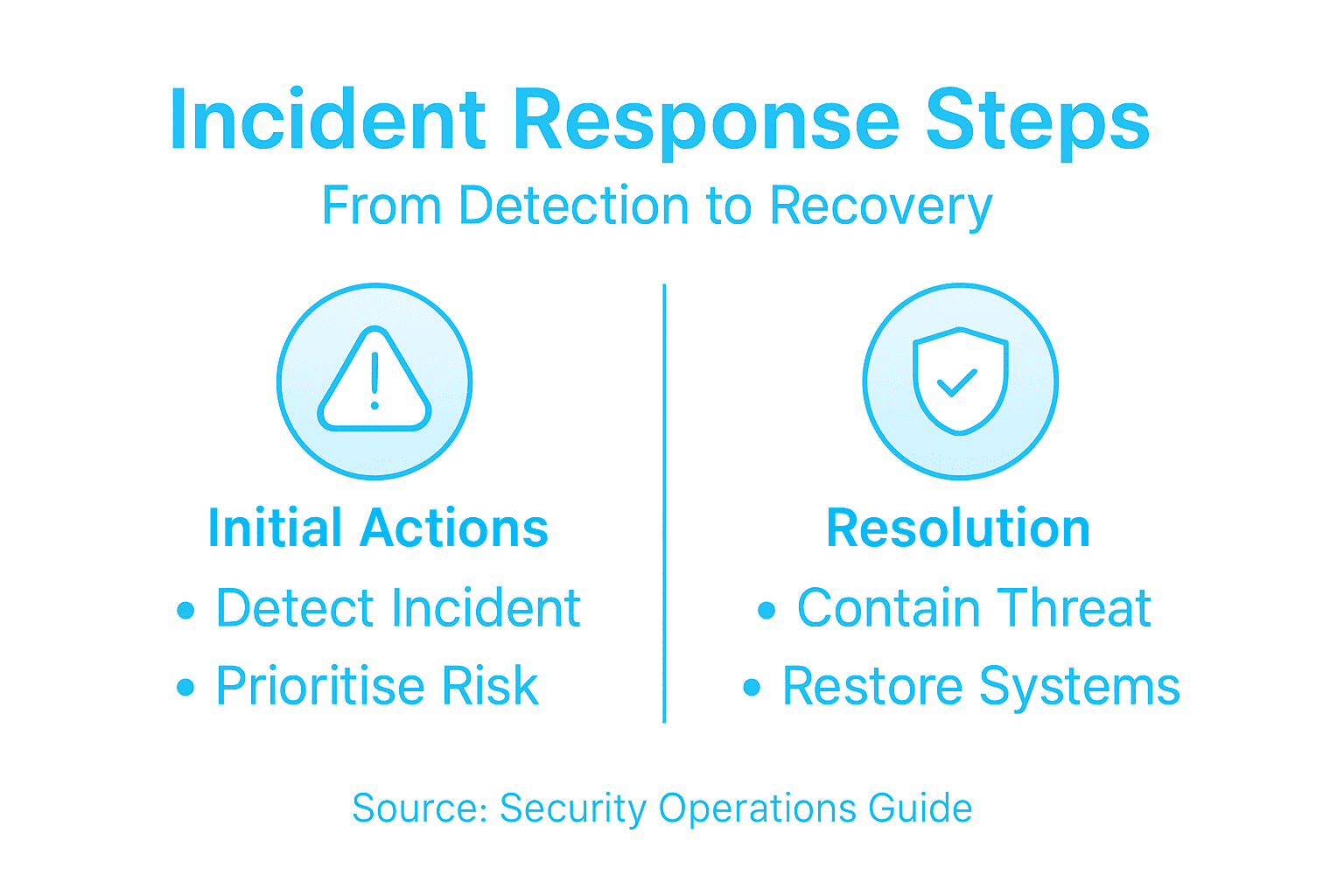
Navigating the SANS Incident Response Steps for Enterprise Security
Effective cybersecurity incident response requires a structured, repeatable methodology to minimize downtime, preserve forensic integrity, and prevent recurring breaches. Organizations facing sophisticated threats rely on standardized...
Effective cybersecurity incident response requires a structured, repeatable methodology to minimize downtime, preserve forensic integrity, and prevent recurring breaches. Organizations facing sophisticated threats rely on standardized frameworks to guide their technical teams through the chaos of a live security event. Among the most widely adopted and respected methodologies in the cybersecurity industry is the incident response process formalized by the SANS Institute.
Contents
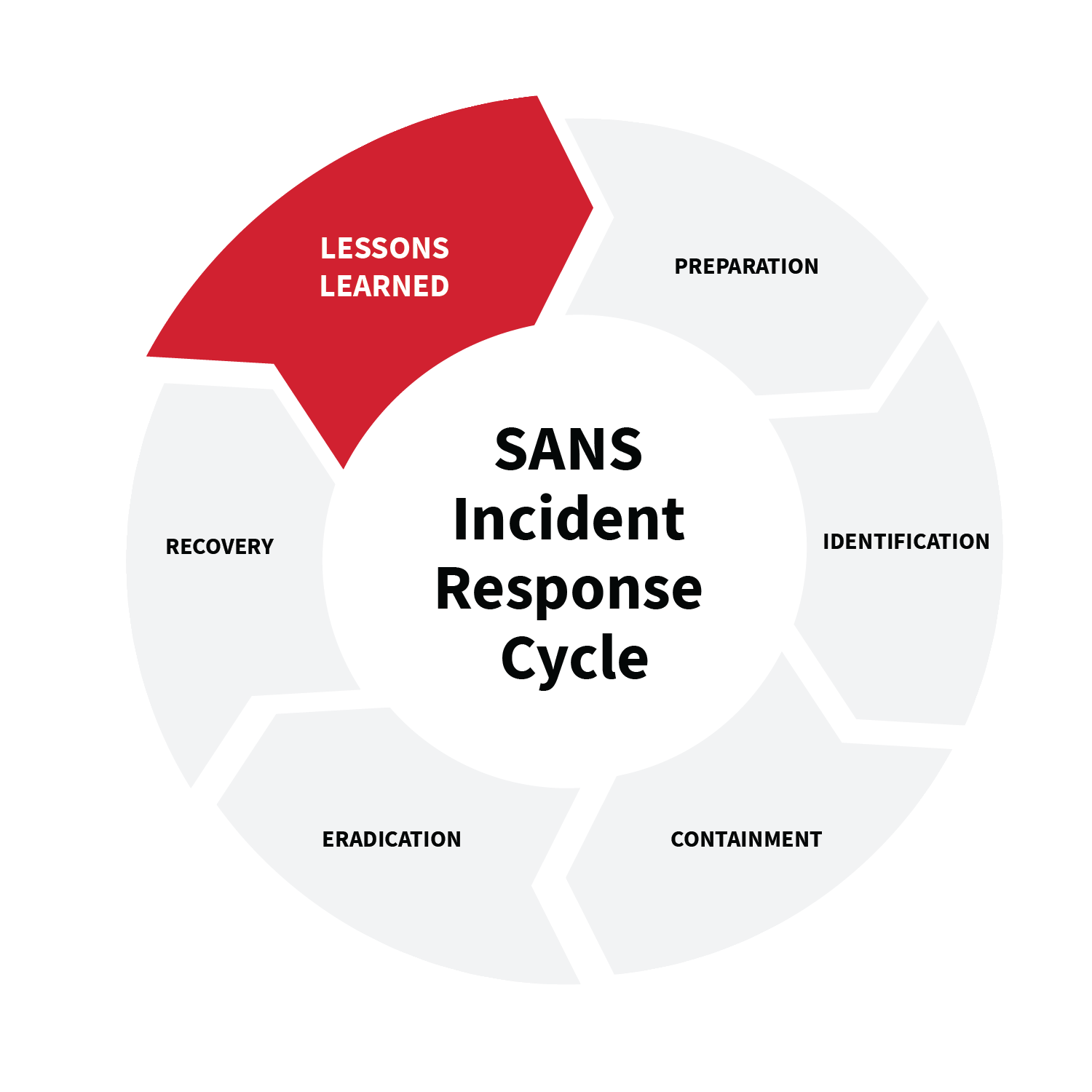
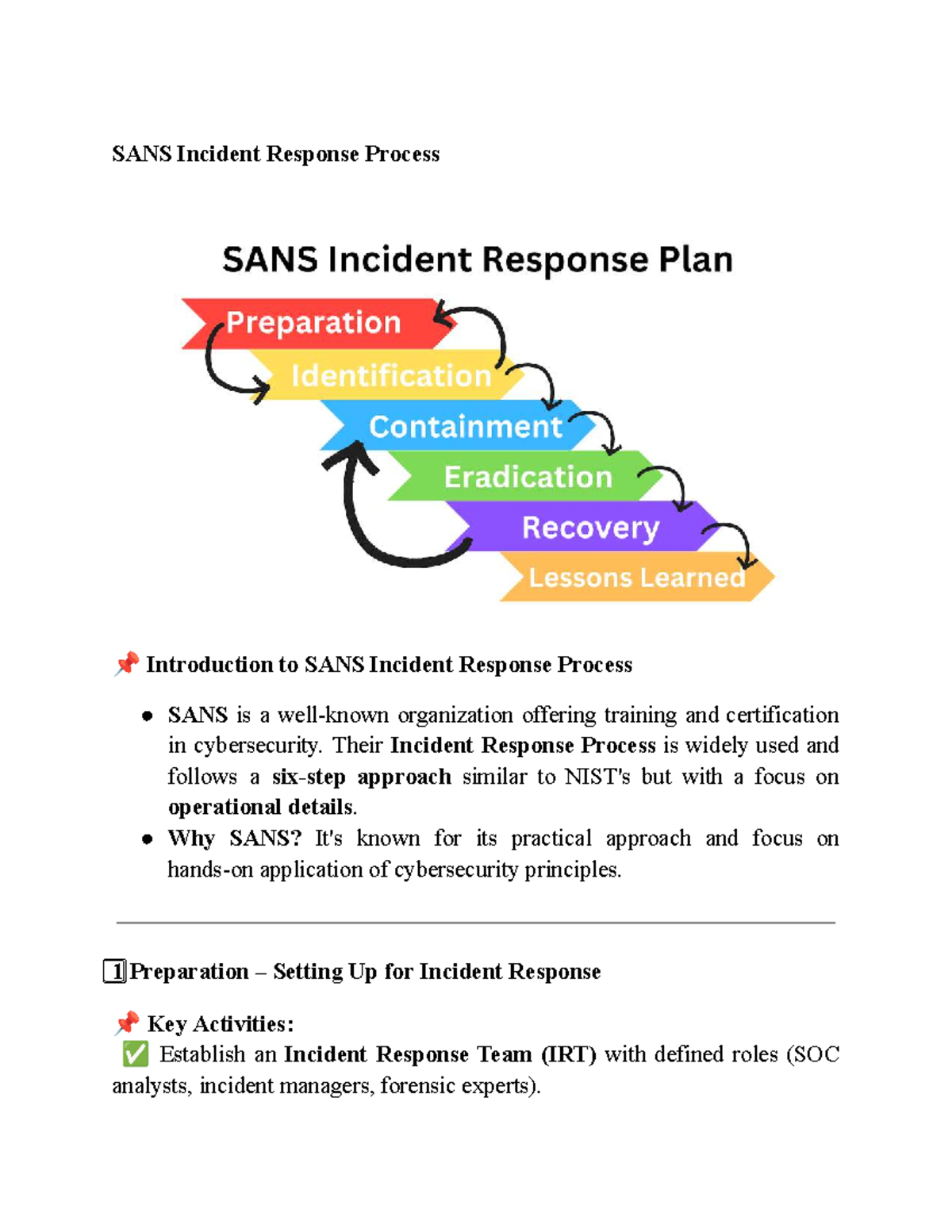
The SANS incident response framework divides the lifecycle of a cyber attack into six distinct, sequential phases: Preparation, Identification, Containment, Eradication, Recovery, and Lessons Learned. By implementing these steps, security operations center (SANS-aligned SOC) teams, system administrators, and incident handlers can systematically isolate compromised systems, eradicate malicious artifacts, restore normal operations, and extract strategic intelligence to fortify future defenses against evolving digital threats.
The Foundation of SANS Incident Response
Before an organization can effectively handle a security breach, it must understand the operational philosophy behind the SANS model. Developed through decades of real-world cybersecurity experience and taught extensively through SANS Institute training programs (such as FOR508 and SEC504), this framework is engineered to balance technical precision with business continuity.
Incident response is rarely a purely technical exercise; it requires cross-functional coordination, legal awareness, and executive communication. The six-phase SANS methodology provides a common vocabulary and workflow that bridges the gap between frontline security analysts and organizational leadership. Adhering to this structured approach ensures that critical evidence is not accidentally destroyed during triage and that remediation efforts address the root cause of an intrusion rather than merely treating its symptoms.
Phase 1: Preparation
The preparation phase occurs long before an actual security incident takes place. It forms the bedrock of an organization's defensive posture, determining how quickly and accurately responders can execute subsequent phases when an alert fires. Without adequate preparation, technical teams are left reacting blindly to active threats.
Policies, Procedures, and Playbooks
An effective preparation phase begins with the creation and regular review of clear, actionable incident response policies. Organizations must define what constitutes an incident, establish escalation paths, and outline roles and responsibilities for every stakeholder. Playbooks detailing specific scenarios—such as ransomware outbreaks, data exfiltration, or credential compromise—should be documented and readily accessible to operational teams.
Tools and Infrastructure
Equally important is the deployment and maintenance of forensic readiness tools. Security teams must ensure that endpoint detection and response (EDR) agents, security information and event management (SIEM) platforms, and packet capture capabilities are deployed across all critical assets. Regular out-of-band communication channels, isolated evidence storage repositories, and pre-configured forensic workstation images must be maintained and tested periodically.
Phase 2: Identification
Identification is the process of detecting an anomaly, determining whether it constitutes a genuine security incident, and scoping the breadth of the compromise. In modern enterprise environments, this phase relies heavily on automated telemetry alongside human threat hunting and alert triage.
SANS Incident Response Flow:
- Prep
- Identify
- Contain
- Eradicate
- Recover
- Lessons
- Recover
- Eradicate
- Contain
Alert Triage and Anomaly Detection
Security analysts sift through thousands of alerts generated by firewalls, intrusion detection systems, antivirus engines, and user reports. The primary challenge during identification is separating false positives from true malicious activity. When an indicator of compromise (IOC) or suspicious behavior is verified, the incident handler must quickly determine the vector of attack and the initial point of entry.
Scoping the Incident
Once an incident is confirmed, scoping answers critical operational questions: Which systems are affected? What user accounts have been compromised? Has sensitive data been accessed or exfiltrated? Accurate scoping prevents premature containment actions that might alert an attacker or leave persistent backdoors hidden elsewhere in the network.
Phase 3: Containment
Containment is designed to limit the damage of an active breach and prevent the attacker from moving laterally across the network or destroying additional assets. Choosing the right containment strategy requires balancing operational needs with the risk of ongoing data loss or system corruption.
Short-Term vs. Long-Term Containment
- Short-term containment involves immediate tactical actions, such as isolating a compromised host from the network (network disconnection), disabling specific user accounts, or blocking malicious IP addresses at the perimeter firewall.
- Long-term containment involves temporary remediation patches, network segmentation adjustments, or building clean staging environments while compromised systems are preserved for deeper forensic analysis.
Preserving Forensic Integrity
A crucial tenet of the SANS methodology during containment is avoiding the temptation to simply reboot or wipe compromised machines prematurely. Rebooting a system can wipe volatile random-access memory (RAM) that contains critical running processes, network connections, and encryption keys. Responders must collect volatile data and forensic images before applying destructive remediation steps whenever operationally feasible.
Phase 4: Eradication
Eradication focuses on removing all traces of the attacker from the enterprise environment. Simply containing a threat is insufficient; if backdoors, rogue user accounts, or implanted web shells remain, the attacker will likely regain access shortly after containment measures are lifted.
Root Cause Analysis
During eradication, security teams perform root cause analysis to understand how the adversary entered the environment. This involves examining phishing emails, vulnerable unpatched software, misconfigured cloud storage buckets, or compromised VPN credentials. Identifying the root cause ensures that the vulnerability exploited by the attacker is fully understood.
Removing Malicious Artifacts
Eradication steps include deleting malicious files, terminating unauthorized processes, removing unauthorized user accounts created by the threat actor, patching vulnerable software, and closing unauthorized network listeners or firewall holes. Every artifact identified during the forensic investigation must be systematically accounted for and destroyed or neutralized across all affected systems.
Phase 5: Recovery
Once the threat has been thoroughly eradicated, the organization enters the recovery phase. This phase involves safely bringing systems, services, and networks back into standard production operation while ensuring that no residual vulnerabilities remain.
Validation and Monitoring
Before reconnecting restored systems to the production network, administrators must validate their integrity. This often involves restoring data from clean, offline backups, applying rigorous security hardening guidelines, and deploying updated patches.
Following reintroduction, enhanced monitoring is placed on recovered assets. Security analysts watch for anomalous network traffic or unusual login patterns that might indicate the attacker is attempting to re-establish access using alternative credentials or overlooked persistence mechanisms.
Phase 6: Lessons Learned
Often overlooked due to "incident fatigue," the lessons learned phase is arguably the most valuable long-term component of the SANS incident response framework. It transforms a disruptive security breach into an opportunity for organizational maturation.
Post-Incident Review Meetings
Within weeks of closing an incident, multidisciplinary teams—including IT, legal, executive leadership, and incident responders—should convene a post-incident review. This meeting examines what worked well during the response, where communication broke down, and which technical controls failed or succeeded.
Updating Defensive Posture
The insights gathered during this phase directly feed back into Phase 1 (Preparation). Playbooks are updated to reflect newly discovered adversary techniques, security monitoring rules are refined to catch similar future attacks, and capital expenditure requests for better tooling or training are justified using data gathered during the breach.
Comparing the SANS Framework to Alternative Methodologies
While the SANS six-phase model is exceptionally popular, security leaders often evaluate it against other established frameworks, such as the NIST Special Publication 800-61 or the MITRE ATT&CK framework. Understanding how these standards intersect helps organizations build robust, comprehensive security programs.
| Framework | Primary Focus | Key Characteristics | Best Suited For |
|---|---|---|---|
| SANS IR | Operational execution and forensic depth | 6 distinct phases emphasizing preparation, evidence preservation, and eradication. | Technical incident response teams, SOC analysts, and forensic investigators. |
| NIST SP 800-61 | Federal guidelines and lifecycle management | 4 phases (Preparation, Detection/Analysis, Containment/Eradication/Recovery, Post-Incident). | Government agencies, contractors, and compliance-driven enterprises. |
| MITRE ATT&CK | Adversary behavior and tactics | Knowledge base of real-world attacker tactics, techniques, and procedures (TTPs). | Threat hunting, detection engineering, and security posture validation. |
Frequently Asked Questions
What are the six steps of SANS incident response?
The six steps are Preparation, Identification, Containment, Eradication, Recovery, and Lessons Learned. Each phase addresses a specific segment of the security incident lifecycle, moving from pre-planning and threat detection through containment, removal, system restoration, and post-incident review.
Why is volatile memory collection important during containment?
Volatile memory (RAM) contains real-time data that is lost the moment a computer is powered down or rebooted. This includes active network connections, running processes, injected code, and encryption keys. Collecting RAM before containment actions ensures investigators retain critical evidence needed to understand the attack.
How does SANS incident response differ from NIST SP 800-61?
While both frameworks cover similar overarching principles, NIST SP 800-61 combines containment, eradication, and recovery into a single broad operational phase, whereas SANS separates them into distinct, dedicated steps. SANS also places heavier emphasis on deep forensic analysis and technical readiness.
Can the SANS incident response steps be applied to cloud environments?
Yes. Although cloud environments abstract away underlying physical hardware, the fundamental principles of preparation, identifying unauthorized access, containing cloud tenant exposure, eradicating misconfigurations or compromised IAM roles, recovering data, and reviewing lessons learned apply directly to cloud native architectures.
What is the most critical phase in the SANS incident response lifecycle?
While all phases are vital, security professionals often consider Preparation to be foundational. Without adequate preparation—such as established playbooks, pre-configured tools, and trained personnel—teams cannot effectively execute identification, containment, or eradication during a high-pressure security event.
Next Actions for Security Teams
Organizations looking to operationalize the SANS incident response steps should begin by auditing their current security playbooks against the six-phase standard. Conduct tabletop exercises simulating realistic cyber attacks to test team coordination, refine evidence collection procedures, and ensure that containment strategies do not inadvertently compromise business-critical operations. By treating incident response as a continuous, iterative cycle rather than a one-time checklist, security teams can significantly reduce dwell time and resilience against modern threats.
Image Gallery