How IUL Insurance Works With Term Life Insurance: A Complete Strategy Guide
Combining Indexed Universal Life (IUL) insurance with term life insurance allows policyholders to blend high-limit, temporary income protection with permanent, tax-advantaged wealth accumulation. By layering these policies or exercisin...
Combining Indexed Universal Life (IUL) insurance with term life insurance allows policyholders to blend high-limit, temporary income protection with permanent, tax-advantaged wealth accumulation. By layering these policies or exercising term conversion options, consumers optimize premium spending, lock in insurability, and build a flexible financial safety net tailored to both short-term debts and long-term financial goals.
Contents
The Core Mechanics of Term Life and IUL Insurance
Understanding how term life and Indexed Universal Life (IUL) function together requires examining their individual structures. While both products offer a tax-free death benefit to beneficiaries, their financial mechanics, cost structures, and duration differ fundamentally.
Term Life Insurance: Pure Temporary Protection
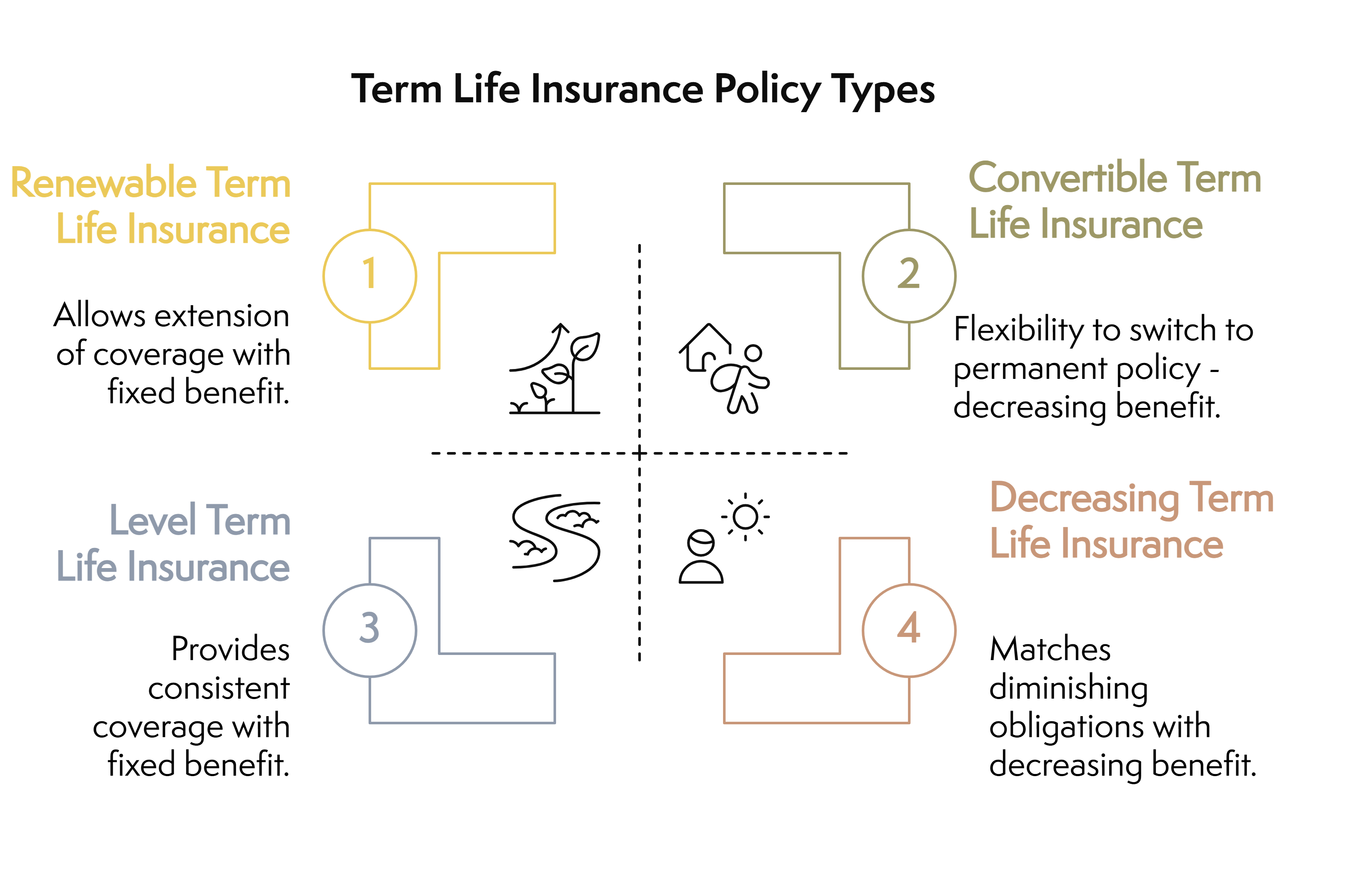
Term life insurance provides simple, straightforward coverage for a specified duration—typically 10, 15, 20, or 30 years.
- Fixed Premiums and Death Benefits: The premium remains level throughout the term period, guaranteeing a specific death benefit if the insured passes away while the policy is active.
- No Cash Value Accumulation: Term life insurance functions solely as protection. If the term expires and the policy is not renewed or converted, coverage ends without any remaining equity or cash value.
- Cost Efficiency: Because term policies do not accumulate cash value and expire before most policyholders pass away, insurance carriers can offer high death benefit coverage for relatively low monthly premiums.
Indexed Universal Life (IUL) Insurance: Flexible Permanent Coverage
Indexed Universal Life insurance is a form of permanent life insurance designed to last for the insured’s entire lifetime, provided the policy is adequately funded.
- Unbundled Premium Structure: Payments made toward an IUL policy are split. A portion pays for administrative fees and the internal Cost of Insurance (COI), while the remaining balance flows into a cash value account.
- Index-Linked Crediting: The cash value in an IUL accumulates interest based on the performance of a financial market index, such as the S&P 500 or Nasdaq-100. The policyholder does not directly invest in the stock market; instead, the insurer uses financial options to credit interest based on index performance.
- Floors and Caps: IUL policies feature a guaranteed downside floor (typically 0%), meaning the policy cash value will not lose ground due to negative index returns. In exchange for this downside protection, insurers place a cap rate (a maximum return limit, such as 8% to 10%) or a participation rate (the percentage of index gains credited to the account).
- Tax-Advantaged Cash Access: Under Internal Revenue Code (IRC) Section 7702, cash value within an IUL grows tax-deferred. Policyholders can access this cash value tax-free through policy loans or withdrawals, assuming the policy remains in force and does not become a Modified Endowment Contract (MEC).
Strategies for Combining IUL and Term Life Insurance
Rather than choosing exclusively between term insurance and permanent IUL coverage, many financial planning strategies utilize both products concurrently. Blending these policies optimizes overall cash flow while addressing distinct short-term and long-term risk exposures.
| Term Life Insurance | IUL Insurance |
|---|---|
| • Temporary Obligations (Mortgage, Income, Debt)• High Death Benefit at Low Initial Cost• Fixed Duration (e.g., 20-30 Years) | • Permanent Need• Cash Value Growth• Tax-Free Loans |
1. The Blended "Layering" Strategy (Policy Stacking)
During peak earning years, individuals often face substantial temporary financial liabilities, such as mortgage balances, business loans, or funding child education. Purchasing a permanent IUL policy large enough to cover all of these temporary liabilities could create an unsustainably high premium burden.
Through policy layering, a consumer purchases:
- A Term Life Policy to cover temporary, high-volume financial risks (e.g., a $1,500,000 20-year term policy to protect family income and pay off a mortgage).
- An IUL Policy structured with a smaller death benefit (e.g., $250,000 to $500,000) designed specifically to maximize cash value accumulation and cover permanent needs, such as estate liquidity or final expenses.
This hybrid approach ensures full risk coverage during high-liability years while concentrating premium dollars into the IUL’s cash value growth components rather than unnecessarily inflated insurance costs.
2. Term Conversion to IUL (Securing Insurability)
Most high-quality term life insurance policies include a Term Conversion Rider. This provision allows the policyholder to convert all or a portion of their term life insurance policy into a permanent policy—such as an IUL—without undergoing medical underwriting or proving evidence of insurability.
- Locking in Health Ratings: If an individual purchases a term policy at age 30 with a "Preferred Plus" health rating, they retain the right to convert that coverage into an IUL policy at the same health rating up to a specified age (e.g., age 65), even if their health deteriorates in the interim.
- Partial Conversions: Policyholders are generally not required to convert the full face amount at once. For instance, a policyholder with a $1,000,000 term policy can execute a partial conversion of $250,000 into an IUL, leaving $750,000 in term coverage. This allows the individual to transition to permanent protection incrementally as their budget expands.
3. Tax-Efficient Retirement Income Supplementation
Combining term life insurance with an IUL policy allows individuals to split their insurance budget between risk management and wealth building. Because term coverage carries low monthly costs, the remaining capital can be used to max-fund an IUL policy up to its IRS-prescribed limits.
Max-funding minimizes the ratio of death benefit to cash value, reducing the internal Cost of Insurance (COI) within the IUL. Over time, the cash value in the IUL grows tax-deferred. During retirement, the policyholder can draw down this cash value via tax-free policy loans to supplement traditional retirement accounts (like 401ks or IRAs), while the term policy handles large temporary family protection obligations during working years.
Key Differences: Term Life vs. IUL Insurance
The following comparison details how Term Life Insurance and IUL Insurance compare individually and how they function when integrated into a single financial plan.
| Feature / Metric | Term Life Insurance | Indexed Universal Life (IUL) | Combined Strategy (Term + IUL) |
|---|---|---|---|
| Primary Purpose | Pure income replacement; temporary risk transfer. | Lifetime coverage; tax-advantaged cash accumulation. | Maximum risk coverage with optimized tax-advantaged growth. |
| Duration | Fixed period (10, 15, 20, 30 years). | Permanent (Lifetime, up to age 120). | Immediate maximum protection that transitions to permanent equity. |
| Cash Value Growth | None ($0 equity built). | Yes; tied to equity index performance with a guaranteed floor. | Targeted cash growth inside the IUL portion; basic risk management via term. |
| Premium Flexibility | Fixed and unchangeable. | Flexible; can adjust within minimum and maximum limits. | Fixed base cost for term; variable, customizable contribution to IUL. |
| Downside Risk | None; pure mortality benefit. | 0% Floor protects principal from market index losses. | Floor protection on cash value combined with guaranteed term benefit. |
| Medical Underwriting | Required at initial policy purchase. | Required at purchase (or waived via term conversion). | Underwritten once at term start; locked in for future IUL conversion. |
| Cost relative to Benefit | Lowest initial cost per dollar of death benefit. | Higher initial cost due to internal fees and cash funding. | Balanced total outlay; high overall death benefit per premium dollar spent. |
Technical Mechanics: Cost of Insurance, Tax Rules, and Caps
To correctly structure an IUL policy alongside term life insurance, policyholders and advisors must understand the regulatory rules and internal pricing mechanisms that govern permanent life insurance.
- Total IUL Premium
- Policy Fees & Internal COI Deductions
- Net Premium to Cash Value
- Equity Index Growth Engine (Floor & Cap)
Cost of Insurance (COI) Considerations
Inside an IUL policy, the Cost of Insurance (COI) is calculated based on the net amount at risk (the difference between the total death benefit and the accumulated cash value) and the insured's attained age. COI rates increase as the insured grows older.
- Underfunded Risks: If an IUL is underfunded—meaning the policyholder pays only the minimum required premium—the rising COI in later years can consume the accumulated cash value, potentially causing the policy to lapse.
- The Role of Term Insurance: Utilizing a term insurance policy alongside an IUL allows the policyholder to keep the IUL’s death benefit lower. A lower death benefit reduces the overall dollar amount spent on COI within the IUL, directing a larger percentage of every dollar paid into cash value accumulation.
IRS Regulations: Section 7702 and MEC Status
The Internal Revenue Code (IRC) under Section 7702 sets strict limits on how much cash can be deposited into a life insurance policy relative to its death benefit.
- 7-Pay Test and MEC Rules: Enacted via the Technical and Miscellaneous Revenue Act of 1988 (TAMRA), if payments into an IUL exceed specific limits over a seven-year period, the policy becomes a Modified Endowment Contract (MEC).
- Consequences of MEC Status: If a policy becomes a MEC, tax-free distributions are lost. Withdrawals and policy loans are taxed on a Last-In, First-Out (LIFO) basis as ordinary income, and distributions taken prior to age 59½ may be subject to a 10% IRS penalty.
- Strategic Balancing: When combining term insurance with an IUL, policyholders can structure the IUL near maximum legal funding limits (just below MEC thresholds) while securing additional necessary death benefit through the lower-cost term policy.
Index Crediting: Caps, Participation Rates, and Spreads
Interest credited to an IUL cash value account relies on specific parameters established by the issuing life insurance company:
- Cap Rate: The upper limit of index growth credited during a segment period (typically one year). If an index yields 15% and the policy cap rate is 9%, the credited rate is 9%.
- Participation Rate: The percentage of index return the carrier credits to the policy. If the index gains 10% and the participation rate is 80%, the credited return is 8%.
- Spread Fee: A percentage deducted from the total index return before interest is credited.
- Guaranteed Floor: The contractually guaranteed minimum interest rate, typically set at 0%, which prevents negative returns during equity market down years.
Common Pitfalls and Implementation Mistakes
While pairing IUL with term life insurance provides structural flexibility, improper execution can derail long-term financial plans.
1. Underfunding the IUL Policy
Purchasing an IUL policy without sufficient long-term premium commitment is one of the most frequent structural mistakes. If an individual allocates too much capital to term premiums and underfunds the IUL, the cash value will fail to generate sufficient earnings to cover the rising internal COI later in life, placing the policy at risk of lapse.
2. Missing the Conversion Window
Term conversion riders carry strict deadline parameters. While a term policy may last 20 or 30 years, the conversion rider may expire earlier (e.g., after 10 years or upon reaching age 65). Allowing the conversion window to pass without evaluating your permanent insurance needs forfeits the option to secure IUL coverage without medical underwriting.
3. Over-relying on Unrealistic Growth Illustrations
Insurance marketing materials often display historical or projected index returns using fixed annual rates (e.g., 6% to 7%). Because real-world equity markets experience volatility, variable annual returns combined with policy caps can produce lower overall compounded returns than fixed rate projections suggest. Financial plans should incorporate conservative performance assumptions (e.g., 4% to 5.5% net returns) to ensure long-term sustainability.
Step-by-Step Implementation Framework
To deploy a strategy that combines IUL and term life insurance effectively, follow this structured process:
- Step 1: Quantify Needs - Differentiate Temporary vs Permanent Risk
- Step 2: Establish Budget - Prioritize Term and Max-Funded IUL Alloc.
- Step 3: Secure Term - Select Policy with Conversion Rider
- Step 4: Execute & Review - Annual Performance & Conversion Audit
Step 1: Quantify Temporary vs. Permanent Coverage Needs
Calculate total death benefit requirements by categorizing liabilities:
- Temporary Needs: Outstanding mortgage, business debt, income replacement for working years, and college tuition. (Assign to Term Insurance).
- Permanent Needs: Final expenses, legacy gifts, estate tax liquidity, and tax-deferred retirement buffers. (Assign to IUL Insurance).
Step 2: Determine Premium Allocation Budget
Establish a sustainable monthly or annual budget. Ensure that the portion of premiums designated for the IUL meets max-funding levels relative to its base death benefit. If the budget cannot support both maximum term protection and a properly max-funded IUL, increase the proportion allocated to term insurance until cash flow allows for greater IUL contributions.
Step 3: Select a Convertible Term Policy
Verify that the term life policy includes a robust conversion rider. Confirm:
- Which permanent products are available for conversion (ensure IUL policies are included in the carrier's conversion catalog).
- The precise expiration date of the conversion rider.
- Whether health ratings from the original underwriting apply to the converted policy.
Step 4: Conduct Annual Policy Reviews
Schedule annual reviews with a qualified insurance professional to audit policy performance. Monitor the IUL’s cash value accumulation against original illustrations, verify current index cap and participation rates, and track the remaining timeline on term conversion options.
Frequently Asked Questions
Can you convert an existing term life policy into an IUL policy?
Yes, provided your term policy contains a active term conversion rider. This contractual provision allows you to convert all or a portion of your term life coverage into a permanent policy—such as an IUL—without undergoing a new medical exam or presenting evidence of insurability.
Is it better to buy an IUL or "buy term and invest the difference"?
Neither strategy is universally superior; the choice depends on your financial profile and tax objectives. "Buy term and invest the difference" (BTID) isolates pure insurance from taxable or tax-deferred investment accounts (like index funds). An IUL structure offers built-in downside principal protection (0% floor) and tax-free policy loans under IRC Section 7702, which traditional taxable brokerage accounts do not provide.
How does combining term and IUL help avoid Modified Endowment Contract (MEC) status?
MEC status occurs when cash contributions exceed IRS limits relative to the policy’s death benefit. By using a separate term policy to cover large temporary death benefit needs, you can design the IUL policy with the lowest permissible death benefit needed to accept your target annual cash contributions without crossing MEC thresholds.
Can IUL cash value be used to pay for term life premiums?
Not directly via an automated transfer between different policies. However, policyholders can take tax-free policy loans or withdrawals from their IUL cash value and use those funds to pay the premiums on a separate term policy, provided the IUL maintains sufficient cash value to support its own internal charges.
What happens when the term life policy expires in a combined strategy?
When the term policy reaches the end of its duration (e.g., year 20 of a 20-year term), the term coverage terminates and no death benefit remains for that policy. At this stage, the insured retains only the permanent IUL policy, which continues to provide lifetime death benefit coverage and cash value access as long as it remains properly funded.
Strategic Recommendations and Next Steps
Combining Indexed Universal Life insurance with term life insurance provides a balanced mechanism to manage temporary financial risks while building long-term, tax-advantaged equity. To execute this strategy successfully:
- Audit Existing Underwriting: Prior to applying for new coverage, check existing term policies to evaluate current conversion windows and eligible permanent products.
- Stress-Test IUL Funding Models: Work with a licensed fiduciary or insurance professional to run policy illustrations at conservative return rates (e.g., 4.5%–5.5%) rather than maximum allowable illustration rates.
- Keep Products Balanced: Never sacrifice basic risk protection to fund an under-capitalized IUL. Ensure your family or business is fully protected with low-cost term insurance first, allocating excess discretionary cash flow toward max-funding an IUL policy over time.
Image Gallery