Understanding Cash Value in North American Term Life Insurance
In North American life insurance markets, standard term life insurance does not accumulate cash value. Term insurance is designed exclusively to provide a death benefit for a specific, temporary period—such as 10, 20, or 30 years—witho...
In North American life insurance markets, standard term life insurance does not accumulate cash value. Term insurance is designed exclusively to provide a death benefit for a specific, temporary period—such as 10, 20, or 30 years—without any savings component or investment account attached to the policy premiums.
Contents
The Fundamental Nature of Term Life Insurance
To understand why cash value is absent from term life insurance, one must first recognize the structural purpose of the product. Term life insurance is effectively a pure protection vehicle. Policyholders pay a premium to transfer the financial risk of their premature death to an insurance company. If the insured individual passes away during the specified "term," the insurer pays the death benefit to the designated beneficiaries. If the term expires and the insured individual is still living, the coverage terminates, the premiums paid are retained by the insurer to cover the cost of insurance and administrative overhead, and no residual value remains.
Unlike permanent insurance products—such as whole life or universal life insurance—term policies do not contain an "endowment" feature or a savings bucket. The premiums calculated for term policies are based primarily on mortality risk, age, health status, and the length of the coverage period. Because there is no long-term asset accumulation, there is no cash value to borrow against, withdraw, or surrender at the end of the term.
Distinguishing Term from Permanent Insurance
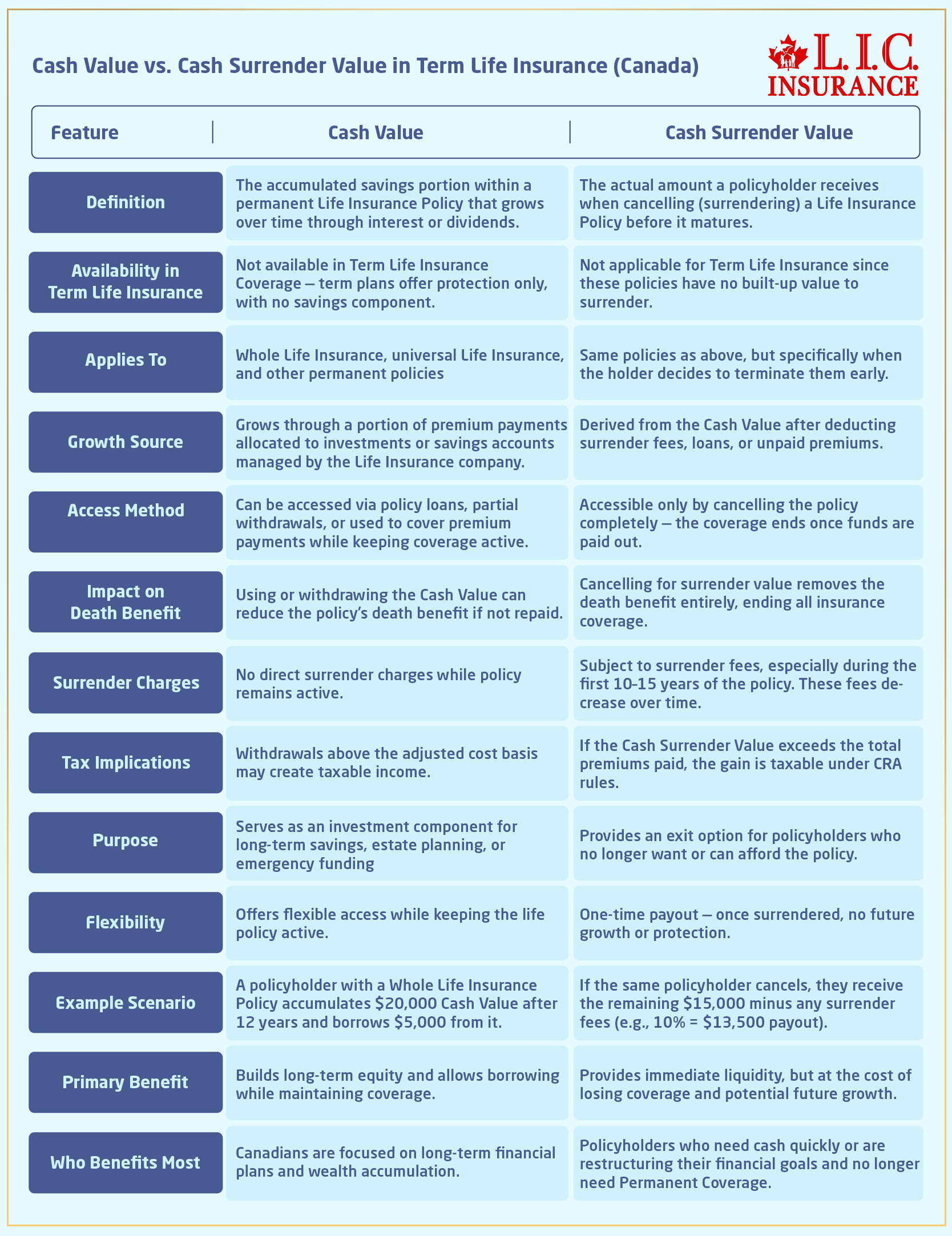
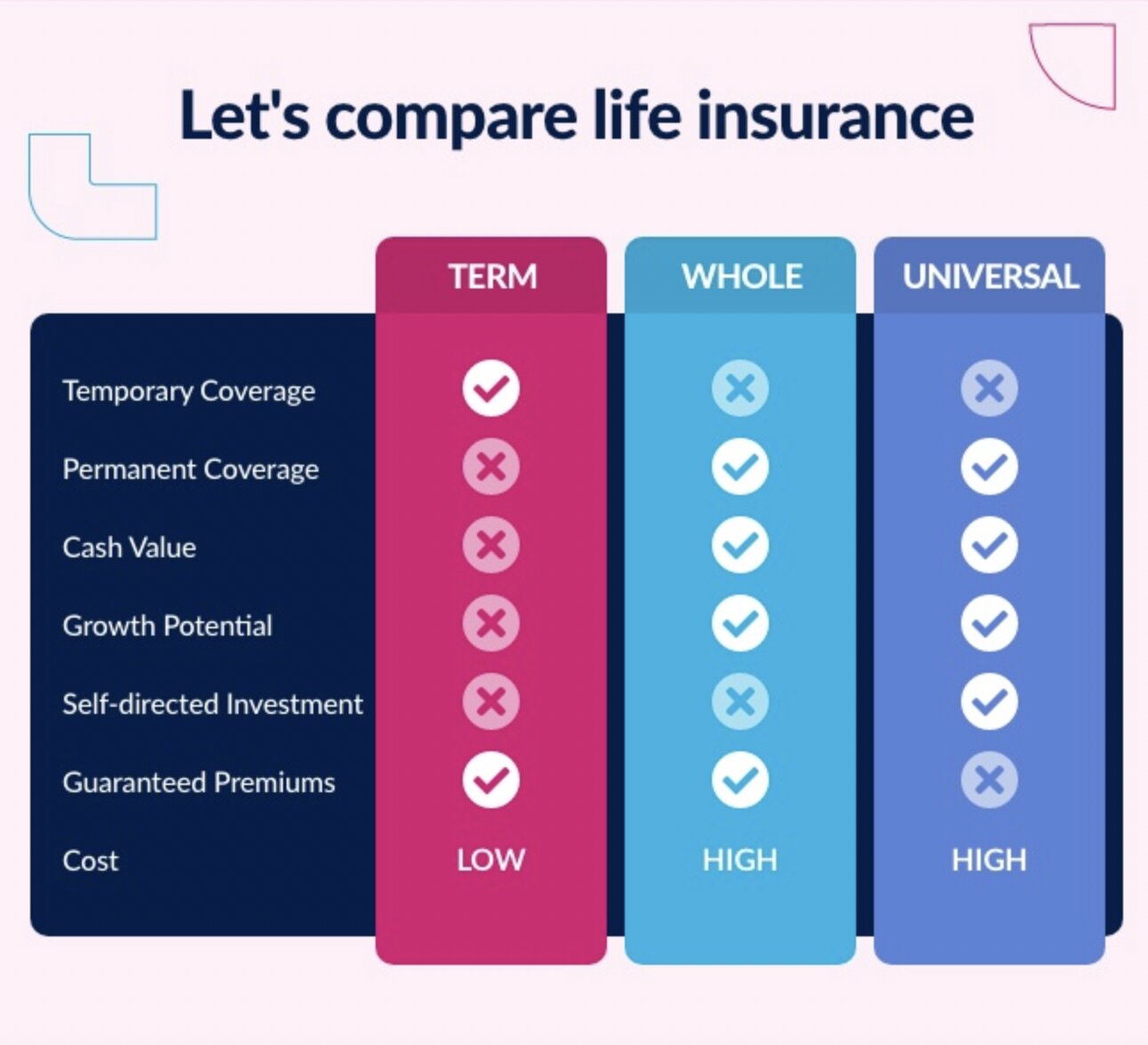
Confusion regarding cash value often stems from the marketing of permanent insurance products. In North America, the term "cash value" is a defining characteristic of permanent life insurance, which includes Whole Life, Universal Life, and Variable Universal Life policies.
- Whole Life Insurance: These policies feature fixed premiums and a guaranteed cash value component that grows at a set rate over time. A portion of the premium is allocated to a "reserve" account that gains value, which the policyholder can access via loans or withdrawals, or by surrendering the policy.
- Universal Life Insurance: These policies offer more flexibility. The cash value component is tied to current interest rates or market performance, and policyholders can often adjust their premiums or death benefits as their financial needs change.
- Term Life Insurance: As a contrast, term insurance is devoid of these mechanisms. It is the lowest-cost form of life insurance precisely because it lacks the investment, savings, and administrative components that drive the higher premiums found in permanent products.
Why "Cash Value" and "Term" are Conceptually Opposite
In the context of actuarial science and insurance law in the United States and Canada, "cash value" represents an equity interest in the policy. When you purchase a term policy, you are purchasing a consumable service—risk protection—rather than an asset.
When you pay a premium for a 20-year term policy in 2026, you are paying specifically for the insurance company’s commitment to pay a claim should you die within those two decades. There is no mathematical "overpayment" that generates a surplus to be saved. If you were to add a savings component, the product would, by definition, cease to be term insurance and would be reclassified under insurance regulations as a permanent product.
Comparing Life Insurance Structures
| Feature | Term Life Insurance | Whole Life Insurance | Universal Life Insurance |
|---|---|---|---|
| Duration | Specific term (e.g., 20 years) | Lifetime (if premiums paid) | Lifetime (if funded) |
| Cash Value | None | Yes (Guaranteed) | Yes (Variable) |
| Premiums | Generally lower, level | Higher, fixed | Flexible |
| Access to Funds | N/A | Loans and withdrawals | Loans and withdrawals |
| Investment Risk | None | Low (Guaranteed) | Moderate to High |
Exceptions: Return of Premium (ROP) Riders
While standard term life insurance does not have a cash value, some consumers encounter the concept of "Return of Premium" (ROP) riders. An ROP rider is an optional add-on available with some term policies. If the policyholder outlives the term, the insurance company refunds a portion or all of the base premiums paid over the life of the policy.
It is critical to distinguish ROP from true cash value:
- Not an Asset: ROP is a contractual refund of premiums, not an investment that grows with interest.
- No Access During Term: You cannot borrow against ROP potential. The money is only accessible if you reach the end of the term without dying.
- Cost: Adding an ROP rider significantly increases the premium of the term policy, often making it substantially more expensive than a standard term policy without the rider.
Common Misconceptions and Troubleshooting
If you find yourself searching for "cash value" within a term policy, you may be experiencing a misunderstanding of your policy documentation.
- Reviewing the Policy Declaration Page: Always consult the "Declaration Page" or "Schedule of Benefits" of your current policy. If the policy is a term policy, you will see a "Term Period" date. If there is no mention of "Account Value," "Cash Surrender Value," or "Investment Account," the policy does not have cash value.
- Conversion Options: Many term life policies offer a "conversion privilege." This allows you to convert your term policy into a permanent policy (like whole life) without needing to undergo a new medical exam. If you desire cash value, you may be able to exercise this option to transition your coverage into a product that does accumulate it.
- Policy Loans: Because term insurance has no cash value, it is impossible to take a policy loan against it. Any entity promising a "loan" against your term life insurance policy is likely describing a predatory lending scheme or a misunderstanding of insurance mechanics.
Professional Guidance and Financial Suitability
When managing your insurance portfolio in 2026, it is vital to align your policy type with your financial objectives. If your goal is to protect your family from the loss of income during your peak earning years—such as while paying off a mortgage or raising children—term life insurance is generally the most cost-effective solution.
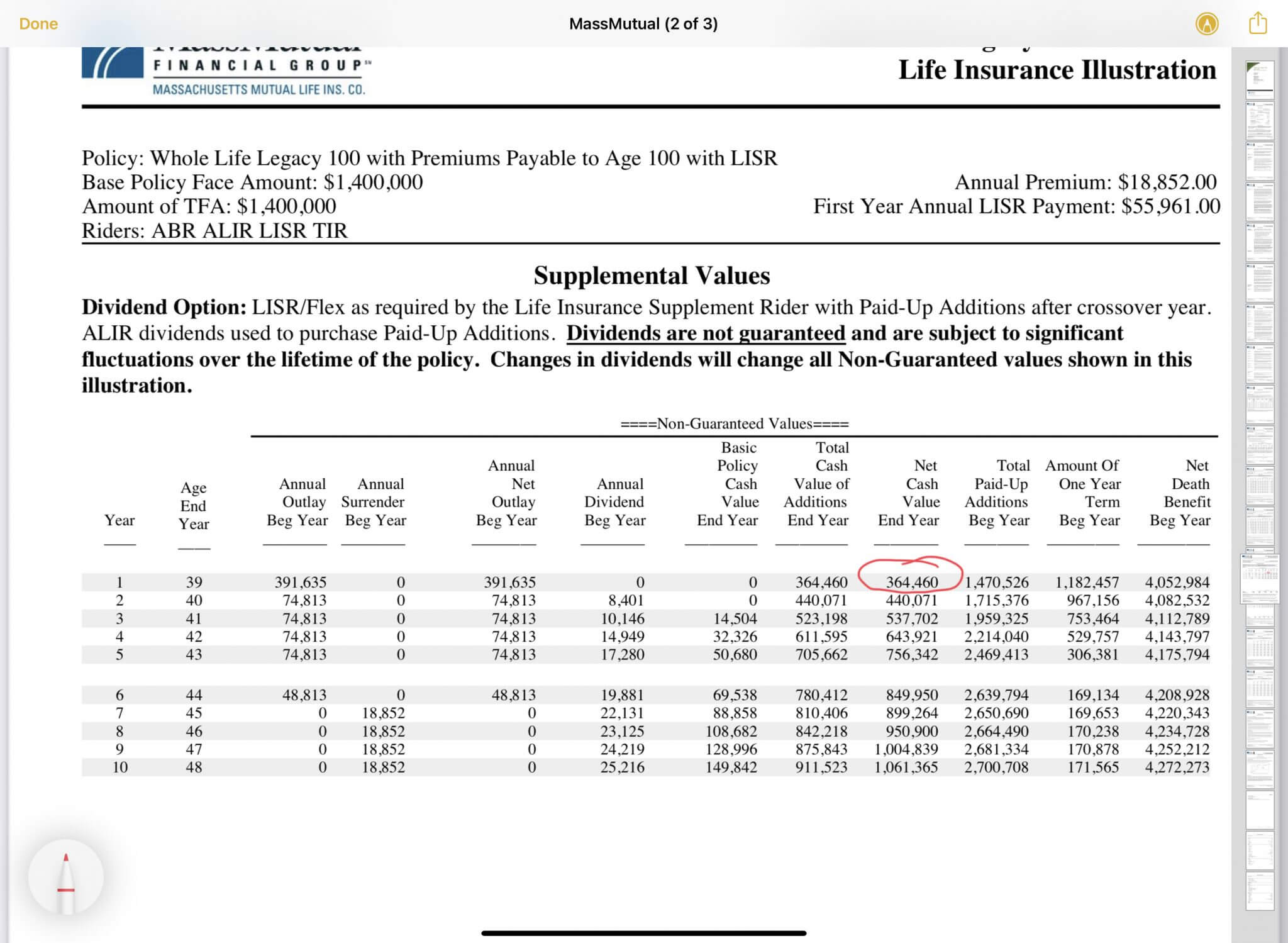
If your goal is to utilize life insurance as a tool for wealth transfer, tax-advantaged savings, or estate planning, you may require a permanent life insurance product. Consult with a licensed financial advisor or insurance professional to evaluate your specific needs. They can provide an "in-force illustration" for any permanent policies you own to show current cash values, or help you calculate the premium difference between term and permanent coverage.
Always remember that life insurance is a long-term financial commitment. Before purchasing, ensure you understand whether you are buying a pure protection product (Term) or an accumulation product (Permanent). If your budget is tight, do not feel pressured to purchase permanent insurance just for the cash value component; the primary function of life insurance is the death benefit, and the most important factor is securing enough coverage to protect your dependents.
Frequently Asked Questions
Does a 30-year term policy accumulate cash value? No. A 30-year term policy provides coverage for 30 years and expires at the end of that period. It does not contain a cash value account or investment component, regardless of how long the policy has been held.
Can I get my money back from a term policy if I do not die? Only if your policy includes a Return of Premium (ROP) rider. Standard term policies do not offer refunds. ROP policies are more expensive and are essentially a form of forced savings that lacks interest growth.
Why do some agents suggest term is "wasted" money? This is a subjective claim based on the perspective that premiums should yield a financial return. From a risk-management perspective, term insurance is not wasted; it is a premium paid for peace of mind and protection against a high-cost event.
Is it possible to convert my current term policy to one with cash value? Yes, if your policy includes a "conversion rider" or "conversion privilege." This allows you to switch to a permanent policy offered by the same insurer. You will likely see a significant increase in premiums following such a conversion.
What should I do if I am confused by my policy documents? Contact your insurance provider directly using the phone number listed on your policy documents or their official website. Request an explanation of the policy type and confirm whether it is a "Term" or "Permanent" policy.
Next Action: Locate your policy declaration page. Verify the policy type. If you determine that you require cash value for long-term financial planning, reach out to a licensed insurance professional to discuss the costs and benefits of converting your current coverage to a permanent life insurance plan.
Image Gallery