How Many Red and White Stripes Are on the US Flag?
The United States flag features 13 horizontal stripes in total: seven red stripes and six white stripes. These stripes alternate, beginning and ending with red. This specific arrangement was established to represent the original 13 Bri...
The United States flag features 13 horizontal stripes in total: seven red stripes and six white stripes. These stripes alternate, beginning and ending with red. This specific arrangement was established to represent the original 13 British colonies that declared independence in 1776 to form the United States of America.
Contents
For nearly two and a half centuries, the "Stars and Stripes" has served as the primary symbol of American identity. While the number of stars in the blue "union" has changed frequently to reflect the admission of new states, the number of stripes has remained constant at 13 for over 200 years. Understanding the configuration, history, and symbolism of these stripes offers a deeper look into the evolution of the American republic.
The Configuration of the Red and White Stripes
The design of the American flag is strictly codified by federal law and executive orders. The stripes are not merely decorative; they follow a precise mathematical and visual pattern that ensures consistency across all official government versions.
The Alternating Pattern
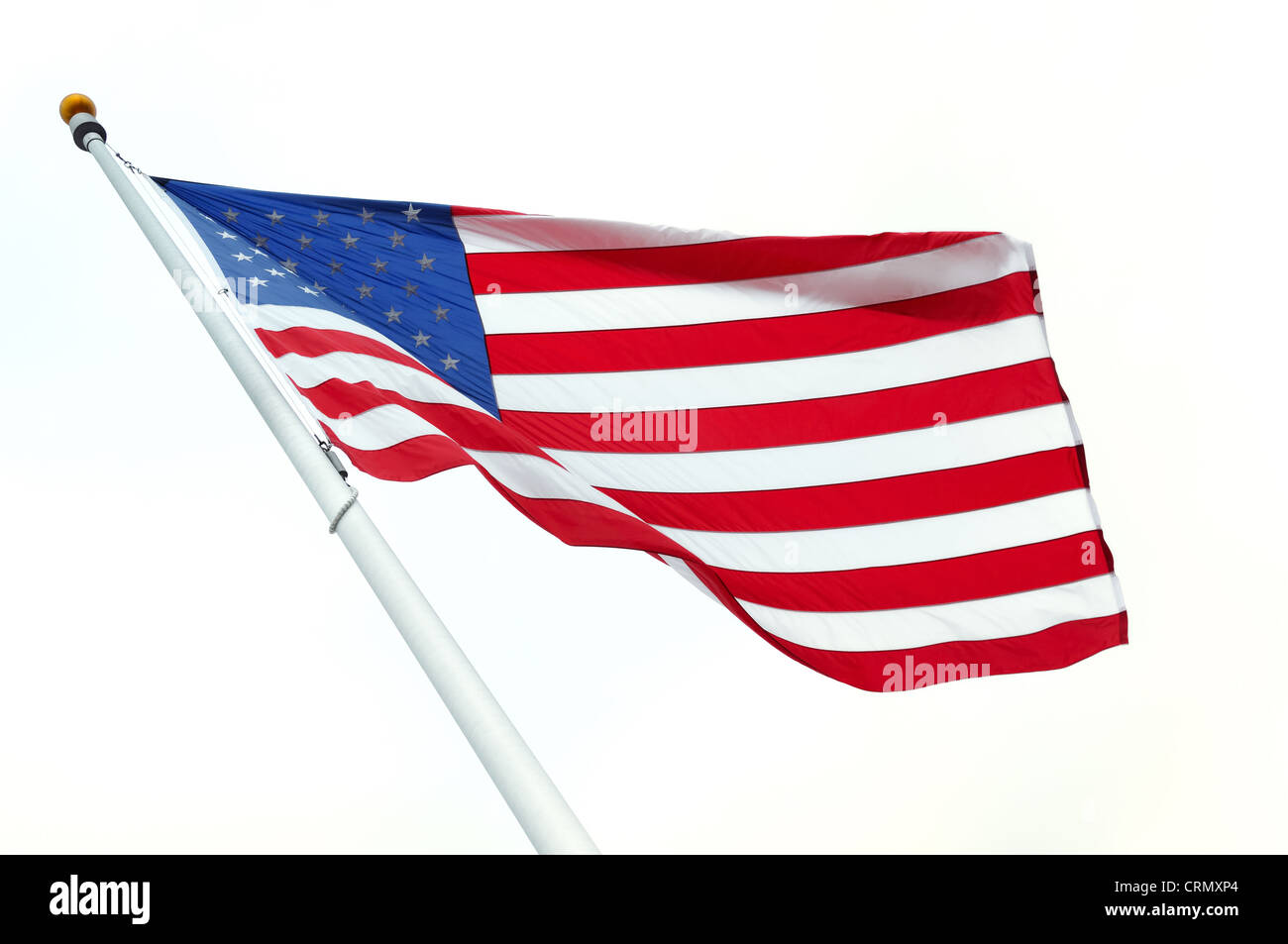
The 13 stripes follow a simple alternating sequence. The pattern begins with a red stripe at the very top of the flag (the "hoist" side) and ends with a red stripe at the very bottom. This results in seven red stripes and six white stripes.
The placement of these stripes is significant for visibility. Historically, red was chosen for the outer edges because it is a more durable color against the elements and provides a sharp contrast against the sky or sea, making the flag easier to identify from a distance.
Interaction with the Union
The blue rectangle in the upper left corner of the flag is called the union or the canton. In the current 50-star flag, which has remained the official design as of 2026, the union extends from the top of the flag down through the seventh stripe.
This means that the first seven stripes (four red and three white) are "broken" by the union, while the bottom six stripes (three red and three white) run the full width of the flag. This specific layout provides the structural balance that has defined the American flag since the mid-19th century.
The Historical Evolution of the Stripes
While the 13-stripe design seems permanent today, it was once a subject of debate. The number of stripes actually changed during the early years of the United States as the nation struggled to decide how to represent its growth.
The Flag Act of 1777
On June 14, 1777, the Continental Congress passed the first Flag Act. It stated: "Resolved, That the flag of the thirteen United States be thirteen stripes, alternate red and white; that the union be thirteen stars, white in a blue field, representing a new constellation."
At this stage, the intention was clear: one stripe and one star for each colony. However, the act did not specify the arrangement of the stars or whether the stripes should be horizontal or vertical, leading to various localized versions of the flag during the Revolutionary War.
The 15-Stripe Era (1795–1818)
As the United States expanded, the government initially intended to add both a star and a stripe for every new state. When Vermont (1791) and Kentucky (1792) joined the Union, the Flag Act of 1794 was passed. This act changed the design to 15 stars and 15 stripes.
This 15-stripe version is historically famous as the "Star-Spangled Banner." This was the specific flag that flew over Fort McHenry during the War of 1812, inspiring Francis Scott Key to write the poem that eventually became the national anthem. However, as more states like Tennessee, Ohio, and Louisiana joined, it became clear that adding a new stripe for every state would eventually make the stripes too thin or the flag too large.
The Flag Act of 1818
To resolve the design dilemma, Congress passed the Flag Act of April 4, 1818. This pivotal legislation, which remains the foundation for the flag's design in 2026, mandated that the number of stripes return to 13 to honor the original colonies. It further decreed that a new star would be added to the union for every new state on the July 4th following its admission.
This act ensured that the flag would forever acknowledge the nation’s origins through its stripes while reflecting its growth through its stars.
Official Proportions and Technical Specifications
To ensure uniformity, the proportions of the United States flag are specified in Executive Order 10834, signed by President Dwight D. Eisenhower in 1959. These specifications are used by the federal government and flag manufacturers to maintain "Old Glory's" iconic look.
| Feature | Proportion (Relative to Hoist/Width) |
|---|---|
| Hoist (Width) of Flag | 1.0 |
| Fly (Length) of Flag | 1.9 |
| Hoist of the Union | 0.5385 (7/13 of the width) |
| Fly of the Union | 0.76 |
| Width of Each Stripe | 0.0769 (1/13 of the width) |
| Diameter of Each Star | 0.0616 |
According to these standards, each of the 13 stripes must be exactly the same width—precisely 1/13th of the total height of the flag. If you were to manufacture a flag that is 10 feet tall, each red and white stripe would need to be approximately 9.23 inches wide.
Standardized Colors
The colors used in the stripes are also standardized. Under the General Services Administration (GSA), the colors are defined by the "Standard Color Cards of America."
- Old Glory Red: Represents hardiness and valor. (Pantone 193 C)
- Old Glory White: Represents purity and innocence. (Pantone Safe)
- Old Glory Blue: Represents vigilance, perseverance, and justice. (Pantone 281 C)
Symbolism of the Red and White Stripes
The symbolism of the flag's colors was not officially defined by the Continental Congress in 1777. However, in 1782, Charles Thomson, the Secretary of the Continental Congress, provided an explanation for the colors when he presented the design for the Great Seal of the United States. These meanings were subsequently adopted for the flag.
The Seven Red Stripes
The red stripes signify hardiness and valor. They serve as a reminder of the blood shed by those who fought for the nation’s independence and the courage required to maintain a republic. Red is a color of action and sacrifice, anchoring the flag's visual identity.
The Six White Stripes
The white stripes signify purity and innocence. In a political context, this represented the desire of the new nation to move away from the corruption of the Old World monarchies and start fresh with a government based on liberty and individual rights.
The Numerical Symbolism
The number 13 is the most significant numerical element of the stripes. It represents the "Original Thirteen" colonies:
- New Hampshire
- Massachusetts
- Rhode Island
- Connecticut
- New York
- New Jersey
- Pennsylvania
- Delaware
- Maryland
- Virginia
- North Carolina
- South Carolina
- Georgia
By keeping the stripes at 13, the flag serves as a permanent historical anchor, ensuring that no matter how many stars are added for new states, the foundational history of the union is never forgotten.
Common Myths and Misconceptions
Despite the flag's ubiquity, several misconceptions persist regarding the red and white stripes.
Myth 1: The stripes were once vertical. While some early "Sons of Liberty" flags used vertical stripes, the official United States flag has always specified horizontal stripes in its legislative acts (1777, 1794, and 1818). The U.S. Coast Guard ensign does use vertical stripes, but that is a specialized maritime flag, not the national ensign.
Myth 2: The bottom stripe is white. Because the flag begins with a red stripe and there are an odd number of stripes (13), it must end with a red stripe to remain symmetrical. If a flag ends in a white stripe, it is either an incorrect reproduction or a different type of flag altogether.
Myth 3: The stripes represent the branches of government. There is no historical or legal basis for the claim that the stripes represent branches of government or specific documents like the Bill of Rights. Their sole official representation is the 13 original colonies.
Proper Etiquette for the Stripes
The United States Flag Code (Title 4 of the U.S. Code) provides specific guidelines on how the stripes should be treated during display.
- Vertical Display: When the flag is displayed vertically (such as against a wall), the union should be at the top and to the observer's left. This means the stripes flow downward.
- On a Vehicle: When the flag is painted or affixed to a vehicle (like an airplane or a space shuttle), the stripes should always face toward the rear, with the union toward the front. This gives the impression that the flag is flying in the wind as the vehicle moves forward.
- Position of Honor: The stripes should never touch the ground, water, or merchandise. If the stripes become frayed, the flag should be retired in a dignified manner, usually by burning.
Frequently Asked Questions
Which stripe is at the very top of the American flag?
The top stripe of the American flag is red. The pattern consists of seven red stripes and six white stripes, starting and ending with red.
Why did the US flag once have 15 stripes?
Between 1795 and 1818, the flag had 15 stripes to represent the addition of Vermont and Kentucky. Congress eventually realized that adding a stripe for every new state would make the design impractical, so they reverted to 13 stripes in 1818.
Do the stripes on the US flag have names?
Individually, the stripes do not have specific names. However, they are collectively referred to as "the stripes" or "the field of stripes," while the blue section is called the "union" or "canton."
What is the significance of the 7 red stripes specifically?
There are seven red stripes because the pattern begins and ends with red. Symbolically, seven is often associated with completion or perfection in various traditions, but in the case of the flag, the number is a mathematical necessity of alternating 13 stripes starting with red.
Can the number of stripes ever change again?
While Congress has the power to change the flag's design through a new Flag Act, it is highly unlikely. The 13-stripe design has been the standard since 1818 and is deeply ingrained in the national identity as a tribute to the country's origins.
Summary of Actionable Knowledge
If you are a student, educator, or citizen looking to verify the details of the American flag in 2026, remember these key points:
- Count: Always 13 stripes.
- Colors: 7 red and 6 white.
- Start/End: Red is the color of both the top and bottom stripes.
- Meaning: The stripes honor the 13 original colonies.
- Reference: Consult Title 4 of the United States Code for official display protocols and Executive Order 10834 for exact manufacturing dimensions.
Whether you are drawing the flag for a project or purchasing one for display, ensuring the correct count of seven red and six white stripes is the first step in showing proper respect for this historical emblem.
Image Gallery