Comprehensive Air Conditioner Tune-Up Checklist: Professional Maintenance Guide for 2026
An effective air conditioner tune-up requires a systematic inspection of electrical components, refrigerant levels, and mechanical parts to ensure peak efficiency. This checklist encompasses cleaning the condenser and evaporator coils,...
An effective air conditioner tune-up requires a systematic inspection of electrical components, refrigerant levels, and mechanical parts to ensure peak efficiency. This checklist encompasses cleaning the condenser and evaporator coils, clearing condensate drain lines, testing capacitor health, and verifying thermostat calibration. Regular maintenance prevents premature compressor failure and reduces summer energy consumption by up to 15%.
Contents
Maintaining a residential or commercial cooling system is no longer just about comfort; in 2026, it is a critical strategy for managing rising energy costs and adhering to environmental standards. As HVAC technology integrates more sophisticated sensors and variable-speed components, the standard "tune-up" has evolved from a simple filter change to a comprehensive technical audit. This guide provides an exhaustive checklist designed for homeowners and facility managers to ensure their cooling systems operate reliably throughout the high-demand summer months.
The Importance of Pre-Season Maintenance
Skipping an annual air conditioner tune-up often results in a "death by a thousand cuts" for the machinery. Small inefficiencies—such as a slightly dusty evaporator coil or a weakening run capacitor—force the system to run longer cycles to reach the desired temperature. These extended cycles accelerate the wear and tear on the compressor, which is the most expensive component to replace.
Furthermore, many manufacturers, including major brands like Carrier, Trane, and Lennox, require documented annual maintenance to keep equipment warranties valid. If a major component fails and there is no record of professional service, the manufacturer may deny the claim. Beyond warranty protection, a well-tuned system maintains better humidity control, which is essential for preventing mold growth and preserving indoor air quality.
Professional vs. DIY: Safety and Scope
While homeowners can perform basic tasks like changing filters and clearing debris from the outdoor unit, a full "tune-up" involves high-voltage electricity and pressurized refrigerant. According to the U.S. Environmental Protection Agency (EPA), only technicians certified under Section 608 of the Clean Air Act are legally permitted to handle or "top off" refrigerants.
In 2026, many systems have transitioned to A2L refrigerants (such as R-454B or R-32), which require specific tools and safety protocols due to their mild flammability. A professional technician possesses the manifold gauges, multi-meters, and leak detectors necessary to perform a deep-level diagnostic that goes far beyond a visual inspection.
The Essential Air Conditioner Tune-Up Checklist
A high-quality maintenance visit should take between 60 and 90 minutes. If a technician finishes in 20 minutes, they likely skipped critical diagnostic steps. Use the following categorized checklist to verify the thoroughness of the service.
1. Outdoor Condenser Unit Inspection
The outdoor unit is responsible for releasing the heat collected from inside your home. Because it is exposed to the elements, it requires the most physical cleaning.
- Coil Cleaning: Inspect the condenser coils for dirt, grass clippings, and "cottonwood" seeds. Even a thin layer of grime acts as an insulator, preventing heat transfer. Technicians should use a dedicated coil cleaner and a low-pressure rinse.
- Fan Motor and Blades: Check the fan motor for bearing wear (often identified by a grinding or squealing noise). Inspect the fan blades for cracks or imbalances that could cause vibration.
- Cabinet Clearance: Ensure there is at least 18 to 24 inches of clear space around the unit. Overgrown shrubs or stacked items restrict airflow, causing the compressor to overheat.
- Fin Straightening: Use a "fin comb" to straighten bent aluminum fins. Bent fins block airflow through the coil.
2. Indoor Air Handler and Evaporator Coil
The indoor portion of the system is where the cooling actually happens. It is also where moisture issues usually originate.
- Evaporator Coil Inspection: Check for dust buildup or biological growth. Because this coil is often difficult to access, it is frequently ignored, leading to "dirty sock syndrome" (unpleasant odors).
- Condensate Drain Line: Clear the drain line using a vacuum or pressurized air. Algae and sludge can block this pipe, leading to water damage in the home or triggering a float switch that shuts the system down.
- Blower Motor Audit: Measure the amperage of the blower motor. An over-amping motor indicates it is working too hard, possibly due to a failing capacitor or restricted ductwork.
- Air Filter Replacement: While simple, this is the most important step for airflow. Ensure the filter is seated correctly with no gaps around the edges.
3. Electrical Component Testing
Electrical failures are the leading cause of emergency AC repair calls. Proactive testing can catch these before they lead to a system blackout.
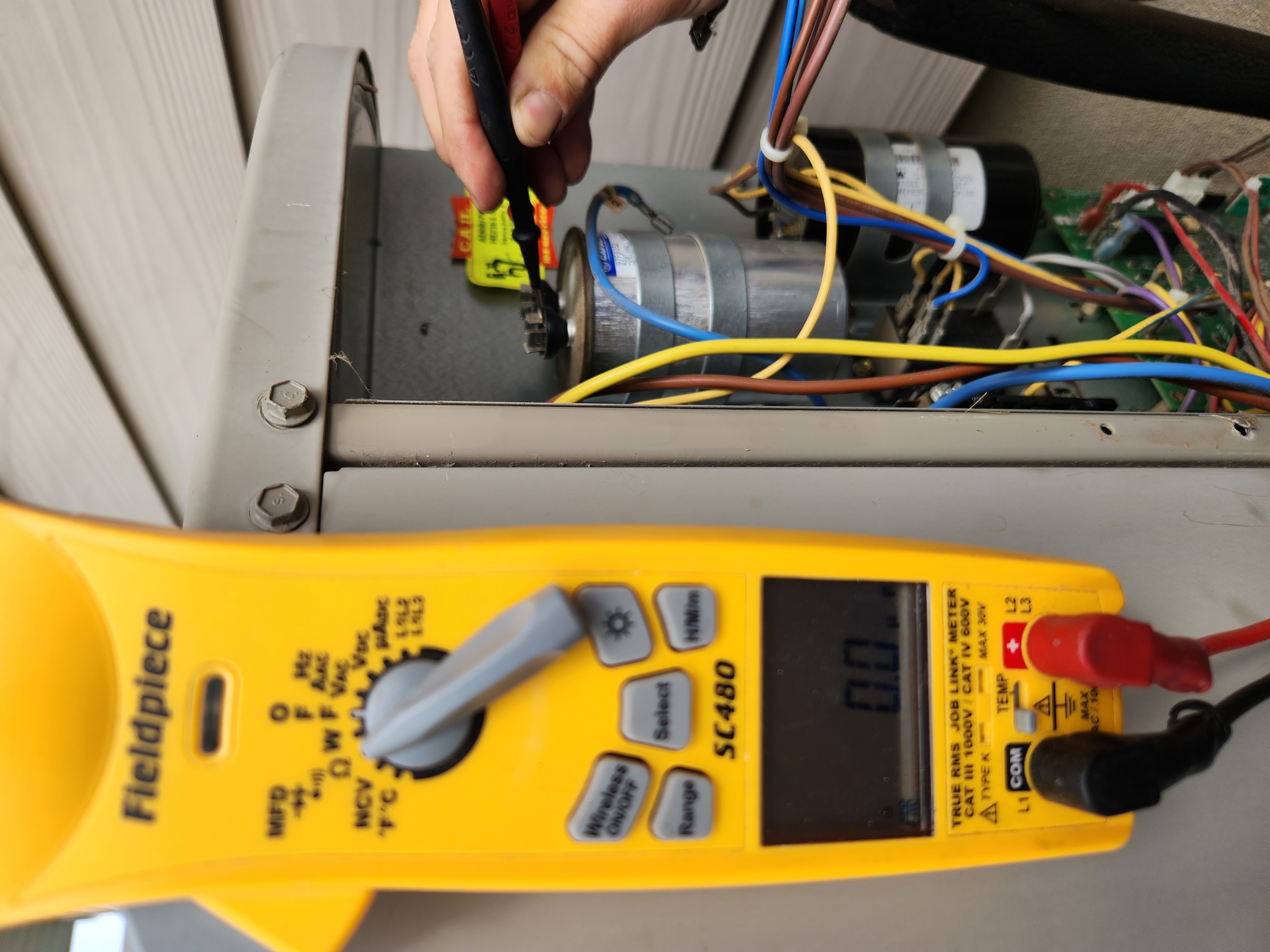
- Capacitor Health: Use a multi-meter to measure the microfarads (µF) of the start and run capacitors. If the reading is more than 5-10% below the rated value, the capacitor should be replaced immediately.
- Contactor Inspection: Check the silver points on the contactor for "pitting" or carbon buildup (arcing). A pitted contactor can "weld" shut, causing the outdoor unit to run non-stop, even when the thermostat is off.
- Wiring Integrity: Tighten all electrical connections. Thermal expansion and contraction can loosen wires over time, leading to high resistance and potential fire hazards.
4. Refrigerant and Operational Performance
A system does not "consume" refrigerant; it is a closed loop. If the levels are low, there is a leak that must be addressed.
- Subcooling and Superheat: Technicians must measure these values to ensure the refrigerant charge is precise. Traditional "pressure-only" checks are often inaccurate for modern systems with Thermal Expansion Valves (TXVs).
- Temperature Split: Measure the "Delta T"—the difference between the air entering the return duct and the air exiting the supply vents. A healthy system typically shows a 16 to 22-degree Fahrenheit difference.
- Static Pressure Test: This measures how hard the fan has to push to move air through the ducts. High static pressure indicates undersized ducting or a severely clogged coil.
2026 Maintenance Task Comparison
The following table differentiates between tasks a homeowner should manage and those that require a licensed HVAC professional.
| Maintenance Task | Frequency | Responsibility | Impact on System |
|---|---|---|---|
| Filter Replacement | Every 1–3 Months | Homeowner | Prevents blower motor burnout and maintains airflow. |
| Clearance Check | Monthly in Summer | Homeowner | Ensures the condenser can exhaust heat properly. |
| Electrical Diagnostics | Annually | Professional | Prevents capacitor and contactor failures. |
| Refrigerant Level Check | Annually | Professional | Ensures efficient cooling and prevents compressor damage. |
| Drain Line Flush | Annually | Both | Prevents water leaks and mold growth in the plenum. |
| Coil Deep Cleaning | Every 1–2 Years | Professional | Restores heat transfer efficiency and lowers bills. |
Measuring the Return on Investment (ROI)
The cost of a professional tune-up in 2026 typically ranges from $125 to $250, depending on the region and the complexity of the system (e.g., multi-stage or ductless mini-split). While this may seem like an unnecessary expense if the system is "working fine," the data suggests otherwise.
According to the Department of Energy (DOE), replacing a dirty, clogged filter with a clean one can lower your air conditioner's energy consumption by 5% to 15%. When combined with a professional coil cleaning and refrigerant adjustment, total energy savings can exceed 20% during peak months. For a typical household, the tune-up pays for itself in reduced utility bills by the end of the season.
Common Signs Your System Needs an Immediate Tune-Up
While an annual schedule is ideal, certain "red flags" indicate that your air conditioner needs professional attention before its scheduled date:
- Short-Cycling: The unit turns on and off frequently without reaching the set temperature. This is often caused by an overheating compressor or a faulty thermostat.
- Ice Formation: If you see ice on the copper refrigerant lines (even when it is 90°F outside), you likely have a refrigerant leak or a severe airflow restriction.
- Uneven Temperatures: If some rooms are freezing while others remain warm, the system may have ductwork issues or a failing blower motor.
- Increased Humidity: If the air feels "heavy" or "clammy" despite the AC running, the evaporator coil may be failing to remove moisture effectively.
Frequently Asked Questions
How often should I realistically get an AC tune-up?
For most residential systems, once per year is the standard recommendation. However, in regions with extremely long cooling seasons (such as the Southern United States) or in homes with high pet dander and dust, a bi-annual check-up—once in the spring and once in the fall—is more appropriate to ensure the system doesn't degrade between seasons.
Does a tune-up include adding refrigerant?
No, a standard tune-up includes an inspection of refrigerant levels, but the refrigerant itself is a pressurized gas that is charged by the ounce or pound. If your system is low, the technician will charge extra for the material and should recommend a leak search, as modern HVAC systems are sealed environments that should never "leak" under normal conditions.
Can a dirty air filter really break my air conditioner?
Yes. A clogged filter restricts airflow to the evaporator coil. Without enough warm air passing over the coil, the refrigerant inside stays too cold, causing the moisture on the coil to freeze. This "ice block" eventually migrates back to the compressor through the suction line. Since compressors are designed to pump gas, not liquid or ice, this can cause a catastrophic mechanical failure known as "slugging."
What is the most common part that fails during the summer?
The dual-run capacitor is the most common failure point. It acts like a battery that provides the extra torque needed to start and run the compressor and fan motor. These components are highly sensitive to heat and electrical surges. Replacing a weak capacitor during a tune-up (usually a $50-$150 part) prevents a $500+ emergency service call on a holiday weekend.
Will a tune-up make my AC run quieter?
Often, yes. Noise is frequently caused by loose panels, vibrating components, or unlubricated motor bearings. During a tune-up, a technician tightens all cabinet screws and can identify if a motor is beginning to fail. However, a "hissing" sound usually indicates a refrigerant leak, which requires a more intensive repair than a standard tune-up.
Final Recommendation for 2026
To maximize the lifespan of your cooling equipment, schedule your professional tune-up in the early spring (March or April) before the peak heat arrives. This ensures you can secure a lower "off-season" rate from HVAC contractors and allows ample time for repairs if a critical component is found to be failing. Always ask for a written report of the technical readings, specifically the capacitor values and the temperature split, to keep for your home maintenance records.
Image Gallery