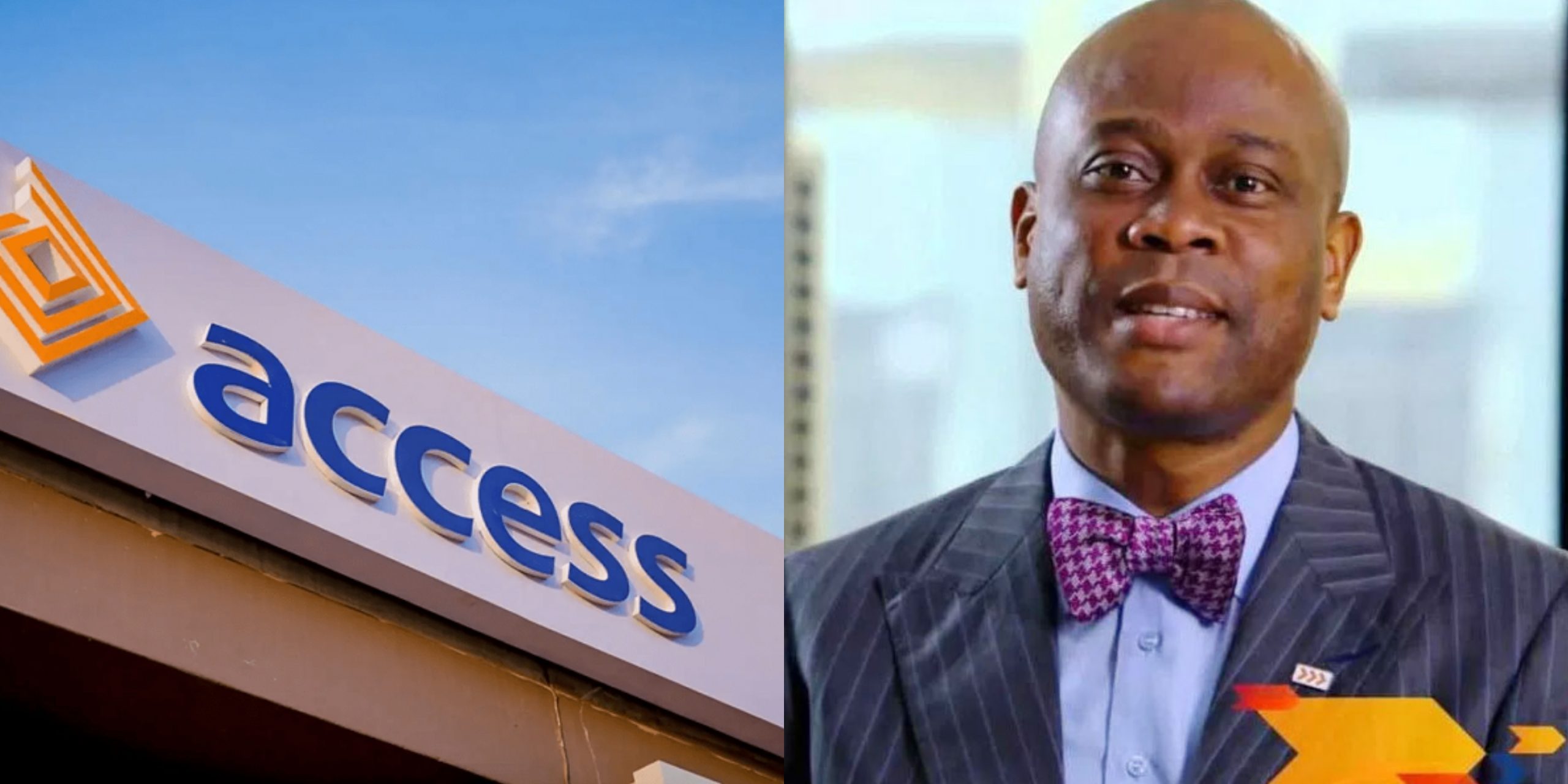
The Legacy of Herbert Wigwe: Architect of the Modern African Banking Landscape
Herbert Wigwe was a visionary Nigerian banker and entrepreneur who served as the Group Managing Director and CEO of Access Holdings PLC until his untimely passing in early 2024. He is credited with transforming Access Bank from a strug...
Herbert Wigwe was a visionary Nigerian banker and entrepreneur who served as the Group Managing Director and CEO of Access Holdings PLC until his untimely passing in early 2024. He is credited with transforming Access Bank from a struggling tier-two lender into Africa’s largest financial institution by customer base through aggressive expansion and strategic acquisitions.
Contents
The story of Herbert Wigwe is not merely a biography of a corporate executive; it is a blueprint for the evolution of African capital markets. As we look back from the vantage point of 2026, his influence remains embedded in the DNA of the continent’s financial services sector. His leadership style, characterized by a relentless pursuit of scale and a commitment to technological integration, redefined how African banks compete on the global stage. From the acquisition of Diamond Bank to the establishment of the Wigwe University, his impact spans across finance, education, and philanthropy.
Early Life and the Foundations of a Career
Herbert Onyewumbu Wigwe was born on August 15, 1966, in Isiokpo, Rivers State, Nigeria. His academic journey provided the analytical rigor required for the complex world of high finance. He earned a degree in Accountancy from the University of Nigeria, Nsukka, followed by an MA in Banking and Finance from the University College of North Wales (now Bangor University) and an MSc in Financial Economics from the London School of Economics.
His career began at Coopers & Lybrand as a management consultant before he transitioned into core banking at Guaranty Trust Bank (GTBank). At GTBank, he rose to the position of Executive Director, working closely with his long-term partner and friend, Aigboje Aig-Imoukhuede. This period was crucial as it exposed him to the "Golden Era" of Nigerian banking, where corporate governance and customer-centricity began to replace the fragmented, inefficient systems of the 1980s.
The Transformation of Access Bank
In 2002, Wigwe and Aig-Imoukhuede took a calculated risk that would change the trajectory of Nigerian banking: they acquired Access Bank. At the time, Access Bank was ranked 65th out of 89 banks in Nigeria. Many industry analysts viewed the acquisition with skepticism, doubting that two young bankers could turn around a marginal institution in a volatile economic environment.
The Access Warrior Culture
Wigwe was instrumental in fostering what became known as the "Access Warrior" culture. This philosophy emphasized high performance, disciplined execution, and an almost aggressive focus on market share. Between 2002 and 2013, while serving as Deputy Managing Director, he oversaw the implementation of rigorous risk management frameworks that allowed the bank to survive the global financial crisis of 2008 and the subsequent Nigerian banking sector consolidation.
Strategic Consolidation and the Diamond Bank Merger
When Wigwe took over as Group Managing Director in 2014, he shifted the focus from domestic stability to international dominance. The most significant milestone of his tenure was the 2019 merger between Access Bank and Diamond Bank.
This was a strategic masterstroke for several reasons:
- Retail Expansion: Access Bank was primarily a corporate banking powerhouse, whereas Diamond Bank possessed a massive retail footprint and a leading mobile banking platform.
- Synergy: The merger instantly created the largest bank in Nigeria by assets and customer base, effectively leapfrogging competitors who had held the top spot for decades.
- Technological Integration: Diamond Bank’s "Diamond Y'ello" account and digital-first approach were integrated into Access Bank’s infrastructure, accelerating its digital transformation.
Transition to Access Holdings (HoldCo)
By 2022, under Wigwe’s guidance, Access Bank transitioned into a holding company structure known as Access Holdings PLC. This move was designed to de-risk the banking business while allowing the group to diversify into non-banking financial services. The HoldCo structure facilitated expansion into:
- Payments: The launch of Hydrogen Pay to compete in the burgeoning fintech space.
- Asset Management: Acquiring and building portfolios to manage the wealth of Africa’s growing middle class.
- Insurance: Offering brokerage and underwriting services to provide a holistic financial ecosystem for customers.
- Pension Fund Administration (PFA): Capitalizing on the long-term stability of the Nigerian pension industry.
This diversification ensured that the group was not solely dependent on interest income, making it more resilient against the currency fluctuations and regulatory changes that often affect the Nigerian banking sector.
Global and Continental Expansion Strategy
Herbert Wigwe’s vision was titled the "African Gateway." He believed that for Africa to trade effectively with the rest of the world, it needed a financial institution that could facilitate cross-border transactions without relying on non-African intermediary banks.
By 2024, Access Bank had established a presence in over 12 African countries, including key markets like South Africa (through the acquisition of Grobank), Kenya, Ghana, and Rwanda. Beyond the continent, Wigwe expanded the bank’s operations to the United Kingdom, the United Arab Emirates (Dubai), and France. This "hub and spoke" model allowed Access Bank to capture trade flows between Africa, Europe, and the Middle East.
Key Milestones in Herbert Wigwe’s Career
| Year | Milestone | Significance |
|---|---|---|
| 2002 | Acquisition of Access Bank | Started the journey from a tier-two bank to a global brand. |
| 2012 | Acquisition of Intercontinental Bank | Significantly boosted the bank's asset base and branch network. |
| 2014 | Appointed GMD/CEO | Transitioned to the top leadership role to drive regional expansion. |
| 2019 | Merger with Diamond Bank | Created Africa's largest bank by customer base. |
| 2022 | Transition to Access Holdings | Diversified the business into pensions, insurance, and payments. |
| 2023 | Launch of Wigwe University | Cemented his legacy in the education and social development sectors. |
Philanthropy and the Wigwe University Project
Wigwe was a staunch believer that business success is hollow without social impact. Through the Herbert Wigwe Foundation, he focused on health, specifically malaria and prostate cancer awareness, and the empowerment of youth through sports.
His most ambitious project outside of finance was Wigwe University, located in his hometown of Isiokpo. With an investment exceeding $500 million, the university was designed to be a world-class institution that would stem the "brain drain" from Nigeria. As of 2026, the university has become a beacon of higher education in West Africa, offering cutting-edge programs in artificial intelligence, robotics, and creative arts, alongside traditional business and science disciplines. Wigwe’s goal was to train the next generation of African leaders to think globally while solving local problems.
The Tragic Loss and Leadership Succession
The global business community was shocked on February 9, 2024, when a helicopter crash in the Mojave Desert, California, claimed the lives of Herbert Wigwe, his wife Chizoba, his son Tozi, and Abimbola Ogunbanjo, the former Chairman of the Nigerian Exchange Group.
The loss was catastrophic, yet the strength of the institution Wigwe built was tested immediately. Following his death, the Board of Directors at Access Holdings acted with the corporate governance rigor Wigwe had long championed. Bolaji Agbede was initially appointed as Acting Group CEO, followed by a structured transition to permanent leadership. The seamless transition ensured that Access Bank’s share price remained stable and its expansion projects continued without interruption, proving that Wigwe had successfully institutionalized his vision.
Frequently Asked Questions
What made Herbert Wigwe’s leadership style unique?
Wigwe was known for "audacious goal setting." He didn't just want Access Bank to be the best in Nigeria; he wanted it to be the "World’s Most Respected African Bank." His leadership was characterized by a combination of high-level strategic thinking and an intense focus on operational details, often personally overseeing complex mergers to ensure cultural alignment.
How did the Diamond Bank merger change Access Bank?
The merger was the turning point that made Access Bank a household name. It shifted the bank from being a "banker to the elites" to a "banker to the masses." It brought in millions of retail customers and provided the digital infrastructure that allowed Access Bank to dominate the mobile banking space in Nigeria.
What is the status of Wigwe University in 2026?
By 2026, Wigwe University has completed its initial phases of academic enrollment. It continues to operate under the governance of its board of trustees, fulfilling Wigwe’s vision of providing an elite, globally competitive education on Nigerian soil. It remains one of the most technologically advanced campuses in Africa.
Who succeeded Herbert Wigwe at Access Holdings?
Immediately following his passing in 2024, Ms. Bolaji Agbede took the helm as the Acting Group Chief Executive Officer. The transition was supported by the existing executive team, including Roosevelt Ogbonna, who continued as the Managing Director/CEO of Access Bank (the subsidiary), ensuring continuity in the "African Gateway" strategy.
What was Herbert Wigwe’s net worth?
While an exact figure was rarely publicized, Wigwe was consistently ranked among the wealthiest business leaders in Africa. His wealth was primarily tied to his significant shareholdings in Access Holdings and his extensive investments in real estate and private equity. However, he often remarked that his "true net worth" was measured by the number of lives impacted through the bank’s CSR initiatives.
Practical Recommendation for Investors and Business Leaders
For those looking to emulate Herbert Wigwe's success or understand the current standing of Access Holdings, the primary takeaway is the importance of institutionalization. Wigwe’s greatest achievement was not just growing a bank, but building a system that could survive its founder.
Investors should look at Access Holdings as a diversified financial ecosystem rather than a traditional commercial bank. When evaluating similar African entities, prioritize those with clear succession plans and diversified revenue streams across multiple jurisdictions. For entrepreneurs, the "Access model" demonstrates that scale is the ultimate competitive advantage in the African market; collaboration and strategic mergers are often more effective than organic growth alone.
Image Gallery