The Professional Role and Impact of an Auto Insurance Fraud Investigator
An auto insurance fraud investigator is a specialized professional within an insurance company's Special Investigation Unit (SIU) or an independent firm tasked with identifying, analyzing, and proving deceptive claims. As of 2026, thes...
An auto insurance fraud investigator is a specialized professional within an insurance company's Special Investigation Unit (SIU) or an independent firm tasked with identifying, analyzing, and proving deceptive claims. As of 2026, these investigators leverage a combination of forensic data analysis, field surveillance, and interviewing techniques to distinguish legitimate losses from fraudulent activities.
Contents
The Core Mandate of the Auto Insurance Fraud Investigator
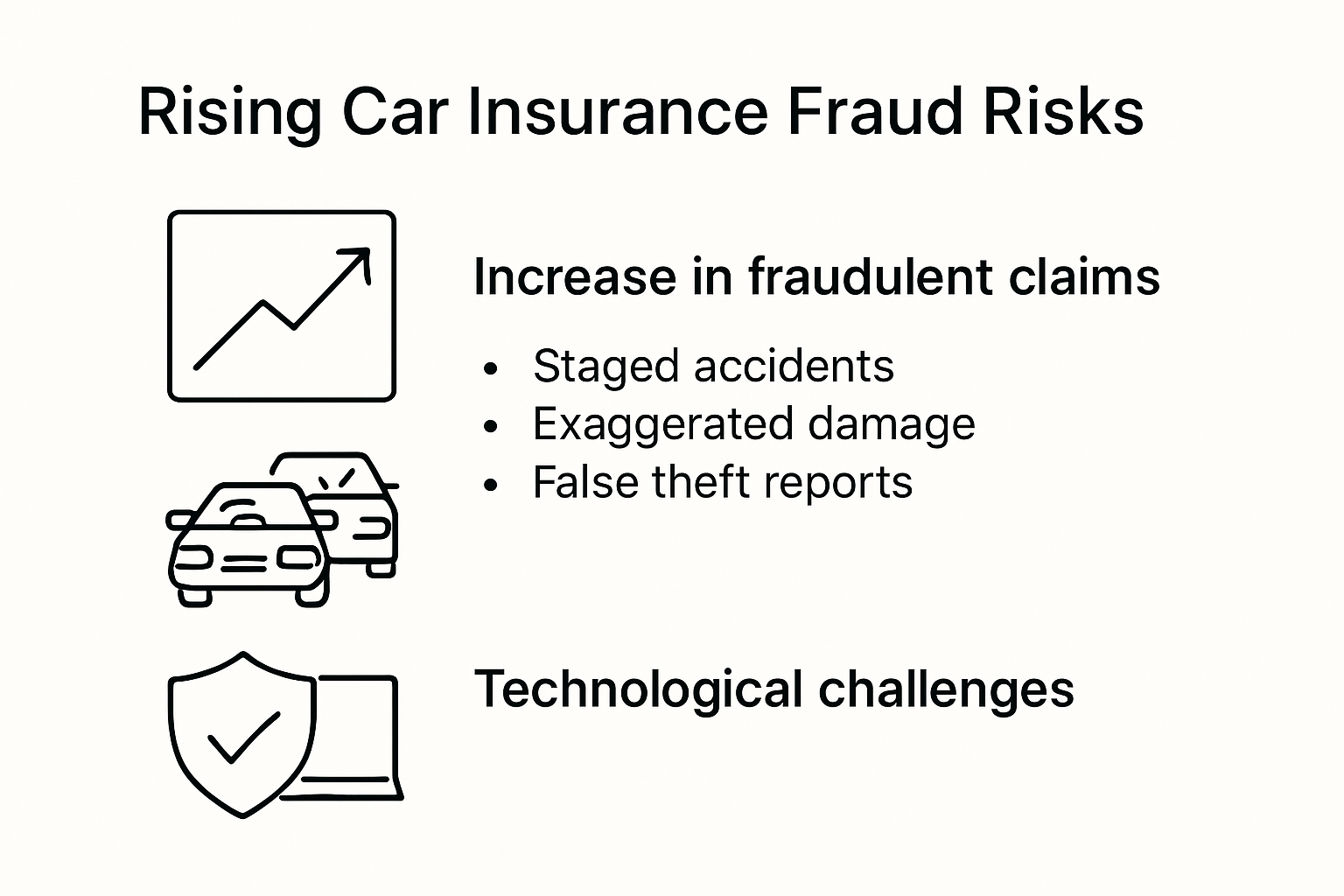
Auto insurance fraud remains a multi-billion dollar problem globally, affecting premiums for every policyholder. In the 2026 landscape, the auto insurance fraud investigator serves as the primary defense against "hard fraud" (deliberately staged events) and "soft fraud" (the exaggeration of legitimate claims). Unlike a standard claims adjuster, who focuses on assessing damage and issuing payments, an investigator operates under the presumption that specific "red flags" require deeper scrutiny to protect the insurer's assets and ensure legal compliance.
The investigator’s work begins when a claim is flagged by automated systems or an alert adjuster. These professionals are not merely looking for mistakes; they are searching for intent. Proving intent is the highest hurdle in fraud litigation, and the investigator’s primary goal is to gather admissible evidence that demonstrates a claimant knowingly provided false information for financial gain.
Integration with Special Investigation Units (SIU)
Most major insurers house these professionals within a Special Investigation Unit (SIU). This department acts as the bridge between the administrative side of insurance and the criminal justice system. Investigators in the SIU are often former law enforcement officers or experts in forensic accounting. They work closely with the National Insurance Crime Bureau (NICB) and local law enforcement agencies to refer cases for prosecution when criminal thresholds are met.
Essential Qualifications and Career Path
Entering the field of auto insurance fraud investigation requires a specific blend of education, technical proficiency, and "street smarts." In 2026, the industry has shifted toward candidates who possess not only investigative experience but also high-level digital literacy.
Educational Foundations
While some entry-level positions accept a high school diploma with significant law enforcement experience, most top-tier firms require a bachelor's degree. Common fields of study include:
- Criminal Justice: Provides the legal framework for understanding evidence and testimony.
- Forensic Accounting: Vital for detecting "paper accidents" and financial inconsistencies.
- Data Science: Increasingly important as investigators use predictive modeling to identify fraud rings.
Certifications and Licensing
Professional certifications establish credibility and are often required for advancement. The most recognized designations in 2026 include:
- Certified Insurance Fraud Investigator (CIFI): Administered by the International Association of Special Investigation Units (IASIU), this focuses specifically on the nuances of insurance claims.
- Certified Fraud Examiner (CFE): A broader designation from the Association of Certified Fraud Examiners (ACFE) that covers financial transactions and legal elements of fraud.
- State-Level Licensing: Many jurisdictions require investigators to hold a Private Investigator (PI) license, which involves background checks and state exams.
The Investigative Process: From Red Flags to Resolution
The investigation of an auto insurance claim follows a rigorous, standardized process to ensure that all evidence is gathered ethically and legally.
Phase 1: Identification of Red Flags
The process usually begins when an automated fraud detection system or an adjuster notices anomalies. Common 2026 red flags include:
- New Policy Claims: A significant claim filed within days or weeks of a policy's inception.
- Physical Inconsistencies: Vehicle damage that does not match the description of the accident (e.g., a "T-bone" collision where the paint transfer is from a different color vehicle).
- Vague Documentation: Missing police reports or claimants who are overly knowledgeable about insurance terminology and settlement limits.
Phase 2: Information Gathering and Digital Forensics
Once a case is opened, the investigator dives into the data. In 2026, this involves more than just reading a file. They analyze telematics data from the vehicles involved, which can provide a second-by-second account of speed, braking, and impact force. They also conduct social media "sweeps" to see if a person claiming a debilitating back injury is posting videos of high-impact activities like skiing or weightlifting.
Phase 3: Field Investigation and Interviews
Fieldwork remains the backbone of the profession. Investigators will visit the scene of the alleged accident to verify if the road conditions and geography support the claimant's story. They also conduct recorded statements. These interviews are highly tactical; investigators look for "leakage"—subtle verbal or physical cues that suggest deception.
Phase 4: Reporting and Referral
After gathering evidence, the investigator compiles a comprehensive report. If fraud is confirmed, the claim is denied. If the evidence meets the statutory definition of a crime, the file is referred to the state's Department of Insurance (DOI) or the National Insurance Crime Bureau (NICB) for further criminal investigation.
Comparative Investigative Approaches
Different types of fraud require different investigative methods. The table below outlines how investigators approach various scenarios.
| Fraud Type | Primary Investigative Method | Key Evidence Targets |
|---|---|---|
| Staged Collisions | Accident Reconstruction | Impact angles, telematics, witness inconsistencies. |
| Padded Claims | Forensic Estimate Review | Pre-existing damage, inflated parts costs, unnecessary repairs. |
| Medical Billing Fraud | Audit & Peer Review | Ghost clinics, billing for services never rendered, "upcoding." |
| Arson/Vehicle Theft | Financial Profiling | Policyholder debt, accelerant traces, location of all keys. |
| Paper Accidents | Link Analysis | Shared addresses among "involved" parties, non-existent vehicles. |
Technological Evolution in 2026
The role of the auto insurance fraud investigator has been significantly augmented by technology. In 2026, the use of Artificial Intelligence (AI) and Machine Learning (ML) allows for the "link analysis" of large datasets. This technology identifies organized fraud rings by finding hidden connections between claimants, medical providers, and body shops that were previously invisible to human analysts.
Furthermore, the integration of blockchain technology in vehicle history reports has made "title washing" and odometer fraud much harder to commit. Investigators now have access to immutable records of a vehicle's lifecycle, from the assembly line to the salvage yard. This digital paper trail is a powerful tool for proving that a vehicle involved in a "total loss" claim had a pre-existing salvage title.
Legal and Ethical Boundaries
Investigators must operate within strict legal frameworks to ensure their findings are admissible in court and to avoid "bad faith" lawsuits against the insurer.
Privacy and Surveillance Laws
While investigators can conduct surveillance in public places, they cannot violate a person's "reasonable expectation of privacy." In 2026, this extends to digital privacy; for example, accessing private messages without a subpoena is strictly prohibited. Understanding the Fair Credit Reporting Act (FCRA) and the Gramm-Leach-Bliley Act (GLBA) is essential for maintaining compliance while gathering financial data.
Testifying in Court
A seasoned investigator must be an effective witness. They are often called to testify in both civil and criminal proceedings. Their testimony must be objective and based solely on the evidence gathered. In 2026, the ability to explain complex technical data (like telematics or AI-driven findings) to a jury is a critical skill set.
Common Challenges Faced by Investigators
The job is not without its hurdles. Organized crime groups are constantly evolving their tactics to bypass detection.
- The "Swoop and Squat": A dangerous staged accident where a car pulls in front of a victim and slams on the brakes. Investigators must work hard to prove the victim was targeted rather than just following too closely.
- Curbstoning: Unlicensed dealers selling "salvage" vehicles as "clean" to unsuspecting buyers, who then unknowingly file fraudulent claims when the car breaks down.
- Aggressive Litigation: Fraud rings often hire lawyers who specialize in filing "bad faith" lawsuits the moment an investigation begins, attempting to intimidate the insurer into a quick settlement.
Frequently Asked Questions
What is the difference between an insurance adjuster and an insurance fraud investigator?
An insurance adjuster's primary role is to process legitimate claims, determine coverage, and negotiate settlements. An insurance fraud investigator, usually part of the SIU, is called in only when a claim shows signs of deception or criminal activity. The investigator's goal is to verify the honesty of the claim, not just its value.
Can an auto insurance fraud investigator deny my claim directly?
While the investigator provides the evidence and the recommendation, the final decision to deny a claim usually rests with the claims management or legal department. The investigator's report serves as the factual basis for that denial. If a claim is denied based on the investigation, the insurer must provide a clear reason as required by state law.
Do auto insurance fraud investigators work for the police?
No, most are private employees of insurance companies or third-party investigation firms. However, they work closely with law enforcement and are often mandated by law to report suspected felony fraud to state authorities. Many investigators are former police officers, which helps facilitate this professional relationship.
How has AI changed the role of investigators in 2026?
AI has shifted the role from "searching for fraud" to "verifying fraud." Automated systems now flag the majority of suspicious claims based on patterns. This allows investigators to spend less time on manual data entry and more time on high-value tasks like interviews, complex surveillance, and the development of evidence for prosecution.
Is a private investigator license required to be a fraud investigator?
In many U.S. states and international jurisdictions, anyone conducting surveillance or "fact-finding" for a fee must be licensed as a Private Investigator. Requirements vary by state, but usually involve a combination of experience, a clean criminal record, and passing a comprehensive exam.
What should I do if my claim is being investigated by an SIU?
Cooperation is key. An investigation does not automatically mean you are being accused of a crime; it means there are inconsistencies that need clarification. Provide requested documentation, such as maintenance records or phone logs, promptly. If you have been truthful, the investigation will typically conclude once the facts are verified.
Expert Recommendation for Stakeholders
For those pursuing a career in this field, focus on obtaining a CIFI or CFE certification and mastering digital forensic tools. The industry is moving away from "gut feelings" toward data-driven evidence.
For policyholders, the best way to avoid being flagged by an investigator is to maintain thorough records of your vehicle’s history and to be as specific as possible when reporting an accident. If you witness what you believe is a staged accident, report it to the National Insurance Crime Bureau (NICB) immediately. In 2026, public cooperation remains one of the most effective tools for stopping the cycle of insurance fraud that inflates costs for everyone.
Image Gallery