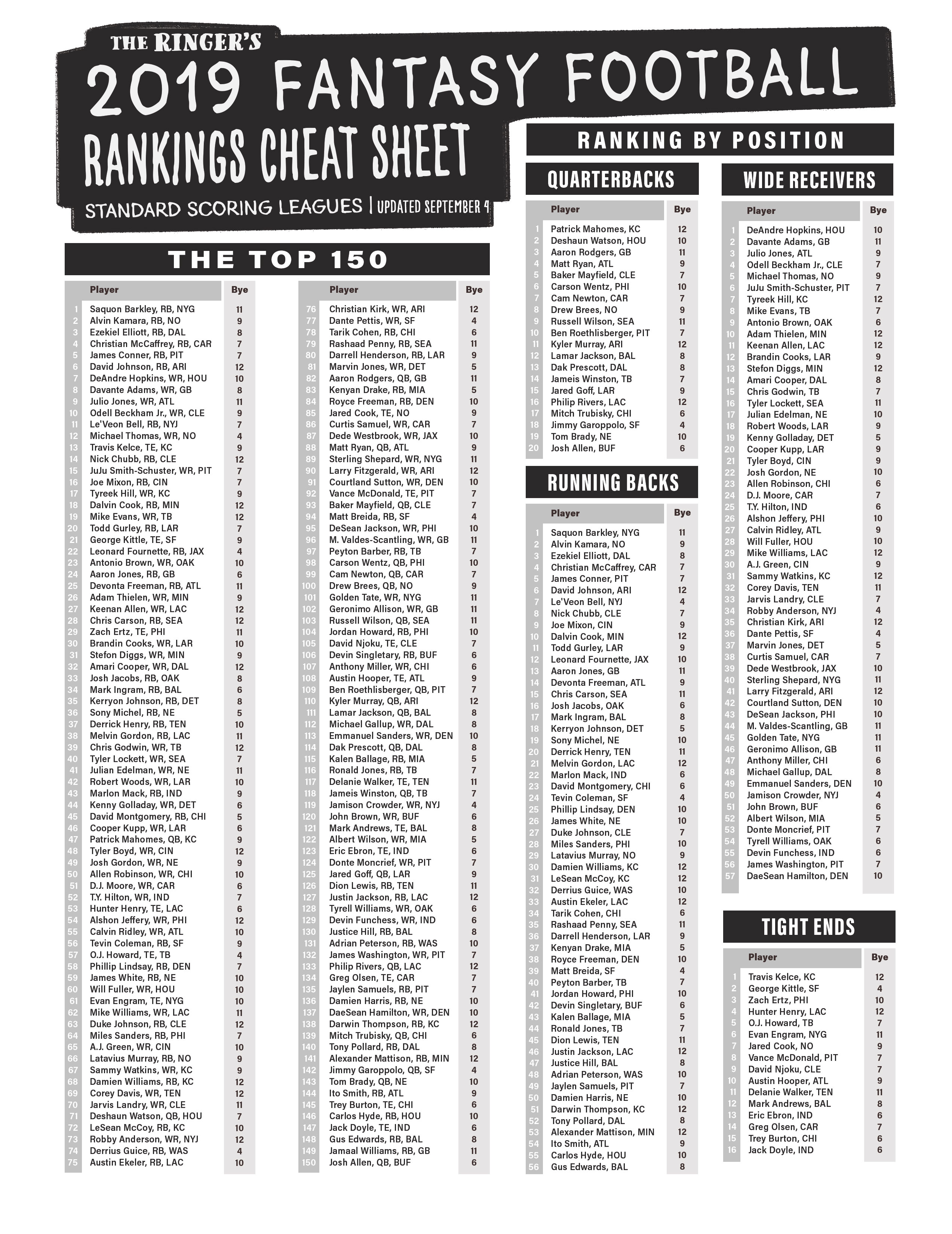
Understanding ESPN Rankings: Comprehensive Guide, Metrics, and Methodology for 2026
ESPN rankings serve as a primary benchmark for sports enthusiasts, fantasy managers, and collegiate athletic directors, synthesizing expert analysis, data analytics, and predictive modeling into definitive positional and team hierarchi...
ESPN rankings serve as a primary benchmark for sports enthusiasts, fantasy managers, and collegiate athletic directors, synthesizing expert analysis, data analytics, and predictive modeling into definitive positional and team hierarchies. This guide breaks down how these proprietary evaluations are constructed, the underlying data ecosystems that power them, and how you can leverage these lists to inform your fantasy drafts, betting strategies, or sports knowledge.
Contents
The Evolution and Purpose of Sports Analytics in Media Rankings
The landscape of sports journalism has shifted dramatically over the past two decades, evolving from purely subjective reporter opinions to a hybrid model that heavily incorporates advanced statistics, tracking data, and machine-learning projections. When sports fans reference these lists, they are typically looking at a curated consensus built by beat writers, statisticians, and former athletes who pool their insights.
Understanding how these lists function requires looking beneath the surface of the published numbers. Editorial boards utilize proprietary weighting systems to balance past performance against future projection, factoring in age curves, strength of schedule, and historical injury rates. This methodology ensures that rankings do not merely reflect what a player or team accomplished last month, but rather what they are statistically expected to produce moving forward.
Core Methodologies Behind Collegiate and Professional Evaluations
Different sports and leagues demand entirely unique evaluation metrics. A quarterback in the National Football League cannot be evaluated using the same categorical framework as a point guard in the National Basketball Association or a collegiate football program fighting for a College Football Playoff spot.
Professional Sports and Fantasy Board Construction
In professional leagues like the NBA, NFL, and MLB, evaluation lists are often split into two distinct categories: real-world talent lists and fantasy sports draft boards. Real-world evaluations prioritize win shares, defensive rating, on-court/on-field impact, and advanced tracking metrics like Expected Goals (xG) in soccer or Wins Above Replacement (WAR) in baseball.
Fantasy draft boards, conversely, place a heavy emphasis on positional scarcity, volume, and projected usage rates. A player might possess elite real-world defensive value, but if their offensive touch rate is low, their fantasy ranking will drop significantly.
Collegiate Rankings and the Selection Committee Dynamic
For college sports, particularly NCAA football and basketball, evaluation metrics dictate postseason positioning and tournament seeding. The Basketball Power Index (BPI) and similar metric-driven frameworks attempt to remove human bias by simulating games thousands of times based on tempo, offensive efficiency, and defensive efficiency.
| Metric Type | Primary Focus | Key Data Inputs | Common Application |
|---|---|---|---|
| BPI (Basketball Power Index) | Team strength and future projection | Pace, efficiency, opponent strength | College basketball tournament seeding |
| QBR (Quarterback Rating) | Individual quarterback efficiency | Plays, pressure, down-and-distance | NFL and college football analysis |
| WAR (Wins Above Replacement) | Cumulative player value over a baseline | Batting, fielding, pitching data | MLB player valuations and awards |
| Fantasy ADP/Rankings | Draft value and projected season output | Historical stats, depth charts, usage rate | Fantasy football, basketball, and baseball |
Comparing Expert Editorial Lists Versus Algorithmic Models
Navigating sports evaluations requires recognizing the tension between human editorial boards and purely algorithmic computer models. Each approach carries distinct advantages and inherent flaws that savvy sports consumers must account for.
- Human Editorial Consensus:
- Pros: Accounts for intangible factors such as locker room chemistry, recent coaching adjustments, motivation, and subtle scheme changes that computers might misinterpret.
- Cons: Susceptible to media bias, recency bias based on the most recent game, and narrative-driven momentum.
- Pure Algorithmic Models:
- Pros: Completely objective, processes thousands of data points instantly, and remains immune to emotional overreactions.
- Cons: Struggles to quantify sudden injuries, emotional letdowns, or radical mid-season tactical shifts implemented by coaching staffs.
How to Leverage Positional and Team Lists for Competitive Advantage
Whether you are participating in a high-stakes fantasy league or analyzing futures betting markets, utilizing these professional evaluations effectively requires contextual interpretation rather than blind adherence.
1. Identify Discrepancies in Positional Scarcity
When reviewing fantasy draft boards, pay close attention to the drop-off points between tiers. If a specific position features three elite tier-one options followed by a massive statistical drop to tier two, targeting those players early becomes critical. Conversely, if a position is deep, waiting to draft depth allows you to accumulate high-end talent elsewhere.
2. Factor in Schedule Adjustments and Environment
Team efficiency ratings often fail to account for upcoming shifts in travel fatigue, weather conditions, or divisional familiarity. Cross-referencing published lists with upcoming schedule difficulty helps identify overrated squads primed for an upset or underrated underdogs ready to outperform their projection.
3. Track Movement Trends Across the Season
Static lists published prior to a season opener lose relevance quickly. Monitoring weekly or monthly updates highlights surging breakout candidates whose underlying performance metrics justify climbing the hierarchy before their trade value or betting odds shift.
Common Pitfalls to Avoid When Interpreting Sports Metrics
Misinterpreting sports data can lead to poor fantasy decisions and flawed analytical conclusions. Awareness of common evaluation traps safeguards against costly miscalculations.
Recency Bias Trap Evaluating players or teams strictly on their last three performances heavily distorts long-term predictive accuracy. Always weigh a larger sample size against outlier performances.
Ignoring Scheme and Role Changes A player traded to a new franchise or a college team with a newly hired offensive coordinator will experience altered usage rates. Previous positional valuations become instantly obsolete until new role data is established.
Frequently Asked Questions
What is the difference between expert rankings and algorithmic projections?
Expert lists rely on human journalistic consensus, film study, and subjective analysis, whereas algorithmic projections use automated mathematical models and historical statistics to predict future outcomes. Combining both approaches yields the most comprehensive evaluation.
How often are professional sports evaluation lists updated?
During active seasons, dynamic fantasy and power lists are typically updated weekly or bi-weekly to reflect injuries, trades, and recent performance trends. Offseason lists are updated periodically as free agency and draft acquisitions alter team landscapes.
Why do fantasy rankings differ significantly from real-life player value lists?
Fantasy lists prioritize individual statistical volume, scoring categories, and positional scarcity. A defensive specialist who wins championships in real life may hold minimal value in a fantasy points league due to low offensive production.
Can computer metrics like BPI predict tournament outcomes accurately?
While computer metrics provide highly accurate probabilities based on historical efficiency data, sports inherently involve variance, injuries, and emotional momentum that models cannot fully quantify.
How do injuries impact a player's standing on official lists?
Major injuries typically result in a player being dropped significantly down a draft board or removed entirely until a clear recovery timeline and medical clearance are established by team staff.
Strategic Outlook
Mastering the interpretation of professional sports evaluations requires looking past the surface numbers to understand the underlying statistical engines and editorial philosophies. By synthesizing expert consensus with objective efficiency metrics, you can make informed decisions that elevate your analytical understanding and competitive success across fantasy sports and sports analysis.
Image Gallery