Comprehensive Guide to MA 261: Course Overview, Prerequisites, and Academic Pathways
MA 261 (often designated as Multivariate Calculus) is an advanced undergraduate mathematics course typically covering vectors, vector-valued functions, partial derivatives, and multiple integration. Mastering this curriculum is essenti...
MA 261 (often designated as Multivariate Calculus) is an advanced undergraduate mathematics course typically covering vectors, vector-valued functions, partial derivatives, and multiple integration. Mastering this curriculum is essential for engineering, physics, and advanced data science students, establishing the foundational spatial and analytical framework required for complex technical problem-solving in 2026.
Contents
Understanding the Scope and Core Concepts of MA 261
Multivariate calculus extends single-variable calculus concepts into higher dimensions, allowing scientists and engineers to model systems with multiple interacting variables. In an academic setting, MA 261 bridges foundational calculus and advanced applied mathematics. Students transition from working on a flat two-dimensional coordinate plane to navigating three-dimensional space, utilizing vectors to describe physical phenomena like force, velocity, and electromagnetic fields.
The curriculum generally emphasizes visualization and computational fluency. Understanding how functions behave when multiple inputs change simultaneously is critical for fields ranging from aerospace engineering to financial risk modeling. The transition from single-variable limits and derivatives to multivariable counterparts requires a strong conceptual grasp of topology in Euclidean space.
Core Mathematical Topics Covered in the Curriculum
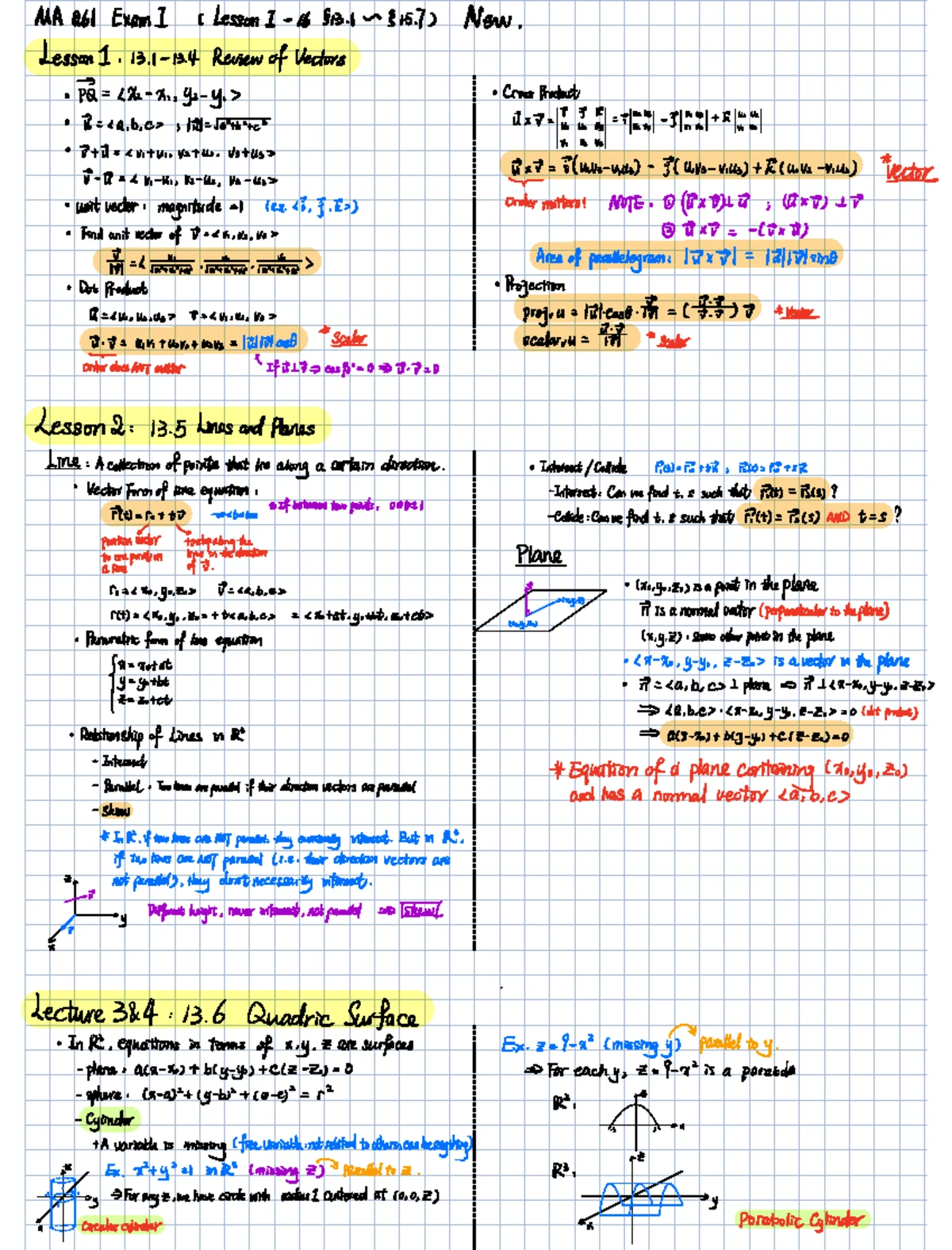
- Vectors and Geometry of Space: Three-dimensional coordinate systems, dot products, cross products, lines, planes, and cylindrical and spherical coordinate systems.
- Vector-Valued Functions: Derivatives and integrals of vector functions, arc length, curvature, velocity, and acceleration in space.
- Partial Derivatives: Functions of several variables, limits, continuity, partial derivatives, tangent planes, directional derivatives, the gradient vector, and optimization problems using Lagrange multipliers.
- Multiple Integration: Double and triple integrals in rectangular, polar, cylindrical, and spherical coordinates, change of variables, and Jacobian determinants.
- Vector Calculus: Vector fields, line integrals, the Fundamental Theorem for Line Integrals, Green's Theorem, divergence, curl, Stokes' Theorem, and the Divergence Theorem.
Academic Prerequisites and Technical Preparation
Successfully completing MA 261 requires deep mastery of prerequisite mathematical concepts. Most university mathematics departments enforce strict prerequisite checks, usually requiring a passing grade in both single-variable differential and integral calculus (often corresponding to sequences such as Calculus I and II).
Students must enter MA 261 with fluent algebraic manipulation skills, trigonometric identities, and solid techniques of integration, including integration by parts and trigonometric substitution. Gaps in single-variable integration often manifest as severe bottlenecks when attempting to evaluate complex multiple integrals later in the semester.
Essential Prerequisite Competencies
| Mathematical Domain | Specific Skill Required | Relevance to MA 261 |
|---|---|---|
| Integral Calculus | Integration by parts, partial fractions | Required for evaluating complex double and triple integrals |
| Trigonometry | Identities, polar coordinate conversion | Essential for shifting between rectangular and polar/spherical systems |
| Analytic Geometry | Conic sections, equations of lines and planes | Forms the geometric baseline for three-dimensional space |
| Linear Algebra Basics | Matrices, determinants, dot/cross products | Applied directly in vector operations and coordinate transformations |
Analytical Comparison: Single-Variable Calculus vs. Multivariate Calculus
Moving from traditional single-variable calculus to multivariate calculus changes both the notation and the underlying geometric intuition. The table below outlines these structural differences.
| Feature | Single-Variable Calculus (Calculus I & II) | Multivariate Calculus (MA 261) |
|---|---|---|
| Coordinate Space | 2D Cartesian Plane ($x, y$) | 3D Space and n-Dimensions ($x, y, z$) |
| Derivative Type | Ordinary derivatives ($df/dx$) | Partial derivatives ($\partial f/\partial x, \partial f/\partial y$) |
| Integration Scope | Area under a curve (Single integrals) | Volume, mass, and flux (Double and triple integrals) |
| Geometric Objects | Curves, tangent lines | Surfaces, tangent planes, vector fields |
| Primary Applications | Rate of change, accumulation | Optimization of multi-variable systems, fluid dynamics |
Step-by-Step Approach to Mastering Problem Solving in MA 261
Tackling advanced multivariate problems requires a structured methodology. Because problems often involve multiple interdependent steps—such as setting up a region of integration before performing the calculus—disorganized approaches frequently lead to cascading arithmetic errors.
- Visualize the Geometric Setup: Sketch or mentally model the surfaces, curves, or regions described in the problem statement. Identify boundaries and intersections before writing down any equations.
- Select the Appropriate Coordinate System: Determine whether rectangular, polar, cylindrical, or spherical coordinates simplify the symmetry of the given problem. Choosing the correct coordinate system often reduces a difficult integration problem to a trivial calculation.
- Establish Limits of Integration: Carefully analyze the region of integration. Project three-dimensional regions onto coordinate planes to find accurate inner and outer limits.
- Execute Differentiation or Integration: Apply calculus rules systematically. Verify intermediate steps by checking units, dimensional consistency, and limiting behaviors.
- Verify Physical or Geometric Reasonableness: Check whether the final numerical answer aligns with physical reality. For example, a computed volume or mass must always yield a positive value.
Common Pitfalls and Strategic Troubleshooting
Students frequently encounter specific conceptual hurdles when studying multivariate calculus. Recognizing these failure points early helps prevent common errors during high-stakes examinations.
Misidentifying Limits of Integration Failing to properly sketch or parameterize the region of integration is the primary source of error in multiple integrals. Always project the solid onto a two-dimensional plane to clearly establish your bounds before integrating.
Confusing Gradient and Directional Derivatives Remember that the directional derivative represents the rate of change of a function in a specific unit vector direction, whereas the gradient vector points in the direction of the maximum rate of increase and is always orthogonal to the level curves or surfaces.
Neglecting the Jacobian Factor When performing a change of variables in multiple integrals (such as moving to polar, cylindrical, or spherical coordinates, or a general linear transformation), always multiply the integrand by the absolute value of the Jacobian determinant. Omitting this scaling factor invalidates the entire calculation.
Frequently Asked Questions About MA 261
What is the primary focus of MA 261?
MA 261 focuses on extending calculus principles to functions of multiple variables, covering vectors, partial differentiation, multiple integration, and vector calculus theorems. This framework allows students to model and solve multi-variable physical and engineering problems.
Is linear algebra required before taking MA 261?
While a full course in linear algebra is not always a formal prerequisite, basic matrix operations, determinants, and vector arithmetic are heavily utilized. Students benefit significantly from having exposure to matrix concepts before encountering coordinate transformations and Jacobians.
How difficult is MA 261 compared to Calculus II?
Many students find MA 261 conceptually different rather than strictly harder than Calculus II. While Calculus II focuses heavily on difficult integration techniques and infinite series, MA 261 requires strong spatial visualization and the ability to manage multiple variables simultaneously.
What majors are typically required to take MA 261?
Mechanical, electrical, civil, and aerospace engineering, along with physics, applied mathematics, and certain advanced computer science specializations, universally require MA 261 as part of their core STEM curriculum.
How can I improve my spatial visualization skills for 3D calculus?
Utilizing modern interactive graphing software, practicing hand-drawn sketches of basic quadric surfaces (such as paraboloids, cones, and ellipsoids), and working through physical models can significantly enhance three-dimensional geometric intuition.
Strategic Academic Recommendations for Success
Succeeding in MA 261 requires consistent, active problem-solving rather than passive reading. Mathematics at this level builds cumulatively; falling behind on vector geometry makes understanding vector calculus theorems nearly impossible later in the term. Form study groups, leverage office hours, and prioritize understanding the underlying geometric meaning behind algebraic formulas. By connecting the abstract equations to tangible physical models, you will build the analytical resilience required for advanced coursework.
Image Gallery