Universal Life Insurance in Belmont, North Carolina: Policy Mechanics, Types, and Local Planning Strategies
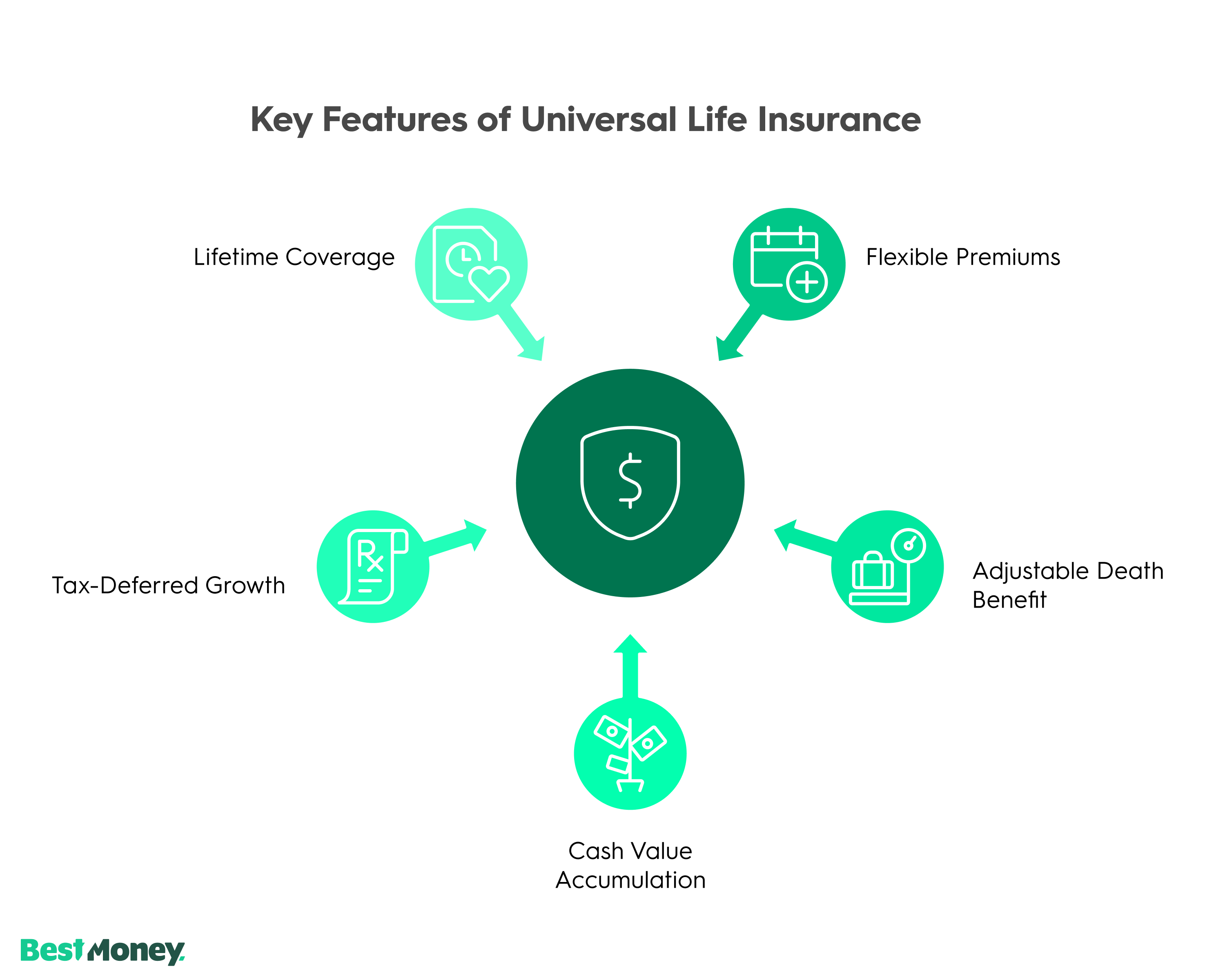
Universal life insurance in Belmont, North Carolina, is a form of permanent life insurance offering flexible premium payments, customizable death benefits, and tax-deferred cash value growth. Regulated by the North Carolina Department...
Universal life insurance in Belmont, North Carolina, is a form of permanent life insurance offering flexible premium payments, customizable death benefits, and tax-deferred cash value growth. Regulated by the North Carolina Department of Insurance, these policies allow policyholders across Gaston County to adapt their coverage to changing financial needs while establishing long-term wealth transfer, business succession, or estate planning strategies.
Contents
Understanding Universal Life Insurance: Core Mechanics
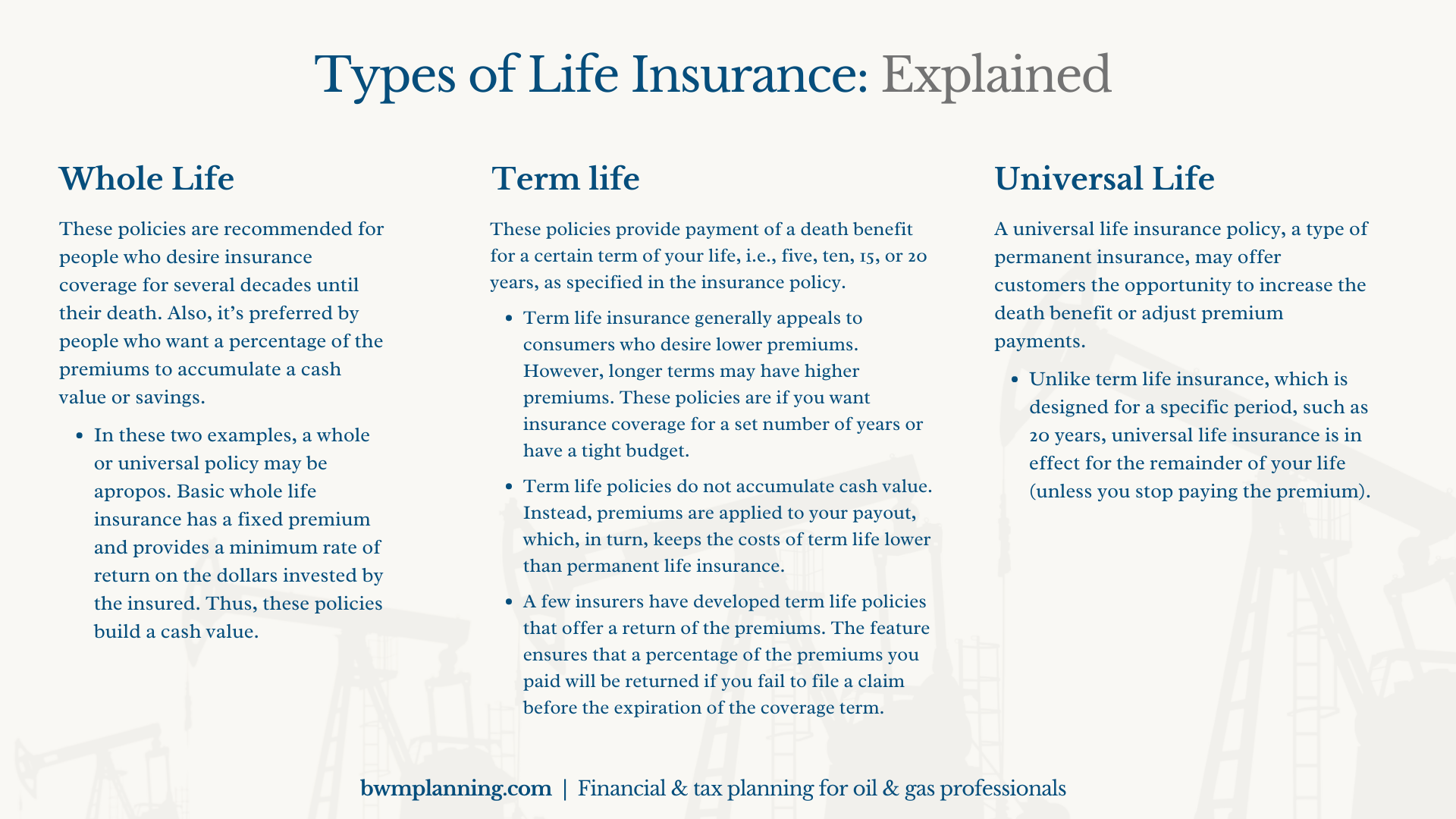
Universal life (UL) insurance is a permanent insurance product designed to provide lifelong protection while accumulating cash value. Unlike traditional whole life insurance, which features fixed premiums and rigid payment schedules, universal life unbundles the core components of the contract: the death benefit, the cost of insurance, and the cash value accumulation account.
- Gross Premium Payment
- Less: Administrative Fees & Load
- Net Premium Deposited Into Cash Value Account
- Subtract: Cost of Insurance (COI) (Increases annually with age)
- Add: Interest / Equity Crediting Return
When a policyholder pays a premium, the funds are credited to the cash value account after the insurer deducts premium loads and administrative expenses. On a monthly basis, the insurance carrier deducts the Cost of Insurance (COI)—which reflects the pure risk cost based on the insured’s attained age, health rating, and net amount at risk—from this account. The remaining balance earns interest or equity-indexed returns depending on the specific policy structure.
Premium and Death Benefit Flexibility
A defining characteristic of universal life insurance is its premium flexibility. Subject to state policy guidelines and minimum funding requirements, policyholders can adjust their payment amounts or timing. If cash value reserves are sufficient, a policyholder may reduce or temporarily suspend out-of-pocket premium payments, relying on accumulated cash value to absorb monthly COI deductions.
Additionally, universal life contracts offer two primary death benefit options:
- Option A (Level Death Benefit): The death benefit remains fixed at the face amount of the policy. As cash value grows, the insurer’s Net Amount at Risk (NAR)—the difference between the total death benefit and the cash value—decreases, reducing monthly COI charges.
- Option B (Increasing Death Benefit): The total death benefit equals the initial face amount plus the accumulated cash value balance. While this increases the ultimate payout to beneficiaries, it maintains a higher Net Amount at Risk, resulting in higher ongoing COI deductions over time.
Major Types of Universal Life Insurance Available in North Carolina
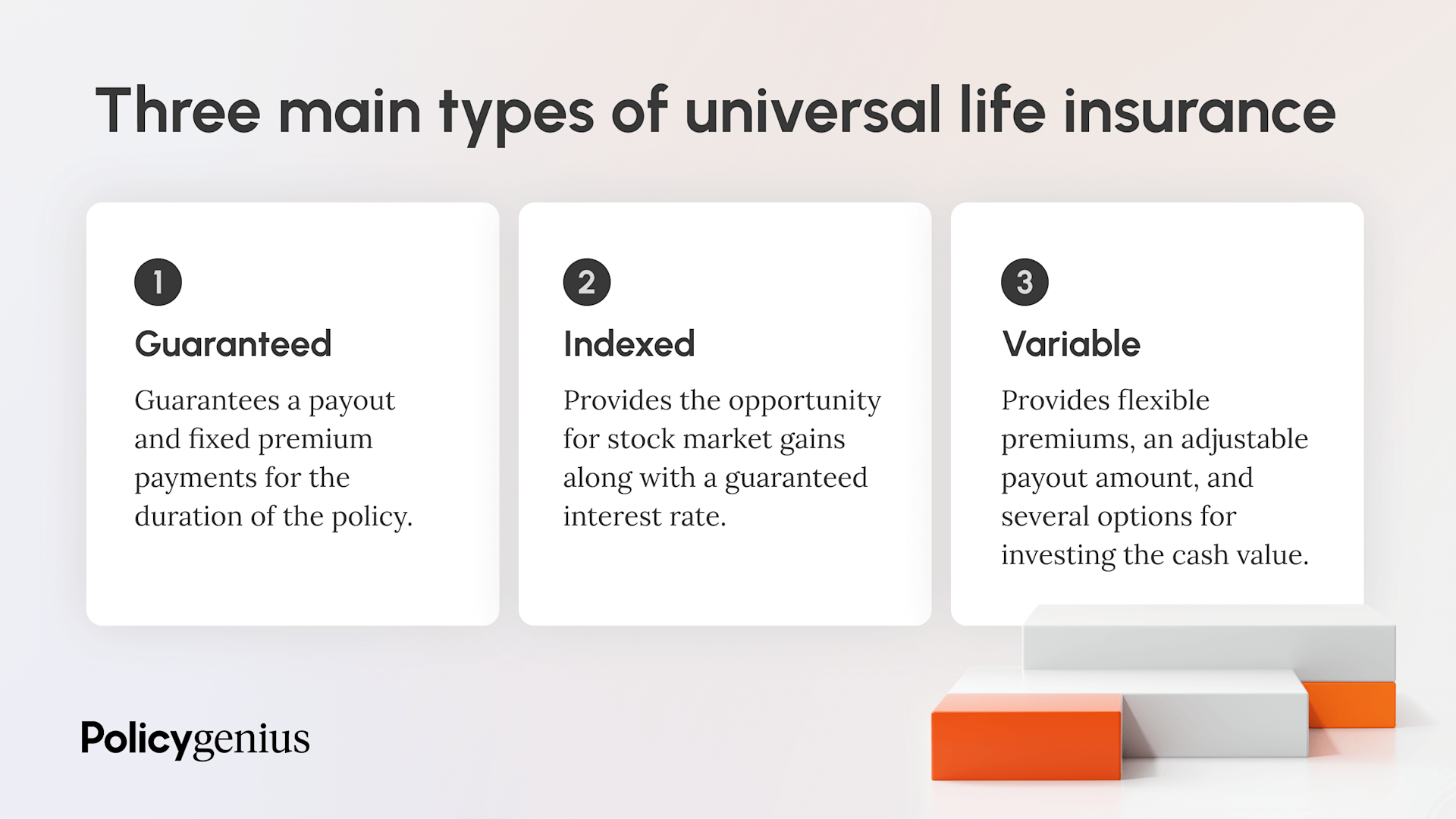
Insurance consumers in Belmont and the broader Charlotte metropolitan area can access several distinct policy variations. Choosing the right option depends on individual risk tolerance, accumulation objectives, and legacy goals.
1. Guaranteed Universal Life (GUL)
Guaranteed Universal Life operates similarly to a term policy that lasts to advanced ages, such as age 90, 95, 100, or 121. GUL focuses primarily on providing an unyielding death benefit guarantee rather than significant cash value accumulation. As long as contractual premiums are paid on schedule, the policy remains active regardless of market movements or fluctuating interest rates. GUL is frequently selected for straightforward estate tax liquidity, pension maximization, or long-term family protection.
2. Traditional Fixed Universal Life
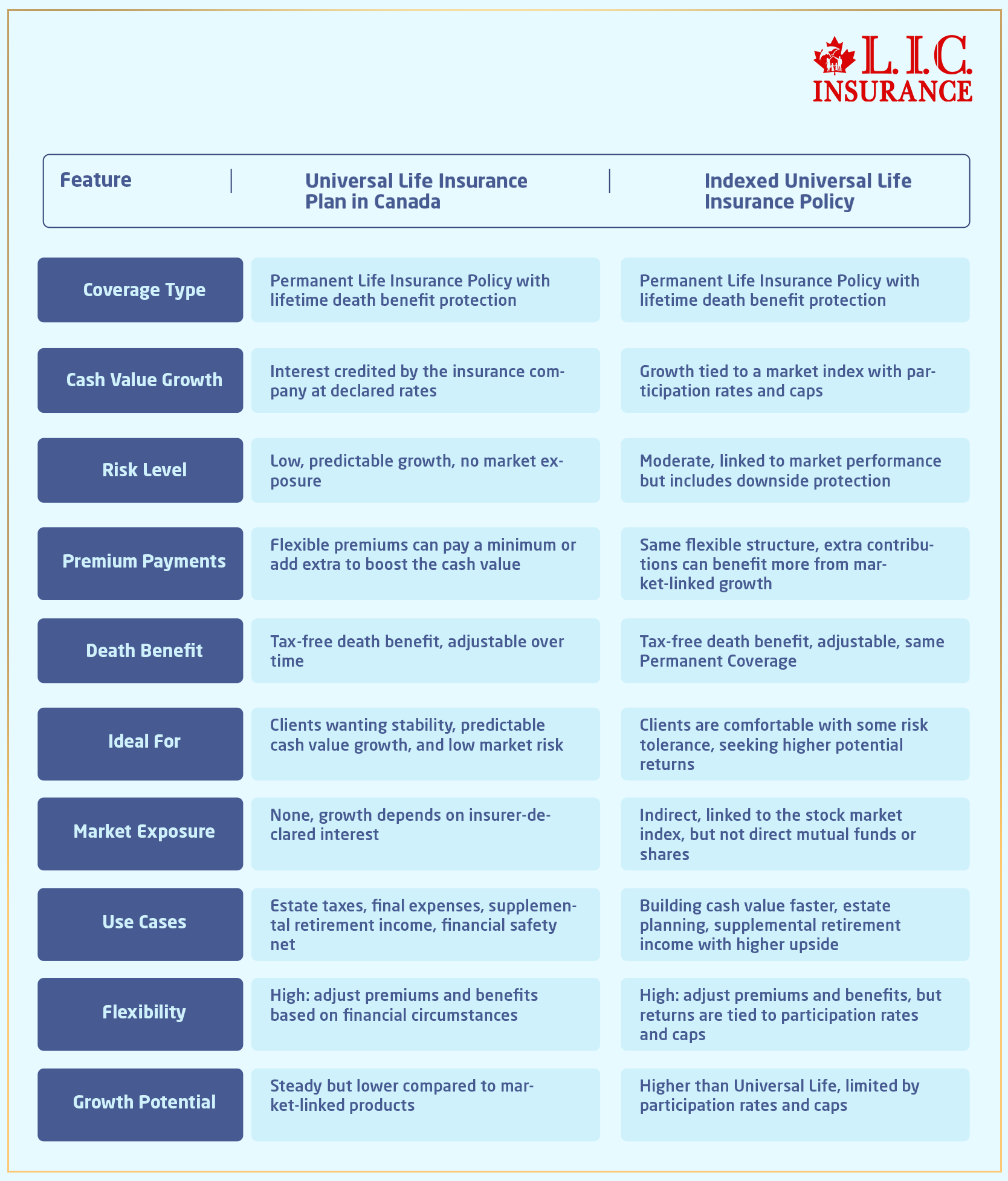
Fixed universal life ties cash value growth to a declared interest rate set periodically by the issuing insurance company. The policy includes a contractually guaranteed minimum interest rate floor (typically between 1% and 3%). This product provides moderate cash growth with complete insulation from stock market volatility.
3. Indexed Universal Life (IUL)
Indexed Universal Life allows policyholders to allocate cash value to accounts linked to equity indices, such as the S&P 500 or Nasdaq-100, without placing capital directly into the market. Growth is calculated using equity index performance over a set crediting period (usually one year), subject to specific parameters:
- Cap Rates: The maximum percentage return credited to the account during a cycle (e.g., an 8% cap).
- Participation Rates: The percentage of the index's movement credited to the policy (e.g., 80% participation).
- Floor Rates: A contractually guaranteed downside floor (typically 0%), ensuring that cash value does not decrease due to negative market index performance.
4. Variable Universal Life (VUL)
Variable Universal Life contracts allow policyholders to invest cash value directly into sub-accounts containing equities, bonds, or mutual funds. VUL offers maximum growth potential but carries market risk; if sub-accounts underperform, cash value can drop significantly, requiring higher out-of-pocket premiums to keep the policy in force. VUL products are securities regulated by FINRA and the SEC in addition to state insurance commissions.
North Carolina Regulatory Framework and Policy Protections
Universal life insurance policies sold in Belmont must comply with laws enacted by the General Assembly of North Carolina and enforced by the North Carolina Department of Insurance (NCDOI).
Statutory Solvency and Guaranty Association Safeguards
Insurance carriers operating in North Carolina are subject to regular financial solvency audits. In the event an authorized life insurer becomes insolvent, eligible policyholders are protected by the North Carolina Life and Health Insurance Guaranty Association under North Carolina General Statutes (§ 58-62). Statutory coverage limits for life insurance currently provide up to:
- $300,000 in total life insurance death benefits for any single life.
- $100,000 in net cash surrender or withdrawal values.
These statutory protections apply per individual life insured per insolvent carrier, emphasizing the importance of evaluating carrier financial strength ratings (such as AM Best, S&P, or Fitch) when securing large policies.
Federal Tax Treatment under IRC Section 7702
To maintain tax-favored status under federal law, universal life policies must pass statutory testing under Internal Revenue Code (IRC) Section 7702. Compliance ensures:
- Tax-Deferred Growth: Cash value accumulation grows without annual income tax assessment.
- Tax-Free Death Benefit: Proceeds paid to beneficiaries upon the insured's death are generally free from federal and state income tax (though they may be included in the gross estate for estate tax calculation unless held within an Irrevocable Life Insurance Trust).
- Tax-Free Policy Loans: Policyholders can access cash value through tax-free policy loans, provided the policy remains active and is not classified as a Modified Endowment Contract (MEC).
If a policy is overfunded beyond federal limits within the first seven years (the 7-Pay Test under IRC § 7702A), it converts into a Modified Endowment Contract (MEC). Withdrawals or loans from a MEC are taxed on a Last-In, First-Out (LIFO) basis, and distributions taken prior to age 59½ face an additional 10% IRS penalty.
Strategic Uses of Universal Life Insurance in Belmont, NC
Belmont’s proximity to Charlotte’s commercial core, alongside its growing residential and business sectors, creates specific financial planning demands where universal life policies are often utilized.
Strategic Financial Planning Uses in Belmont, NC:
- Wealth Transfer & Liquidity: Off-sets estate taxes and equitably splits non-liquid real estate/business assets.
- Business Succession & Buy-Sell: Funds cross-purchase or key person insurance for local enterprise owners.
- Supplemental Income Options: Provides non-correlated cash value access during market downturns in retirement.
1. Estate Planning and Asset Transfer
With rising land values and substantial wealth accumulation in Gaston County, high-net-worth individuals use universal life policies to create liquidity. Death benefits can cover federal estate tax liabilities, settle debts, or balance inheritances when passing down non-liquid assets, such as real estate holdings along the Catawba River or local family businesses.
2. Business Succession and Key Person Coverage
Belmont's small-to-midsize business sector relies on structured continuity plans. Business owners frequently utilize Universal Life policies within Buy-Sell Agreements or cross-purchase structures. The policy's flexible premium feature accommodates fluctuating business revenue, while the death benefit provides funds for remaining partners to buy out a deceased owner's share. Companies also purchase key person policies to cushion against operational disruptions caused by the death of critical executives.
3. Supplemental Retirement Planning
For high-earning professionals who have maximized traditional retirement accounts (such as 401(k)s or IRAs), properly structured Indexed Universal Life (IUL) policies offer a tax-efficient secondary accumulation vehicle. By max-funding the contract up to 7-Pay limits while keeping the Net Amount at Risk low, owners can build accessible cash value that can be drawn tax-free via policy loans during retirement.
Comparing Universal Life Policy Variations
The following matrix contrasts the four main variations of universal life insurance available to North Carolina buyers:
| Feature / Metric | Guaranteed Universal Life (GUL) | Traditional Fixed Universal Life | Indexed Universal Life (IUL) | Variable Universal Life (VUL) |
|---|---|---|---|---|
| Primary Objective | Pure Permanent Death Benefit | Conservative Cash Growth | Equity-Linked Accumulation | Maximum Market Growth |
| Cash Growth Mechanism | Minimal / Contractual Fixed Rate | Insurer-Declared Fixed Rate | Index-Linked Performance (Cap/Floor) | Direct Investment Sub-Accounts |
| Downside Risk | None (Fixed Guarantee) | Low (Contractual Floor) | Low (0% Floor Protection) | High (Direct Exposure to Market Volatility) |
| Premium Flexibility | Low (Strict schedules to keep guarantee) | Moderate | High | High |
| Complexity Level | Simple | Moderate | Moderate to High | High |
| Best Suited For | Estate preservation, final legacy planning | Low risk tolerance, basic wealth accumulation | Tax-advantaged growth with downside protection | Experienced investors comfortable with market risk |
Managing Costs, Risks, and Policy Pitfalls
While universal life insurance provides significant flexibility, poor policy management can lead to unexpected challenges.
The Cost of Insurance (COI) Drag
The single largest operational risk in a universal life contract is the rising cost of insurance. COI charges increase as the policyholder grows older. If an IUL or Fixed UL policy experiences underperforming interest credits over several consecutive years, the monthly COI deductions will steadily erode the accumulated cash value.
- Underfunding / Low Returns
- Cash Value Decreases
- Net Amount at Risk Increases
- COI Rises
- Policy Collapse Risk
If the cash value hits zero, the policyholder must pay substantial out-of-pocket premiums to keep the policy active. Otherwise, the contract will lapse.
Avoiding Policy Lapses and Tax Liabilities
If a policy lapses while outstanding policy loans exist, the IRS treats the forgiven loan amount as ordinary income to the extent it exceeds the policy's cost basis. This can trigger a significant, unexpected tax bill. To prevent this, policyholders should request annual in-force illustrations from their insurance carrier to review cash value projections, current COI rates, and policy health.
Steps to Evaluate and Acquire Coverage in Belmont
Securing universal life coverage involves systematically evaluating individual goals, underlying costs, and carrier performance.
- Step 1: Define Goals (Protection vs. Growth)
- Step 2: Calculate Financial Need & Premium Budget
- Step 3: Compare Carriers & Underwriting Guidelines
- Step 4: Review In-Force Policy Projections
- Step 5: Execute Application & Complete Medical Exam
1. Identify Primary Objectives
Determine whether the main priority is a low-cost, guaranteed death benefit (GUL) or cash value accumulation for estate planning and retirement income (IUL or VUL).
2. Request Detailed Policy Illustrations
Obtain comprehensive policy illustrations from multiple insurance companies. Ensure the financial professional runs scenarios showing:
- Guaranteed Return Rates: Demonstrating policy performance under absolute minimum interest rate assumptions.
- Mid-Range Non-Guaranteed Rates: Reflecting conservative economic projections rather than maximum allowed capped returns.
3. Evaluate Carrier Solvency and Ratings
Check the financial stability of prospective insurers using independent rating agency scores. Select carriers rated A or higher by AM Best, S&P, or Fitch to ensure long-term claims-paying ability over several decades.
4. Understand Local Underwriting Procedures
Underwriting standards vary by carrier. Factors such as personal medical history, family health background, lifestyle risks, and occupation affect premium classifications (e.g., Preferred Best, Standard, or Substandard Table Ratings). Working with a licensed North Carolina insurance producer allows applicants to shop across multiple independent carriers for optimal terms.
Frequently Asked Questions
What is the primary difference between Whole Life and Universal Life insurance?
Whole life insurance offers fixed premiums, guaranteed cash value growth, and a set death benefit structured by the insurance company. Universal life insurance unbundles these elements, giving policyholders the flexibility to adjust premium payments, change death benefits, and choose different cash accumulation mechanisms (such as fixed, indexed, or variable options).
How does the North Carolina Life and Health Insurance Guaranty Association protect policyholders?
If an authorized life insurance company becomes insolvent, the North Carolina Life and Health Insurance Guaranty Association provides statutory protection to state residents up to $300,000 in life insurance death benefits and $100,000 in net cash surrender values per insured life.
Can universal life insurance premiums be adjusted over time?
Yes. Universal life insurance allows policyholders to raise, lower, or temporarily pause premium payments, provided the policy holds sufficient cash value to cover monthly internal charges, including administrative fees and the cost of insurance.
What happens if an Indexed Universal Life (IUL) index experiences a market drop?
Most IUL policies feature an annual downside floor (typically 0%). If the linked market index drops, the cash value account does not suffer direct market losses. However, regular monthly cost-of-insurance charges and administrative fees are still deducted from the cash value.
What is a Modified Endowment Contract (MEC), and how do policyholders avoid it?
A policy becomes a Modified Endowment Contract (MEC) if cumulative premium payments exceed federal limits set under the 7-Pay Test of IRC Section 7702A within the first seven years. If a policy becomes a MEC, policy loans and withdrawals lose their tax-free status and are taxed as ordinary income on a LIFO basis, plus a 10% penalty for distributions before age 59½. Insurers provide policy warnings before a payment triggers MEC status.
Next Steps for Belmont Residents
To establish a universal life insurance structure tailored to your needs:
- Gather Existing Financial Information: Summarize your current household income, outstanding mortgage or business liabilities, net estate value, and existing life insurance policies.
- Request Professional Illustrations: Work with a licensed North Carolina life insurance advisor to run side-by-side policy illustrations that show both guaranteed minimum performance and realistic non-guaranteed assumptions.
- Review Policy Performance Annually: Once a policy is in force, request annual in-force illustrations from the carrier to ensure cash accumulation remains on track to support rising cost-of-insurance charges as you age.
Image Gallery