Understanding the Quasi-Experimental Research Definition and Application
A quasi-experimental research design is a systematic study that evaluates interventions or treatments without the use of random assignment to divide participants into groups. Unlike true experiments, which rely on randomization to elim...
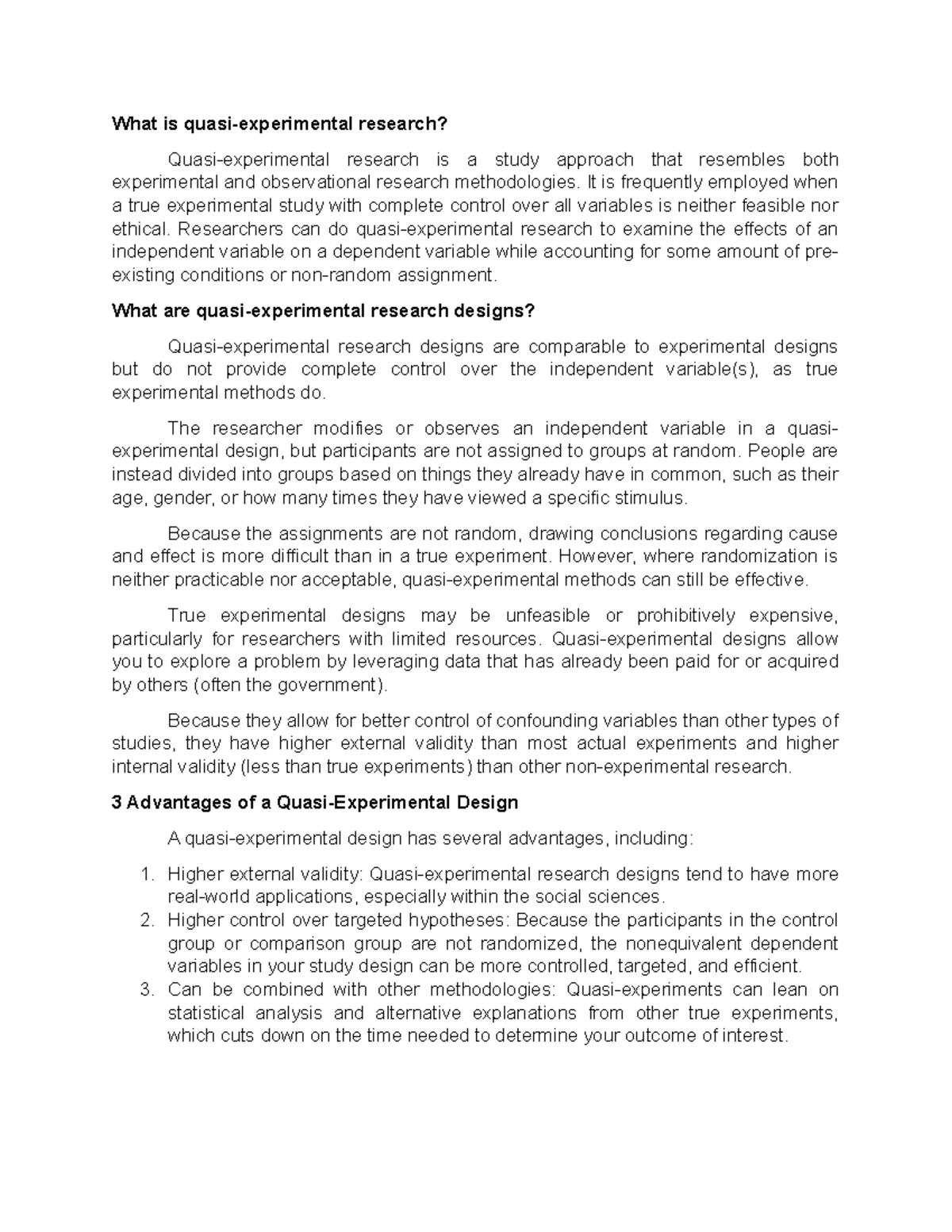
A quasi-experimental research design is a systematic study that evaluates interventions or treatments without the use of random assignment to divide participants into groups. Unlike true experiments, which rely on randomization to eliminate selection bias, quasi-experiments utilize pre-existing groups, making them highly practical for social, educational, and clinical settings where strict laboratory control is ethically or logistically impossible.
Contents
Defining Quasi-Experimental Research
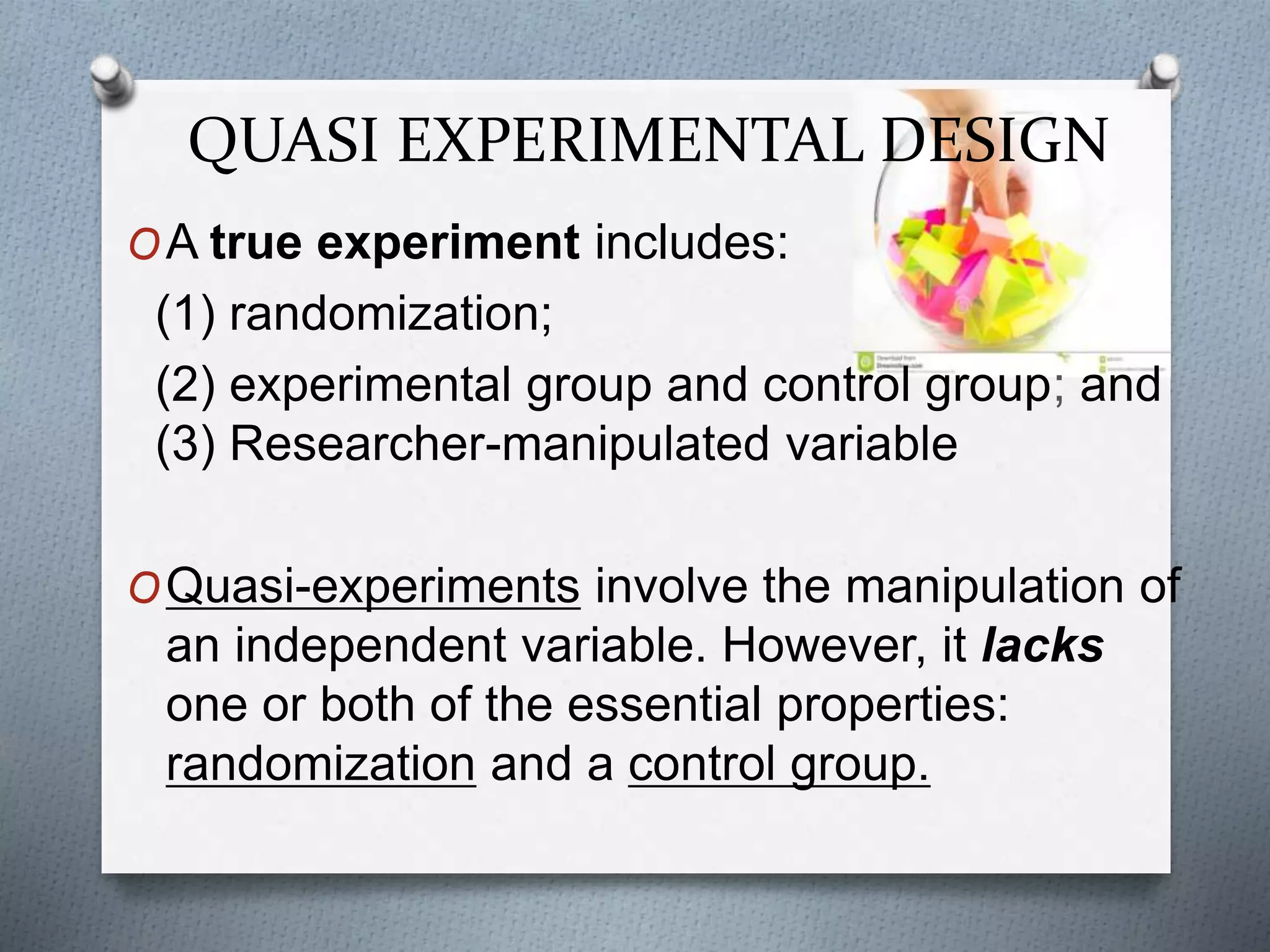
At its core, the quasi-experimental research definition centers on the absence of random assignment. In a traditional experimental design, a researcher randomly allocates participants to either an experimental group (receiving the treatment) or a control group (not receiving the treatment). This process ensures that, on average, the two groups are equivalent at the start of the study.
In a quasi-experiment, the researcher cannot exert that level of control. Instead, the participants are already organized into groups by external circumstances, such as classrooms, hospital wards, geographic regions, or job roles. Because the groups were formed based on factors other than researcher intervention, there is a heightened risk of selection bias—where the inherent differences between the groups, rather than the treatment itself, may account for the observed results. To compensate for this, researchers use sophisticated statistical methods, such as propensity score matching or covariate adjustment, to balance the groups after the fact.
When to Utilize Quasi-Experimental Methods
The decision to choose a quasi-experimental approach over a randomized controlled trial (RCT) is rarely based on a lack of rigor; rather, it is usually a result of feasibility, ethics, or the nature of the research question.
- Ethical Constraints: In many human-centered studies, it is unethical to randomly assign participants to a "no-treatment" group. For example, if a researcher is studying the impact of a new curriculum on literacy, they cannot deny an existing class the opportunity to learn for the sake of a control group.
- Logistical Feasibility: Large-scale public policy interventions often involve entire populations or organizations. It is often physically or politically impossible to randomly assign some municipalities to receive a tax benefit while excluding others.
- Natural Experiments: Sometimes, events occur naturally that allow for research. For instance, if a new environmental regulation is passed in one state but not another, researchers can use that state-based distinction to study the outcomes, treating the state border as a proxy for a control boundary.
- Time and Cost: RCTs are resource-intensive and time-consuming. Quasi-experiments can often utilize existing administrative data, making them a cost-effective way to derive insights from data that has already been collected for other purposes.
Common Quasi-Experimental Designs
To effectively execute a quasi-experiment, researchers must select a design that best mitigates the specific threats to validity present in their field.
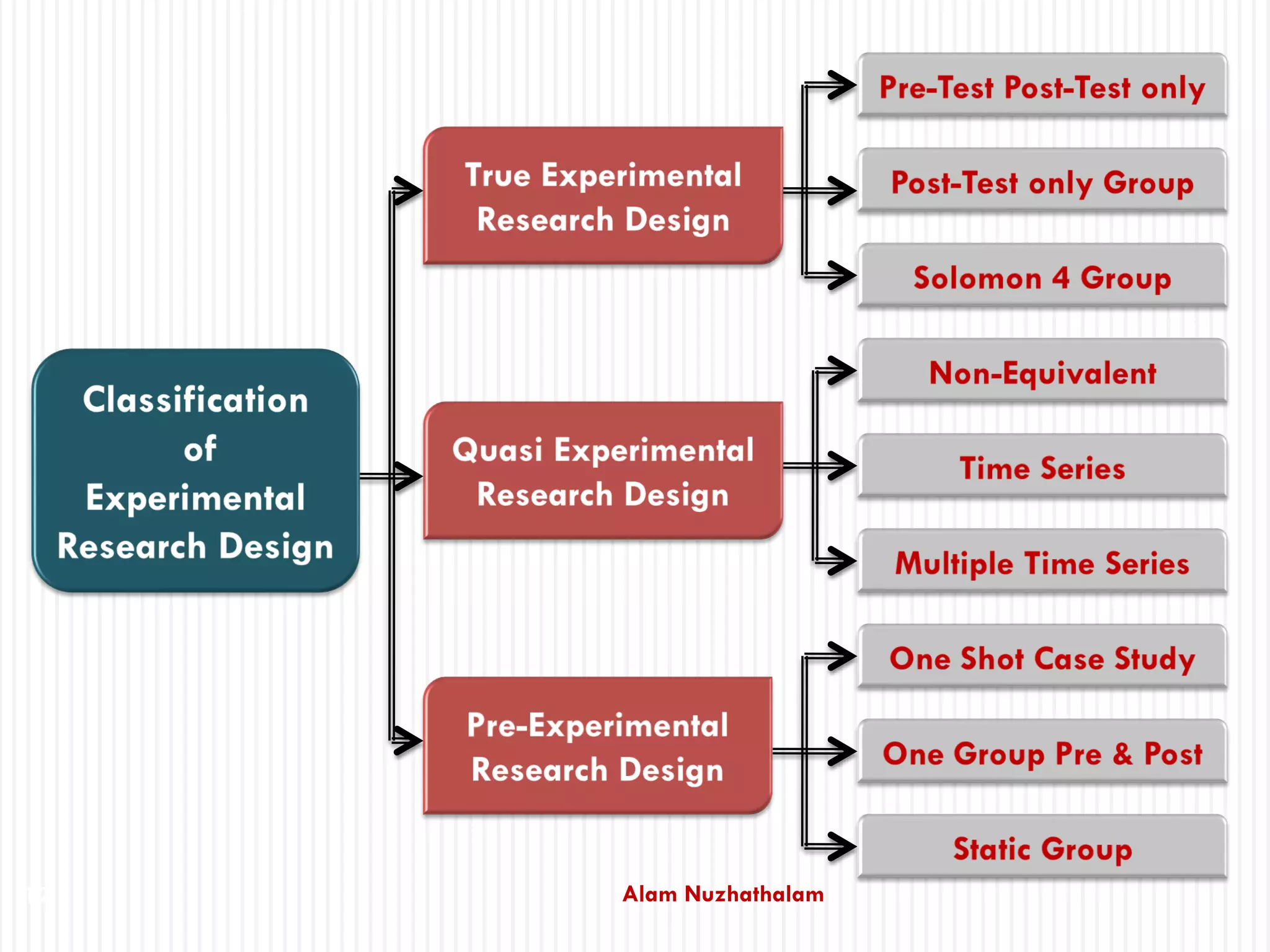
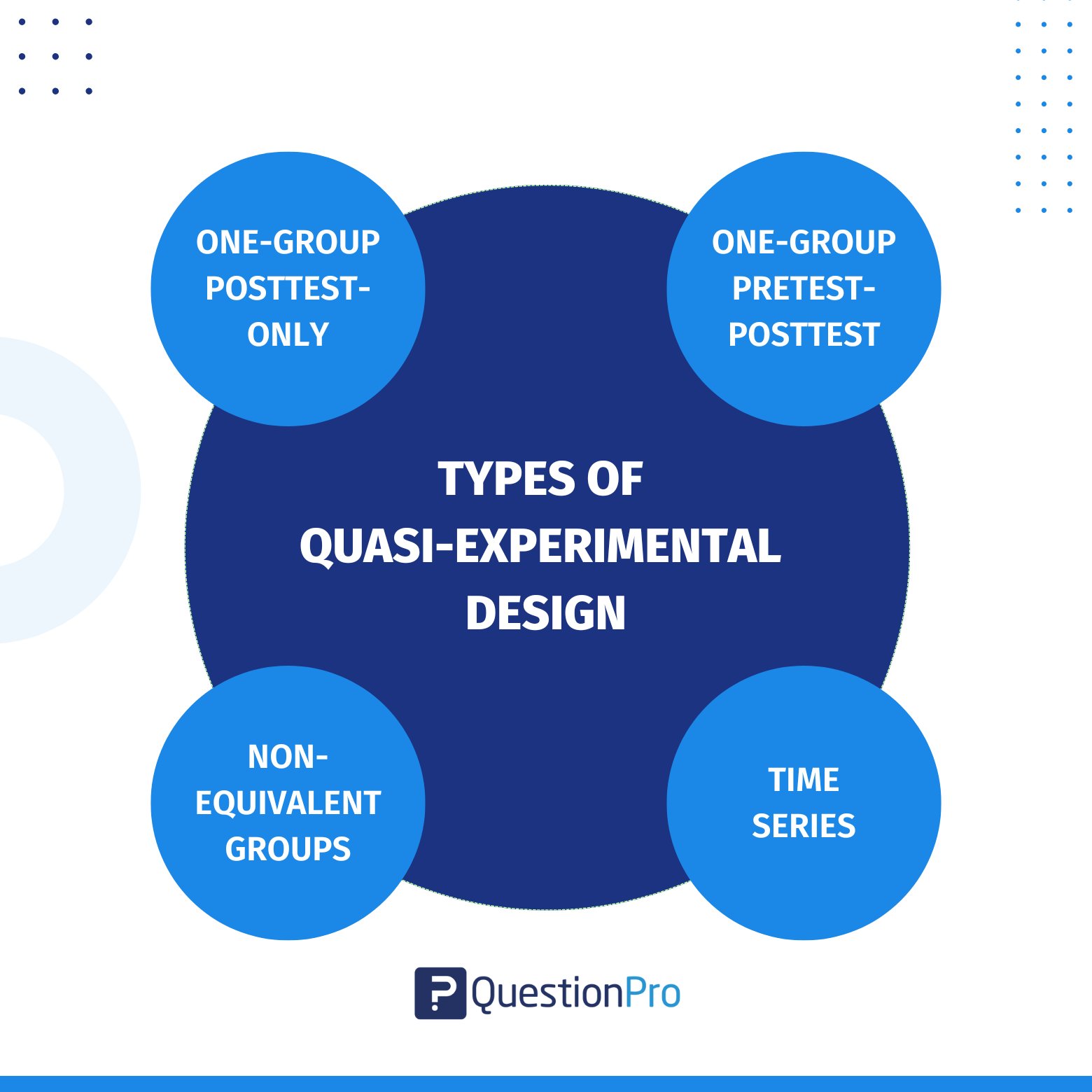
The Non-Equivalent Groups Design (NEGD)
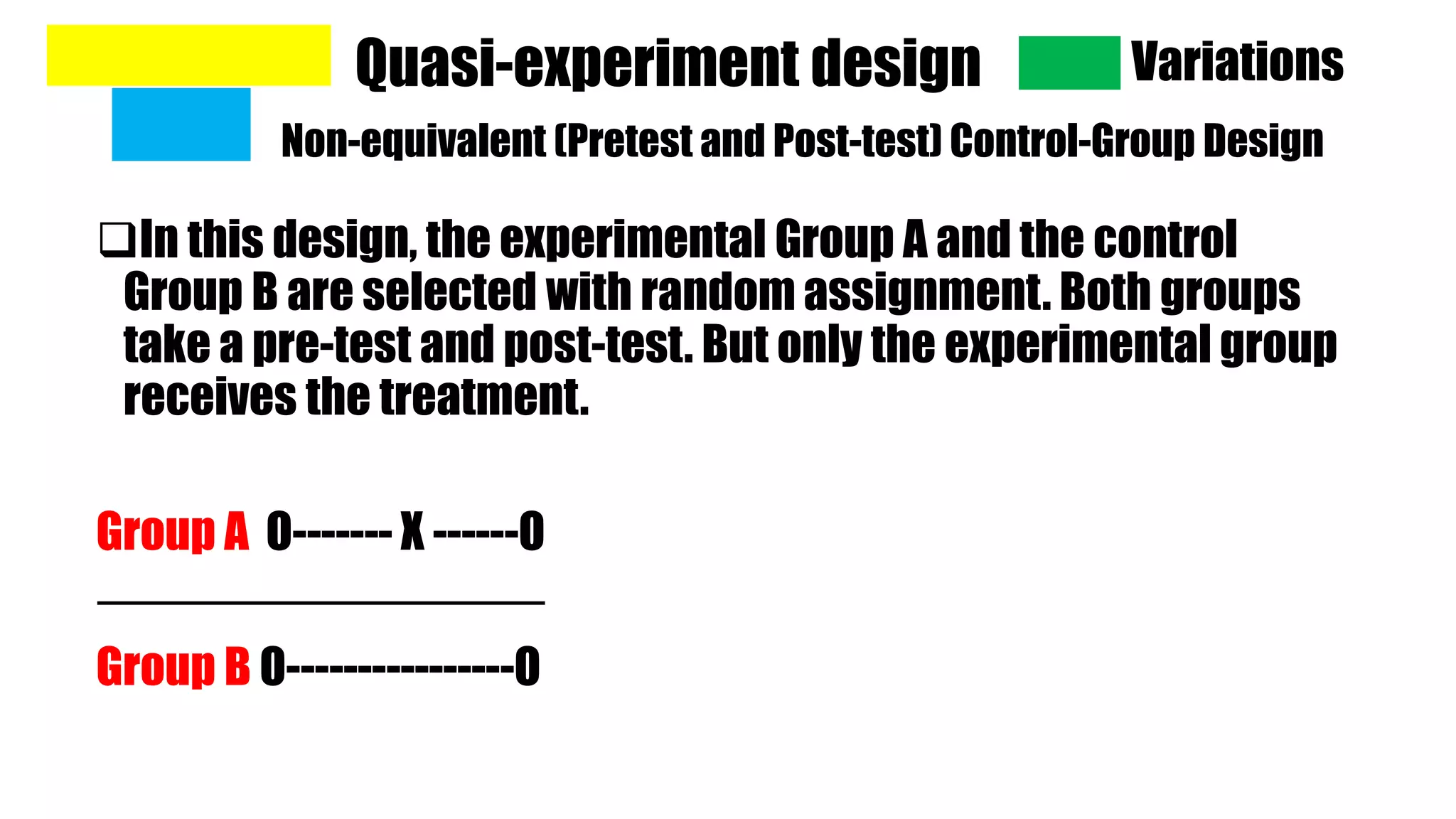
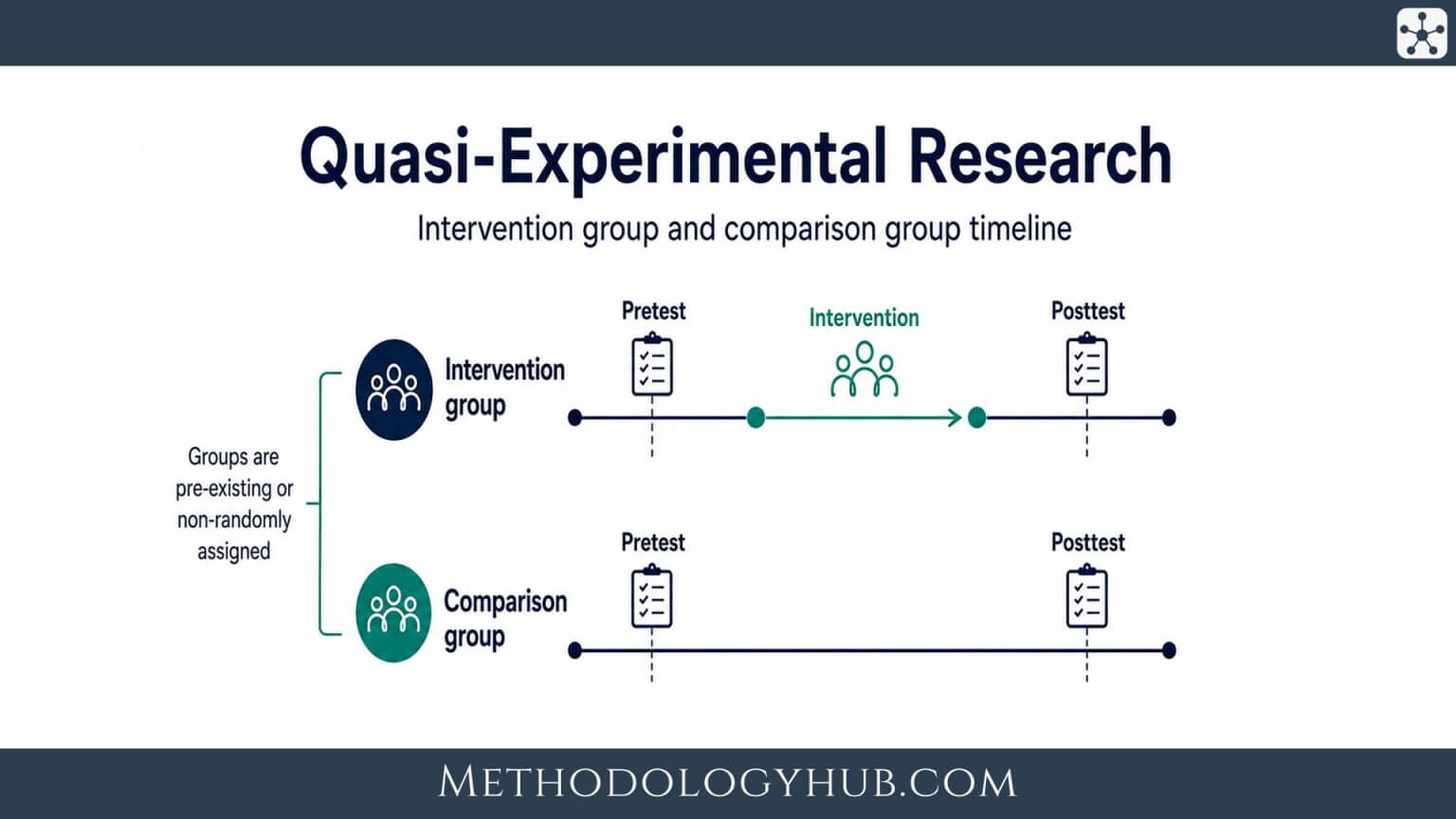
This is the most common quasi-experimental structure. It involves a treatment group and a comparison group, both of which are measured before (pre-test) and after (post-test) the intervention. Because the groups are non-equivalent, the pre-test measurement is crucial. It allows the researcher to see if the groups were different to begin with and how much they changed relative to one another.
Interrupted Time Series (ITS)
This design involves multiple measurements of a single group over a long period, both before and after an intervention. By looking at the trend line of the data, researchers can determine if the "interruption" (the intervention) caused a significant shift in the outcome or if the change was merely a continuation of a pre-existing trend.
Regression Discontinuity Design (RDD)
Used primarily when a program is assigned based on a specific cutoff score (e.g., only students with a test score below 50 qualify for a tutoring program). By comparing individuals just above and just below the cutoff, researchers can infer the impact of the program, as individuals near the cutoff are likely very similar in their baseline characteristics.
Comparison of Methodological Approaches
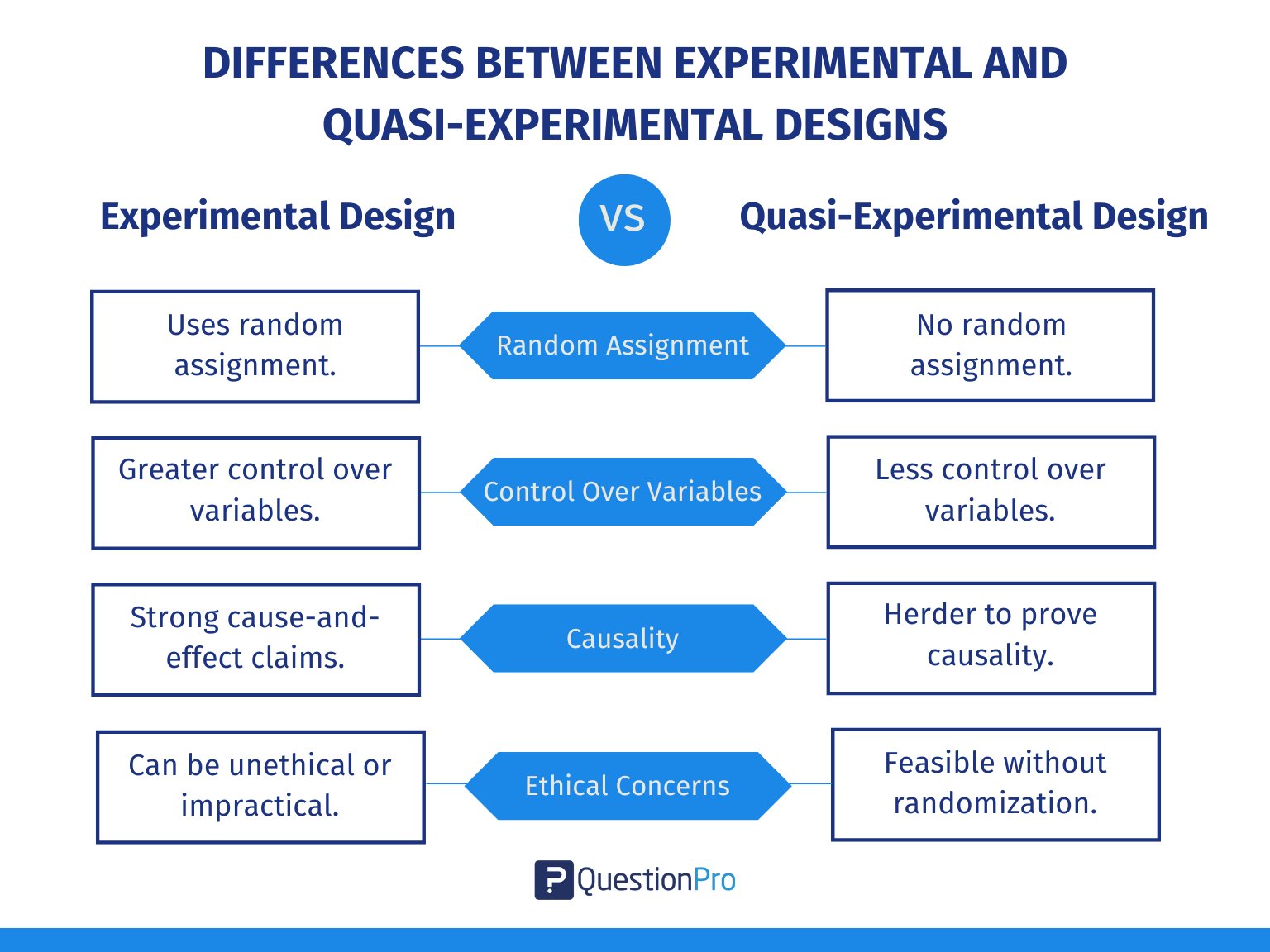
The following table summarizes the structural differences between randomized and quasi-experimental designs to help clarify why a researcher might select one over the other.
| Feature | Randomized Controlled Trial (RCT) | Quasi-Experiment |
|---|---|---|
| Assignment | Pure random allocation | Non-random or self-selection |
| Internal Validity | High; minimizes selection bias | Moderate; requires statistical control |
| External Validity | Often lower (lab-like conditions) | Often higher (real-world settings) |
| Practicality | High cost, high effort | Variable cost, easier implementation |
| Ethical Barriers | Often difficult to obtain approval | Generally more accessible |
Addressing Threats to Validity
Because participants are not randomly assigned, the primary technical challenge in quasi-experimental research is the threat to internal validity. "Internal validity" refers to the extent to which the study can accurately conclude that the intervention caused the outcome, rather than some other confounding variable.
- Selection Bias: If the group that chooses to participate in an intervention is inherently more motivated or skilled than the group that does not, the results may be skewed. Researchers manage this by using longitudinal data or baseline assessments to control for these differences.
- History Effects: Events occurring outside the study, such as a major economic shift or a public policy change, can impact results. In a multi-site quasi-experiment, researchers can observe whether the effect is consistent across different locations to rule out local historical events.
- Maturation: Over time, people change naturally. In educational studies, students might improve their scores simply because they are growing older and more mature, not because of a specific intervention. Using a control group that is subject to the same maturation process helps isolate the effect of the intervention.
Practical Steps for Implementation
- Identify the Objective: Clearly define the outcome you are measuring and ensure it is quantifiable.
- Select the Population: Choose your treatment and control groups based on natural boundaries, ensuring you have access to baseline data.
- Collect Baseline Data: Establish a pre-test measurement to serve as a benchmark for comparing future performance.
- Apply the Intervention: Implement the change consistently across the treatment group while documenting any variations in execution.
- Post-test Measurement: Measure the results using the same instruments as the pre-test to ensure consistency.
- Statistical Adjustment: Use methods like Analysis of Covariance (ANCOVA) or Propensity Score Matching to adjust for demographic or behavioral differences found during the baseline phase.
Frequently Asked Questions
Is a quasi-experiment considered less valid than an experiment? Not necessarily. While it is more prone to bias than an RCT, a well-designed quasi-experiment with robust statistical controls can provide evidence that is just as compelling, particularly when the results are replicated across different settings or populations.
How does propensity score matching help a study? It helps mimic randomization. By pairing participants from the control group with those from the treatment group who share similar characteristics (age, income, prior achievement), it statistically balances the groups to make them more comparable.
Can quasi-experiments prove causation? While no single study can definitively prove causation in a vacuum, quasi-experiments provide strong evidence of a causal link if they effectively rule out alternative explanations through rigorous data analysis and design controls.
What is the biggest risk in a quasi-experimental design? The biggest risk is confounding variables—factors that influence both the treatment and the outcome, making it appear that the treatment caused the change when, in reality, the confounding variable did.
Does a quasi-experiment require a control group? Most quasi-experiments utilize a comparison group, though some designs, like the Interrupted Time Series, serve as their own controls by measuring trends over time.
Conclusion and Next Actions
Quasi-experimental research is an essential tool for evidence-based decision-making in real-world environments. For researchers and analysts tasked with evaluating programs where full randomization is impossible, the focus should shift toward building strong internal validity through pre-test measurements and sophisticated statistical adjustment. To proceed with this methodology, start by auditing existing administrative data to determine if a pre-existing group structure allows for a clear comparison of baseline characteristics and post-intervention outcomes. Engaging a statistician early in the design phase is recommended to ensure that the chosen analytical techniques will effectively minimize selection bias in your final results.
Image Gallery