How to Conduct an Employee Performance Evaluation: A Comprehensive Guide for 2026
Conducting an effective employee performance evaluation requires a structured process of documenting achievements, identifying skill gaps, and aligning individual goals with organizational strategy. By combining objective data with emp...
Conducting an effective employee performance evaluation requires a structured process of documenting achievements, identifying skill gaps, and aligning individual goals with organizational strategy. By combining objective data with empathetic communication, managers can transform these sessions from administrative requirements into powerful catalysts for professional growth, operational efficiency, and long-term talent retention.
Contents
The Evolution of Performance Management in 2026
In the current professional landscape of 2026, the traditional once-a-year "performance review" has largely been replaced by a continuous performance management cycle. However, the formal evaluation remains a critical milestone. It serves as the official record for compensation adjustments, promotion eligibility, and legal documentation.
Modern evaluations now leverage sophisticated People Analytics and AI-driven insights to minimize human bias. Organizations have shifted their focus from retrospective criticism to prospective development. The goal is no longer just to score an employee’s past twelve months but to architect their next twelve. This shift requires managers to be more than just supervisors; they must act as coaches who understand the technical and interpersonal nuances of their team's roles.
Step 1: Preparation and Data Collection
Successful evaluations are won or lost in the preparation phase. Attempting to conduct a review based on memory alone leads to recency bias—the tendency to over-emphasize an employee's most recent actions while forgetting contributions from earlier in the year.
Gathering Objective Evidence
Begin by aggregating quantitative data. Depending on the role, this might include:
- Key Performance Indicators (KPIs): Sales figures, code deployment frequency, project completion rates, or customer satisfaction (CSAT) scores.
- Project Management Logs: Reviewing contributions in platforms like Jira, Asana, or Monday.com to see how deadlines were met.
- Learning and Development (L&D) Progress: Checking if the employee completed mandatory certifications or voluntary upskilling courses.
Incorporating Multi-Source Feedback
In 2026, the "360-degree feedback" model is standard. Gather anonymous input from the employee’s peers, direct reports (if applicable), and internal stakeholders. This provides a holistic view of their "soft skills," such as collaboration and leadership, which hard data often misses.
The Self-Evaluation
Ask the employee to complete a self-evaluation form at least two weeks before the meeting. This empowers the individual to reflect on their own performance and alerts the manager to any "perception gaps"—instances where the employee believes they are excelling while the manager sees room for improvement.
Step 2: Structuring the Evaluation Document
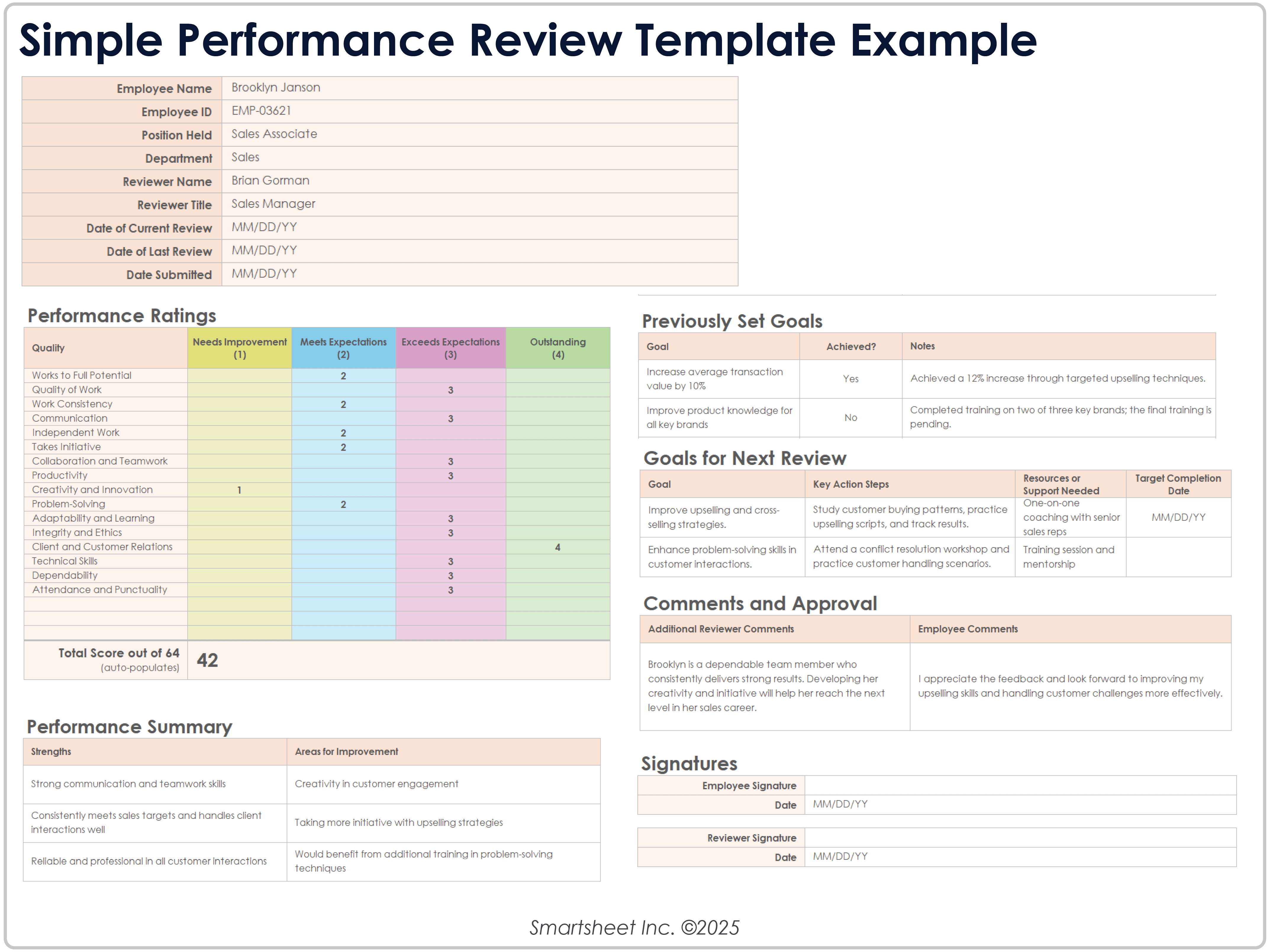
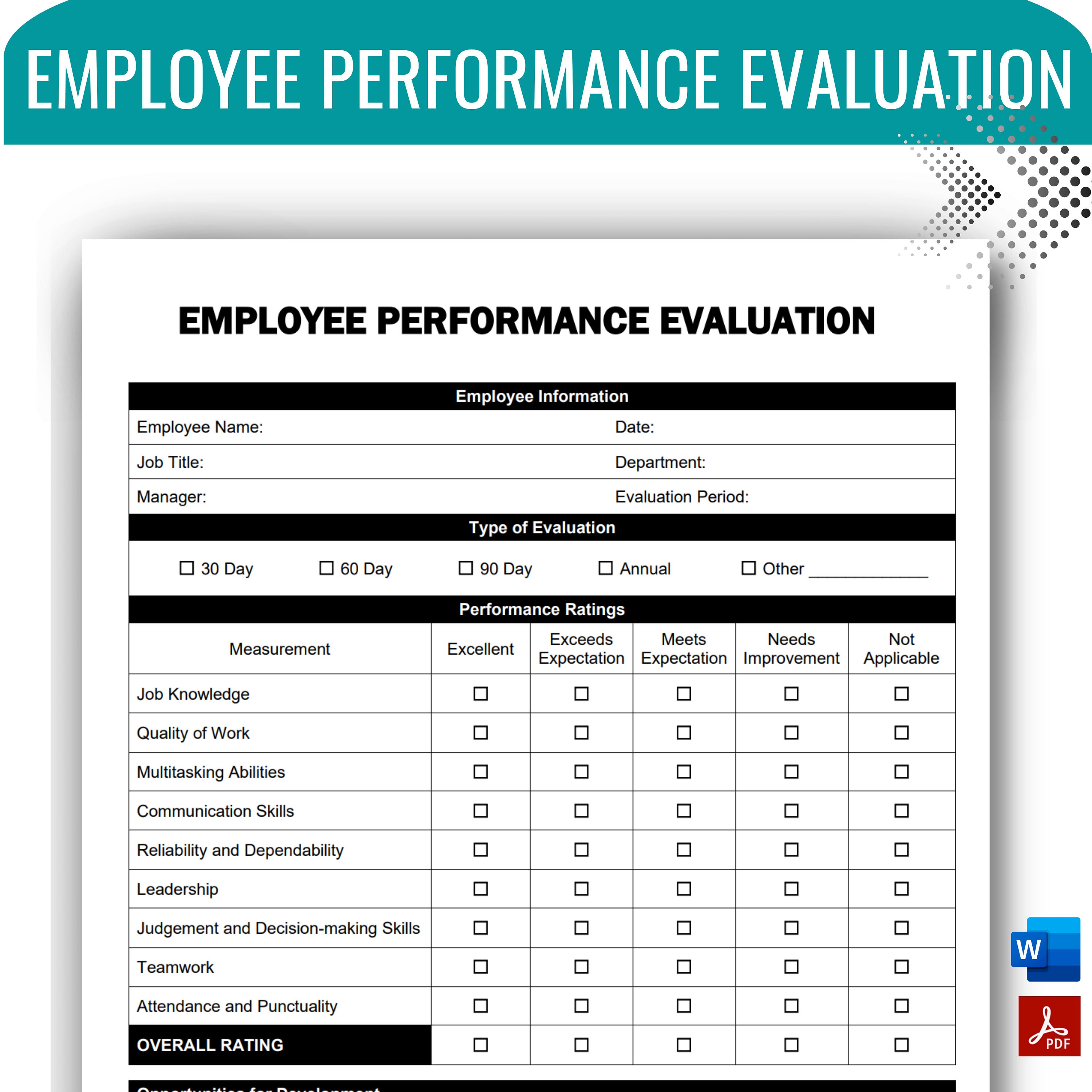
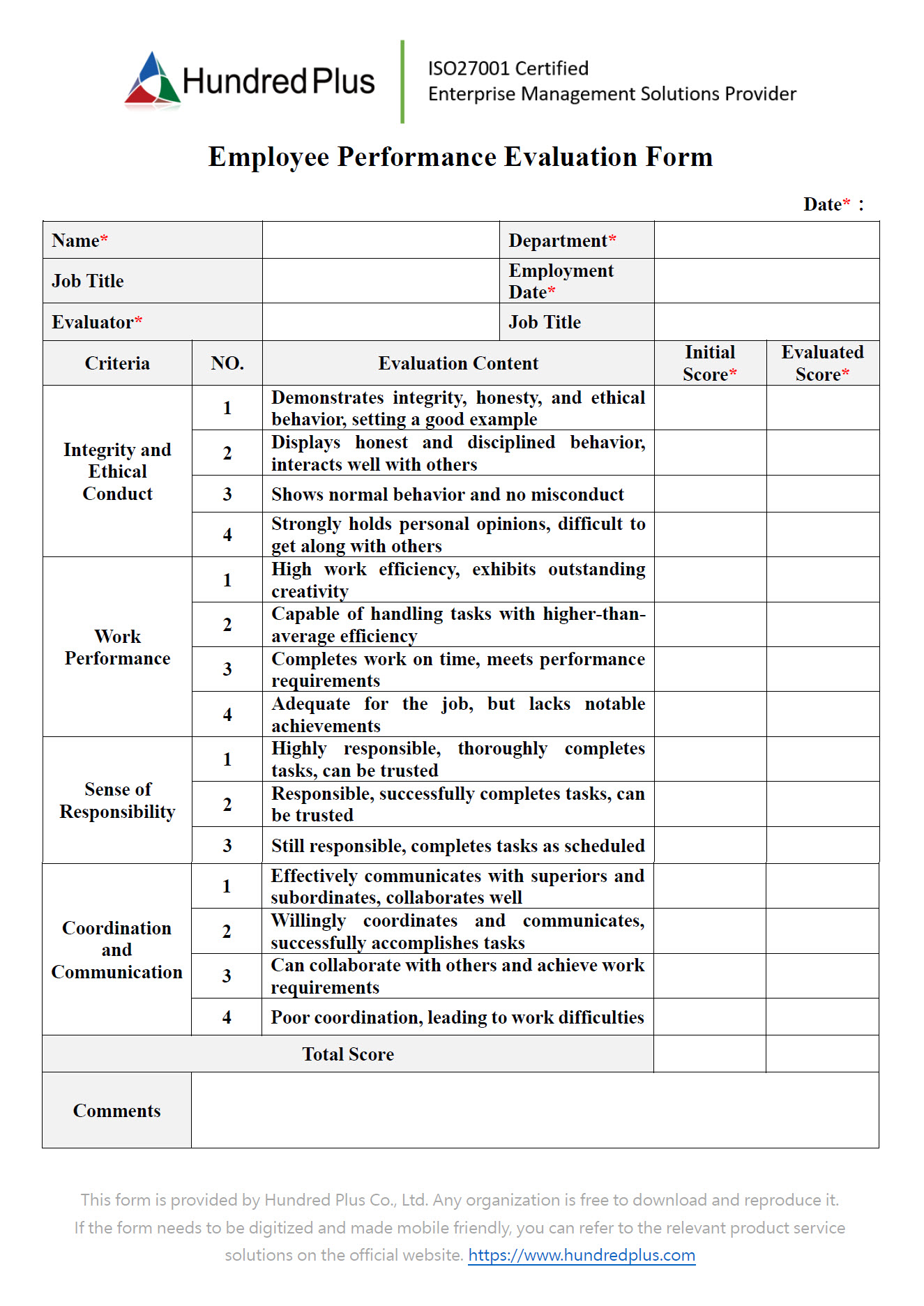
The written evaluation is a legal and professional document. It must be clear, concise, and free of ambiguous language. Most organizations use a standardized rubric to ensure fairness across departments.
Use the SMART Framework for Goal Assessment
When reviewing previous goals, use the SMART criteria: Specific, Measurable, Achievable, Relevant, and Time-bound. If a goal was not met, document the external factors (e.g., budget cuts, market shifts) versus internal factors (e.g., lack of technical proficiency, poor time management).
Balancing Strengths and Improvements
A common technical mistake is focusing 90% of the document on "areas for improvement." High-performing employees need to know exactly what they are doing right so they can replicate those behaviors. Aim for a balanced narrative that highlights core competencies while providing a clear roadmap for addressing deficiencies.
Step 3: Conducting the Evaluation Meeting
The atmosphere of the meeting dictates how the feedback is received. In a hybrid or remote 2026 workplace, ensure the meeting is held via high-quality video conference or in a private office to maintain confidentiality and focus.
Setting the Tone
Start by clarifying the purpose of the meeting: it is a collaborative session designed to support the employee’s career. Avoid diving immediately into critiques. Instead, ask the employee to share their thoughts on their self-evaluation first. This "employee-first" approach reduces defensiveness and fosters an open dialogue.
Delivering Constructive Feedback
When addressing performance issues, use the SBI Model (Situation, Behavior, Impact):
- Situation: "During the Q3 product launch..."
- Behavior: "...you missed three consecutive documentation deadlines."
- Impact: "...which caused the QA team to delay testing and pushed our release date back by a week."
This method keeps the conversation objective and focused on professional outcomes rather than personal traits.
Active Listening and Coaching
Performance evaluations should be a two-way street. If an employee challenges a piece of feedback, listen without interrupting. There may be context the manager is unaware of, such as a tool failure or a cross-departmental bottleneck. Use coaching questions like, "What resources do you need to overcome this hurdle next time?" to shift the focus toward problem-solving.
Comparison of Performance Evaluation Methodologies
Different organizational cultures require different approaches. The table below compares the three most common frameworks used in 2026.
| Methodology | Primary Focus | Best For | Pros | Cons |
|---|---|---|---|---|
| Traditional Annual Review | Historical accountability and grading. | Stable industries with fixed roles. | Clear administrative record for HR. | Often feels disconnected from daily work. |
| Objectives and Key Results (OKRs) | Ambitious goal-setting and transparency. | Tech, startups, and high-growth firms. | Aligns individual output with company vision. | Can be stressful if "stretch goals" are too high. |
| Continuous Feedback Loop | Real-time coaching and agile adjustments. | Remote and hybrid teams. | Fixes issues immediately; high engagement. | Requires significant manager time/effort. |
Step 4: Mitigating Cognitive Bias
Managers are susceptible to psychological biases that can skew an evaluation. Awareness of these is essential for maintaining equity.
- The Halo/Horns Effect: Letting one positive or negative trait color the entire evaluation. For example, assuming a highly charismatic employee is also highly organized.
- Central Tendency Bias: Rating everyone as "average" to avoid difficult conversations or justifications for top/bottom scores.
- Leniency Bias: Being overly generous with ratings to maintain "likability," which ultimately harms the employee’s growth and the team's standards.
In 2026, many HR departments use "calibration meetings" where managers discuss their ratings with other leaders to ensure that a "5 out of 5" means the same thing across the entire organization.
Step 5: Post-Evaluation Follow-Up
The evaluation does not end when the meeting concludes. The most critical phase is the implementation of the agreed-upon action plan.
Documentation and Sign-off
Ensure both parties sign the final evaluation document. This confirms that the conversation took place and the expectations were understood. In many jurisdictions, this is a prerequisite for any future disciplinary actions or merit-based bonuses.
The Performance Improvement Plan (PIP)
If an employee is consistently underperforming, a formal Performance Improvement Plan (PIP) may be necessary. A PIP should outline specific metrics the employee must reach within 30, 60, or 90 days. It is not necessarily a "pre-firing" document; when used correctly, it provides the clear structure an employee needs to turn their performance around.
Scheduling the Next Check-in
Do not wait until next year. Schedule a follow-up meeting in one month to review progress on the new goals set during the evaluation. This maintains momentum and shows the employee that the organization is invested in their success.
Legal and Ethical Considerations
In 2026, data privacy and labor laws are stricter than ever. Managers must ensure that:
- All feedback is based on job-related criteria, avoiding any mention of protected characteristics (age, race, gender, etc.) to comply with Equal Employment Opportunity Commission (EEOC) guidelines.
- Performance data stored in AI systems complies with global data protection regulations like the GDPR or similar local statutes.
- The evaluation process is applied consistently across all team members to prevent claims of discrimination or favoritism.
Frequently Asked Questions
What should I do if an employee disagrees with their evaluation?
If an employee disagrees, stay calm and ask for specific evidence to support their perspective. If their evidence is valid, be prepared to adjust the evaluation. If you stand by your assessment, explain the "why" clearly and allow them to add a formal rebuttal to their personnel file. This ensures their voice is heard while maintaining management’s standards.
How do I evaluate a remote or hybrid employee fairly?
Focus on "Output over Hours." In a remote environment, visibility is lower, so you must rely on objective work products, meeting contributions, and feedback from collaborators. Avoid penalizing employees for not being "online" during specific hours if their deliverables meet all quality and timeline requirements.
Is it okay to discuss salary during a performance evaluation?
While performance and salary are linked, many experts recommend separating the two meetings by at least a week. If an employee knows a raise is being discussed, they may focus entirely on the number and stop listening to the developmental feedback. Separating them allows for a deeper conversation about growth first, followed by the financial outcome later.
How do I handle an "overachiever" who has no obvious areas for improvement?
For top performers, the evaluation should focus on "expansion" rather than "correction." Discuss leadership opportunities, mentorship roles, or the acquisition of advanced skills that would prepare them for a promotion. High achievers often leave organizations when they feel they have hit a ceiling, so use the evaluation to build a long-term career path.
How has AI changed the performance evaluation process in 2026?
AI is now used to aggregate data and identify patterns that humans might miss, such as a subtle decline in productivity that correlates with a specific project type. However, AI should only be used as a supportive tool. The final judgment and the delivery of feedback must remain human to ensure empathy, context, and nuance.
Final Recommendation
To conduct a truly effective employee performance evaluation, shift your mindset from "judging" to "enabling." Use the first half of 2026 to audit your current feedback tools and ensure they are capturing the right data points. Start your next round of evaluations by asking your team what they need from you to be successful. When employees feel that the evaluation process is designed to help them win, they will engage with it more honestly, leading to a more productive and harmonious workplace.
Image Gallery