How to Make the Vinegared Rice Recipe for Authentic Sushi
Making vinegared rice, known as sushimeshi or shari, requires precise ratios of Japanese short-grain rice, rice vinegar, sugar, and salt, cooked with the right amount of water and folded with care. This foundational component determine...
Making vinegared rice, known as sushimeshi or shari, requires precise ratios of Japanese short-grain rice, rice vinegar, sugar, and salt, cooked with the right amount of water and folded with care. This foundational component determines the texture, flavor balance, and overall success of homemade sushi, rolls, and bowls.
Contents
Understanding the Role of Vinegared Rice in Japanese Cuisine
The success of any sushi preparation relies far less on the raw fish or fillings and far more on the quality, temperature, and seasoning of the rice. In Japanese culinary tradition, shari (sushi rice) provides a deliberate counterpoint to rich proteins. The acidity cuts through oily fish like salmon or tuna, while the subtle sweetness enhances the natural starches of the grain.
Achieving this balance requires understanding that sushi rice is not merely regular white rice mixed with vinegar. It is a specific chemical and physical process. The vinegar seasoning (sushizu) breaks down excess surface starch, firms up the individual grains so they do not clump into a paste, and imparts a glossy sheen. Furthermore, serving the rice at body temperature ensures that the fats in the fish melt pleasantly on the palate rather than remaining cold and stiff.
Essential Ingredients and Equipment
Before beginning the cooking process, gathering the correct ingredients and specialized equipment ensures authentic results. Substitutions can drastically alter the final texture and taste.
Ingredients
- Japanese Short-Grain Rice (Japonica): Essential for its high amylopectin content, which gives the rice its sticky, plump texture. Do not substitute long-grain jasmine or basmati rice.
- Water: For washing and cooking. Filtered water yields the cleanest flavor.
- Rice Vinegar (Komezu): Unseasoned Japanese rice vinegar provides a mild, clean acidity. Avoid Western white vinegars, which are far too harsh.
- Sugar: Granulated white sugar dissolves cleanly into the warm vinegar mixture.
- Salt: Fine sea salt or kosher salt without additives ensures clean seasoning.
- Kombu (Optional): A small strip of dried kelp adds umami depth to the cooking water.
Equipment
- Fine-Mesh Strainer: For thoroughly rinsing the rice grains.
- Heavy-Bottomed Pot or Rice Cooker: A pot with a tight-fitting lid prevents steam from escaping prematurely.
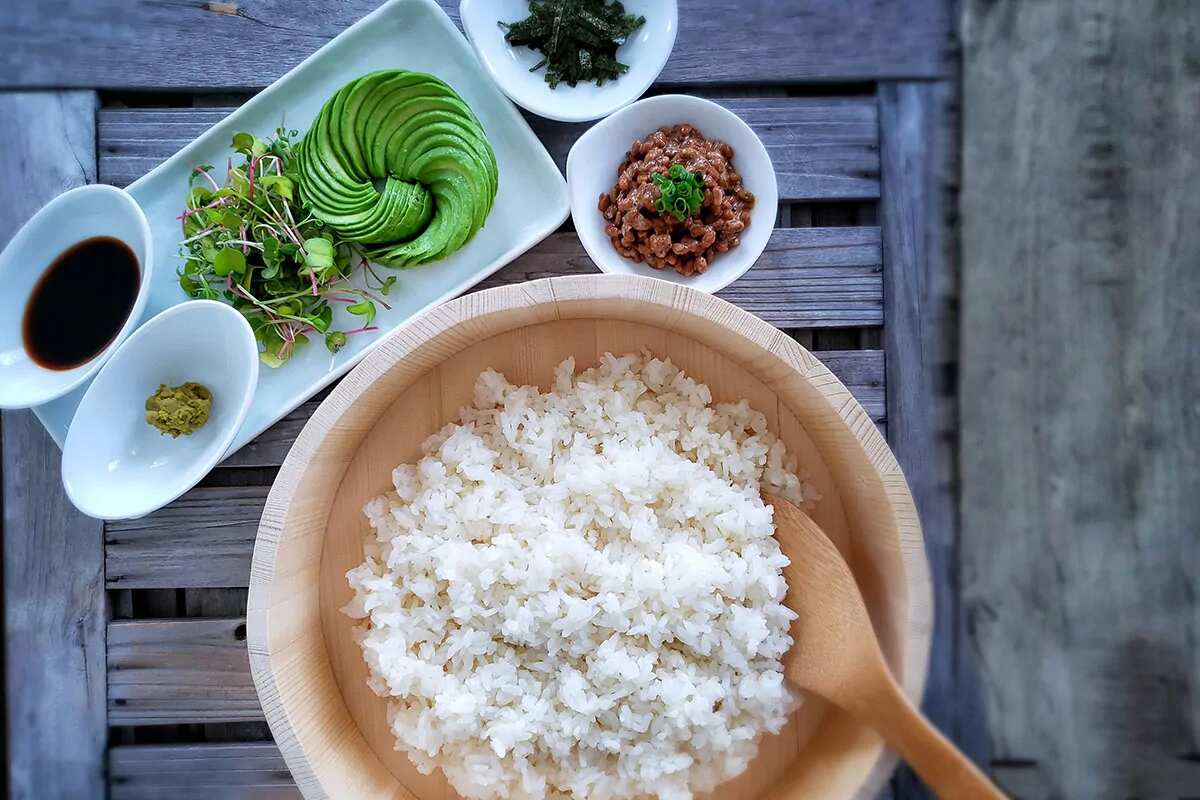
- Hangiri (Wooden Sushi Tub) or Large Glass Bowl: Wood absorbs excess moisture from the hot rice, while glass prevents the vinegar from reacting with metal.
- Shamoji (Wooden Rice Paddle): Used for cutting and folding the rice rather than stirring, which would break the grains.
- Uchiwa (Japanese Fan) or Hand Fan: Essential for rapidly cooling the rice while the seasoning is folded in.
Step-by-Step Instructions for Making Sushi Rice
Mastering this sequence ensures the ideal texture, moisture level, and flavor balance required for professional-quality sushi.
Step 1: Measuring and Washing the Rice
Measure your desired quantity of short-grain rice. Place the rice in a fine-mesh strainer or directly into your cooking pot. Cover with cold water, swirl the grains vigorously with your hand, and pour the cloudy water out immediately. Repeat this process 4 to 5 times until the water runs nearly clear. This removes excess surface starch that would otherwise make the cooked rice gummy.
Step 2: Soaking the Grains
Drain the washed rice thoroughly and transfer it to your cooking pot. Add fresh cold water following a strict ratio: typically 1 cup of water for every 1 cup of uncooked rice (or according to the specific package instructions for your rice brand). Add a 2-inch strip of dried kombu to the top of the water if desired. Let the rice soak undisturbed for 30 minutes. This allows water to penetrate the core of each grain, ensuring even cooking. Remove and discard the kombu just before turning on the heat.
Step 3: Cooking the Rice
Cover the pot with a tight-fitting lid and place it over medium-high heat. Bring the water to a rolling boil, which usually takes about 5 to 7 minutes. Once boiling, immediately reduce the heat to the lowest possible setting and simmer for 15 minutes. Crucial Rule: Do not lift the lid or stir the rice during this entire cooking phase, as escaping steam will disrupt the cooking process.
Step 4: Steaming Off Heat
After 15 minutes, remove the pot from the heat source entirely. Leave the lid tightly sealed and allow the rice to steam undisturbed for an additional 10 to 15 minutes. This resting period allows the internal moisture to distribute evenly through every grain.
Step 5: Preparing the Sushi Vinegar (Sushizu)
While the rice cooks and rests, prepare the seasoning mixture. In a small bowl or saucepan, combine rice vinegar, sugar, and salt. The standard golden ratio for sushi rice seasoning is 5 parts vinegar, 2 parts sugar, and 1 part salt (for example: 5 tablespoons of rice vinegar, 2 tablespoons of sugar, and 1 teaspoon of salt). Warm the mixture gently in a small pan over low heat—or in the microwave for 15 seconds—just until the sugar and salt crystals dissolve completely. Do not let the liquid boil, as this ruins the delicate aroma of the vinegar.
Step 6: Mixing and Cooling the Rice
Transfer the hot cooked rice into your pre-moistened hangiri or a wide, shallow glass mixing bowl. Pour the prepared sushizu evenly across the surface of the rice. Hold your wooden rice paddle (shamoji) at a sharp 45-degree angle and gently slice or "cut" through the rice in a sweeping motion, turning it over without mashing the grains. While a second person fans the rice with a traditional fan (uchiwa)—or you alternate tasks—continue cutting until the vinegar is fully absorbed and the rice cools down to body temperature. The fanning action gives the rice its characteristic glossy sheen.
Technical Specifications and Ingredient Ratios
Maintaining exact measurements ensures consistent results across different batch sizes. The table below outlines standard proportions for preparing sushi rice.
| Uncooked Rice | Cold Water | Rice Vinegar | Sugar | Salt |
|---|---|---|---|---|
| 1 Cup (approx. 180g) | 1 Cup | 2.5 Tablespoons | 1 Tablespoon | 1 Teaspoon |
| 2 Cups (approx. 360g) | 2 Cups | 5 Tablespoons | 2 Tablespoons | 2 Teaspoons |
| 3 Cups (approx. 540g) | 3 Cups | 7.5 Tablespoons | 3 Tablespoons | 1 Tablespoon |
Common Mistakes and Troubleshooting
Even experienced home cooks encounter challenges when preparing Japanese rice. Recognizing these pitfalls helps troubleshoot issues before they ruin your meal.
Mushy or Sticky Rice
- Cause: Too much water, insufficient rinsing, or stirring the rice too aggressively while hot.
- Solution: Ensure you use a strict 1:1 water-to-rice ratio by volume, rinse the grains until the water runs clear, and always use a slicing motion with the paddle rather than a circular stirring motion.
Hard or Dry Rice Cores
- Cause: Inadequate soaking time, insufficient cooking water, or steam escaping during the simmer phase.
- Solution: Always allow the rice to soak for 30 minutes before turning on the heat, and never lift the lid while the pot is simmering or resting.
Overly Sour or Sweet Flavor Profile
- Cause: Incorrect measuring of the sushizu components.
- Solution: Stick closely to the 5:2:1 ratio of vinegar, sugar, and salt, and adjust the total amount of seasoned liquid added rather than changing the ratio itself.
Frequently Asked Questions
Can I use regular white table vinegar if I do not have rice vinegar?
No. Regular white distilled vinegar is significantly more acidic and lacks the delicate sweetness and mellow profile of Japanese rice vinegar. Substituting it will result in an overly sharp, harsh taste that overpowers the dish. Apple cider vinegar can serve as a distant emergency substitute, but authentic rice vinegar yields the best results.
How should I store leftover sushi rice?
Sushi rice is best consumed at room temperature within a few hours of preparation. Storing seasoned sushi rice in a refrigerator causes the starch molecules to retrograde, turning the grains hard, dry, and unpalatable. If you must store it, cover it tightly with a damp paper towel and plastic wrap at room temperature for no more than 4 to 6 hours.
Do I need a traditional wooden hangiri to make sushi rice?
A traditional wooden hangiri helps absorb excess moisture, but it is not mandatory. A wide, shallow glass, ceramic, or plastic mixing bowl works well. Avoid using metal bowls, as the acid in the rice vinegar can react with the metal and impart an undesirable metallic taste to the food.
Why is the rice fanned while mixing in the vinegar?
Fanning the rice rapidly cools the grains down to body temperature while simultaneously evaporating excess surface moisture. This quick cooling process locks in the glossy sheen and prevents the rice from becoming soggy or continuing to cook from residual heat.
Can I make sushi rice in an electric rice cooker?
Yes. An electric rice cooker is exceptionally reliable for making sushi rice because it regulates heat automatically. Simply wash and soak the rice inside the cooker pot for 30 minutes, then use the standard white rice setting. Once cooked and rested, transfer the rice to a bowl and fold in the vinegar mixture as outlined above.
To ensure the best outcome for your next sushi night, prioritize precise measuring of your water-to-rice ratios, invest in authentic Japanese short-grain rice and unseasoned rice vinegar, and never skip the cooling and fanning phase. By respecting these foundational steps, you will achieve the ideal texture and flavor profile required for professional-grade sushi at home.
Image Gallery