The Evolution of Solar Panels at Disney World: A Complete Guide to Clean Energy at the Resort
Walt Disney World Resort utilizes a massive infrastructure of solar panels, currently generating enough renewable energy to power approximately 40% of its total annual operations. As of 2026, the resort features several major solar fac...
Walt Disney World Resort utilizes a massive infrastructure of solar panels, currently generating enough renewable energy to power approximately 40% of its total annual operations. As of 2026, the resort features several major solar facilities, including the iconic 22-acre Mickey-shaped farm and two massive 75-megawatt arrays, all contributing to Disney’s goal of reaching net-zero emissions by 2030.
Contents
The transition to solar energy at Walt Disney World is not merely a branding exercise; it is one of the largest private-sector renewable energy commitments in the state of Florida. Spanning across nearly 40 square miles of property, the resort's energy needs are immense. By integrating utility-scale solar into its power grid, Disney has effectively decoupled a significant portion of its carbon footprint from its growth. This guide explores the technical specifications, historical development, and environmental impacts of solar energy at "The Most Magical Place on Earth."
The History and Growth of Disney’s Solar Infrastructure
Disney's journey into large-scale solar energy began in earnest in 2016. Before this, the resort experimented with smaller applications, but the "Mickey Solar Farm" marked the first major step toward utility-scale generation. Since then, the expansion has been exponential, moving from 5 megawatts (MW) to nearly 280 MW of total capacity.
The 5-Megawatt "Mickey" Solar Farm
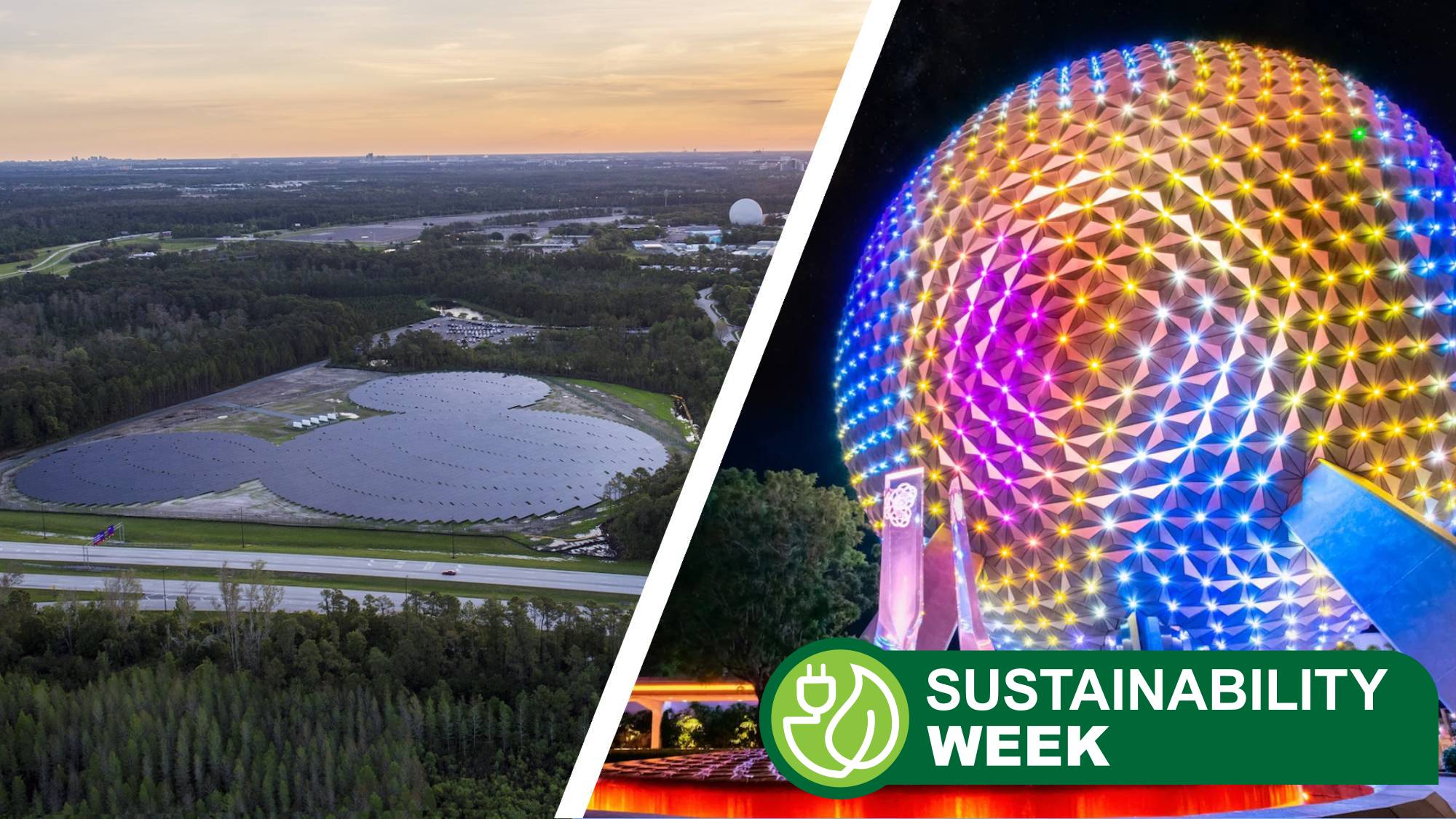
Located near Epcot and visible from World Drive, the first major installation is the 22-acre, Mickey-shaped solar array. Developed in collaboration with Duke Energy and the Reedy Creek Improvement District (now the Central Florida Tourism Oversight District), this facility consists of approximately 48,000 solar panels.
While its shape is a clever nod to the company’s mascot, the facility serves a practical purpose. It produces roughly 5 megawatts of power, which is equivalent to the energy needed to power about 820 typical residential homes. In 2026, this site remains a symbol of Disney’s commitment to "green" storytelling, proving that industrial infrastructure can be aesthetically integrated into a themed environment.
The 270-Acre Solar Facility (50-Megawatt Array)
In 2019, Disney significantly scaled up its efforts with a 270-acre facility located near State Road 429. This project was developed with Origis Energy USA. This facility is ten times larger than the original Mickey farm and features half a million solar panels.
At its peak capacity, this 50-megawatt plant generates enough power to run two of Disney’s four theme parks for a year. The technical layout uses single-axis tracking technology, which allows the panels to tilt throughout the day to follow the sun's path, maximizing energy capture during Florida's intense afternoon sun.
Expanding to 40%: The Newest Solar Developments
By 2024, Disney completed two additional 75-megawatt solar arrays, bringing the total renewable capacity to a level that can handle nearly 40% of the resort’s annual energy consumption. These projects were essential for the resort to maintain its 2030 net-zero roadmap.
These newer sites are strategically placed to minimize impact on local wetlands while maximizing solar exposure. The collaboration between the Central Florida Tourism Oversight District (CFTOD) and private energy providers ensures that the power generated is seamlessly integrated into the local grid, providing stability not just for the parks, but for the surrounding infrastructure.
| Solar Facility Name | Capacity | Year Online | Partner Entity | Key Feature |
|---|---|---|---|---|
| Mickey Mouse Solar Farm | 5 MW | 2016 | Duke Energy | Iconic hidden Mickey shape |
| SR 429 Solar Facility | 50 MW | 2019 | Origis Energy | 270-acre pollinator habitat |
| North Solar Facility | 75 MW | 2023 | Origis/Duke | Single-axis tracking panels |
| West Solar Facility | 75 MW | 2024 | Origis Energy | Part of 2030 Net-Zero plan |
| Total Capacity | ~205+ MW | - | - | Powers ~40% of operations |
Technical Specifications and Environmental Benefits
The solar panels used across the Disney properties are primarily monocrystalline silicon modules, known for their high efficiency and durability in humid, subtropical climates. Given Florida’s susceptibility to hurricanes, the racking systems are engineered to withstand high-wind events, with some structures designed to go into a "stow" mode to minimize wind resistance during storms.
Pollinator-Friendly Solar Design
One of the most innovative aspects of Disney’s solar program is the "pollinator-friendly" initiative. Traditional solar farms often use gravel or turf grass beneath the panels, which requires high maintenance and offers no ecological value.
At the 270-acre site, Disney and Origis Energy planted a variety of native Florida wildflowers and grasses. This habitat supports:
- Bees and Butterflies: Providing essential nectar sources for local pollinators.
- Soil Health: Native roots prevent erosion and improve water filtration into the Florida aquifer.
- Reduced Maintenance: Once established, native meadows require less mowing and zero chemical fertilizers compared to standard turf.
Integration with the Florida Grid
Unlike a home solar system that might use batteries (like a Tesla Powerwall), Disney’s utility-scale arrays feed directly into the grid managed by the CFTOD. This energy is distributed to the four theme parks, two water parks, and over 25 resort hotels. During peak sun hours, the solar facilities often produce more power than the resort needs, allowing the excess clean energy to benefit the broader Florida electrical grid.
The 2030 Environmental Goals: Beyond Solar
As of 2026, solar energy is just one pillar of Disney’s broader environmental strategy. The company has publicly committed to a 2030 Environmental Goals framework, which includes:
- Net-Zero Emissions: Achieving net-zero greenhouse gas emissions for direct operations.
- Zero Waste: Redirecting 90% of waste from landfills across all parks and resorts.
- Water Stewardship: Implementing advanced irrigation and low-flow technologies to reduce potable water consumption.
- Sustainable Sourcing: Ensuring that at least 80% of energy used in the production of Disney-branded products comes from low-carbon sources.
The solar farms represent the most visible part of this strategy. By 2026, the resort has also transitioned a significant portion of its bus fleet to electric or renewable diesel, further reducing the carbon intensity of guest transportation.
Challenges and Considerations for Solar in Central Florida
While solar is a natural fit for the "Sunshine State," it is not without challenges. Disney must balance land use with conservation. Much of the Disney property is designated as protected wetlands or conservation areas.
- Land Conservation: Disney has set aside thousands of acres of land for permanent conservation (such as the Disney Wilderness Preserve) to offset the footprint of both its theme parks and its solar arrays.
- Intermittency: Because solar power is only generated during the day, the resort still relies on traditional power sources or grid purchases during the night. The next phase of Disney’s energy evolution likely involves large-scale battery storage to capture midday solar peaks for use during evening fireworks and park hours.
- Humidity and Soiling: In Florida, pollen and dust can accumulate on panels, reducing efficiency. Disney uses specialized cleaning protocols to ensure the panels operate at peak performance without wasting excessive water.
How Guests Can Experience Disney’s Solar Efforts
For most guests, the solar panels remain "behind the scenes," but there are several ways to see the progress:
- Aerial Views: Guests flying into Orlando International Airport (MCO) can often spot the massive 270-acre array or the Mickey-shaped farm from the air.
- Epcot Education: Epcot’s "Living with the Land" attraction and various festival displays often highlight the resort's renewable energy and conservation efforts.
- Transportation: Riding the monorail or Disney Skyliner provides a bird's-eye view of some of the smaller solar applications used to power peripheral facilities.
FAQ: Solar Power at Walt Disney World
Can you see the Mickey-shaped solar farm from the ground?
The Mickey-shaped solar farm is difficult to see in its entirety from the ground because of its flat layout and perimeter fencing. However, you can catch glimpses of the panels while driving along World Drive near the Epcot entrance. The best way to view the "Hidden Mickey" shape is via satellite imagery or from an airplane.
Does Disney World run entirely on solar power?
No. While Disney has made massive strides, the solar arrays currently account for approximately 40% of the resort’s total annual energy consumption as of 2026. The remaining power is sourced from the local utility grid, which includes a mix of natural gas, nuclear, and other energy sources.
How many panels are in the Disney solar farms?
There are over 600,000 solar panels across the various Disney facilities. The 50MW site alone contains approximately 500,000 panels, while the Mickey-shaped farm contains about 48,000.
What happens to the solar panels during a hurricane?
The solar arrays are designed to meet Florida’s strict building codes for wind resistance. The panels are mounted on sturdy metal frames anchored deep into the ground. During high-wind events, automated systems can tilt the panels to a horizontal position (stow mode) to allow wind to flow over them more easily, reducing the risk of damage.
Does Disney sell the solar power back to the city?
The power generated is primarily used to offset the resort's own consumption. However, because the facilities are tied into the regional grid, any excess energy produced during peak sunlight hours flows back into the grid, helping to "green" the energy supply for the surrounding Orange and Osceola counties.
Final Recommendations for Eco-Conscious Visitors
For visitors interested in supporting Disney’s green initiatives, the best approach is to utilize the resort's low-carbon infrastructure. Use the Disney Skyliner or the electric bus fleet whenever possible, as these systems are increasingly powered by the very solar arrays described above. Additionally, guests can look for "Green Lodging" certified hotels within the Disney portfolio, which adhere to strict energy and water conservation standards.
Disney’s investment in solar technology demonstrates that even the world’s largest tourism destinations can transition to renewable energy. By 2030, the resort is on track to be a global leader in sustainable theme park operations, proving that the future of entertainment is inextricably linked to the health of the planet.
Image Gallery