How Hyaluronic Acid Serum Works for Sensitive Skin: A Comprehensive Guide
Hyaluronic acid (HA) serum works for sensitive skin by acting as a powerful humectant that attracts and binds moisture to the dermal layers without triggering the inflammatory responses common with harsh actives. It strengthens the ski...
Hyaluronic acid (HA) serum works for sensitive skin by acting as a powerful humectant that attracts and binds moisture to the dermal layers without triggering the inflammatory responses common with harsh actives. It strengthens the skin's natural barrier, reduces transepidermal water loss (TEWL), and provides non-greasy hydration that soothes reactive complexions.
Contents
Hyaluronic acid is often hailed as the "gold standard" of hydration in the skincare industry. As we move through 2026, the focus has shifted from simple hydration to "barrier-first" formulations, particularly for those with sensitive, reactive, or compromised skin. Unlike exfoliating acids like glycolic or salicylic acid, hyaluronic acid is not a "peeling" agent. Instead, it is a naturally occurring glycosaminoglycan—a vital component of the skin’s extracellular matrix.
For individuals with sensitive skin, finding a product that provides visible results without causing stinging, redness, or dermatitis is a perpetual challenge. Hyaluronic acid serums offer a unique solution because they are bio-identical, meaning the body recognizes the molecule, significantly reducing the likelihood of an adverse reaction.
Understanding the Biological Role of Hyaluronic Acid
To understand how a serum works, one must first look at the biology of the skin. Hyaluronic acid is naturally produced by the body, found in high concentrations in the skin, joints, and eye fluids. In the skin, its primary role is to maintain structural integrity and moisture levels. It has the remarkable ability to hold up to 1,000 times its weight in water.
In a healthy skin environment, HA sits between the skin cells, providing a cushion and a reservoir of moisture. However, as we age or face environmental stressors—such as pollution, UV radiation, and harsh weather—our natural levels of HA deplete. For those with sensitive skin, this depletion often coincides with a weakened moisture barrier. When the barrier is compromised, moisture escapes (TEWL), and external irritants enter more easily, leading to the "stinging" sensation many people experience with standard skincare products.
Hyaluronic acid serums bridge this gap by replenishing the surface-level moisture. When applied topically, the serum creates a hydration network that mimics the skin’s natural moisturizing factors (NMFs).
The Importance of Molecular Weight for Sensitive Skin
Not all hyaluronic acid serums are created equal. The efficacy and safety of a serum for sensitive skin depend heavily on the molecular weight of the HA used in the formulation. Molecular weight is measured in Daltons (Da) or kiloDaltons (kDa).
High Molecular Weight (HMW) Hyaluronic Acid
High molecular weight HA (typically 1,500 kDa and higher) consists of larger molecules that cannot penetrate the skin barrier. Instead, they sit on the surface of the stratum corneum. For sensitive skin, this is actually a benefit. HMW HA forms a breathable, non-occlusive film that prevents moisture from evaporating. It provides immediate surface hydration and has been shown to have anti-inflammatory properties, making it excellent for soothing immediate redness.
Medium Molecular Weight (MMW) Hyaluronic Acid
Medium molecular weight HA provides a balance. It offers some surface protection while also hydrating the slightly deeper layers of the epidermis. This helps to "plump" the skin and reduce the appearance of fine lines caused by dehydration, which is a frequent concern for those who cannot use stronger anti-aging retinoids due to sensitivity.
Low and Ultra-Low Molecular Weight (LMW) Hyaluronic Acid
Low molecular weight HA (below 50 kDa) is small enough to penetrate deeper into the dermis. While this is effective for long-term hydration, there is a nuance for sensitive skin. Some dermatological studies suggest that extremely low molecular weight HA can sometimes be perceived by the body as a signal of tissue damage, potentially triggering a mild inflammatory response in highly reactive individuals. In 2026, the consensus among formulators is to use "multi-molecular" complexes that favor a higher ratio of HMW to ensure soothing remains the priority.
Mechanism of Action: How HA Serums Function
The primary mechanism of a hyaluronic acid serum is humectancy. Humectants are substances that attract water molecules from their surroundings.
- Atmospheric Draw: In humid environments, HA can pull moisture from the air directly into the skin.
- Dermal Draw: In drier climates, HA draws moisture from the deeper layers of the dermis up to the epidermis. This is why the method of application is critical (which we will cover in the "Best Practices" section).
- Barrier Repair: By saturating the stratum corneum with water, HA helps the enzymes responsible for skin desquamation (shedding) and barrier repair to function correctly. Sensitive skin is often "stuck" in a cycle of poor repair; HA provides the aqueous environment necessary for the skin to heal itself.
Identifying Potential Irritants in HA Serums
While pure hyaluronic acid is rarely an irritant, the delivery vehicle (the serum itself) often contains secondary ingredients that can cause problems for sensitive skin. When selecting a serum in 2026, it is vital to scrutinize the ingredient list for the following:
- Fragrances and Essential Oils: These are the leading cause of contact dermatitis in skincare. A "sensitive skin" HA serum should ideally be fragrance-free.
- Alcohol Denat: Often used to make serums dry faster or feel "weightless," denatured alcohol can strip the skin barrier and negate the hydrating benefits of the HA.
- Preservatives (e.g., Phenoxyethanol): While necessary to prevent bacterial growth, some preservatives in high concentrations can cause a stinging sensation on compromised skin.
- Propylene Glycol: A common solvent that some sensitive individuals find irritating, though it is generally considered safe in low concentrations.
Comparing Hyaluronic Acid Types and Formulation Benefits
The following table outlines the different forms of Hyaluronic Acid often found in modern serums and their specific impact on sensitive skin.
| HA Type/Derivative | Common Label Name | Skin Depth | Primary Benefit for Sensitive Skin |
|---|---|---|---|
| Sodium Hyaluronate | Sodium Hyaluronate | Surface to Mid-Epidermis | Most stable form; less likely to oxidize or irritate. |
| Sodium Acetylated Hyaluronate | Sodium Acetylated Hyaluronate | Mid-Epidermis | "Super" HA; stays on the skin longer and improves elasticity. |
| Hydrolyzed Hyaluronic Acid | Hydrolyzed Hyaluronic Acid | Deep Epidermis | Broken down into smaller pieces for deeper hydration and repair. |
| Cross-polymer HA | Sodium Hyaluronate Crosspolymer | Surface | Forms a "mesh" that delivers moisture slowly over time. |
| Botanical HA | Cassia Angustifolia Seed Polysaccharide | Surface | Plant-based alternative; often very soothing for organic-focused users. |
Best Practices for Application on Sensitive Skin
For a hyaluronic acid serum to work effectively without causing "rebound dryness," it must be applied correctly. This is especially true for sensitive skin types that may have a higher rate of transepidermal water loss.
The "Damp Skin" Rule
Hyaluronic acid needs water to work. If you apply HA serum to bone-dry skin in a dry environment, the molecule will pull moisture out of your skin's deeper layers to satisfy its humectant properties. Always apply the serum to damp skin—immediately after cleansing or after misting with a simple thermal water spray.
The Occlusive Seal
Once the HA serum is applied and patted into the skin, it must be "locked in." For sensitive skin, this means applying a moisturizer containing ceramides, squalane, or fatty acids over the serum. This creates a physical barrier that prevents the HA-bound water from evaporating into the air, ensuring the hydration stays within the skin layers.
Patch Testing
Even though HA is low-risk, sensitive skin can react to anything. Apply a small amount of the serum to the inner forearm or behind the ear for 24–48 hours before applying it to the entire face.
Synergistic Ingredients for Sensitive Skin
In 2026, many dermatological brands formulate HA serums with "calming boosters." When looking for a serum, these additions can enhance the soothing effect:
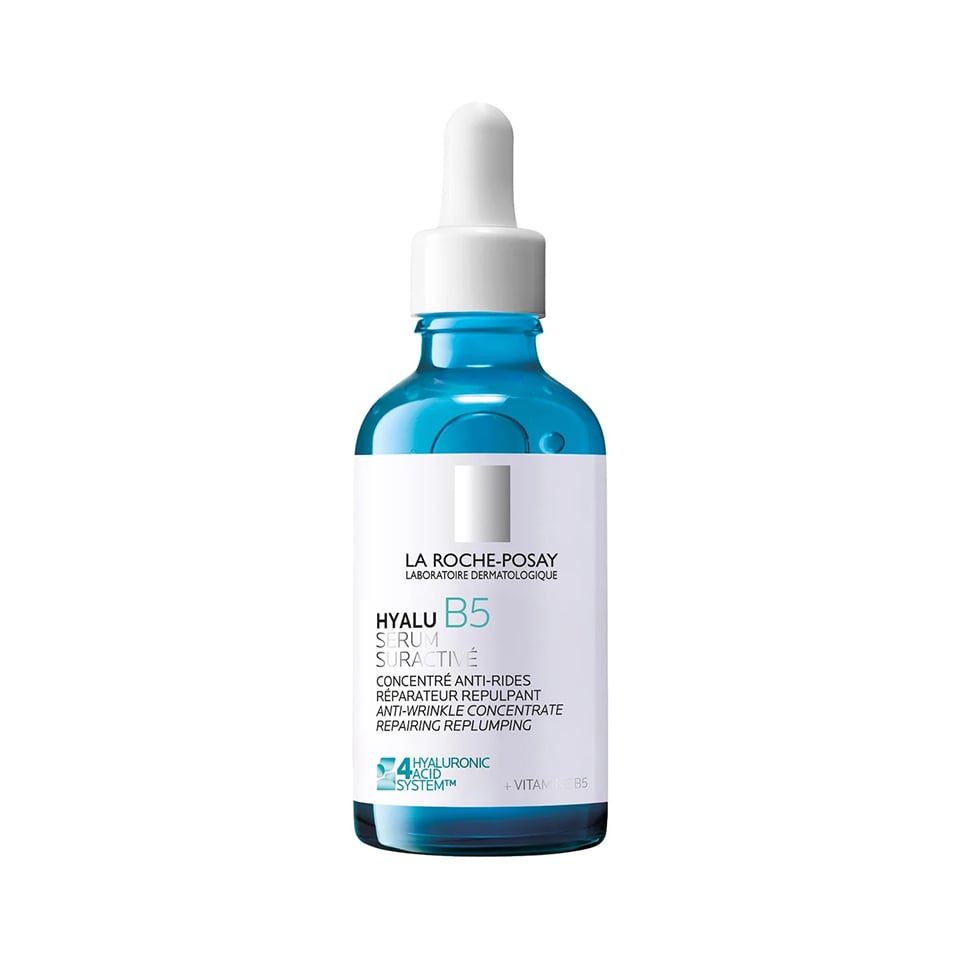
- Panthenol (Pro-Vitamin B5): A renowned soothing agent that works in tandem with HA to improve skin barrier repair.
- Madecassoside (Cica): Derived from Centella Asiatica, it reduces redness and inflammation.
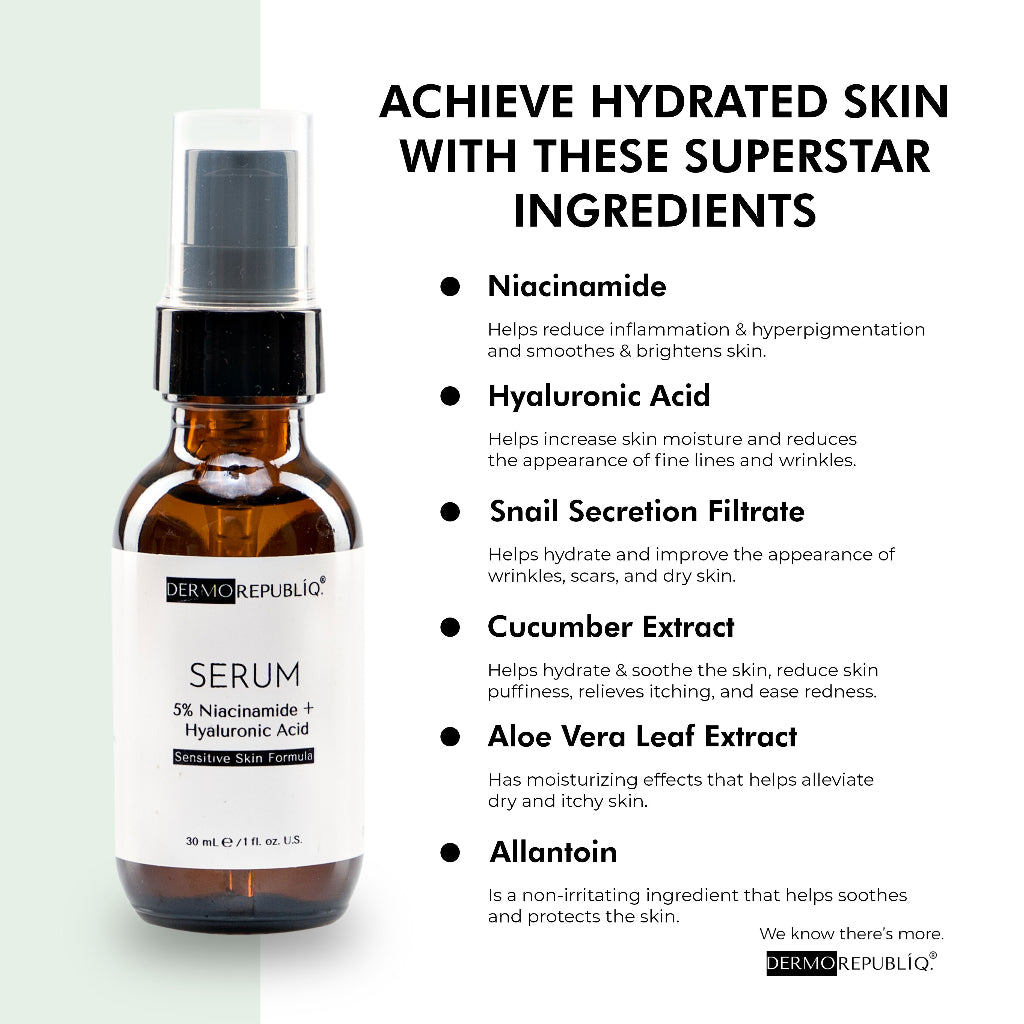
- Niacinamide (Vitamin B3): In concentrations of 2-5%, it can help increase the natural production of ceramides, making the skin less sensitive over time.
- Thermal Spring Water: Often used as the base of the serum, providing minerals that help desensitize the skin.
Common Mistakes to Avoid
- Using too much: A pea-sized amount is usually sufficient for the entire face. Over-applying can lead to "pilling" when you apply moisturizer or sunscreen over it.
- Relying on HA alone: Hyaluronic acid is a hydrator (water-adder), not an emollient (oil-adder). Sensitive skin usually needs both. If you only use HA and skip moisturizer, your skin may eventually feel tighter.
- Ignoring the climate: If you are in a desert or an office with high air conditioning (low humidity), you must be extra vigilant about applying an occlusive cream over your serum.
Troubleshooting: Why does my skin feel dry after using HA?
If your sensitive skin feels drier or tighter after using a hyaluronic acid serum, it is likely due to trans-evaporation. If the air around you is drier than your skin, the HA will draw moisture out of your face and release it into the atmosphere. This is easily corrected by ensuring you apply the serum to wet skin and immediately covering it with a cream that contains "occlusive" ingredients like dimethicone, petrolatum, or plant oils.
Another possibility is a reaction to a preservative or a "penetration enhancer" in the serum. If redness or itching occurs, discontinue use and look for a formulation with a shorter, more "minimalist" ingredient list.
Frequently Asked Questions
Can hyaluronic acid cause a breakout on sensitive skin?
Hyaluronic acid itself is non-comedogenic, meaning it does not clog pores. However, some serums contain thickeners or oils that might trigger breakouts in acne-prone sensitive skin. Always look for "non-comedogenic" on the label if you are prone to congestion.
How often should I use HA serum?
For most people with sensitive skin, using it twice daily—morning and night—is ideal. Because it is non-irritating, there is no need to "build up" a tolerance like you would with retinol or Vitamin C.
Is Sodium Hyaluronate the same as Hyaluronic Acid?
Sodium Hyaluronate is the salt form of HA. It is the most common version found in serums because it is more stable, less expensive to formulate, and has a smaller molecular size, allowing it to move into the skin more easily than pure HA. For sensitive skin, both are generally excellent choices.
Can I use HA serum after a professional treatment?
In 2026, post-procedure care frequently involves HA. Because it is soothing and aids in wound healing, it is often recommended after chemical peels or laser treatments, provided the serum is sterile and free of fragrances or alcohols. Always consult your dermatologist for post-op specifics.
Will HA serum help with rosacea?
While not a cure for rosacea, HA can help manage the symptoms. Rosacea is often characterized by a broken skin barrier and extreme dryness. By providing hydration without irritation, HA helps calm the "heat" associated with rosacea flare-ups.
Final Recommendation
For those navigating the complexities of sensitive skin, a hyaluronic acid serum is one of the safest and most effective tools for maintaining a healthy, glowing complexion. Focus on high-quality, fragrance-free formulations that utilize a variety of molecular weights. By applying the serum to damp skin and sealing it with a barrier-supporting moisturizer, you can effectively resolve dehydration and reduce sensitivity over time.
Image Gallery