Navigating the Market for a Compact Hybrid Car Under a $500 Monthly Budget in 2026
Finding the best compact hybrid car under a $500 monthly budget involves balancing auto financing costs, fuel economy savings, and long-term reliability in the 2026 automotive market. While a $500 monthly car payment typically translat...
Finding the best compact hybrid car under a $500 monthly budget involves balancing auto financing costs, fuel economy savings, and long-term reliability in the 2026 automotive market. While a $500 monthly car payment typically translates to a vehicle purchase price of roughly $25,000 to $28,000 based on current interest rates and down payment structures, savvy buyers can secure highly efficient compact hybrid sedans and hatchbacks that lower total cost of ownership through exceptional fuel economy.
Contents
Understanding the Financial Reality of a $500 Monthly Car Budget
Securing a compact hybrid vehicle under a strict $500 monthly threshold requires a clear breakdown of financing mechanics, insurance, and operational costs. A monthly payment of $500 is a common benchmark for car buyers financing a reliable commuter vehicle, but the total cost of ownership extends far beyond the loan payment itself.
When evaluating a $500 monthly budget, buyers must account for depreciation, comprehensive and collision auto insurance premiums, scheduled maintenance, and fluctuating fuel prices. Compact hybrids excel in this budget tier because their exceptional fuel economy—often exceeding 45 to 50 miles per gallon (MPG) combined—actively offsets monthly transportation expenditures compared to traditional internal combustion engine (ICE) vehicles.
Financing Structure and Down Payment Dynamics
To maintain a monthly payment at or below $500 in the current lending environment, buyers generally structure their auto loans around a specific set of financial variables. Assuming a standard 60-month or 72-month loan term with average Tier 1 or Tier 2 credit scores, the maximum loan principal for a $500 payment sits comfortably within the pre-owned or entry-level new vehicle market.
| Loan Term | Estimated Interest Rate | Max Loan Principal (Approx.) | Required Down Payment for $26,000 Car |
|---|---|---|---|
| 60 Months | 5.5% APR | $26,200 | $1,500 - $2,500 |
| 72 Months | 6.2% APR | $29,800 | $0 - $1,000 |
| 48 Months | 4.9% APR | $21,500 | $5,500 - $6,500 |
Utilizing a structured down payment or trading in an existing vehicle helps keep the monthly payment beneath the $500 ceiling while avoiding excessive long-term interest accrual associated with extended 84-month financing terms.
Top Compact Hybrid Contenders Fitting the Budget
The compact hybrid market features several standout models that easily fall within the target price bracket when purchased as a certified pre-owned (CPO) vehicle or a base-trim new model. These vehicles combine nimble dimensions for urban driving with advanced powertrain technology.
1. Toyota Prius (Recent Generations)
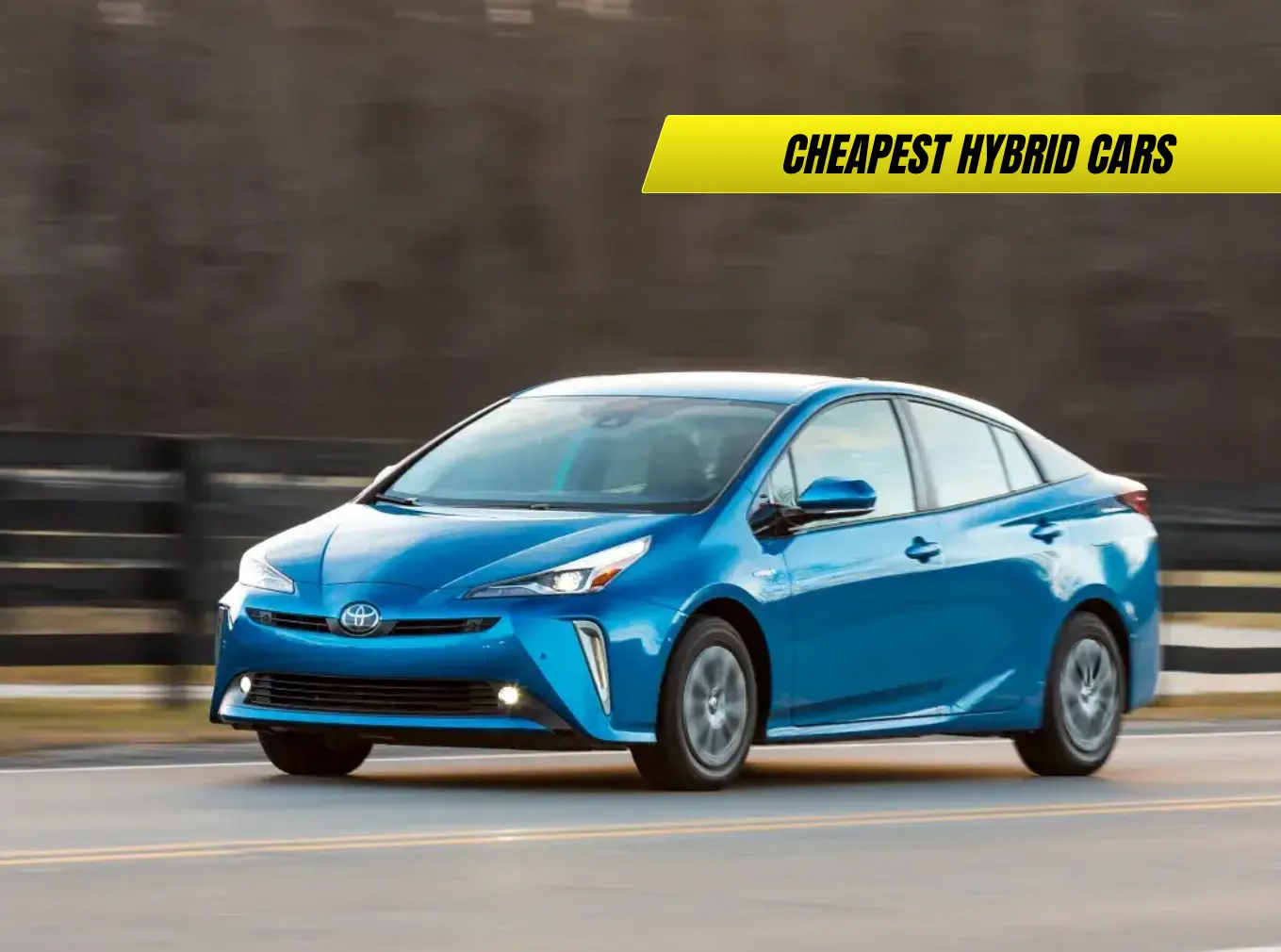
The Toyota Prius remains the undisputed benchmark for compact hybrid efficiency. Modern iterations deliver an astounding EPA-estimated rating of up to 57 MPG combined, drastically reducing monthly fuel expenditures. The sleek aerodynamic profile, robust suite of active safety features (Toyota Safety Sense), and legendary powertrain longevity make it a top recommendation for budget-conscious commuters.
2. Hyundai Elantra Hybrid
Offering a more traditional sedan silhouette, the Hyundai Elantra Hybrid provides an upscale interior layout, intuitive infotainment technology, and an EPA-estimated rating of roughly 50 to 54 MPG. Its dual-clutch automatic transmission delivers a more engaging driving dynamic compared to the continuously variable transmissions (CVTs) found in many competitors.
3. Toyota Corolla Hybrid
For buyers prioritizing bulletproof reliability and straightforward ergonomics, the Toyota Corolla Hybrid bridges the gap between traditional compact sedan practicality and high-efficiency hybrid operation. With available electronic all-wheel drive (AWD) on select trims and fuel economy ratings touching 50 MPG combined, it represents a secure financial and operational investment.
Key Technical Specifications and Performance Metrics
Evaluating compact hybrids requires looking beyond aesthetic appeal and examining the engineering specifications that dictate daily usability, energy recovery, and cargo capacity.
- Powertrain Architecture: Most compact hybrids pair a naturally aspirated 4-cylinder gasoline engine (utilizing the Atkinson cycle for maximum thermal efficiency) with one or two permanent-magnet synchronous electric motors.
- Battery Chemistry: Lithium-ion battery packs are standard in modern compact hybrids, offering higher energy density and lighter weights compared to older nickel-metal hydride (NiMH) units, though both chemistries offer exceptional longevity.
- Regenerative Braking Systems: Advanced brake-by-wire systems capture kinetic energy during deceleration, converting it back into electrical energy to replenish the hybrid battery pack while minimizing traditional brake pad wear.
- Cargo Versatility: Hatchback designs like the Prius offer superior vertical cargo flexibility compared to traditional trunk-based sedans like the Corolla Hybrid, though both offer split-folding rear seats to accommodate oversized items.
Step-by-Step Guide to Purchasing and Budgeting for Your Hybrid
Executing a seamless vehicle purchase requires a methodical approach that protects your financial standing and ensures you secure a reliable hybrid vehicle.
- Assess Total Monthly Transportation Costs: Calculate your maximum comfort zone, ensuring that the car payment, insurance, fuel, and maintenance combined do not strain your monthly cash flow.
- Obtain Pre-Approved Financing: Secure financing through a credit union or bank before visiting a dealership to establish a firm interest rate baseline and maximum loan amount.
- Inspect Hybrid Battery Health: If purchasing a pre-owned compact hybrid, request a hybrid health check report from a certified dealership or independent mechanic to verify battery module integrity and state of health (SOH).
- Evaluate Insurance Rates: Request VIN-specific insurance quotes for your shortlisted models, as hybrid repair costs and advanced safety sensor calibrations can occasionally impact premium pricing.
- Review Warranty Coverage: Confirm remaining factory hybrid component warranties (typically 8 years/100,000 miles or 10 years/150,000 miles depending on state regulations and model year) before finalizing the purchase.
Pros and Cons of Owning a Compact Hybrid on a Budget
Weighing the operational advantages against the potential limitations ensures that a compact hybrid aligns with your long-term driving habits and financial goals.
Advantages
- Exceptional Fuel Efficiency: Drastically lower fuel costs per mile compared to standard gasoline-powered compact cars, protecting your budget against fluctuating pump prices.
- Lower Maintenance Costs: Regenerative braking reduces brake pad wear, and hybrid systems generally experience less engine wear due to electric motor assistance during low-speed acceleration.
- Resale Value: Compact hybrids historically hold their residual values exceptionally well due to high market demand for fuel-efficient transportation.
Disadvantages
- Higher Initial Purchase Price: Hybrids often carry a slight price premium over their non-hybrid counterparts, requiring careful negotiation or looking at slightly older model years to stay under a $500 monthly payment.
- Complex Powertrain Repairs: Out-of-warranty repairs involving high-voltage electrical components require specialized technician training and diagnostic equipment.
- Cabin and Cargo Space Compromises: Battery pack placement in certain compact sedans can slightly reduce trunk capacity or rear-seat pass-through capabilities.
Frequently Asked Questions
Can I buy a brand-new hybrid car for under a $500 monthly payment?
Yes, certain base-trim compact hybrids can be financed for under $500 a month if you provide a sufficient down payment or trade-in equity to reduce the total loan principal. However, many buyers target certified pre-owned (CPO) models to secure higher trim levels while maintaining a comfortable monthly payment.
How much do hybrid batteries cost to replace if they fail?
Modern hybrid vehicle batteries are engineered to last the lifetime of the vehicle, often exceeding 150,000 to 200,000 miles. If a replacement is eventually necessary, independent aftermarket options and refurbished modules typically cost between $1,500 and $3,500, a significant drop from early-generation pricing.
Do compact hybrids require special maintenance compared to regular cars?
Compact hybrids require the same routine maintenance as standard vehicles—such as oil changes, tire rotations, and cabin air filter replacements—with the added benefit of extended brake pad lifespan. The internal combustion engine operates less frequently, but coolant flushes for the inverter system must be performed according to factory service schedules.
Are compact hybrids difficult to drive in winter weather?
Most compact hybrids are front-wheel drive (FWD) and handle winter weather capably with a proper set of winter tires. Furthermore, several modern compact hybrids offer electronic all-wheel drive (e-AWD) systems that automatically engage a dedicated rear electric motor when slippage is detected at the front wheels.
How do I verify the health of a used hybrid car before buying?
You should request a comprehensive pre-purchase inspection (PPI) from a technician certified in hybrid vehicle systems. They will use specialized diagnostic scanners to read battery cell voltages, check for error codes in the hybrid control module, and evaluate the overall thermal management system.
Strategic Recommendation
To maximize your $500 monthly automotive budget, prioritize certified pre-owned Toyota Prius or Honda Insight models from recent model years. These vehicles offer the ideal intersection of low depreciation, unmatched fuel efficiency, and robust factory warranties, ensuring your total cost of ownership remains low long after you drive off the lot. Begin by securing independent credit union financing, request a comprehensive battery health check on any pre-owned prospect, and enjoy the substantial monthly fuel savings that a high-efficiency compact hybrid provides.
Image Gallery