Software Resources at NJIT: Powering Advanced Research and Innovation in 2026
The New Jersey Institute of Technology (NJIT) provides a robust ecosystem of specialized software, ranging from computational modeling and simulation tools to advanced data analytics suites. These resources are centrally managed throug...
The New Jersey Institute of Technology (NJIT) provides a robust ecosystem of specialized software, ranging from computational modeling and simulation tools to advanced data analytics suites. These resources are centrally managed through Information Services and Technology (IST) and Academic & Research Computing (ARC), enabling researchers to perform high-stakes simulations, analyze massive datasets, and develop architectural prototypes essential for modern scientific discovery.
Contents
The Strategic Role of Software in NJIT’s Research Mission
As of 2026, software at NJIT is no longer viewed merely as a set of tools but as a fundamental infrastructure that drives the university’s status as an R1 doctoral university. The integration of software into the research lifecycle allows faculty and students to transition from theoretical concepts to digital twins and predictive models with high precision.
The university’s research strategy emphasizes "Computing as a Service," where the complexity of software installation and license management is handled centrally, allowing researchers to focus on their specific domains. Whether it is a PhD student in the Newark College of Engineering (NCE) using ANSYS for fluid dynamics or a researcher at the Ying Wu College of Computing (YWCC) deploying TensorFlow on high-performance clusters, software serves as the bridge between raw data and actionable insight.
Centralized Software Access: The IST and ARC Portals
The primary gateway for software at NJIT is the IST Software Downloads portal and the specialized repositories managed by Academic & Research Computing. In 2026, the delivery methods have become increasingly diverse to accommodate hybrid research environments.
The Software Download Portal
Faculty, staff, and students can access a wide array of licensed software for personal and university-owned devices. This portal manages seat licenses for industry-standard applications. Access typically requires an active UCID (University Computing ID) and multi-factor authentication (MFA).
Virtual Desktop Infrastructure (VDI)
For software that requires high computational overhead or has restrictive licensing (such as specific CAD or GIS tools), NJIT utilizes high-performance VDI solutions like Apporto. This allows researchers to run intensive applications via a standard web browser, bypassing the need for expensive local hardware. This is particularly beneficial for undergraduate researchers and international collaborators who may not have high-end workstations.
Academic & Research Computing (ARC)
ARC provides specialized software environments for the Wulfe and Lochness high-performance computing (HPC) clusters. Unlike standard desktop software, the ARC environment uses a module-based system. Researchers load specific software versions (e.g., Python 3.11, CUDA 12.x, or OpenMPI) into their shell environment to ensure reproducibility in scientific experiments.
Key Software Categories and Research Applications
To understand the impact of software at NJIT, one must look at how specific disciplines leverage these tools to advance their respective fields.
Engineering and Physical Sciences
In the Newark College of Engineering, software such as MATLAB, LabVIEW, and SolidWorks remains the backbone of research.
- MATLAB is extensively used for algorithm development and signal processing in electrical engineering.
- ANSYS and COMSOL Multiphysics enable researchers to simulate heat transfer, structural integrity, and electromagnetics without the high cost of physical prototyping.
- AutoCAD and Revit are essential for the Hillier College of Architecture and Design, facilitating the creation of sustainable urban models.
Data Science and Artificial Intelligence
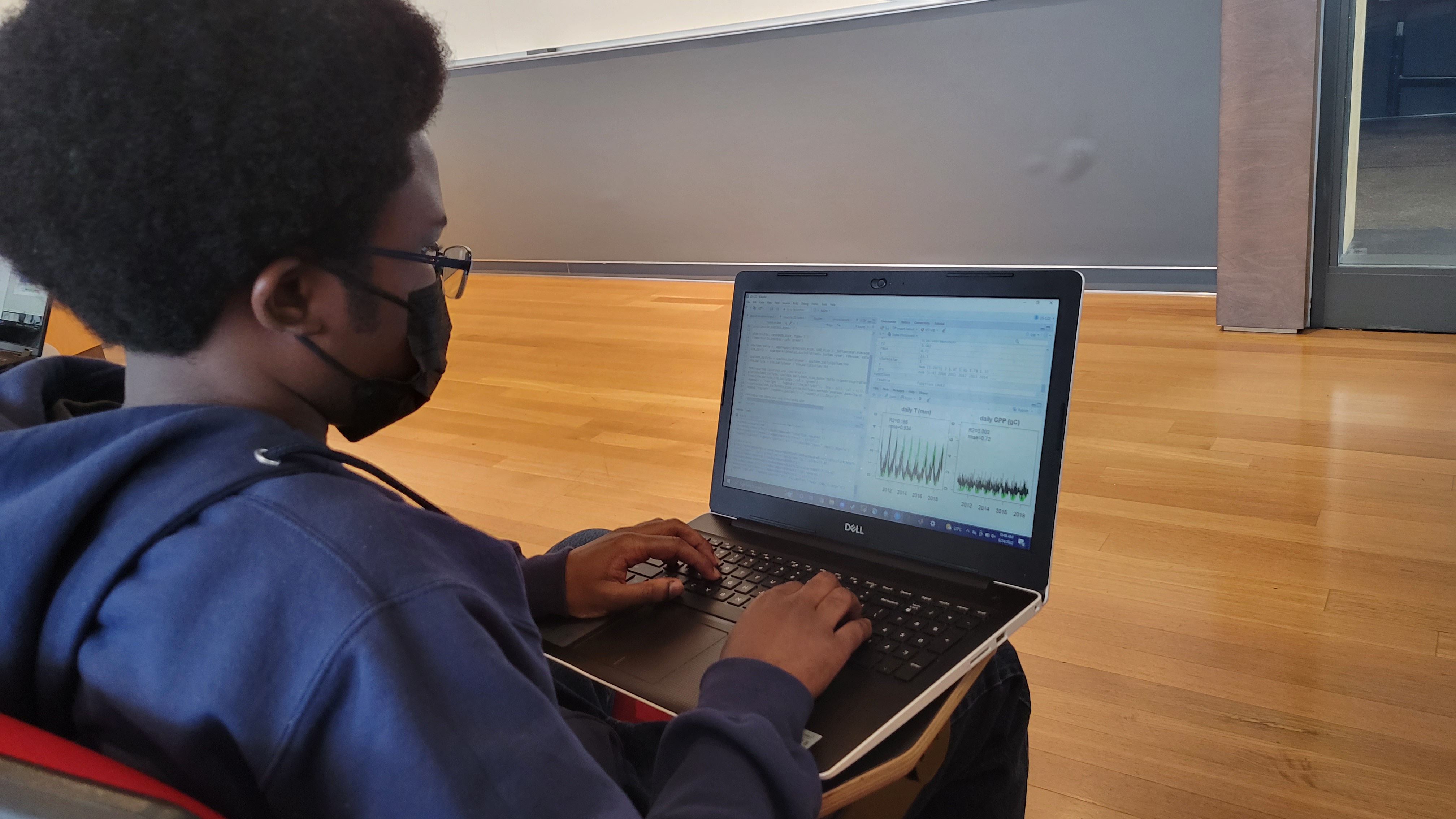
With the growth of the Institute for Data Science, software like RStudio, Anaconda (Python), and Tableau has become ubiquitous. These tools allow for the cleaning, visualization, and statistical modeling of "Big Data." Researchers in social sciences use SPSS and Stata for quantitative analysis, while those in bioinformatics rely on specialized libraries within the Bioconductor project.
Cyber-Physical Systems and Security
For research in cybersecurity, NJIT provides environments for virtualization and network simulation, such as VMware and Wireshark. These tools allow researchers to create "sandbox" environments to test the resilience of critical infrastructure against cyber threats without risking actual network integrity.
Comparative Overview of Research Software at NJIT
The following table summarizes the most utilized software packages, their primary research function, and the typical method of access within the NJIT ecosystem for the 2026 academic year.
| Software Category | Core Software Examples | Primary Research Application | Access Method |
|---|---|---|---|
| Computational Math | MATLAB, Mathematica | Algorithm testing, symbolic math, modeling | Download / VDI |
| Engineering/CAD | SolidWorks, AutoCAD, ANSYS | Structural simulation, 3D design, CFD | Download / VDI / HPC |
| Data Analytics | R, Python (Conda), SAS, SPSS | Statistical modeling, AI, Big Data | HPC / Download |
| GIS & Mapping | ArcGIS Pro, QGIS | Geospatial analysis, urban planning | VDI / Download |
| Scientific Writing | LaTeX (Overleaf), EndNote | Publication formatting, citation management | Cloud / Download |
| Biology/Chemistry | ChemDraw, BLAST, Schrödinger | Molecular modeling, genome sequencing | HPC / Specialized Labs |
High-Performance Computing (HPC) and Software Modules
For research projects involving massive parallelization—such as climate modeling or training large language models (LLMs)—the local desktop software is insufficient. NJIT’s HPC clusters offer a Linux-based environment where software is managed through the module command.
This system is critical for research "versioning." In a typical research paper, a scientist must specify exactly which version of a library was used. By using the ARC software stack, researchers can "freeze" their software environment, ensuring that a simulation run today will yield the same results if repeated three years later. Common modules include:
- Compilers: GCC, Intel OneAPI, and NVIDIA HPC SDK for optimized code execution.
- Libraries: FFTW for fast Fourier transforms and PETSc for partial differential equations.
- Parallel Frameworks: MPI and OpenMP for distributing workloads across hundreds of CPU cores or GPUs.
Compliance, Licensing, and Security Requirements
Software at NJIT is governed by strict licensing agreements and security protocols. Researchers must be aware that software provided for "Academic Use" often cannot be used for commercial consulting or outside corporate research without additional permissions.
- Export Control: Certain high-end encryption or simulation software is subject to U.S. Export Control laws (EAR/ITAR). Researchers working with international partners must consult with the NJIT Office of Research Compliance before sharing software or results generated by controlled tools.
- Data Protection: When using cloud-based software or VDI, researchers handling sensitive data (HIPAA for health, FERPA for education, or CUI for defense) must ensure the software environment is cleared for that specific data classification.
- License Renewals: Most NJIT software licenses follow the fiscal year cycle (July 1 – June 30). Users are encouraged to synchronize their research milestones with these cycles to avoid downtime during license server updates.
Support and Technical Training
NJIT provides more than just the installer files; the university offers a support structure to help researchers master these tools.
- IST Service Desk: Handles installation errors, UCID authentication issues, and VPN connectivity for license server access.
- ARC Workshops: Throughout the semester, Academic & Research Computing hosts "bootcamps" on Python, R, and HPC basics. These are vital for graduate students who need to scale their research from a laptop to a supercomputer.
- Departmental Labs: Many departments (like Biomedical Engineering) maintain specialized labs with software tailored to niche research requirements that may not be available on the general university portal.
Frequently Asked Questions
How do I access NJIT software from off-campus?
To access software that relies on university license servers (like MATLAB or SolidWorks) while off-campus, you must use the NJIT VPN (Cisco AnyConnect or GlobalProtect). This establishes a secure tunnel to the campus network, allowing your computer to "check out" a license. Alternatively, using the Apporto VDI allows access without a VPN, as the software runs on a remote server accessible via any browser.
Can I install NJIT-licensed software on my personal laptop?
Most software available on the IST Software Downloads page is licensed for "Academic Use" on personal devices belonging to students and faculty. However, some specific titles are restricted to university-owned assets. You should check the "Terms of Use" listed next to each title in the software portal for specific eligibility.
What should I do if a software package I need is not on the list?
If your research requires a specific package not currently licensed by the university, you should contact Academic & Research Computing. They can often assist in evaluating the software for security compliance or help negotiate a departmental license. For widely used tools, there may be a path to adding them to the centralized portal if there is sufficient demand.
Are there costs associated with using the HPC software?
For standard research and academic projects, access to the software stack on the Wulfe or Lochness clusters is generally provided at no direct cost to the researcher. However, projects that require massive, dedicated resources or long-term storage may involve a "condominium" model where the PI (Principal Investigator) contributes to the hardware costs, while the software maintenance remains supported by the university.
How does NJIT handle software for sensitive or classified research?
Research involving Controlled Unclassified Information (CUI) or other sensitive data must be conducted in a Secure Computing Environment (SCE). NJIT provides specialized software instances and storage that meet NIST 800-171 standards. Researchers must request access to these environments through the Office of Research and IST to ensure all software configurations meet federal security mandates.
Final Recommendations for Researchers
To maximize the impact of software on your research at NJIT, begin by auditing the Academic & Research Computing (ARC) inventory before purchasing any independent licenses. Leveraging the university’s site licenses not only saves grant funding but also ensures you have access to official technical support and updates. For those working on complex simulations, prioritize learning the Linux command line to take full advantage of the HPC clusters. Finally, always document the software versions and environment configurations used in your experiments to satisfy the increasing demands for transparency and reproducibility in modern scientific publishing.
Image Gallery