Commercial Foundation Repair Company in Hurst: 2026 Guide for Property Owners
Securing a commercial foundation repair company in Hurst requires identifying specialized contractors who understand the unique expansive clay soils of the Mid-Cities region. In 2026, professional remediation involves structural engine...
Securing a commercial foundation repair company in Hurst requires identifying specialized contractors who understand the unique expansive clay soils of the Mid-Cities region. In 2026, professional remediation involves structural engineering oversight, high-capacity steel piering, or polyurethane injection to stabilize large-scale buildings, warehouses, and retail centers against North Texas's volatile moisture cycles and soil shifts.
Contents
Understanding the Hurst Geological Context and Foundation Risks
Commercial properties in Hurst, Texas, face specific structural challenges rooted in the local geography. Situated within the Dallas-Fort Worth metroplex, Hurst sits atop layers of expansive clay soil, primarily from the Eagle Ford Shale and Austin Chalk formations. These soils are notorious for their high shrink-swell capacity. When the region experiences heavy spring rains, the clay absorbs moisture and expands, exerting upward pressure (heave) on concrete slabs. Conversely, during the hot, dry Texas summers—which have become increasingly intense through 2025 and into 2026—the soil loses moisture and shrinks, leaving voids that lead to foundation settlement.
For commercial entities, the stakes are significantly higher than for residential homeowners. Commercial structures often feature larger footprints, heavier "dead loads" (the weight of the building itself), and fluctuating "live loads" (inventory, machinery, and foot traffic). A minor shift that might cause a hairline crack in a house can lead to significant structural misalignment in a retail strip or an industrial warehouse, potentially violating safety codes or disrupting business operations.
Signs Your Hurst Commercial Property Needs Professional Intervention
Before contacting a commercial foundation repair company in Hurst, facility managers should conduct a thorough walkthrough to identify specific "red flags." Because commercial buildings often utilize tilt-wall construction or steel frame designs, the symptoms of failure differ from residential structures.
- Exterior Masonry Cracks: Look for "stair-step" cracks in brickwork or separations in concrete tilt-wall panels. These often indicate that one corner of the building is settling faster than the rest.
- Window and Door Misalignment: If fire doors or heavy commercial glass entrances are sticking, or if gaps appear between the frame and the wall, the building’s "square" has been compromised.
- Interior Floor Sloping: In large warehouses, even a one-degree slope can interfere with high-density racking systems and automated forklifts.
- Plumbing and Utility Disruptions: Foundation movement often shears underground cast-iron or PVC pipes. A sudden, unexplained increase in the water bill is a frequent secondary indicator of a foundation leak.
- Separation of Additions: If a newer wing of a building is pulling away from the original structure, it suggests independent movement and a lack of unified support.
Technical Repair Methods for Commercial Structures
A reputable commercial foundation repair company in Hurst will not offer a one-size-fits-all solution. Instead, they will propose a method based on the building’s weight, the depth of the load-bearing strata, and the intended use of the facility.
Deep-Driven Steel Piers
For heavy commercial loads, steel piers are the industry standard in 2026. These involve driving heavy-duty steel pipe segments deep into the ground until they hit "refusal" at the bedrock or a stable load-bearing stratum. Because they do not rely on skin friction from the soil, they are immune to the moisture changes in the upper clay layers. They are particularly effective for multi-story office buildings in the Hurst-Euless-Bedford (HEB) area.
Helical Piers
Helical piers feature screw-like blades at the tip and are mechanically rotated into the ground. These are ideal for lighter commercial structures or areas where the soil is highly saturated. They provide immediate load-bearing capacity and are often used for stabilizing walkways, loading docks, or signage foundations.
Polyurethane Foam Injection (Slab Jacking)
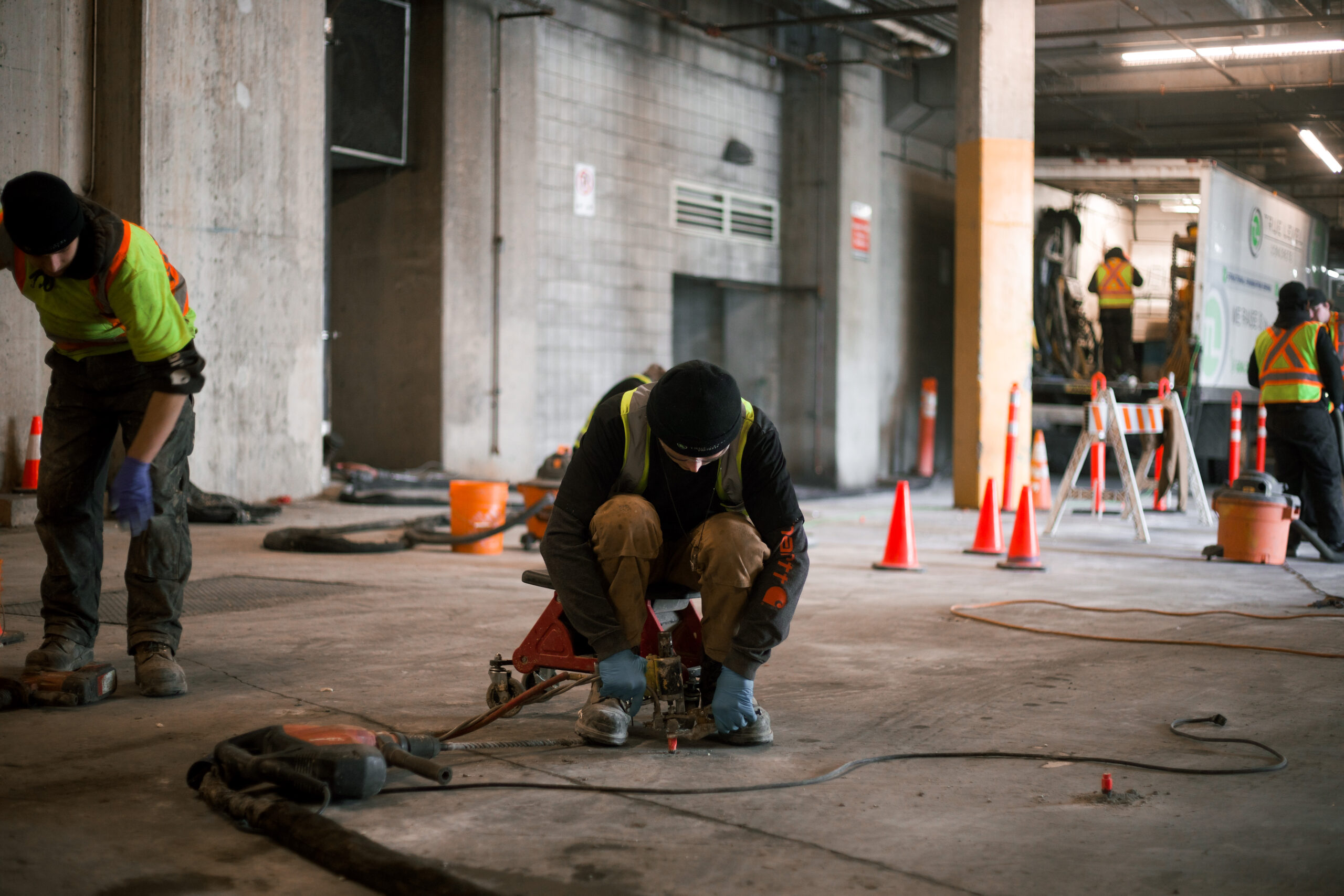
For interior floor leveling in retail spaces or warehouses, high-density polyurethane injection is a non-invasive alternative to traditional mudjacking. Technicians drill small holes through the slab and inject a specialized foam that expands to fill voids and lift the concrete. In 2026, this remains the preferred method for businesses that cannot afford extended downtime, as the foam cures within minutes.
Mudjacking
While older than polyurethane, traditional mudjacking—pumping a slurry of cement, soil, and sand under the slab—is still used for specific heavy-duty industrial floor stabilization where the added mass of the slurry is beneficial for dampening machinery vibrations.
The Process of Commercial Foundation Remediation
When engaging a commercial foundation repair company in Hurst, the workflow follows a strictly regulated sequence to ensure compliance with City of Hurst building codes and International Building Code (IBC) standards.
1. Initial Assessment and Survey
The contractor performs an initial floor-level survey using a digital altimeter to map out the current elevations of the slab. This "contour map" identifies exactly where the building is low and where it remains stable.
2. Independent Engineering Report
In 2026, most commercial insurance policies and municipal permits require an independent Professional Engineer (P.E.) to sign off on the repair plan. The engineer provides an unbiased assessment, ensuring the proposed number of piers and their placement are structurally sound.
3. Permitting and Utility Locates
The company must secure permits from the Hurst Development Services department. Furthermore, "Texas 811" must be called to locate underground gas, electric, and fiber-optic lines, which are dense in the commercial corridors along Highway 183 and Loop 820.
4. Installation and Lifting
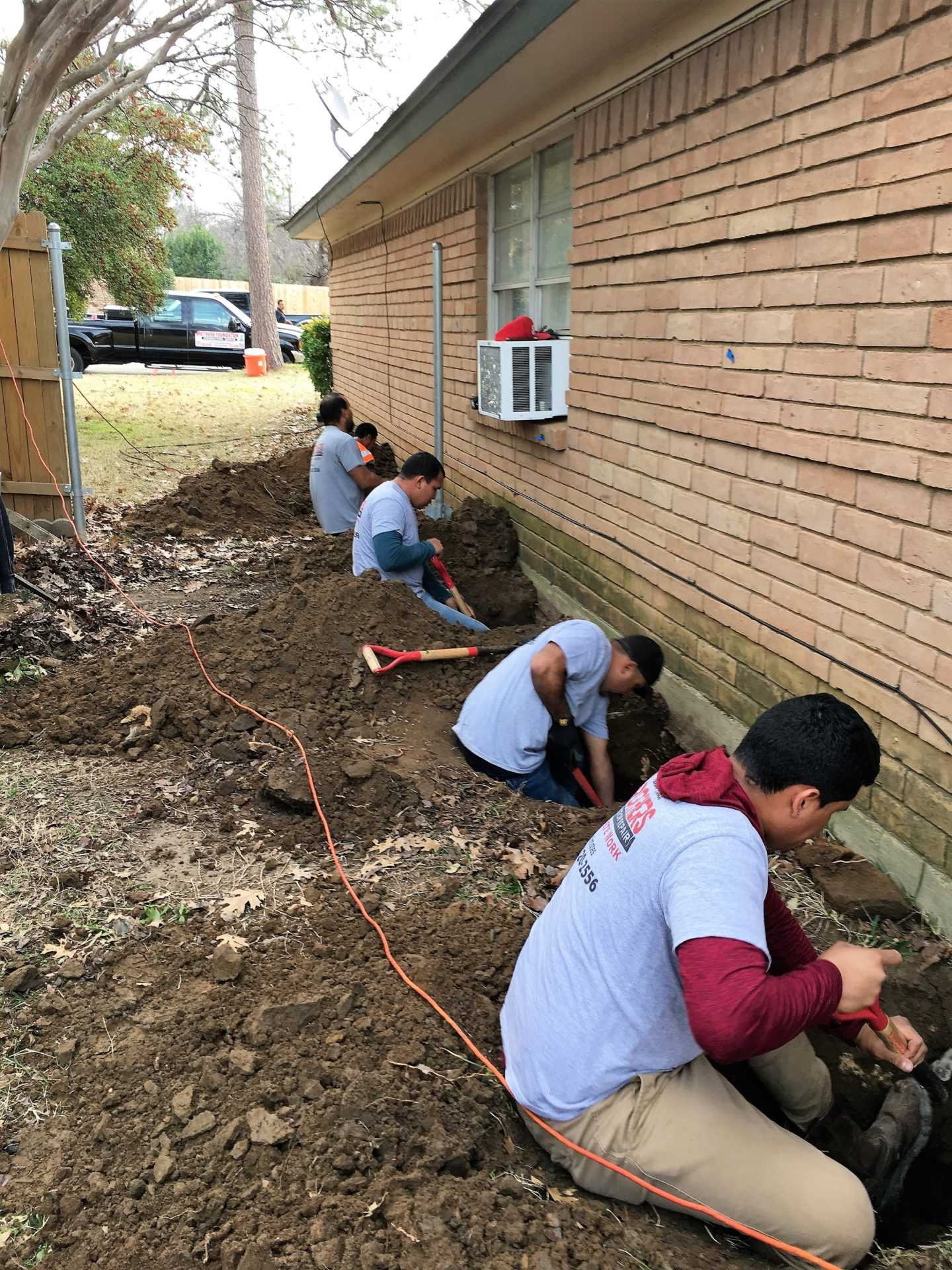
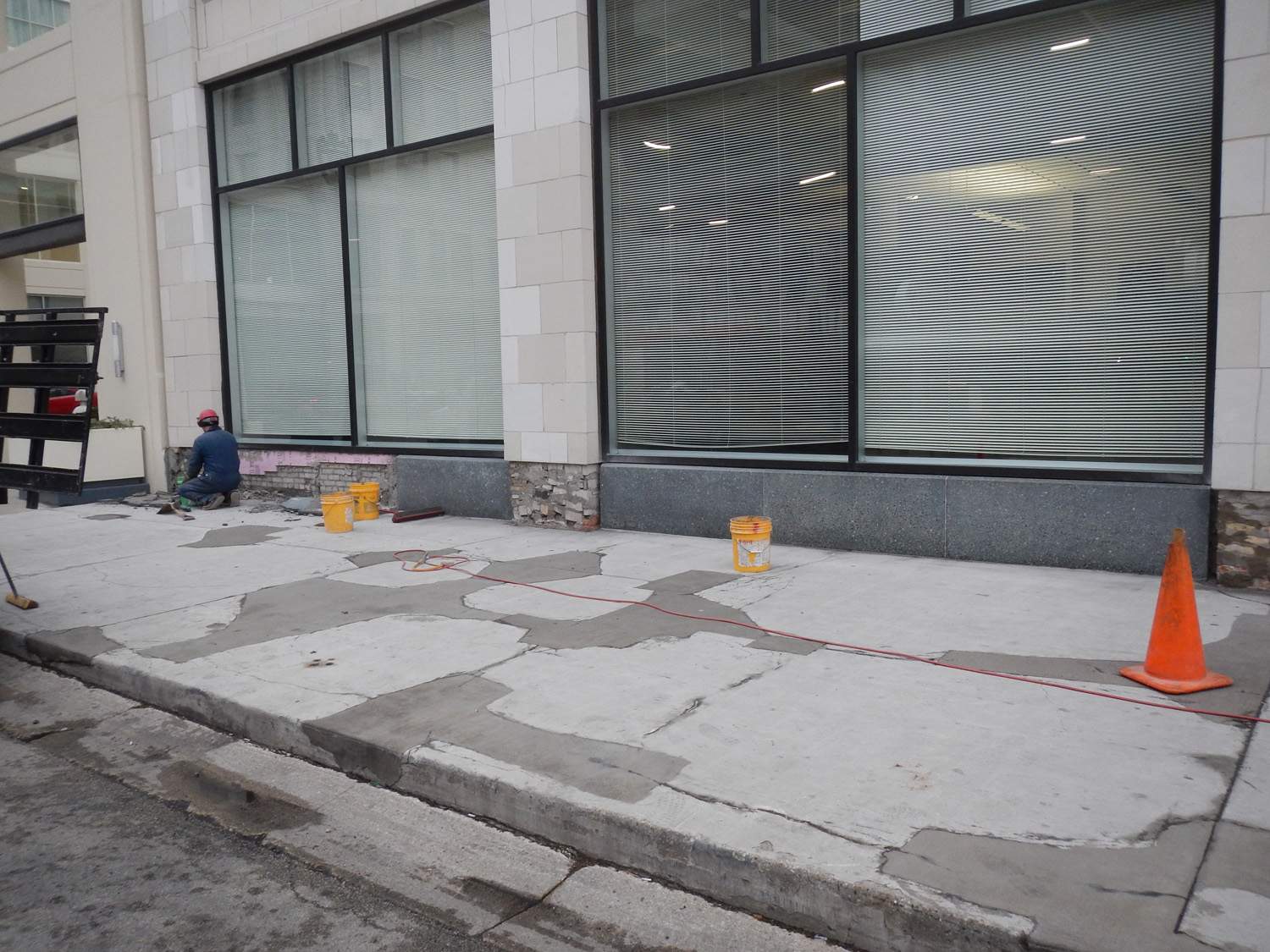
Excavation occurs at the designated pier locations. For exterior piers, this usually involves digging small "bell holes" under the grade beam. The piers are driven to the required depth, and hydraulic jacks are used simultaneously to bring the building back toward its original level.
5. Final Engineering Verification and Site Restoration
Once the lift is complete, the independent engineer returns to verify that the structure has been stabilized according to the initial plan. The holes are backfilled, concrete is patched, and the site is returned to its operational state.
Comparison of Commercial Foundation Repair Methods
| Method | Primary Benefit | Ideal Application | Estimated Lifespan | Impact on Operations |
|---|---|---|---|---|
| Steel Piers | Highest load capacity | Multi-story offices, Heavy machinery | 50+ Years | Moderate (Exterior excavation) |
| Helical Piers | Precision in wet soils | Lighter structures, New additions | 40+ Years | Low (Mechanical installation) |
| Polyurethane | Rapid execution | Interior warehouse floors, Retail | 10-20 Years | Minimal (Zero downtime) |
| Concrete Piers | Cost-effective | Low-rise strip malls | 20-30 Years | Moderate (Large excavations) |
Choosing the Right Hurst Contractor: 2026 Criteria
Selecting a commercial foundation repair company in Hurst requires more than just looking at a quote. Because commercial repairs involve significant capital expenditure and long-term liability, property owners must vet contractors based on several professional markers.
- Commercial-Specific Bonding and Insurance: Residential-grade insurance is insufficient. Ensure the company carries high-limit General Liability and Workers' Compensation tailored for commercial sites.
- Safety Records: Ask for their EMR (Experience Modification Rate). A company with a strong safety culture will have an EMR below 1.0, which is crucial for working on active construction sites or industrial zones.
- Equipment Capabilities: Commercial jobs require heavy-duty hydraulic systems and specialized rigs that can operate in tight spaces or handle the high PSI required to drive piers through North Texas clay.
- Warranty Transferability: In the event of a property sale, the warranty must be legally transferable to the new owner. A "lifetime" warranty is only as good as the company's longevity; look for firms with at least 15–20 years of local history in the DFW area.
Costs of Commercial Foundation Repair in Hurst
In 2026, pricing for commercial foundation repair in Hurst is influenced by material costs (especially steel) and the depth of the load-bearing strata. While residential repairs might be quoted per pier, commercial projects are usually bid as a total package including engineering and permits.
- Pier Installation: Steel piers typically range from $800 to $1,200 per pier depending on the depth required.
- Engineering Fees: An independent P.E. report for a commercial building generally costs between $1,500 and $5,000, depending on the square footage.
- Interior Lifting: Polyurethane injection is often priced by the pound of material used, with small retail spaces starting around $3,000 and large warehouse projects exceeding $25,000.
Frequently Asked Questions
Will my business have to close during foundation repairs?
In most cases, no. Modern commercial foundation repair companies in Hurst utilize "bracket" systems that allow them to work from the exterior of the building. For interior work, such as polyurethane foam injection, the process is quiet and fast enough that it can often be completed during off-hours or in cordoned-off sections, allowing the business to remain operational.
How long does a typical commercial repair take?
A standard commercial project, such as stabilizing a 10,000-square-foot office building, typically takes between 5 and 10 business days. This includes excavation, pier driving, lifting, and site cleanup. This timeframe does not include the 1–2 weeks usually required for initial engineering and permit approval.
Does the City of Hurst require a permit for foundation repair?
Yes. The City of Hurst requires a building permit for all structural repairs, including foundation stabilization. A reputable contractor will handle the permit application process and coordinate the required city inspections. Failure to obtain a permit can result in fines and complications during future property appraisals or sales.
Are foundation repairs tax-deductible for commercial properties?
Generally, foundation repairs are considered "maintenance and repairs" rather than "capital improvements" if they are restoring the building to its original condition rather than adding value or extending its life significantly. However, tax laws in 2026 can be complex; property owners should consult with a tax professional regarding Section 179 deductions or capitalization rules.
How do I know if the soil under my Hurst building is particularly bad?
The USDA Web Soil Survey provides detailed data on soil types in the Hurst area. If your building is located in an area with a high "Plasticity Index" (PI), it means the soil is highly susceptible to movement. A professional foundation company will also conduct soil probes or review existing geotechnical reports during their assessment.
Practical Recommendation for Property Managers
If you suspect foundation movement in your Hurst commercial property, the first step is to document the issues with dated photographs and internal measurements. Before calling multiple repair companies, consider hiring an independent structural engineer who does not sell repair services. Their report will act as a "bid spec," allowing you to compare quotes from different commercial foundation repair companies in Hurst on an "apples-to-apples" basis. Ensure that any contractor you hire provides a detailed contract that specifies the depth to be reached by the piers and includes a post-repair plumbing test to ensure no lines were damaged during the lift.
Image Gallery