Understanding the VA Disability Rating Code Sheet and Diagnostic Codes
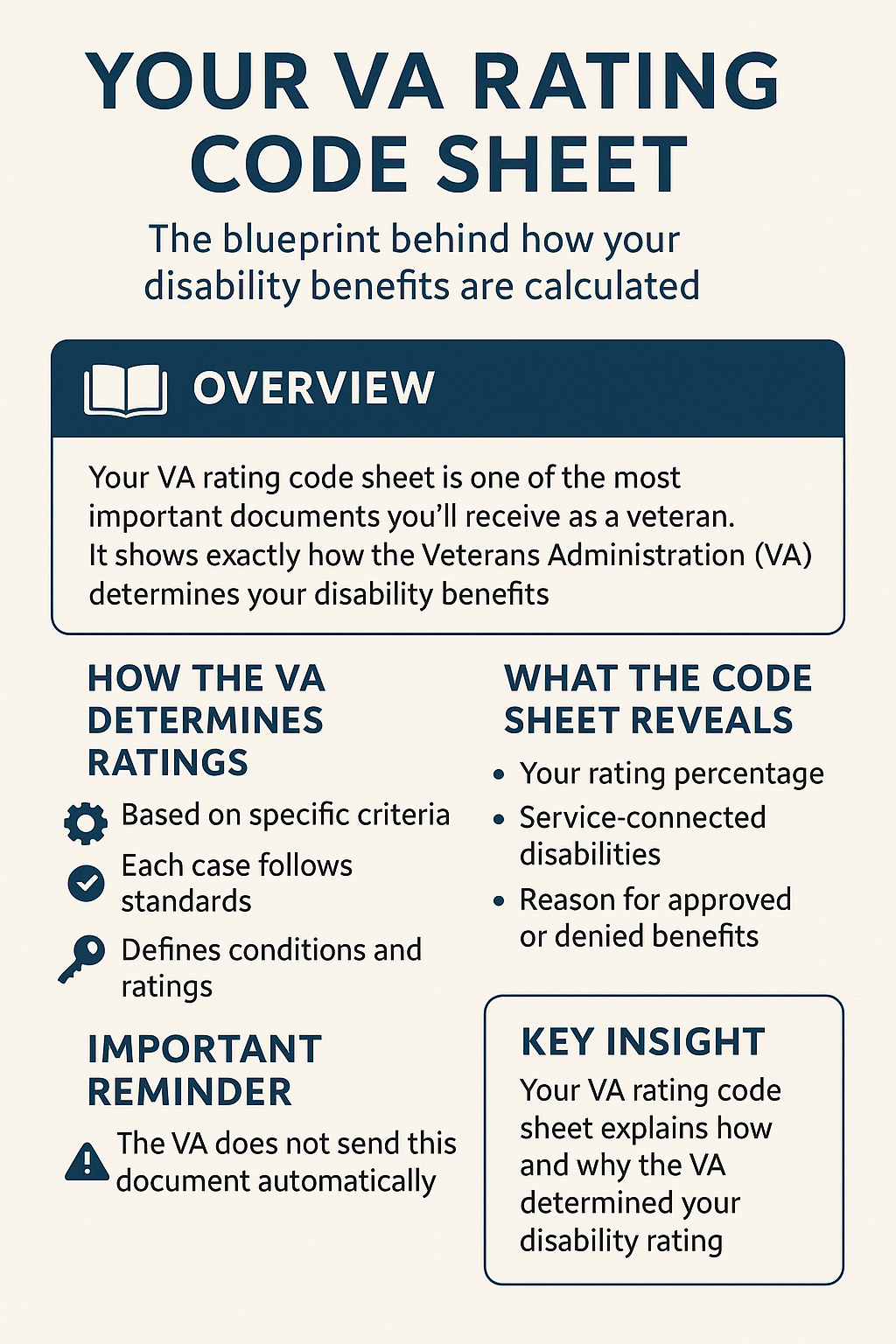
The VA disability rating code sheet is an official internal Department of Veterans Affairs document listing a veteran's service-connected conditions alongside their specific diagnostic codes and individual percentage ratings. Veterans...
The VA disability rating code sheet is an official internal Department of Veterans Affairs document listing a veteran's service-connected conditions alongside their specific diagnostic codes and individual percentage ratings. Veterans can request this document through their local VA regional office or online via the Department of Veterans Affairs portal to verify how their conditions are legally categorized and compensated under federal guidelines.
Contents
Navigating the federal veterans benefits system requires a firm grasp of the administrative mechanisms that govern compensation. When an individual files a claim for service-connected conditions, the rating decision is translated into a precise numerical framework. This framework relies on standardized coding structures that dictate payment tiers, eligibility for secondary benefits, and future evaluation schedules. Recognizing how these codes operate empowers claimants to audit their benefit status, identify rating discrepancies, and prepare effectively for future administrative reviews or appeals.
Anatomy of a Department of Veterans Affairs Rating Decision
A rating decision packet issued by the federal benefits administration contains several critical components. While the award letter provides a high-level summary of monthly compensation and combined percentage metrics, the underlying documentation offers granular administrative data.
The primary administrative tracking tool for an individual's adjudicated conditions is formally known as a rating code sheet. This document functions as the official ledger of record within the Veterans Benefits Administration database. It establishes the legal and medical basis for every dollar disbursed to a beneficiary.
Every line item on this document connects a diagnosed medical issue to a specific entry within the Schedule for Rating Disabilities. Reviewing this paperwork requires familiarity with several standard data fields:
- Diagnostic Code: A four-digit numerical identifier assigned to every recognized medical condition or psychiatric disorder under federal regulations.
- Percentage Evaluation: The assigned severity rating, ranging from 0% to 100%, reflecting the average impairment in earning capacity.
- Effective Date: The calendar date from which monetary compensation or service connection is legally established.
- Service Connection Status: The legal determination of whether the condition was incurred or aggravated during active military service, or designated as secondary to a primary service-connected issue.
- Static Indicator: A notation indicating whether a condition is considered stable and unlikely to improve, which exempts the beneficiary from routine future re-examinations.
The Structure and Purpose of Diagnostic Codes
The numeric identifiers found on rating summaries are derived from Title 38 of the Code of Federal Regulations, specifically Part 4, known as the Schedule for Rating Disabilities. These codes are categorized by body systems, ensuring that conditions affecting similar physiological structures are evaluated under uniform clinical criteria.
The numbering system uses a systematic categorization strategy. For example, musculoskeletal conditions typically begin with the number 5, mental health disorders start with 9, and neurological conditions fall within specific numerical ranges associated with the nervous system.
System Category Example: - Musculoskeletal System: Diagnostic codes 5000 through 5332 (e.g., Code 5260 for limitation of flexion of the knee) - Mental Disorders: Diagnostic codes 9200 through 9440 (e.g., Code 9411 for posttraumatic stress disorder) - Respiratory System: Diagnostic codes 6600 through 6847 (e.g., Code 6825 for chronic bronchitis)
Understanding these categories allows claimants to cross-reference their assigned codes with the exact rating criteria outlined in federal regulations. If a medical condition worsens, the criteria tied to that specific code dictate whether an increase is warranted based on documented symptom severity.
How Combined Ratings and the Bilateral Factor Work
A common point of confusion among beneficiaries involves how multiple disability percentages translate into a single monthly payment tier. The federal benefits administration does not use simple addition to calculate combined totals. Instead, calculations rely on the concept of remaining efficiency, often referred to as the whole-person theory.
When multiple conditions are present, the administration evaluates the severity of the most disabling condition first, leaving a percentage of health or efficiency remaining. Subsequent conditions are applied sequentially to the remaining non-disabled percentage, rather than the whole person.
Furthermore, the calculation incorporates the bilateral factor when a veteran suffers from service-connected disabilities in both upper extremities, both lower extremities, or paired skeletal structures. This adjustment provides a minor mathematical boost to account for the combined functional loss of operating paired limbs.
| Combined Percentage Calculation Mechanics |
|---|
| Principle |
| Sequential Math |
| The Bilateral Factor |
| Rounding Rules |
| Static vs. Temporary |
Step-by-Step Process to Obtain and Review Your Documentation
Securing a copy of your detailed rating paperwork is a straightforward administrative procedure. Beneficiaries have several secure channels available to access their personal records without needing to visit a regional office in person.
- Access the Online Portal: Navigate to the official Department of Veterans Affairs benefits website and sign in using a verified digital credential, such as Login.gov or ID.me.
- Navigate to Document Records: Locate the records or letters section within your profile dashboard, specifically looking for downloadable documents related to benefit verification or benefit summaries.
- Submit a Formal Request: If the specific rating sheet is not immediately available for instant download, submit VA Form 20-10820 (Request for Information/Documents) or contact a recognized Veterans Service Organization to pull the file directly from the internal database.
- Audit the Codes: Compare the diagnostic codes listed on the document against your private or military medical records, ensuring that every diagnosed condition is correctly captured and compensated.
- Identify Discrepancies: Check for omitted secondary conditions, incorrect effective dates, or missing bilateral adjustments that could impact your monthly financial tier.
Common Pitfalls and Administrative Mistakes to Avoid
Managing long-term benefits requires ongoing vigilance to prevent administrative errors that can delay financial adjustments or trigger unnecessary medical reviews. Claimants frequently encounter specific hurdles when reviewing their documentation.
- Ignoring Routine Future Exams: Failing to attend scheduled re-evaluations for non-static conditions can result in a proposed reduction or termination of benefits for that specific code.
- Misinterpreting Static Status: Assuming a rating is permanent when it lacks a static indicator can lead to unexpected re-evaluations down the line.
- Overlooking Secondary Service Connection: Accepting a single primary rating without evaluating whether related secondary ailments—such as radiculopathy stemming from a service-connected back injury—have been formally claimed and coded.
- Failing to Track Regulatory Updates: Relying on outdated rating criteria rather than reviewing current federal guidelines when submitting claims for evaluation increases.
Frequently Asked Questions
What is the difference between a VA award letter and a rating code sheet?
An award letter provides a high-level summary of your monthly payment amount and combined disability percentage, whereas a rating code sheet is the internal administrative document listing exact diagnostic codes, effective dates, and legal determinations for every individual condition.
Can I request my rating code sheet online?
Yes, veterans can access many of their official benefit documents and letters through the secure online federal portal, though certain internal adjudication documents may require a formal records request or assistance from a certified Veterans Service Organization.
Why do some diagnostic codes change over time?
The federal government periodically updates the Schedule for Rating Disabilities to reflect modern medical understandings and terminology, which can result in historical codes being reclassified or consolidated under new diagnostic numbers.
What does a static rating mean on my code sheet?
A static rating indicates that the Department of Veterans Affairs considers your service-connected condition permanent and stable, meaning you will not be scheduled for routine future medical re-examinations for that specific issue.
How do I challenge an incorrect diagnostic code on my record?
If a condition has been miscoded or evaluated under the wrong clinical criteria, you can submit a formal request for review, a supplemental claim with new evidence, or an appeal through the federal decision review system.
Practical Recommendation
Regularly auditing your official benefit documentation ensures financial accuracy and prevents missed opportunities for deserved compensation adjustments. If you identify discrepancies in your diagnostic codes, percentage evaluations, or effective dates, consult with an accredited Veterans Service Organization, claims agent, or attorney specializing in veterans law. These professionals can assist in gathering supporting medical evidence and submitting timely administrative appeals or requests for correction to your regional office.
Image Gallery