Masonry Waterproofing and Foundation Repair Services: A Comprehensive 2026 Guide
Professional masonry waterproofing and foundation repair services identify and resolve structural vulnerabilities caused by hydrostatic pressure, soil shifts, and water infiltration. These specialized services combine engineering solut...
Professional masonry waterproofing and foundation repair services identify and resolve structural vulnerabilities caused by hydrostatic pressure, soil shifts, and water infiltration. These specialized services combine engineering solutions—such as helical piering and carbon fiber reinforcement—with advanced chemical barriers like silane-siloxane sealants and crystalline coatings to preserve a building’s structural integrity and market value.
Contents
The Intersection of Masonry Integrity and Structural Stability
Masonry and foundations are the literal bedrock of any structure, but they are inherently susceptible to environmental degradation. In 2026, the building science community emphasizes that waterproofing and structural repair are not separate maintenance tasks but two sides of the same coin. Masonry materials like brick, stone, and concrete block are porous. Without adequate protection, water travels through these materials via capillary action, leading to internal degradation and foundation failure.
The primary driver of foundation distress is hydrostatic pressure. When the soil surrounding a foundation becomes saturated, it exerts immense pressure against the walls. If the masonry is not waterproofed, this moisture seeps through, weakening the mortar joints and eventually causing the walls to bow or crack. Foundation repair services in 2026 focus on neutralizing this pressure while simultaneously sealing the envelope to prevent future ingress.
Identifying Key Signs of Water Damage and Foundation Stress
Recognizing the early warning signs of masonry failure can save property owners tens of thousands of dollars in emergency restoration costs.
Efflorescence and Spalling
Efflorescence is the appearance of white, powdery salt deposits on masonry surfaces. It occurs when water dissolves minerals within the brick or stone and carries them to the surface. While efflorescence is a cosmetic issue, it is a definitive "red flag" for moisture transit. More severe is spalling, where the face of the brick or stone begins to flake or crumble. This is usually the result of the freeze-thaw cycle, where trapped water expands and breaks the masonry's internal structure.
Foundation Cracking and Bowing
Cracks are the most visible indicators of foundation movement. However, the orientation of the crack dictates the severity:
- Vertical Cracks: Often caused by the natural settling of the house.
- Horizontal Cracks: These are critical warnings of hydrostatic pressure and indicate that the wall is beginning to fail under the weight of the surrounding soil.
- Stair-step Cracks: Common in brick or concrete block walls, these follow the mortar lines and indicate differential settlement—where one part of the foundation is sinking faster than the rest.
Interior Moisture and Mold
A damp smell, high humidity in the basement, or visible mold growth on baseboards indicates that the exterior waterproofing has failed. By 2026, indoor air quality standards have become more stringent, making professional waterproofing a health necessity rather than just a structural choice.
Technical Methods for Foundation Repair in 2026
Modern foundation repair has shifted from "patching" to "engineering." The tools used today are designed to provide permanent stability by transferring the load of the building to more stable soil strata or by reinforcing existing walls with aerospace-grade materials.
Underpinning with Resistance and Helical Piers
When a foundation settles or sinks, underpinning is required. Resistance piers (or push piers) use the weight of the structure to drive steel pipes down to competent load-bearing soil or bedrock. Helical piers, which feature screw-like plates, are mechanically "screwed" into the ground. These are particularly effective for lighter structures or in areas with high water tables where soil stability is unpredictable.
Wall Stabilization with Carbon Fiber
For walls that have begun to bow inward, carbon fiber reinforcement has become the industry standard in 2026. These straps are bonded to the interior masonry wall using high-strength epoxy. Carbon fiber has a higher tensile strength than steel and does not rust, making it a low-profile, permanent solution for stabilizing foundation walls without the need for intrusive I-beams.
Structural Epoxy and Polyurethane Injection
Repairing cracks involves more than just filling a gap. Structural epoxy is used for load-bearing cracks, effectively "welding" the concrete back together. For cracks that are actively leaking, hydrophilic polyurethane resins are injected; these resins expand upon contact with water, creating a flexible, watertight seal that can withstand the movements of the foundation.
Advanced Masonry Waterproofing Strategies
Waterproofing is categorized into two main approaches: keeping water out (exterior) and managing the water that gets in (interior).
Exterior Waterproofing Membranes
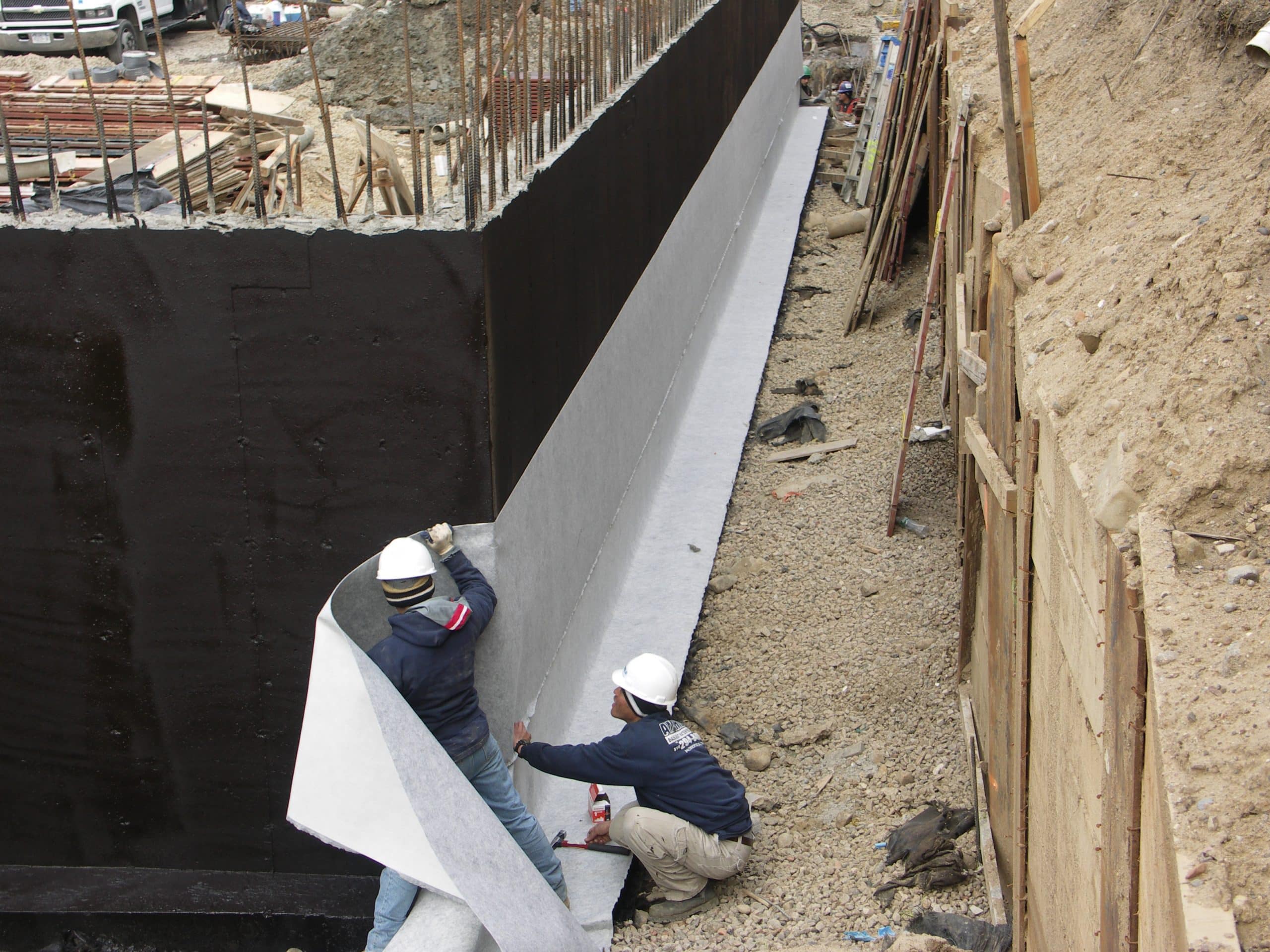
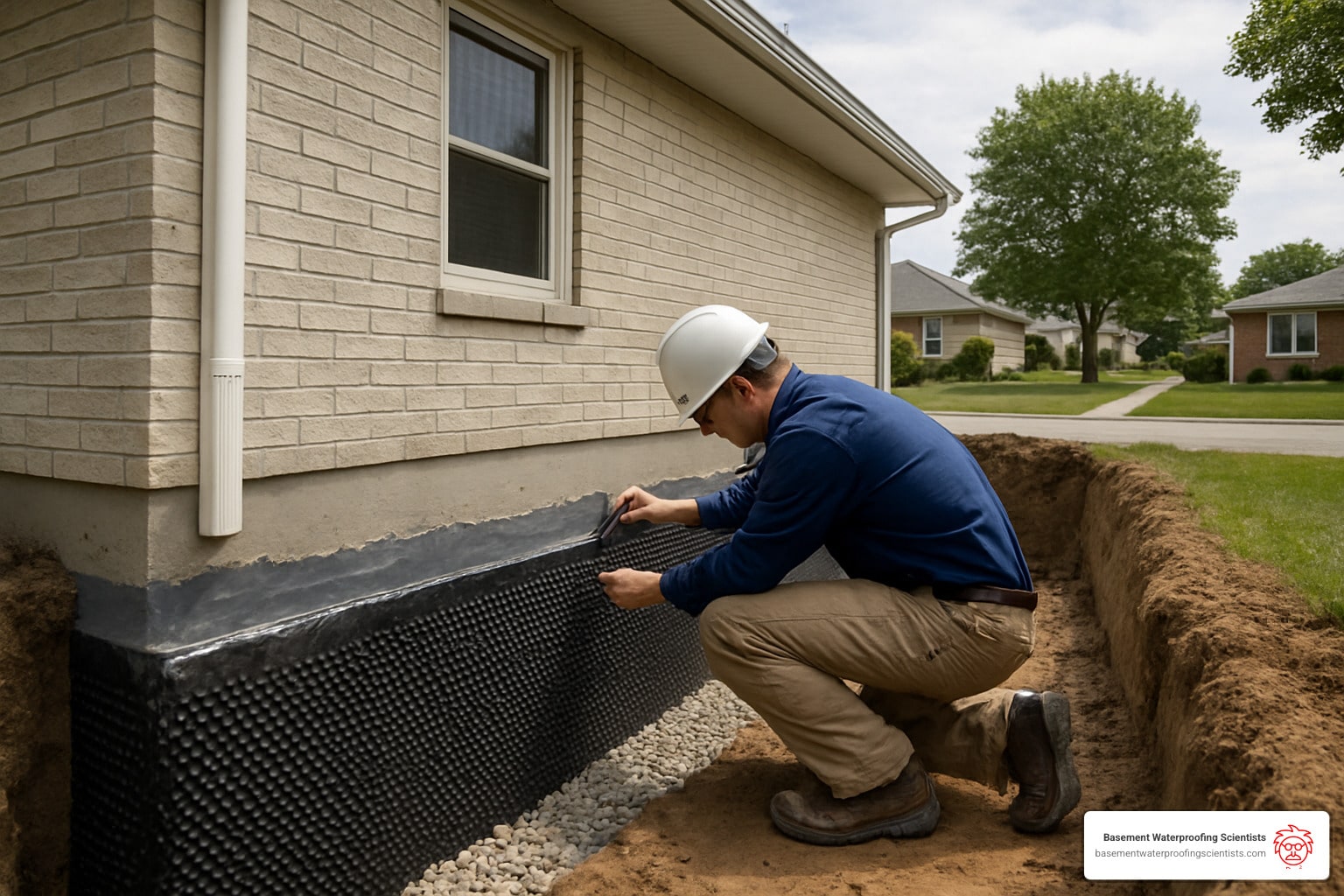
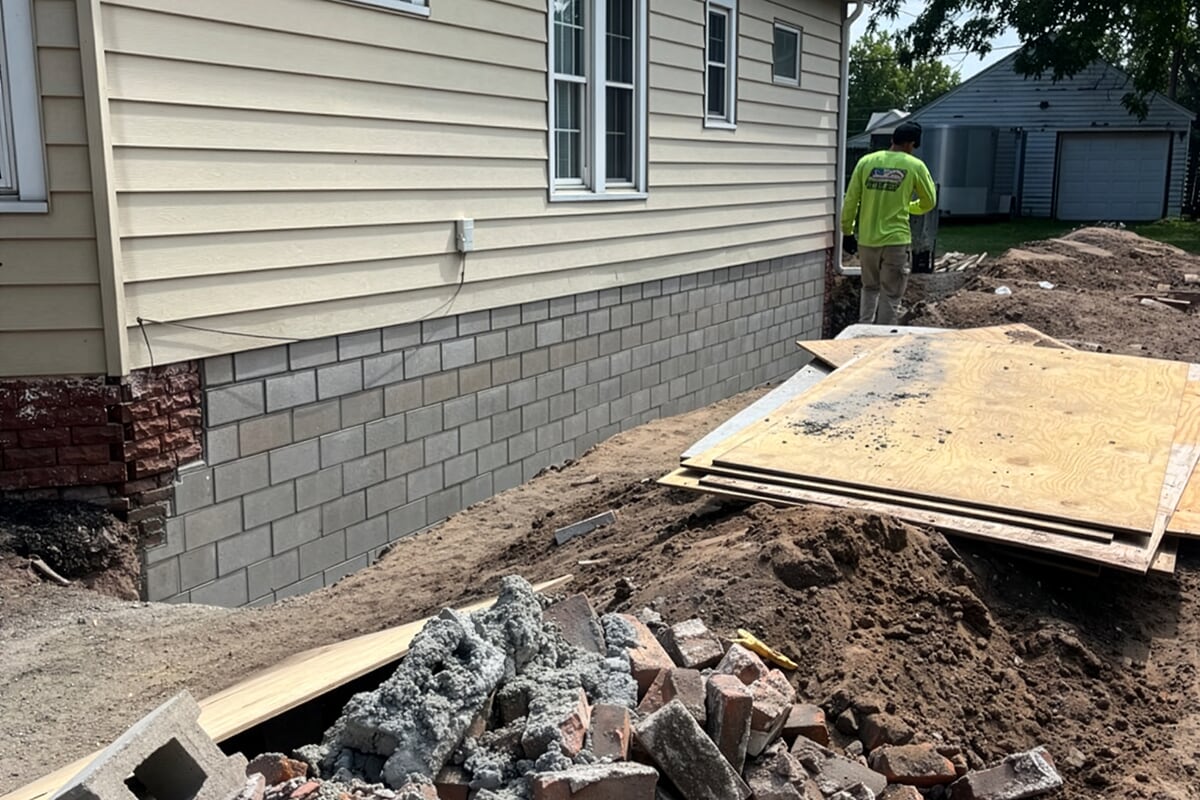
This is the most effective way to protect masonry. It involves excavating down to the footing and applying a multi-layered system:
- Primary Sealant: A thick, rubberized asphalt membrane or a polymer-modified bitumen.
- Drainage Board: A dimpled plastic sheet that creates an air gap and allows water to fall straight down to the drainage tiles.
- French Drain (Weeping Tile): A perforated pipe embedded in gravel that directs water away from the foundation.
Crystalline Waterproofing
For existing concrete foundations where exterior excavation is impossible, crystalline waterproofing is a high-tech alternative. When applied to the interior surface, the chemicals react with the un-hydrated cement particles to grow millions of needle-like crystals. These crystals block the pores and capillaries of the concrete, making the material itself waterproof.
Penetrating Silane-Siloxane Sealers
For above-grade masonry like brick chimneys or facades, silane-siloxane sealers are the preferred choice in 2026. Unlike film-forming sealers that can peel, these penetrate deep into the substrate. They are "breathable," meaning they allow water vapor to escape from the inside while preventing liquid water from entering from the outside. This prevents the "trapped moisture" issue that leads to spalling.
2026 Service Cost and Comparison Matrix
The following table provides estimated costs and performance metrics for common masonry and foundation services. Actual prices vary by region, soil condition, and the severity of the damage.
| Service Type | Primary Function | Estimated Cost (2026) | Expected Lifespan |
|---|---|---|---|
| Helical Piering | Structural stabilization/lifting | $2,000 – $3,500 per pier | 75+ Years |
| Carbon Fiber Straps | Stabilizing bowing walls | $600 – $1,200 per strap | Lifetime of structure |
| Exterior Waterproofing | Preventing water ingress | $150 – $300 per linear foot | 30 – 50 Years |
| Interior Drainage System | Managing ground water | $3,000 – $8,000 (standard basement) | 25 – 40 Years |
| Crack Injection (Epoxy/Poly) | Sealing leaks/structural repair | $500 – $1,500 per crack | 15 – 20 Years |
| Silane Sealing (Above Grade) | Protecting brick/stone facades | $2.50 – $5.00 per sq. ft. | 5 – 10 Years |
Verifying Professional Service Providers
In 2026, the complexity of soil mechanics and material science requires that property owners vet contractors rigorously. A reputable masonry and foundation repair firm should provide the following:
- Engineering Certification: For structural repairs like piering or wall stabilization, a licensed Professional Engineer (P.E.) should review the plans and sign off on the final installation.
- ICC-ES Product Evaluation: Ensure the products used (like carbon fiber or piering systems) are evaluated by the International Code Council Evaluation Service to ensure they meet modern building codes.
- Soil Analysis: A high-quality repair service will often perform or request a soil test to determine the load-bearing capacity and moisture content of the earth surrounding the foundation.
- Transferable Warranty: High-quality foundation work should come with a warranty that transfers to the next homeowner, as this preserves the property's resale value.
Common Pitfalls in Masonry and Foundation Maintenance
One of the most frequent mistakes is relying on DIY basement paints. While these products claim to stop water, they are often topical and cannot withstand the hydrostatic pressure coming from the outside. Over time, the paint will blister and peel, often hiding a growing structural problem.
Another error is ignoring grading and gutters. Foundation repair services often find that simple landscaping fixes—ensuring the ground slopes away from the house and that downspouts discharge at least 6 to 10 feet away—could have prevented the need for expensive structural repairs. According to FEMA’s guidelines on floodproofing, maintaining proper drainage is the first line of defense for any masonry structure.
FAQ: Frequently Asked Questions
How long does a typical foundation repair project take?
Most residential foundation repairs, such as piering or wall stabilization, take between 3 to 7 days. Exterior waterproofing is more labor-intensive due to the excavation required and can take 1 to 2 weeks depending on weather conditions.
Can I repair foundation cracks from the inside?
Yes, for non-structural leaks, polyurethane injection is highly effective from the interior. However, if the crack is horizontal or indicates structural movement, interior patching is only a temporary cosmetic fix and will not prevent the wall from eventually failing.
Does homeowners insurance cover masonry waterproofing?
Standard homeowners insurance rarely covers seepage or gradual water damage caused by a lack of maintenance or hydrostatic pressure. Coverage is usually limited to "sudden and accidental" events, such as a pipe burst. Professional waterproofing is considered a preventative maintenance investment.
What is the difference between a sealant and a coating?
A sealant (like silane-siloxane) penetrates the masonry and remains invisible, allowing the material to breathe. A coating (like an elastomeric paint) sits on the surface, creating a thick barrier. Coatings are generally less durable for masonry because they can trap moisture behind the film.
Is carbon fiber better than steel I-beams for bowing walls?
In 2026, carbon fiber is preferred for most residential applications because it is thinner, requires no maintenance, and does not interfere with finishing a basement. Steel I-beams are still used for extreme cases where the wall has bowed more than 2-3 inches or where the structural integrity of the masonry block is severely compromised.
Practical Recommendation for Property Owners
If you suspect foundation issues, your first step should be a professional inspection. In 2026, many firms use ground-penetrating radar (GPR) or thermal imaging to identify voids in the soil or hidden moisture pockets behind masonry walls. Addressing these issues early prevents the "cascading failure" effect, where water damage leads to structural instability, which in turn creates more pathways for water. Ensure any structural plan is backed by an engineering report to protect your liability and the long-term safety of the building.
Image Gallery