The Legacy of R. Budd Dwyer: A Comprehensive Historical and Ethical Review in 2026
Robert Budd Dwyer was the Treasurer of Pennsylvania who died by suicide during a live, televised press conference on January 22, 1987. His death followed a conviction for bribery and conspiracy related to a state contract scandal invol...
Robert Budd Dwyer was the Treasurer of Pennsylvania who died by suicide during a live, televised press conference on January 22, 1987. His death followed a conviction for bribery and conspiracy related to a state contract scandal involving Computer Technology Associates (CTA). Dwyer maintained his innocence until his final moments, a claim that remains a subject of intense debate and media ethics study in 2026.
Contents
The Political Ascent of Robert Budd Dwyer
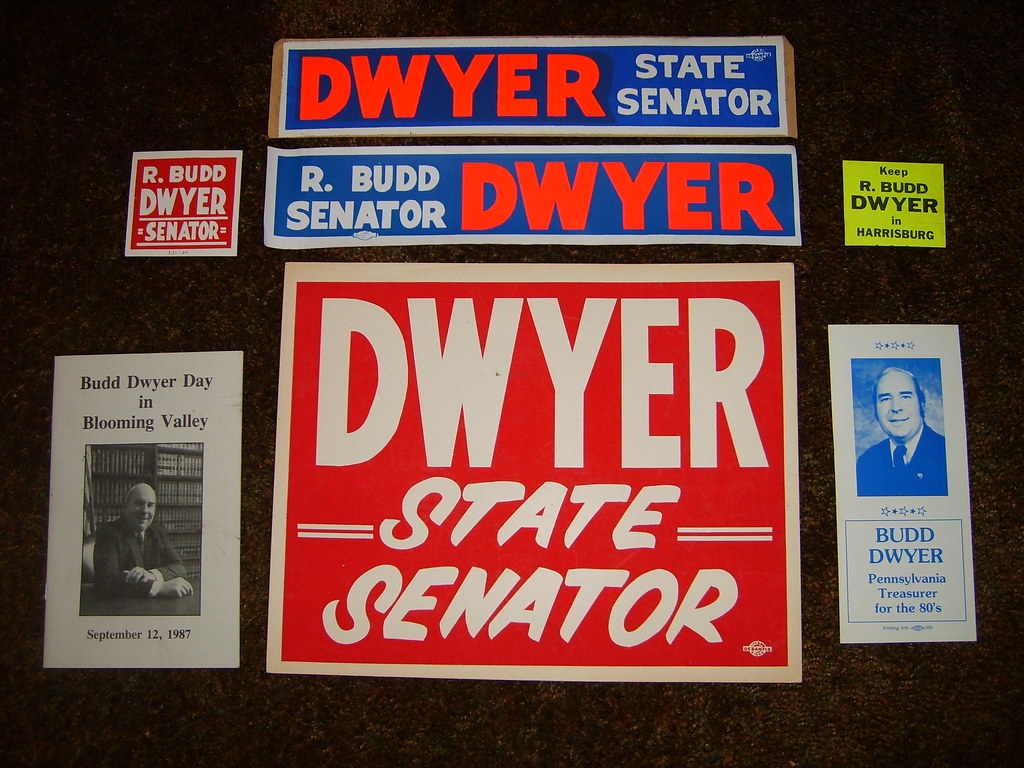
Robert Budd Dwyer, commonly known as R. Budd Dwyer, was a prominent figure in Pennsylvania politics long before the tragedy that defined his legacy. Born in 1939 in Saint Charles, Missouri, Dwyer eventually settled in Meadville, Pennsylvania, where he began a career dedicated to public service. His background as a social studies teacher provided him with a unique perspective on civic duty, which he translated into a successful political trajectory.
Dwyer served in the Pennsylvania House of Representatives from 1965 to 1970 and subsequently in the Pennsylvania State Senate from 1971 to 1981. During his tenure in the Senate, he was known for his advocacy for educational reform and fiscal responsibility. In 1980, he was elected as the State Treasurer, a role that placed him at the helm of the Commonwealth’s financial operations. By 1986, Dwyer had built a reputation as a dedicated public servant, making the subsequent allegations of corruption particularly shocking to his constituency and colleagues alike.
The CTA Scandal: Technical and Legal Foundations
The downfall of R. Budd Dwyer was rooted in the Computer Technology Associates (CTA) scandal. In the early 1980s, it was discovered that Pennsylvania state employees had overpaid millions of dollars in Federal Insurance Contributions Act (FICA) taxes due to administrative errors. The Commonwealth required a specialized accounting firm to calculate the precise amounts owed to thousands of employees and secure the refunds from the federal government.
The contract to perform this recovery was worth approximately $4.6 million. Two main firms were in contention: a large, established accounting firm and a smaller, California-based company called Computer Technology Associates, owned by John Torquato Jr. Despite the larger firm offering a lower bid, the contract was awarded to CTA.
The subsequent investigation by the FBI and federal prosecutors alleged that Dwyer had agreed to award the contract to CTA in exchange for a $300,000 kickback. The prosecution's case relied heavily on the testimony of William T. Smith, a lawyer for CTA, and John Torquato. In 1986, Dwyer was charged with mail fraud, conspiracy, and interstate transportation in aid of racketeering.
The Trial and the Verdict
The trial of R. Budd Dwyer took place in late 1986. Throughout the proceedings, Dwyer maintained his absolute innocence, claiming that the charges were a politically motivated "witch hunt" designed to remove him from office and destroy the Republican Party's influence in the state.
The prosecution’s evidence was primarily circumstantial, bolstered by the plea-bargained testimony of Smith and Torquato, who received lighter sentences in exchange for their cooperation. Dwyer was offered a plea deal that would have resulted in a maximum of five years in prison, provided he resigned from office and cooperated with the investigation. He refused the deal, asserting that he would not plead guilty to a crime he did not commit.
On December 18, 1986, the jury found Dwyer guilty on 11 counts. Under federal law at the time, Dwyer faced a potential sentence of up to 55 years in prison and a $300,000 fine. His sentencing was scheduled for January 23, 1987. Crucially, under Pennsylvania law, Dwyer remained the State Treasurer until his sentencing. Had he been sentenced, he would have been automatically removed from office, terminating the survivor benefits for his family.
January 22, 1987: The Final Press Conference
On the morning of January 22, 1987—the day before his sentencing—Dwyer called a press conference in the Pennsylvania State Capitol in Harrisburg. Many expected him to announce his resignation. Instead, Dwyer delivered a lengthy, rambling speech in which he once again declared his innocence, criticized the justice system, and targeted the individuals he believed had orchestrated his conviction.
As he reached the end of his prepared remarks, Dwyer stopped reading and began distributing three envelopes to his staff. One contained a letter to his wife and children, another was an organ donor card, and the third was a letter to the newly inaugurated Governor Robert P. Casey.
The Immediate Aftermath of the Act
The events that transpired after Dwyer produced a .357 Magnum revolver from a manila envelope remain some of the most analyzed moments in television history. Despite the pleas of reporters to put the gun down, Dwyer acted decisively. Because he died while still in office, his family was entitled to full survivor benefits, totaling over $1.2 million—a financial safety net that would have been forfeited had he been sentenced the following day.
Media Ethics: The Broadcast Dilemma
The suicide of R. Budd Dwyer presented an unprecedented ethical challenge for newsrooms across the country. In 1987, the concept of "viral" content did not exist, but the raw footage of the event was distributed via satellite feeds to various stations.
News directors had to make immediate decisions:
- Full Broadcast: Some stations chose to air the footage in its entirety, arguing that it was a significant historical event and that the public had a right to see the reality of the situation.
- Partial Broadcast: Many stations aired the press conference up until the moment the weapon was produced, then froze the frame or cut to a reporter.
- Audio Only: Others chose to play the audio of the speech while showing still photographs of Dwyer.
- Complete Redaction: A minority of outlets chose not to show any footage of the suicide itself, focusing instead on the political implications of his death.
In 2026, this event is still used as a primary case study in journalism programs to discuss the "Harm Limitation" principle. The debate centers on whether the graphic nature of the footage serves the public interest or merely satisfies a morbid curiosity.
Re-evaluating the Evidence: The "Honest Man" Perspective
In the decades following his death, particularly after the release of the 2010 documentary Honest Man: The Life of R. Budd Dwyer, public perception began to shift for some. The documentary featured an interview with William T. Smith, the prosecution’s star witness, who admitted that he had given false testimony during the trial to secure a reduced sentence for himself and his wife.
Smith suggested that Dwyer had never actually received or even explicitly agreed to a bribe, but rather that the "agreement" was an assumption made by the CTA associates. This revelation led to a modern re-examination of the case, with some legal experts arguing that the prosecution's reliance on "purchased testimony" created a fundamental miscarriage of justice. However, others maintain that the evidence of the contract's steering was sufficient to justify the conviction, regardless of Smith's later recantations.
Summary of Key Events and Legal Milestones
| Date | Event Category | Description |
|---|---|---|
| November 1980 | Political | R. Budd Dwyer is elected as Pennsylvania State Treasurer. |
| May 1984 | Legal | CTA is awarded the $4.6 million FICA recovery contract. |
| May 1986 | Legal | Dwyer is indicted by a federal grand jury on bribery and conspiracy charges. |
| December 18, 1986 | Legal | Jury returns a guilty verdict on 11 counts against Dwyer. |
| January 22, 1987 | Historical | Dwyer dies by suicide during a televised press conference in Harrisburg. |
| October 2010 | Media | Release of "Honest Man," highlighting William Smith's recanted testimony. |
| January 2026 | Historical | 39th anniversary of the event; remains a key study in media ethics and law. |
Practical Implications for Political Transparency in 2026
The Dwyer case serves as a permanent reminder of the necessity for transparency in government contracting. In 2026, modern procurement systems in Pennsylvania and across the United States have implemented several safeguards directly influenced by the CTA scandal:
- Multi-Tiered Review: Contracts of significant value now require multi-departmental sign-offs to prevent a single official from "steering" funds.
- Whistleblower Protections: Enhanced legal protections for state employees who report irregularities in bidding processes.
- Mandatory Recusals: Officials must now formally recuse themselves from any contract involving former campaign donors or associates, with strict penalties for failure to disclose.
Frequently Asked Questions
Why did R. Budd Dwyer commit suicide in public?
Dwyer chose a public setting to ensure his final message reached the citizenry without being filtered by what he perceived as a biased press. Furthermore, by dying before his sentencing, he remained legally "innocent" (as the judgment wasn't final) and died while in office, which secured his family's financial future through state survivor benefits.
Was R. Budd Dwyer actually innocent?
This remains a point of contention. While his conviction was never overturned, the 2010 admission by the prosecution's key witness, William Smith, that he lied under oath has led many to believe that the evidence was insufficient for a conviction. However, the technicalities of the contract award process still suggest significant administrative irregularities.
How did the media change after the Dwyer incident?
The incident led to stricter "graphic content" guidelines for live broadcasts. It established a precedent for delaying live feeds by several seconds (tape delay) to allow producers to cut away from unexpected violence or trauma, a practice that is standard in 2026 broadcasting and digital streaming.
What happened to the money in the CTA scandal?
The $4.6 million contract was eventually canceled. The FICA overpayment recovery was later handled through different channels. The "bribe" money—the $300,000 kickback—was never proven to have reached Dwyer's personal accounts, which was a central point of his defense.
What is the "Honest Man" documentary?
"Honest Man: The Life of R. Budd Dwyer" is a 2010 documentary directed by James Dirschberger. it explores Dwyer's life, the CTA scandal, and features the pivotal interview with William Smith. It is widely credited with reopening the public conversation regarding Dwyer's potential innocence.
Final Perspective on the Dwyer Case
The story of R. Budd Dwyer is a tragedy of political, legal, and personal dimensions. Whether viewed as a corrupt official who took the ultimate way out or an innocent man driven to despair by a flawed justice system, his impact on Pennsylvania history is undeniable. In 2026, his case continues to serve as a cautionary tale for those in power and a fundamental lesson for those who report on them.
The intersection of financial desperation, the complexities of the RICO Act, and the unrelenting pressure of public scrutiny created a "perfect storm" in 1987 that changed the landscape of American journalism and state politics forever. For those researching the case today, it remains essential to look beyond the graphic footage and analyze the intricate legal and ethical failures that preceded it.
Image Gallery