Comprehensive Guide to the Texas Certificate of Formation in 2026
A Certificate of Formation is the fundamental legal document filed with the Texas Secretary of State to create a new business entity, such as an LLC, corporation, or nonprofit. Governed by the Texas Business Organizations Code, this fi...
A Certificate of Formation is the fundamental legal document filed with the Texas Secretary of State to create a new business entity, such as an LLC, corporation, or nonprofit. Governed by the Texas Business Organizations Code, this filing officially establishes the entity’s legal existence, defining its structure, purpose, and registered management.
Contents
In the state of Texas, the transition from fragmented filing systems to a unified framework occurred with the adoption of the Texas Business Organizations Code (BOC). Prior to this, business owners filed "Articles of Incorporation" or "Articles of Organization." As of 2026, the Certificate of Formation remains the standardized document for all domestic entities. Whether you are launching a tech startup in Austin or a retail operation in Houston, understanding the nuances of this document is essential for legal compliance and asset protection.
The Role of the Texas Business Organizations Code (BOC)
The BOC was designed to streamline the statutes governing different types of business entities into a single, cohesive body of law. Before its full implementation, the rules for corporations, partnerships, and limited liability companies (LLCs) were scattered across various acts.
By filing a Certificate of Formation, you are essentially entering into a contract with the State of Texas. You agree to abide by the provisions of the BOC in exchange for the benefits of formal business structures, such as limited liability protection. The BOC dictates what must be included in the certificate and what may be optionally added to tailor the entity’s governance.
Selecting the Correct Certificate Form
The Texas Secretary of State (SOS) provides specific forms based on the type of entity you intend to form. While you are not strictly required to use the state-provided forms, doing so ensures that you meet all statutory requirements and minimizes the risk of rejection.
- Form 201 (For-Profit Corporation): Used to establish a standard business corporation that issues shares of stock.
- Form 202 (Nonprofit Corporation): Used for entities organized for charitable, religious, or educational purposes where no part of the income is distributed to members or directors.
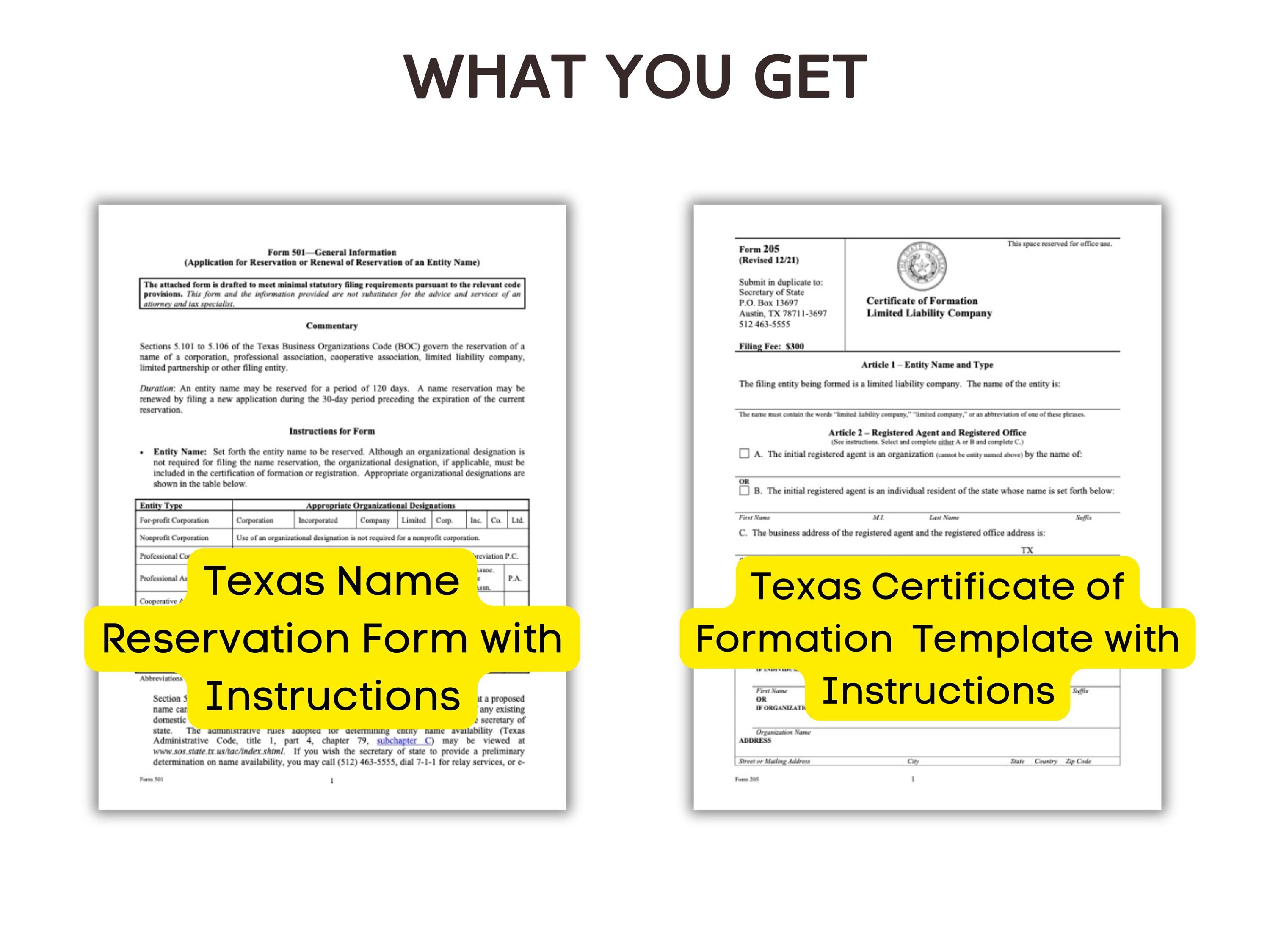
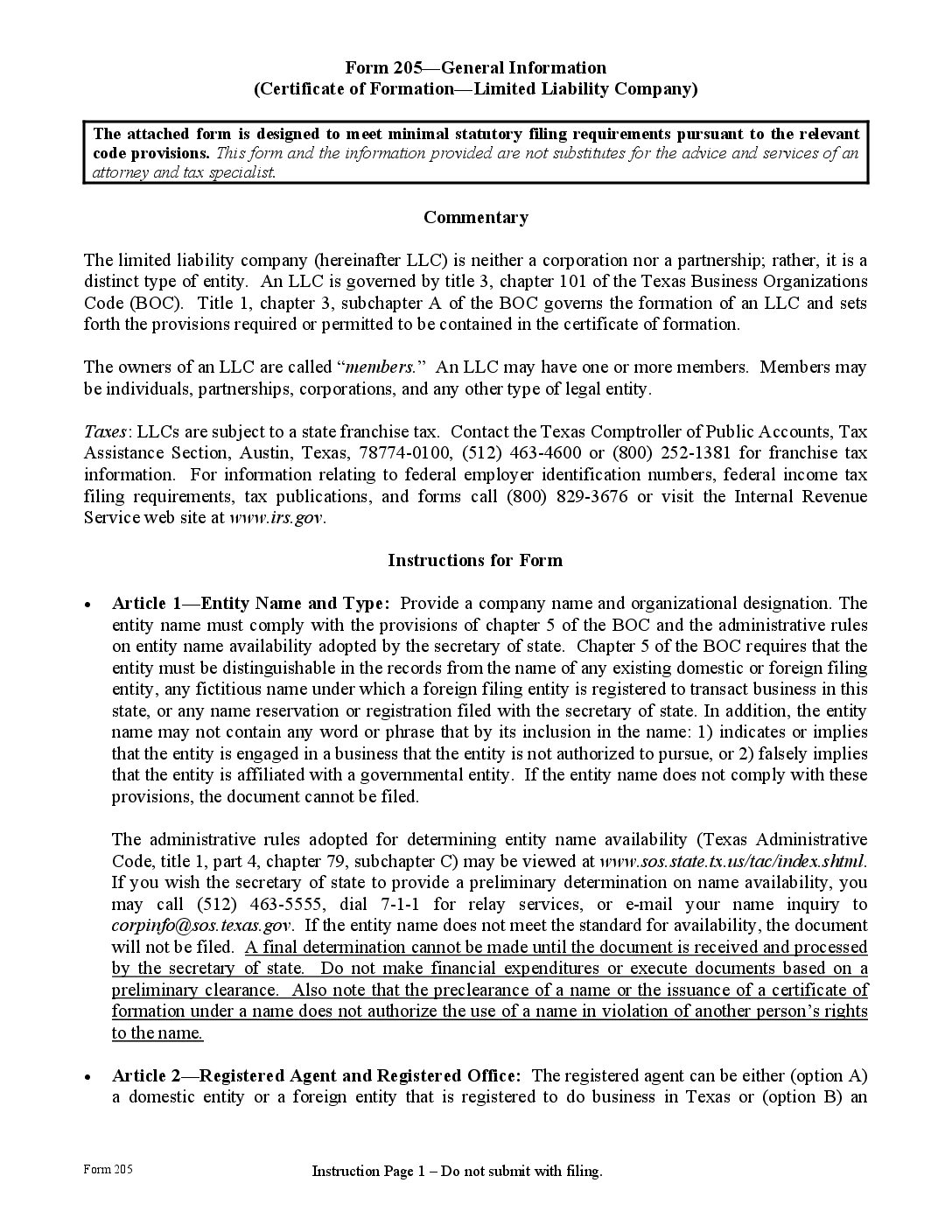
- Form 205 (Limited Liability Company): The most common filing, used for LLCs, which offer a flexible management structure and pass-through taxation.
- Form 203 (Professional Corporation): Specifically for licensed professionals, such as physicians or attorneys, providing services that require a state license.
Core Requirements for a Texas Certificate of Formation
To successfully file your certificate in 2026, several key pieces of information must be verified and accurately recorded. Errors in these sections can lead to filing delays or legal vulnerabilities later.
1. Entity Name and Distinguishability
Under Texas law, your business name must be "distinguishable" from all other active entities on file with the Secretary of State. This means more than just a different spelling; it must be unique enough to avoid public confusion. The name must also include an appropriate organizational designator, such as "Limited Liability Company," "L.L.C.," or "Corp."
2. Registered Agent and Registered Office
Every Texas entity must maintain a Registered Agent. This is an individual or organization designated to receive service of process (lawsuits) and official government correspondence on behalf of the business. The registered office must be a physical street address in Texas; a P.O. Box is not sufficient.
3. Governing Authority
You must specify how the entity will be managed. For an LLC, you must decide between a "Member-managed" structure (where the owners run the business) or a "Manager-managed" structure (where owners appoint specific individuals to run the company). For a corporation, you must list the initial board of directors.
4. Purpose of the Entity
While most businesses use a "general-purpose clause" stating they are formed for any lawful purpose under Texas law, some specialized entities may need to state a specific professional or nonprofit purpose to satisfy regulatory or tax requirements.
5. Supplemental Provisions
The Certificate of Formation is a public document. While many internal rules belong in a private "Operating Agreement" or "Bylaws," certain items—such as indemnification clauses or restrictions on the sale of shares—may be included directly in the certificate to provide constructive notice to the public.
Filing Comparison: LLC vs. Corporation vs. Nonprofit
The following table outlines the primary differences in filing requirements and costs for the most common Texas entities in 2026.
| Feature | Limited Liability Company (LLC) | For-Profit Corporation | Nonprofit Corporation |
|---|---|---|---|
| Primary Form | Form 205 | Form 201 | Form 202 |
| Filing Fee (Standard) | $300 | $300 | $25 |
| Management Structure | Managers or Members | Board of Directors | Board of Directors (Min. 3) |
| Ownership Interest | Membership Interests | Shares of Stock | N/A (Members or No Members) |
| Registered Agent | Required | Required | Required |
| Duration | Perpetual (unless stated) | Perpetual (unless stated) | Perpetual (unless stated) |
Note: Filing fees are subject to small convenience charges if using the SOSDirect online portal.
The Filing Process: Step-by-Step
Navigating the Texas Secretary of State’s requirements can be done through several channels. In 2026, the vast majority of filings are processed electronically.
Step 1: Name Availability Search
Before drafting the document, use the Texas SOSDirect portal to search for name availability. You may also call the SOS at (512) 463-5555 to verify a name's status.
Step 2: Preparing the Document
Decide whether you will use the standardized SOS forms or draft a custom certificate. Custom certificates are often used by larger corporations or entities with complex share structures to ensure all Texas Business Organizations Code requirements are met.
Step 3: Submission via SOSDirect
The SOSDirect portal is the most efficient way to file. You will need to create an account, upload your information, and pay the filing fee via credit card or an existing SOS deposit account. Online filings are typically processed within 2 to 4 business days.
Step 4: Physical Submission (Optional)
If you prefer to file by mail, you must submit two copies of the signed Certificate of Formation along with the filing fee to:
Secretary of State P.O. Box 13697 Austin, Texas 78711-3697
Post-Formation: What Happens Next?
Receiving your "filed" stamped Certificate of Formation is the beginning, not the end, of your business's legal journey. Several administrative tasks are required to maintain the entity’s "Good Standing" status in Texas.
- Federal Tax ID (EIN): Most entities will need an Employer Identification Number from the IRS for tax purposes and to open a business bank account.
- Operating Agreement or Bylaws: While not filed with the state, these internal documents govern how the business is run, how profits are shared, and how disputes are resolved.
- Texas Franchise Tax: Every taxable entity formed in Texas must register with the Texas Comptroller of Public Accounts. Even if the business does not owe tax, an annual "Public Information Report" (PIR) is generally required.
- Corporate Records Book: Maintain a copy of the Certificate of Formation, any amendments, and meeting minutes at your principal place of business.
Common Mistakes and How to Avoid Them
Even experienced entrepreneurs can run into issues when filing a Certificate of Formation. One of the most frequent errors is failing to obtain the Registered Agent’s consent. While you do not file the consent form with the state, Texas law requires you to have a signed statement from the agent agreeing to serve in that capacity.
Another common pitfall is providing a P.O. Box for the Registered Office. The SOS will reject filings that do not provide a physical address where a person can be found during normal business hours. Finally, ensure that the Organizer (the person signing the filing) is clearly identified. The organizer does not have to be an owner; they are simply the person responsible for the ministerial act of filing the document.
Frequently Asked Questions
Can I change my Certificate of Formation after it is filed?
Yes. You must file a Certificate of Amendment (Form 424) with the Texas Secretary of State. This is commonly used to change the entity's name, update management structure, or modify supplemental provisions. There is a filing fee associated with amendments (typically $150 for LLCs and Corporations).
What is the difference between a Certificate of Formation and a Certificate of Fact?
A Certificate of Formation is the document that creates the entity. A Certificate of Fact (often called a "Certificate of Good Standing") is a document issued by the Secretary of State at a later date to prove that the entity currently exists and has complied with all state filing and tax requirements.
Do I need an attorney to file a Certificate of Formation?
While Texas does not require an attorney for the filing process, legal counsel is highly recommended for complex entities, businesses with multiple investors, or those requiring specialized share structures. A mistake in the formation document can have long-term tax or liability consequences.
How long does it take for the Texas Secretary of State to process the filing?
In 2026, electronic filings through SOSDirect typically take 2 to 4 business days. Paper filings sent by mail can take anywhere from 7 to 15 business days depending on the current backlog. Expedited processing may be available for an additional fee if you require the document processed within 24 hours.
Is the information on the Certificate of Formation public?
Yes. Once filed, the Certificate of Formation becomes a public record. Anyone can request a copy of the filing or view the names of the registered agent and governing authorities through the SOSDirect portal.
What happens if I lose my original filed Certificate?
You can order a certified copy of your Certificate of Formation from the Secretary of State for a nominal fee. This is often necessary when applying for certain types of professional licenses or international business certifications.
Final Recommendation
To ensure your Texas business is established on a firm legal foundation, use the SOSDirect portal for the most efficient filing experience. Before submitting your Certificate of Formation, double-check your Registered Agent’s physical address and confirm that your chosen name complies with the state's distinguishability standards. Once your filing is accepted, immediately register with the Texas Comptroller to manage your franchise tax obligations and maintain your entity’s active status.
Image Gallery