Unpacking the Meaning of PSA MK: Standard Qualifiers, Terminology, and Contexts
The term PSA MK most commonly refers to a trading card graded by Professional Sports Authenticator (PSA) that has been assigned the MK (Marks) qualifier. This designation indicates that while the card meets the physical standards of a...
The term PSA MK most commonly refers to a trading card graded by Professional Sports Authenticator (PSA) that has been assigned the MK (Marks) qualifier. This designation indicates that while the card meets the physical standards of a specific numerical grade, it possesses unoriginal ink, pencil, marker, or stamp marks. Less frequently, the term refers to firearms manufactured by Palmetto State Armory (PSA) bearing a "Mark" (Mk) military designation, or to combined medical diagnostics involving Prostate-Specific Antigen (PSA) and Midkine (MK).
Contents
Understanding the precise meaning of "PSA MK" depends heavily on the industry context. For collectibles collectors, investors, and auction houses, identifying the MK qualifier is critical because altered surface conditions drastically affect a card's liquidity and commercial valuation.
Primary Context: PSA Card Grading and the "MK" Qualifier
In the trading card hobby, Professional Sports Authenticator (PSA) is the world's largest third-party authentication and grading service for sports cards, non-sports cards, and gaming cards (such as Pokémon and Magic: The Gathering).
When PSA evaluates a card, it assigns a numerical grade on a scale from 1 (Poor) to 10 (Gem Mint). Historically, when a card possessed exceptional eye appeal and structural integrity matching a high numerical grade but suffered from one specific manufacturing or human defect, PSA added a two-letter suffix known as a qualifier.
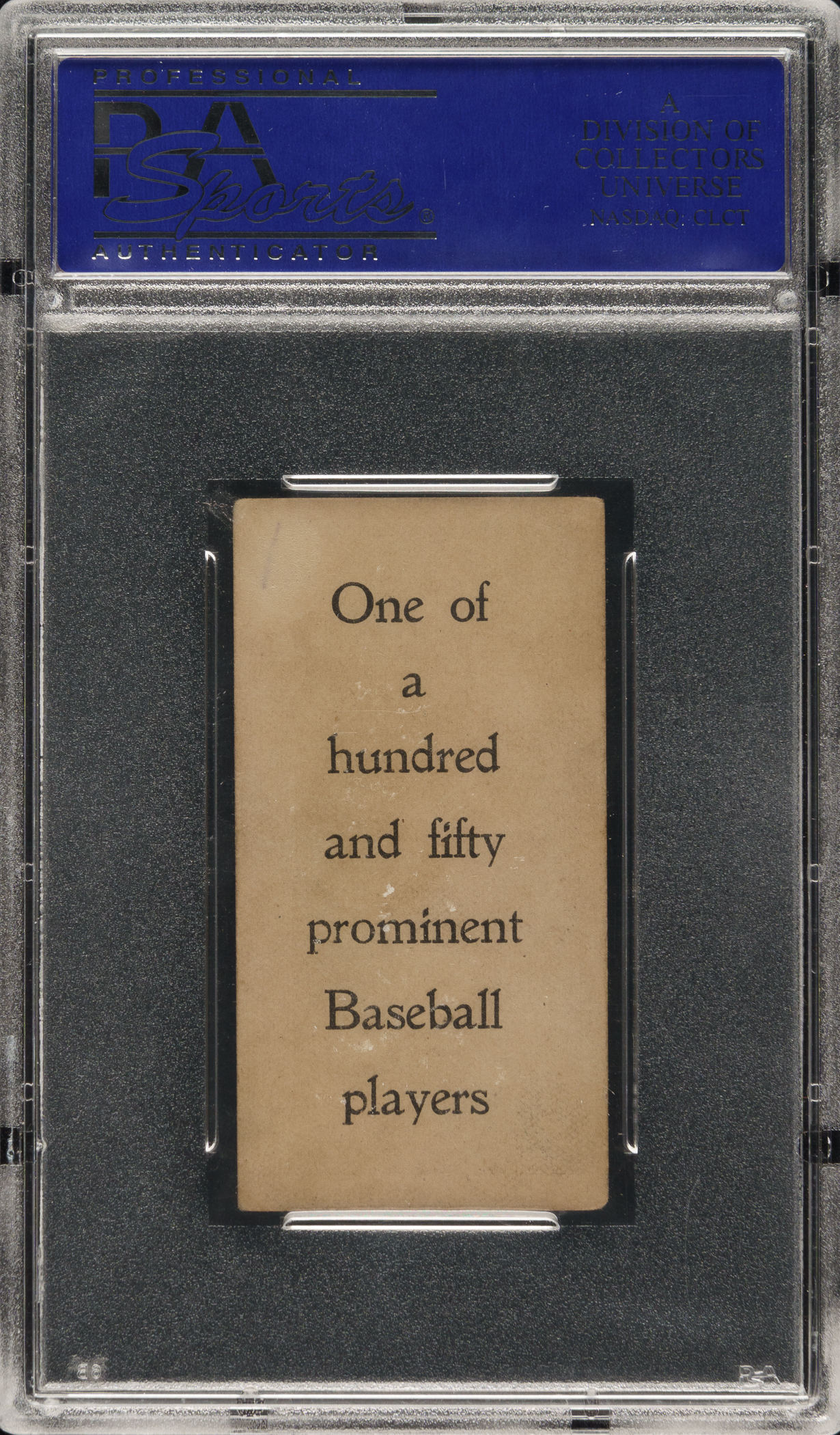
- PSA GRADED SLAB
- 1952 TOPPS #311
- MICKEY MANTLE
- PSA 6 MK
- CERT #12345678
What Defines an "MK" Designation?
The MK qualifier stands explicitly for Marks. According to official PSA grading standards, a card receives an MK qualifier if it contains any form of unoriginal writing or surface residue added after production. Common examples include:
- Handwritten Ink or Ballpoint Pen: Dates, scores, stats, initials, or names written on either the front or back of the card.
- Pencil Writing: Erasable or embedded pencil markings frequently made by original owners or vintage card collectors.
- Ink Stampings: Library stamps, store ownership stamps, or vintage collector club marks.
- Uncertified Autographs: Hand-signed autographs that have not been authenticated or submitted through PSA/DNA autograph verification services.
- Marker or Felt-Tip Touch-ups: Attempts by previous owners to color in white edges, corners, or surface scuffs using black or colored markers (often considered card alteration).
If a vintage card retains sharp corners, bright centering, and pristine edges characteristic of a PSA 8 (Near Mint-Mint), but has a small pencil mark on the reverse, PSA traditionally labeled the card PSA 8 MK.
How the MK Qualifier Impacts Card Value and Market Performance
In the collectibles market, a card bearing an MK qualifier trades at a substantial discount compared to an unqualified card of the same numerical grade. Collectors and investors treat qualifiers as an indicator of compromised visual integrity.
The "Two-Grade Rule" Valuation Benchmark
As a standard industry benchmark, market analysts and dealers generally value a qualified PSA card approximately two full numerical grades lower than the assigned technical grade.
- A PSA 8 MK card typically trades at a market price comparable to a straight PSA 6 (EX-MT) or PSA 5 (EX) card.
- A PSA 9 MK card usually aligns in value with a straight PSA 7 (NM) card.
However, the exact discount depends heavily on the placement and visibility of the mark:
- Back vs. Front: A discrete pencil date on the back of a rare 1933 Goudey or 1952 Topps card will penalize value far less than a bold permanent-marker scribble across an athlete's face on the front of the card.
- Card Rarity: For extremely scarce pre-war vintage cards, an MK qualifier is often tolerated by collectors seeking entry-level examples of legendary items. For modern card issues (post-1980), an MK qualifier usually renders the card non-liquid or significantly undesirable.
PSA's Modern Shift: Straight Grading vs. Qualifiers
Historically, submitters could request "No Qualifiers" (NQ) on their submission forms. If NQ was selected, PSA would not use suffixes like MK, OC, or ST; instead, PSA would automatically reduce the overall numerical grade to account for the flaw.
In recent years, PSA updated its default grading policy to favor straight numerical grading without qualifiers for standard submissions. Under this updated framework, a card with ink marks that previously received a PSA 8 MK is now more likely to receive a straight PSA 5 or PSA 4 without an explicit qualifier label, unless the submitter specifically requests legacy qualifier rules.
Comparison of Standard PSA Grading Qualifiers
To better understand where "MK" fits within authentication standards, the table below outlines the full range of standard PSA card grading qualifiers, their physical definitions, and their relative market impacts.
| Qualifier Code | Full Qualifier Name | Physical Identification & Criteria | Typical Market Impact |
|---|---|---|---|
| MK | Marks | Ink writing, pencil marks, stamp marks, stray marker, or unauthenticated signatures. | High discount (trades ~2 grades lower); back marks preferred over front. |
| OC | Off-Center | Card centering falls outside standard tolerances for the grade (e.g., worse than 60/40 to 70/30). | Moderate discount; highly dependent on visual symmetry and era. |
| MC | Miscut | Card borders are cut so poorly that part of an adjacent card is visible or print borders are missing. | Severe discount; appeals primarily to niche error collectors. |
| ST | Staining | Liquid stains, wax pack residue, gum stains, or water damage on surface or reverse. | Moderate-to-high discount depending on stain opacity and location. |
| PD | Print Defect | Major factory imperfections such as ink dots, print lines, missing color bands, or wet ink smears. | Low-to-moderate discount; factory defect rather than user damage. |
| OF | Out of Focus | Primary image registration is blurred, doubled, or printed out of alignment during manufacturing. | Moderate discount; less common on modern trading cards. |
Secondary Contexts: Firearms, Medicine, and Automotive Industries
While card collecting represents the primary search volume for "PSA MK," the letter combination appears in three other distinct technical fields.
1. Firearms & Defense: Palmetto State Armory (PSA) "Mk" Series
In the firearms industry, PSA stands for Palmetto State Armory, a major American firearm manufacturer and retailer. In military and defense terminology, Mk (short for "Mark") designates a specific model iteration or revision (derived from the British and U.S. Navy designation systems).
When firearms enthusiasts reference "PSA Mk" models, they are referring to Palmetto State Armory builds modeled after military "Mark" weapon systems:
- PSA Mk12: A civilian semi-automatic precision rifle patterned after the U.S. Military’s Mk 12 Special Purpose Rifle (SPR).
- PSA Mk18: A short-barreled rifle (SBR) upper receiver or complete firearm styled after the U.S. Navy SEALs' Mk 18 Mod 0/1 close-quarters battle receiver.
- PSA Mk47 / KS-47: Mid-length or specialized carbine platforms designed to fire Soviet 7.62x39mm cartridges using standard AK-style magazines within an AR-15 format.
In this context, "Mk" simply denotes standard military model nomenclature rather than a grade or quality defect.
2. Biomedical Science: PSA and Midkine (MK) Oncology Biomarkers
In clinical medicine and pathology research, PSA stands for Prostate-Specific Antigen, a glycoprotein enzyme produced by prostate cells. MK stands for Midkine, a heparin-binding growth factor encoded by the MDK gene.
Medical literature available via the National Center for Biotechnology Information (NCBI) frequently pairs these two terms when discussing diagnostic assays for prostate adenocarcinoma:
- Serum PSA is the standard blood test used to screen for prostate tissue abnormalities.
- Midkine (MK) is evaluated as a complementary serum biomarker to improve diagnostic accuracy, helping clinicians differentiate between benign prostatic hyperplasia (BPH) and aggressive prostate cancer when PSA levels are elevated.
When used in oncology reports, "PSA MK" does not describe a single unified compound, but rather the combined measurement of PSA and Midkine levels in diagnostic patient panels.
3. Automotive Engineering: PSA Group Vehicle Platforms
In European automotive history, PSA Group (Peugeot Société Anonyme) was the parent company of Peugeot, Citroën, DS, Opel, and Vauxhall prior to its 2021 merger into Stellantis. Automotive technicians frequently use "Mk" (Mark) to distinguish generation builds across PSA vehicle platforms (e.g., PSA Mk1, Mk2, or Mk3 chassis designators).
Practical Recommendations for Card Buyers and Collectors
If you are evaluating a trading card labeled PSA MK, follow these practical steps to determine whether the item fits your collection or investment strategy:
1. Examine High-Resolution Scans
Before purchasing a PSA MK slab online, request clear high-resolution scans of both the front and back of the holder. Identify whether the mark is a minor pencil mark on the back border or a heavy permanent marker line across a key visual area on the front.
2. Calculate Real Market Value
Do not rely on recent sales of unqualified cards of the same numerical grade. If a PSA 8 NQ card sells for $1,000, a PSA 8 MK version should generally be priced closer to the PSA 5 or PSA 6 benchmark (typically $300–$450).
3. Verify Autograph Authenticity
Be aware that vintage cards hand-signed by athletes during stadium visits or promotional events often received an "MK" qualifier if submitted purely for structural card grading without paying for PSA/DNA autograph authentication. If you suspect an MK mark is a genuine vintage signature, consider cross-submitting the card to PSA for dual Autograph & Card Authentication.
4. Review Submission Form Settings
When submitting raw cards to PSA, decide in advance whether you want to permit qualifiers. If you prefer a straight numerical grade (e.g., receiving a clean PSA 5 instead of a PSA 7 MK), select the default straight-grading option on your submission form.
Frequently Asked Questions
What does "MK" stand for on a PSA card label?
"MK" stands for Marks. It is a PSA grading qualifier indicating that a card has ink writing, pencil marks, stamp impressions, marker residue, or unauthenticated signatures on its surface.
Does an MK qualifier mean a card is fake?
No. An MK qualifier means the card itself is authentic and has been graded by PSA, but it contains post-production writing or stray marks added by a previous owner or collector.
How much value does an MK qualifier lose compared to a straight grade?
As a general rule of thumb, an MK qualifier reduces a card's market value by approximately two full numerical grades. For example, a card graded PSA 8 MK typically sells for a price similar to a straight PSA 6 or PSA 5.
Can you remove an MK qualifier from a PSA slab?
You cannot remove the MK designation without cracking the card out of its protective slab. If you crack the card out and re-submit it under PSA's modern straight-grading standards, PSA will issue a lower overall numerical grade (such as a PSA 4 or 5) without the "MK" text suffix.
Is PSA MK related to Palmetto State Armory firearms?
Yes, in a defense context. Palmetto State Armory (PSA) uses "Mk" (Mark) to designate military-style rifle configurations, such as the PSA Mk12 or PSA Mk18 upper receivers.
Final Action Steps
To properly handle a PSA MK card transaction or submission:
- For Card Buyers: Always factor a 30% to 60% price reduction into your bid compared to standard unqualified card prices of the same technical grade.
- For Card Sellers: Disclose the MK qualifier clearly in auction titles and provide zoomed-in photographs showing the exact location of the mark to prevent buyer returns.
- For Card Submitters: Review PSA's current submission guidelines to determine whether you prefer standard straight-numerical grading or legacy qualifier designations before sending in marked vintage cards.
Image Gallery