Identifying and Addressing Neglect in Nursing Homes: A Guide for Families
Neglect in a nursing home occurs when a facility or its staff fails to provide the basic care, medical attention, or sanitary living conditions required to maintain a resident's health and safety. Recognizing the signs early—ranging fr...
Neglect in a nursing home occurs when a facility or its staff fails to provide the basic care, medical attention, or sanitary living conditions required to maintain a resident's health and safety. Recognizing the signs early—ranging from unexplained weight loss and poor hygiene to recurring pressure ulcers—is critical to intervening, protecting your loved one, and holding the facility accountable under state and federal regulations.
Contents
Understanding the Definition of Nursing Home Neglect
In the context of long-term care, neglect is distinct from abuse. While abuse involves the intentional infliction of harm, neglect is often characterized by the failure of a responsible caregiver or facility to fulfill their duty of care. Under the federal standards established by the Centers for Medicare & Medicaid Services (CMS), nursing homes participating in Medicare or Medicaid programs are strictly required to provide services that meet the highest practicable physical, mental, and psychosocial well-being of each resident.
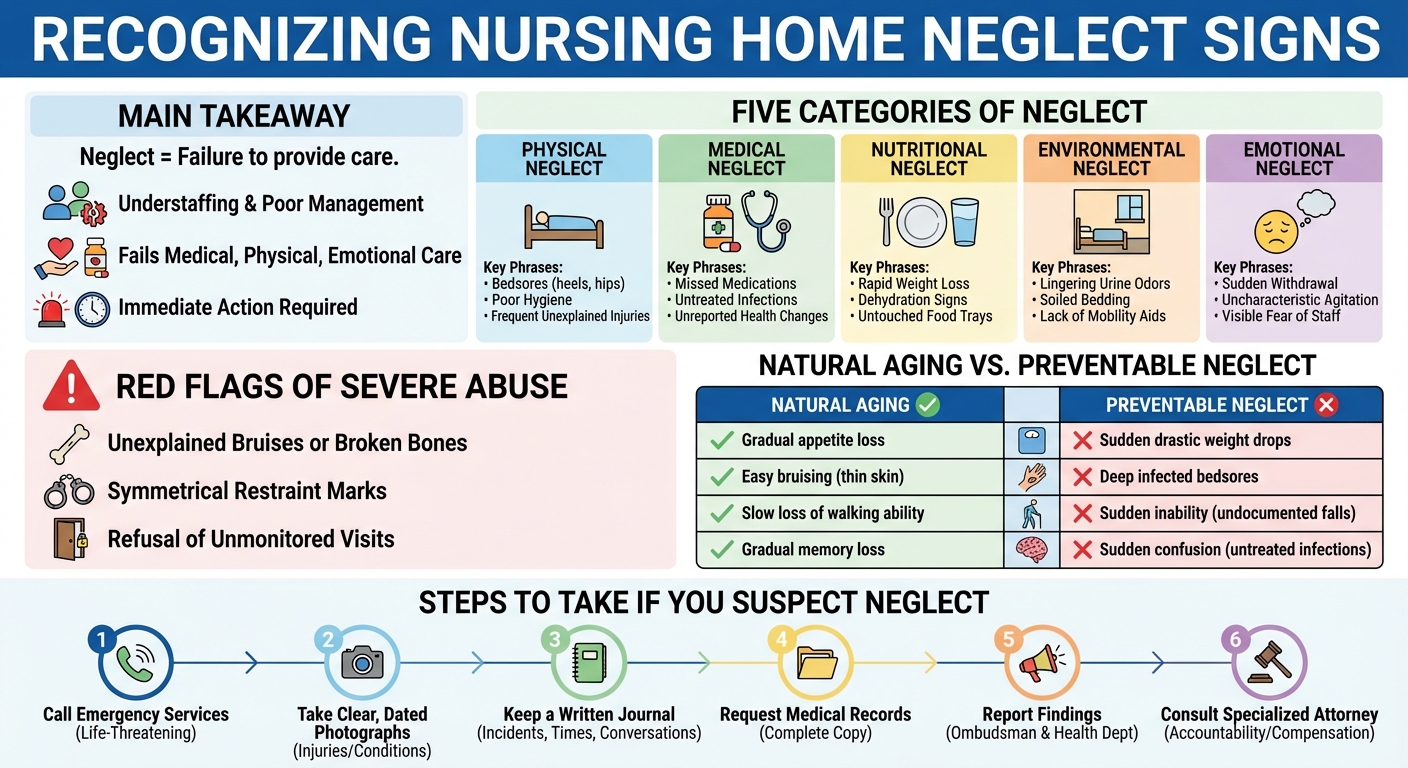
Neglect manifests in several forms, often categorized by the specific duty that has been abandoned:
- Physical Neglect: The failure to provide necessities such as food, water, clothing, or proper shelter. This also includes the failure to assist with activities of daily living (ADLs), such as bathing, grooming, and toileting.
- Medical Neglect: The failure to administer prescribed medications, provide necessary medical equipment (like hearing aids or walkers), or seek professional medical attention when a resident’s health condition changes or deteriorates.
- Basic Needs Neglect: The failure to provide a safe environment, which may include leaving a resident in an unsanitary room, ignoring safety hazards that lead to falls, or failing to address significant changes in mental or emotional health.
Recognizing Warning Signs and Red Flags
Identifying neglect is often difficult because victims may be unable to communicate their suffering due to cognitive impairment, or they may fear retaliation from staff. Families must rely on observable physical and behavioral cues.
Physical Indicators:
- Pressure Ulcers (Bedsores): These are often the most objective evidence of neglect. When a resident is not repositioned according to a set schedule, sores develop. If these progress to Stage III or IV, it strongly suggests a systemic failure in the facility’s care plan.
- Unexplained Weight Loss or Dehydration: A sudden loss of weight can indicate that a resident is not being assisted with meals or that their nutritional requirements are being ignored.
- Poor Hygiene: Persistent odors, unwashed hair, soiled clothing, or long, unclipped fingernails are clear signs that basic grooming duties are being ignored.
- Unexplained Injuries: While falls can happen, a high frequency of bruises, fractures, or abrasions without a documented explanation or fall-risk mitigation plan is a major red flag.
Behavioral and Environmental Indicators:
- Withdrawal or Fear: If a resident suddenly becomes silent, avoids eye contact, or becomes agitated specifically when certain staff members are present, it may indicate a pattern of intimidation or neglect.
- Staffing Issues: A facility that appears perpetually understaffed, with long response times to call buttons or high turnover rates, is significantly more likely to engage in neglect.
- Unsanitary Environment: Cluttered hallways, lingering odors, or overflowing waste bins indicate a lack of basic maintenance and supervision.
Comparative Framework: Indicators and Facility Responsibilities
The following table outlines standard care expectations versus indicators of potential neglect.
| Area of Care | Expected Standard | Potential Indicators of Neglect |
|---|---|---|
| Mobility | Regular repositioning every 2 hours | Pressure ulcers, contractures, stiff joints |
| Nutrition | Assistance with feeding and hydration | Unexplained weight loss, skin turgor issues |
| Medication | Timely administration and tracking | Missed dosages, changes in mental state |
| Hygiene | Daily assistance with bathing/toileting | Body odor, soiled clothing, skin rashes |
| Safety | Fall-risk assessment and monitoring | Frequent unexplained falls, broken items |
Taking Action: A Step-by-Step Approach
If you suspect your loved one is a victim of neglect, acting decisively is essential. Begin by documenting everything. Keep a journal of dates, times, and specific observations. If you notice a physical injury, take photographs, but always ensure you are respecting the resident's dignity and the facility's privacy policies.
- Direct Communication: First, address your concerns with the facility’s Director of Nursing (DON) or the Administrator. Request a formal review of the resident's care plan. Ensure that your concerns are documented in writing so there is a paper trail.
- Contact the Ombudsman: Every state has a Long-Term Care Ombudsman Program. These advocates are trained to investigate complaints and help resolve issues between families and facilities. They are independent of the nursing home and act in the interest of the resident.
- State Survey Agency: If internal communication fails, file a formal complaint with your state’s health department or the agency responsible for nursing home licensing. They have the authority to conduct an unannounced site survey and impose sanctions on the facility.
- Professional Legal Guidance: In cases of severe neglect resulting in permanent injury, significant medical expenses, or death, consult with an attorney experienced in nursing home litigation. They can determine if the facility violated the standard of care and evaluate the feasibility of a civil claim.
Regulatory Oversight and Resident Rights
In 2026, nursing homes operating under federal oversight must comply with the Requirements of Participation. These rules stipulate that every resident has the right to be free from neglect and that the facility must conduct a comprehensive assessment of each resident’s needs upon admission and periodically thereafter.
Facilities are legally obligated to maintain a clean, safe, and homelike environment. If a facility receives federal funding, they are subject to inspections that are available for public viewing on the Medicare "Care Compare" website. Before placing a family member in a facility, check their history of citations. A high number of complaints or significant deficiencies in the "Quality of Care" category should be treated as a warning.
Frequently Asked Questions
How can I tell the difference between staff burnout and intentional neglect? The intent behind the failure is rarely relevant to the outcome for the resident. Whether a staff member is overwhelmed by a high resident-to-staff ratio or is acting out of malice, the result is still neglect. The legal responsibility lies with the facility management to ensure adequate staffing levels.
Is it normal for a nursing home to have some turnover? While moderate turnover is common in the healthcare sector, high staff turnover often indicates systemic management problems. A lack of continuity in care can lead to critical information being missed, which significantly increases the risk of neglect.
Should I install a hidden camera in my loved one’s room? Laws regarding electronic monitoring devices in nursing homes vary significantly by state. Some states have "Granny Cam" laws that explicitly allow for their use under specific conditions, while others have strict privacy statutes. Research your specific state laws before installing any monitoring equipment.
Can I move my loved one if I suspect neglect? Yes. You have the right to discharge a resident at any time. If you suspect immediate danger, do not wait for an investigation to conclude; prioritize the safety of your loved one and seek an alternative placement immediately.
Next Steps and Recommendations
Your primary action should be proactive observation. Visit your loved one at different times of the day—not just during scheduled family hours—to get an accurate picture of the facility's daily operations. If you observe persistent issues, do not wait for the situation to resolve itself. Escalate your concerns to the facility administration and simultaneously reach out to your local Long-Term Care Ombudsman. Ensuring your loved one's needs are met is a continuous process that requires vigilance and clear documentation.
Disclaimer: This article provides general information and does not constitute legal or medical advice. Nursing home regulations vary by jurisdiction. For specific concerns regarding health or legal rights, please consult with a qualified attorney or a healthcare professional.
Image Gallery