Navigating New York Jails and Prisons: System Differences, Inmate Lookup, and Visiting Rules
Correctional facilities in New York are divided into three distinct operational jurisdictions: county and city jails for short-term detention or pre-trial holding, New York State prisons for felony sentences over one year, and federal...
Correctional facilities in New York are divided into three distinct operational jurisdictions: county and city jails for short-term detention or pre-trial holding, New York State prisons for felony sentences over one year, and federal correctional facilities. Locating an individual and navigating visitation rules requires knowing whether the person is held under local, state, or federal custody and using the correct identification system, such as a state Department Identification Number (DIN) or local Book and Case Number.
Contents
Understanding the New York correctional landscape requires distinguishing between municipal detention centers, county sheriff facilities, state penitentiaries, and federal holding centers. Each system operates under its own legal statutes, visitor processing policies, inmate lookup portals, and administrative bodies.
Jurisdictional Architecture: Distinguishing New York Jails, State Prisons, and Federal Facilities
The correctional infrastructure in New York State relies on a strict division of authority based on the legal status of the individual, the severity of the alleged or convicted offense, and the sentencing duration imposed by the court system.
| Standardizing terms |
|---|
| Jails host pre-trial detainees and sentences ≤ 1 year. |
| Prisons host felony sentences > 1 year managed by NYS DOCCS. |
(Correctional hierarchy table provided in the following section for detailed technical specifications.)
County and Municipal Jails (Local Detention)
Jails in New York are operated at the county level by County Sheriff’s Offices or, in New York City, by the New York City Department of Correction (NYC DOC). Under the New York Criminal Procedure Law (CPL), local jails primarily hold two categories of individuals:
- Pre-Trial Detainees: Individuals awaiting arraignment, trial, or sentencing who have been denied bail or have not posted bail.
- Locally Sentenced Individuals: Individuals convicted of misdemeanors or minor offenses serving sentences of one year or less under the New York Penal Law.
The largest local jail complex in the state is Rikers Island, managed by the NYC DOC. Upstate counties and Long Island maintain independent county correctional centers (such as the Nassau County Correctional Center or Erie County Holding Center) governed directly by local county sheriffs and inspected by the New York State Commission of Correction (NYSCOC).
New York State Prisons (NYS DOCCS)
State prisons fall under the administrative jurisdiction of the New York State Department of Corrections and Community Supervision (NYS DOCCS). These facilities house individuals convicted of felony offenses who receive state determinate or indeterminate sentences exceeding one year.
DOCCS manages facilities categorized by security classifications:
- Maximum Security: Facilities such as Sing Sing, Attica, Clinton, and Green Haven feature perimeter walls, electronic security systems, and high staff-to-inmate ratios for individuals requiring maximum supervision.
- Medium Security: Facilities like Bare Hill or Wallkill maintain secure perimeters (often double-fenced with motion detection) but allow greater movement, vocational programming, and communal dining.
- Minimum Security and Re-Entry Centers: Facilities housing individuals near their release dates, focusing on work release, community reintegration, and substance abuse treatment.
- Specialized Facilities: Includes dedicated medical facilities, shock incarceration locations, and female-only institutions such as the Bedford Hills Correctional Facility (the state's primary maximum-security prison for women).
Federal Correctional Facilities
The Federal Bureau of Prisons (BOP) operates independent facilities within New York State boundaries. These institutions house individuals charged with or convicted of federal crimes under United States Code (USC) violations. Primary federal facilities in New York include the Metropolitan Detention Center (MDC) Brooklyn, an administrative facility holding federal pre-trial detainees and short-sentence offenders.
Comparative Overview of New York Correctional Systems
The administrative processes, prisoner tracking identifiers, and oversight mechanisms vary significantly across local, state, and federal networks.
| System Classification | Governing Body | Primary Population | Sentence Length | Identification System | Official Inmate Search System |
|---|---|---|---|---|---|
| NYC City Jails | NYC Department of Correction (DOC) | Pre-trial detainees & local misdemeanor convictions | 1 year or less | Book and Case Number / NYSID | NYC DOC Inmate Lookup |
| NYS State Prisons | NYS Department of Corrections and Community Supervision (NYS DOCCS) | State felony convictions | Exceeding 1 year | Department Identification Number (DIN) | NYS DOCCS Inmate Lookup |
| Upstate / Long Island County Jails | Local County Sheriff's Offices | Pre-trial detainees & county sentence convictions | 1 year or less | Local Booking Number / NYSID | VINELink / County Sheriff Portals |
| Federal Detention Centers | Federal Bureau of Prisons (FBOP) | Federal pre-trial detainees & convicted federal felons | Variable (Federal sentences) | BOP Register Number | Federal Inmate Locator |
How to Locate an Incarcerated Person in New York
Locating an incarcerated individual requires targeting the database matching the governing correctional jurisdiction. Searching the wrong system will yield no records.
Locating Individuals in New York State Prisons (DOCCS)
To locate an individual serving a state prison sentence, use the public NYS DOCCS Inmate Lookup tool.
- Required Information: Search using either the individual's full legal name and date of birth, or their unique Department Identification Number (DIN).
- Understanding the DIN Structure: A DIN is assigned upon entry into the state prison reception center (e.g., Elmira or Downstate historical reception protocols). The format includes the year of commitment, an alpha code, and a sequential number (e.g.,
24-A-1234). - Search Output Data: The DOCCS lookup provides the current housing facility, commitment status, legal conviction details, earliest release date, parole eligibility date, and aggregate minimum/maximum sentence terms.
DOCCS Lookup Note: If an individual has recently been sentenced to state prison, there is typically a delay of 3 to 7 business days while the individual is transferred from local county jail custody to a DOCCS reception center before their record populates in the state database.
Locating Detainees in NYC City Jails
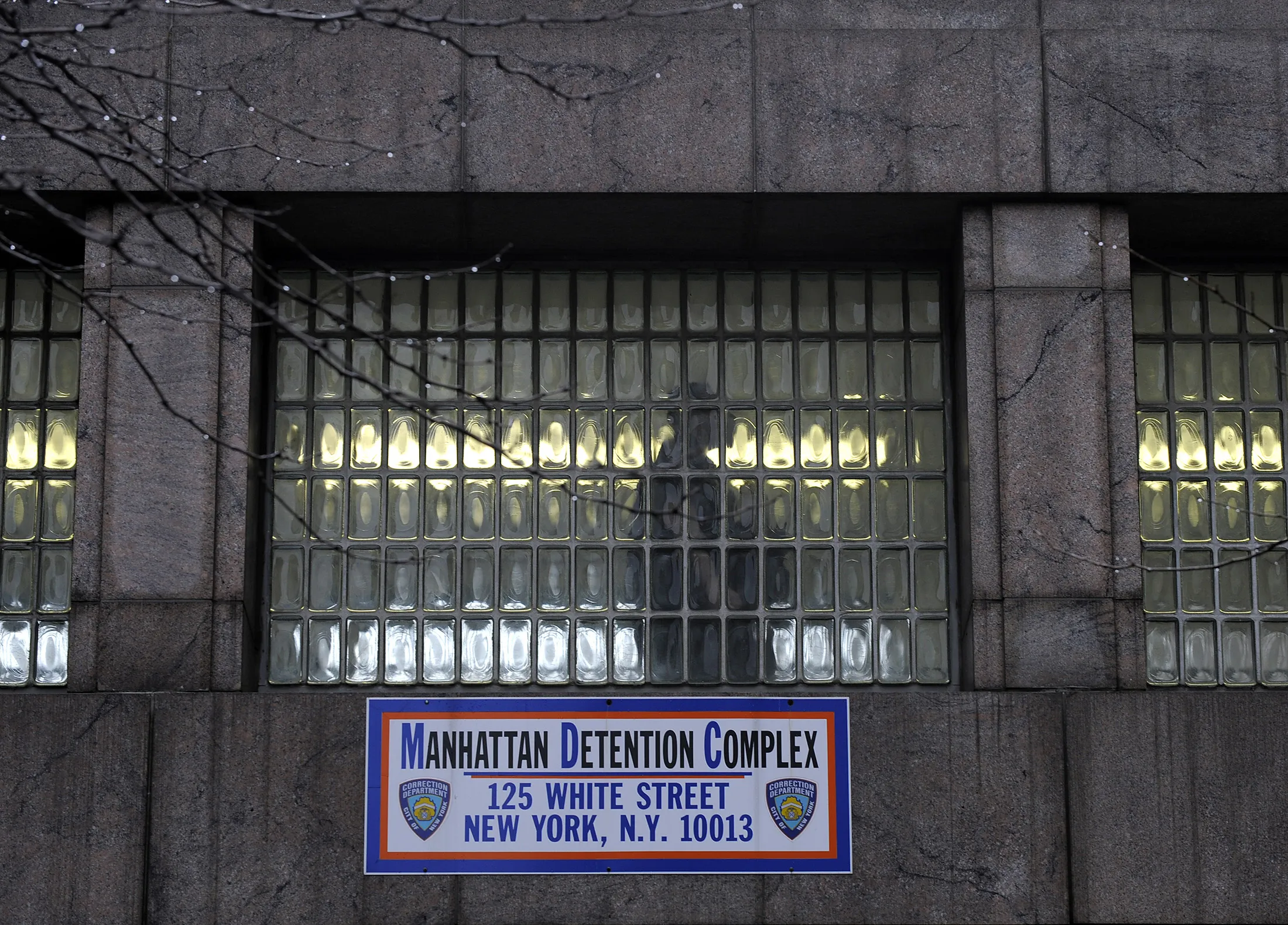
For individuals held in New York City facilities (such as Rikers Island, the Manhattan Detention Complex, or the Vernon C. Bain Center historical transfers), use the NYC DOC Inmate Lookup System.
- Search Criteria: Requires the individual's full legal name, date of birth, or their 10-digit Book and Case Number or NYSID (New York State Identification number issued by Division of Criminal Justice Services).
- Search Results: Returns the current facility location, housing block, bail amount set by the court, next court appearance date, scheduled court transport details, and criminal charge summaries.
Locating Individuals in Upstate and Long Island County Jails
County jails outside the NYC DOC system do not maintain a single centralized state jail portal. To locate an individual held in a county jail:
- Access the specific County Sheriff's Office website (e.g., Suffolk County Sheriff, Monroe County Sheriff).
- Utilize the VINELink (Victim Information and Notification Everyday) network for New York State, which aggregates real-time custody status changes across participating county facilities.
Visitation Regulations, Communication, and Security Standards
Visiting an incarcerated person in New York requires strict adherence to administrative codes governing security checks, allowed items, and dress regulations. Rules differ between state DOCCS facilities and local city/county jails.
State Prison (DOCCS) Visiting Policies
Visitor Approval and ID Requirements
All adult visitors (18 years and older) must present valid, government-issued photo identification, such as a state driver's license, passport, or military ID card. First-time visitors must fill out a visitor registration form upon arrival. Individuals on active probation or parole must obtain written permission from their supervising officer and approval from the facility superintendent before visiting.
Schedule and Frequency
Visiting schedules depend on the security level of the institution:
- Maximum Security Facilities: Visiting is generally permitted seven days a week, subject to capacity caps and specific housing unit rotation schedules.
- Medium and Minimum Security Facilities: Visiting is typically limited to weekends and designated state holidays.
- Limit on Visitors: Most state facilities permit up to three or four adult visitors per table, with children under five accommodated on laps.
Strict Dress Code Enforcements
DOCCS enforces standard dress rules across all facilities. Prohibited attire includes:
- Clothing resembling correctional officer uniforms (blue denim tops with blue denim bottoms, khaki shirts/pants, or camouflage patterns).
- Barefoot, open-toed shoes, flip-flops, or steel-toed boots.
- Underwire bras that set off metal detectors (non-metallic options recommended).
- Attire exposing excess skin, sheer fabrics, miniskirts, tank tops, or athletic shorts.
- Headwear of any kind, unless declared as standard religious apparel subject to non-invasive inspection.
Electronic Communication, Phone Calls, and Money Transfers
Telephone Services
Incarcerated individuals cannot receive incoming calls. Phone calls must be initiated by the incarcerated person using approved vendor systems (such as Securus Technologies or ViaPath Technologies).
Under New York State legislation, local jail systems and DOCCS must limit communication costs. Rates are capped by Federal Communications Commission (FCC) regulations alongside state mandate reforms aimed at minimizing financial burdens on families.
Electronic Messaging and Media Tablets
Most NYS DOCCS and NYC DOC facilities provide access to secured electronic tablets. Friends and family can send approved electronic messages, photos, and short videos through official vendor applications (e.g., JPay or ConnectNetwork).
Communication Monitoring: All outgoing calls and electronic messages—excluding privileged legal communications with licensed attorneys—are recorded and subject to administrative monitoring by internal intelligence and security staff.
Inmate Trust Accounts and Money Transfers
To send funds for an incarcerated person's commissary account:
- State DOCCS: Money orders must be mailed with a deposit slip to the centralized vendor address (e.g., JPay), or deposited electronically via web portal or phone.
- NYC DOC: Funds can be deposited online via the NYC DOC payment portal, through kiosks at designated visit centers, or via approved money transfer vendors using the Book and Case Number.
Medical Access, Solitary Confinement, and Statutory Protections
New York correctional institutions operate under federal constitutional mandates, New York State Correction Law, and legislative reform statutes.
The HALT Solitary Confinement Act
The Humane Alternative to Long-Term (HALT) Solitary Confinement Act (Chapter 93 of the Laws of 2021) established strict limits on segregated housing throughout state prisons and local county jails.
Key provisions enforced under the HALT Act include:
- 15-Day Maximum Cap: Segregated housing (solitary confinement) is limited to no more than 15 consecutive days, or a total of 20 days within any 60-day period.
- Complete Prohibition for Special Populations: Solitary confinement is barred for individuals under 21 years of age, 55 years of age or older, pregnant individuals, new mothers, and persons with severe physical, mental, or intellectual disabilities.
- Mandatory Out-of-Cell Time: Facilities must provide a minimum of four hours of daily out-of-cell time for individuals placed in alternative Residential Rehabilitation Units (RRUs), focusing on therapeutic programming and rehabilitation.
Rights to Medical and Mental Health Care
Under Correction Law Section 137 and the Eighth Amendment of the U.S. Constitution, incarcerated individuals have a statutory right to adequate medical treatment, dental care, and mental health services.
- Mental Health Oversight: The New York State Office of Mental Health (OMH) operates psychiatric units and therapeutic residential programs within select DOCCS facilities to serve individuals diagnosed with major depressive disorders, schizophrenia, or severe trauma-related conditions.
- Prescription Medications: DOCCS pharmacy systems manage medication distribution. Individuals entering custody with existing prescriptions must undergo clinical review by facility medical staff for continuation or therapeutic substitution.
Systemic Reform Trajectories and Facility Infrastructure
The New York penal system continues to undergo structural adjustments driven by legislative updates, changing population metrics, and physical infrastructure initiatives.
The NYC Borough-Based Jails Plan
The New York City Borough-Based Jails Plan requires closing the Rikers Island jail complex and replacing it with four smaller, modern community-based detention centers located across Manhattan, Brooklyn, Queens, and the Bronx.
Designed to keep detainees closer to their home boroughs, families, and judicial centers, the plan incorporates upgraded medical facilities, enhanced safety protocols, and dedicated space for legal consultation. Construction and transition efforts remain active city infrastructure projects.
State Prison Consolidation Trends
The NYS DOCCS incarcerated population has seen multi-year shifts due to bail reform laws, sentencing alterations, and expanded post-release diversion options.
As overall bed usage declines, the state periodically closes older, underutilized correctional facilities to consolidate staff resources, update aging infrastructure, and reallocate state budget capital toward re-entry initiatives and vocational rehabilitation.
Frequently Asked Questions
What is the primary operational difference between a jail and a prison in New York?
Jails in New York are operated by local city or county agencies (such as the NYC DOC or County Sheriffs) to hold pre-trial detainees and individuals serving short misdemeanor sentences of one year or less. State prisons are operated by NYS DOCCS and house individuals convicted of felony crimes who are serving sentences greater than one year.
How do I find an incarcerated person's State DIN number?
You can search the public NYS DOCCS Inmate Lookup online using the person's full legal name and date of birth. The search results will list their assigned Department Identification Number (DIN), current housing facility, conviction information, and release eligibility dates.
What items can be brought directly to a visitor meeting in a New York State prison?
Visitors are generally restricted from bringing personal items into the visiting room. Small amounts of cash (usually coins or small bills, depending on the facility's vending system rules) are permitted for purchasing food from visiting room vending machines. All personal items like bags, keys, and cell phones must be stored in facility lockers prior to passing through security checkpoints.
How does the HALT Solitary Confinement Act restrict isolated housing in NY facilities?
The HALT Act caps isolated confinement at a maximum of 15 consecutive days (or 20 total days within a 60-day period) across all local jails and state prisons. It strictly forbids solitary confinement for vulnerable populations, including young adults, individuals over 55, pregnant women, and persons with severe mental or physical disabilities.
Can an incarcerated individual receive packages from family members in NYS DOCCS prisons?
Under current DOCCS secure package directives, packages sent to state prison inmates must be ordered and shipped directly from approved third-party vendors or licensed commercial publishers. Unsolicited, hand-delivered, or personally packed boxes sent directly from private residences are not accepted by DOCCS mailroom staff.
Strategic Recommendations for Legal and Family Logistics
When preparing to interact with any New York correctional institution, verify all administrative requirements prior to travel or sending funds:
- Confirm Custody Status Daily: Check the official lookup portal (DOCCS, NYC DOC, or county database) on the morning of a planned visit to confirm the individual has not been transferred, transported to court, or placed under medical isolation.
- Verify Facility-Specific Rules: Check individual facility web pages for localized visiting schedules, bus transportation schedules, and specific intake rules, as rules vary by security level and location.
- Maintain Clear Documentation: Always keep copies of certified government IDs, legal representation documents, and vendor receipts for money transfers or approved package shipments.
Image Gallery