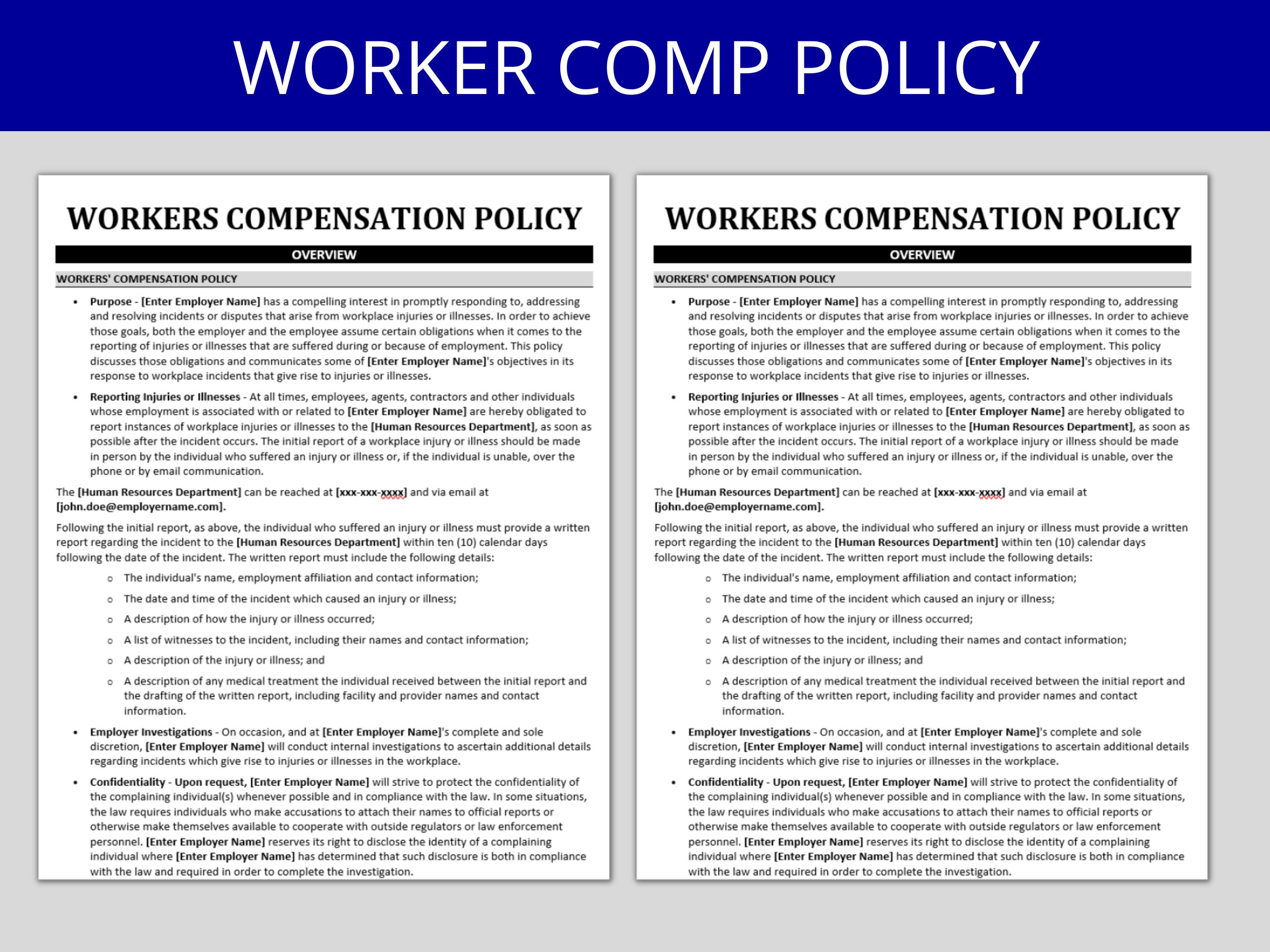
Who Is Responsible for Paying Workers Compensation Insurance?
Workers compensation insurance is a mandatory expense funded almost exclusively by the employer. In the vast majority of jurisdictions, businesses are legally required to purchase these policies to provide wage replacement and medical...
Workers compensation insurance is a mandatory expense funded almost exclusively by the employer. In the vast majority of jurisdictions, businesses are legally required to purchase these policies to provide wage replacement and medical benefits to employees injured in the course of their employment. Employees do not contribute to the cost of these premiums through payroll deductions.
Contents
Understanding the Employer’s Financial Obligation
The fundamental principle of workers compensation systems is the "exclusive remedy" doctrine. Under this social contract, employees relinquish their right to sue their employers for workplace injuries in exchange for guaranteed, no-fault insurance coverage. To maintain this balance, the financial burden of the insurance premium rests entirely on the employer.
Employers view these premiums as a core cost of doing business. Because the insurance is a mandatory regulatory requirement in nearly every state, business owners must account for this expense in their operational budgets. The cost is calculated based on several factors, primarily the size of the payroll and the risk classification associated with the specific industry. A construction firm, for instance, faces significantly higher premium rates than a professional services firm because the statistical likelihood of physical injury is greater in manual labor environments.
Why Employees Do Not Pay Premiums
It is a common misconception that workers compensation is a shared contribution, similar to Social Security or Medicare taxes in the United States. However, unlike government-mandated social insurance programs, workers compensation is a private insurance market regulated at the state level.
Legally, an employer is prohibited from deducting workers compensation premiums from an employee’s wages. Attempting to pass this cost on to the workforce is a violation of state labor laws and can lead to severe penalties, including fines and the potential loss of the employer’s business license. The system is designed this way to ensure that employees receive protection without a financial barrier to entry, ensuring that the risk of workplace accidents remains an internalized cost of the organization rather than an externalized cost to the individual.
How Premiums Are Determined
While the employer pays the bill, the amount of that bill is variable. Insurance carriers determine the premium based on the "Experience Modification Rate" (EMR). This numerical value reflects the company's past history of workplace injuries compared to other businesses in the same industry.
- Classification Codes: Each job role is assigned a code by the National Council on Compensation Insurance (NCCI) or a state-specific rating bureau. These codes reflect the inherent danger of the specific tasks performed.
- Payroll Exposure: Because workers compensation covers medical bills and lost wages, the total payroll acts as a proxy for the total hours worked. Higher payrolls generally equate to higher premiums.
- Claims History: If a business has frequent or high-cost injury claims, their EMR increases, resulting in higher premiums. Conversely, businesses that prioritize safety and maintain a clean record can earn "credits" that lower their annual premiums.
Table: Comparison of Responsibility in Employment Taxes and Insurance
| Benefit/Tax | Employer Contribution | Employee Contribution |
|---|---|---|
| Workers Compensation | 100% | 0% |
| Social Security (OASDI) | 6.2% | 6.2% |
| Medicare (HI) | 1.45% | 1.45% |
| Unemployment Insurance | Usually 100% | 0% (in most states) |
| Private Health Insurance | Variable (Shared) | Variable (Shared) |
Independent Contractors and Sole Proprietors
The question of "who pays" becomes more complex when the workforce consists of independent contractors rather than W-2 employees. By definition, independent contractors are not employees and are generally not covered by an employer’s workers compensation policy. In these scenarios, the contractor is responsible for their own coverage if they desire protection against work-related injury.
However, many states have "statutory employee" laws. These rules specify that if a general contractor hires a subcontractor who lacks their own insurance, the general contractor may become liable for workers compensation claims filed by the subcontractor's employees. Consequently, many general contractors require their subcontractors to provide a "Certificate of Insurance" (COI) before beginning work, ensuring the subcontractor has secured and paid for their own policy.
Coverage for Small Business Owners
In many jurisdictions, the business owner (sole proprietor, partner, or member of an LLC) is not automatically included in the mandatory workers compensation coverage. Because they are the ones paying the premiums, they are often given the option to exclude themselves from the policy to save on costs. If a business owner chooses to include themselves, they are essentially paying the insurance company to cover their own potential injuries. This is a voluntary choice, distinct from the mandatory coverage provided to their employees.
Steps to Verify Your Coverage
If you are an employee and concerned about whether your employer is paying for your coverage, you do not need to rely on their word. Most state governments maintain a "Proof of Coverage" database that is accessible to the public.
- Identify your state’s insurance regulator: This is typically a Department of Labor or a dedicated Workers Compensation Board.
- Search the portal: Most states offer an online verification tool where you can enter your employer’s name or Federal Employer Identification Number (FEIN).
- Review the status: The portal will confirm if the business has an active policy, the name of the insurance carrier, and the effective dates of the coverage.
Common Misunderstandings
A recurring issue in the workplace is the confusion between health insurance and workers compensation. While employers may ask employees to contribute to a health insurance premium, they cannot ask for a contribution toward workers compensation. Any employer soliciting funds from employees to cover "insurance for injuries" is likely operating in violation of the law.
Furthermore, some employers mistakenly believe that because they are "small," they are exempt from paying workers compensation. While some states have "employee count" thresholds (e.g., exempting businesses with fewer than three employees), these rules are narrow and often ignore the reality that one serious accident can bankrupt a small firm. Even where not strictly mandatory, purchasing the insurance is the only way to shield the business from expensive personal injury litigation.
Frequently Asked Questions
Can my employer deduct workers compensation costs from my paycheck? No. In all 50 U.S. states and most international jurisdictions, it is illegal for an employer to deduct the cost of workers compensation insurance from an employee’s wages. This is a mandatory employer business expense.
What happens if my employer doesn't have insurance? If an employer fails to carry mandatory workers compensation insurance, they become directly liable for all medical bills and lost wages resulting from an injury. Furthermore, they face significant legal penalties, including heavy fines, stop-work orders, and potential criminal charges.
Are independent contractors covered by my employer’s policy? Generally, no. Independent contractors are responsible for their own insurance. However, if you are a subcontractor, you should check your contract and state laws, as some primary contractors are required to provide coverage for their uninsured subcontractors.
How does my safety record affect what my boss pays? Your workplace behavior impacts the "Experience Modification Rate" (EMR). If the company has a high number of accidents, the insurance carrier increases the EMR, causing the employer's premiums to rise. A safe workplace is financially beneficial for the employer.
Do I have to pay for workers compensation if I am a business owner? If you have employees, you must pay for their coverage. Whether you must cover yourself depends on your business structure and state law; in many cases, owners are permitted to opt-out of their own policy to avoid the added premium cost.
Next Steps for Compliance
For business owners, the priority is to consult with a licensed commercial insurance broker who specializes in the specific state statutes where the business operates. Ensuring that all employees are correctly classified—and that any subcontractors carry their own policies—is the most effective way to manage costs. For employees, maintain awareness of your workplace safety procedures. If you are injured, immediately report the incident to your supervisor to ensure the claims process is initiated through the employer-funded policy, which is designed to protect your financial security during recovery.
Image Gallery