Where to Buy a Back Posture Corrector Near You: Local Retailers, Device Types, and Selection Guide
You can purchase a back posture corrector locally at retail pharmacies, big-box department stores, specialty medical supply shops, and orthopedic clinics. While over-the-counter braces provide immediate physical feedback to prevent slo...
You can purchase a back posture corrector locally at retail pharmacies, big-box department stores, specialty medical supply shops, and orthopedic clinics. While over-the-counter braces provide immediate physical feedback to prevent slouching, selecting the right device requires understanding your specific spinal needs, proper fitting protocols, and the crucial distinction between temporary posture aids and clinical orthoses.
Contents
Medical Disclaimer: This guide is for educational purposes and does not replace professional medical evaluation. If you experience persistent back pain, numbness, tingling, or structural spinal curvature, consult a licensed physical therapist or orthopedic physician before using a posture brace.
Where to Find Back Posture Correctors Locally
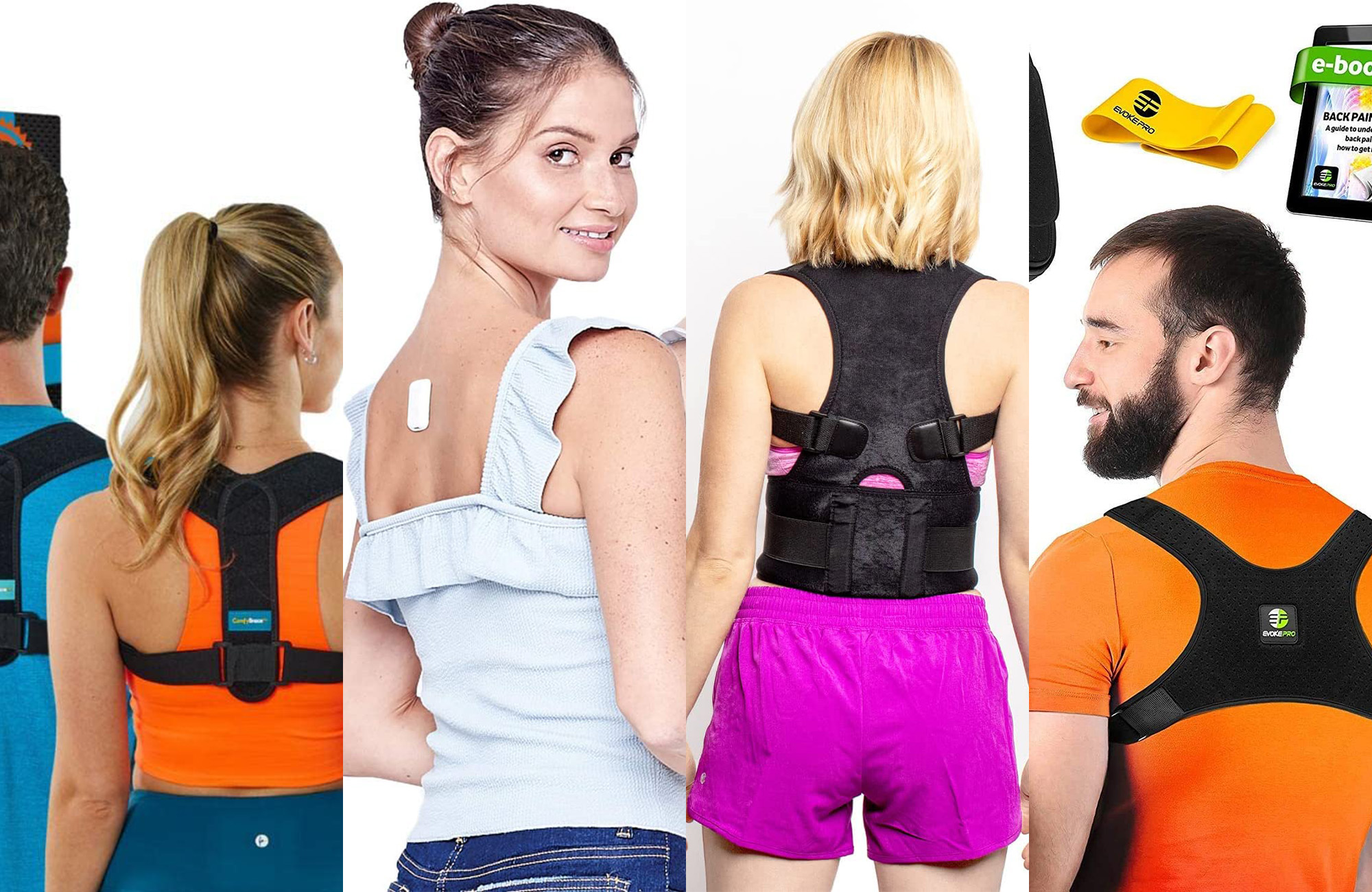
Searching for a back posture corrector near you usually leads to four primary retail and medical destinations. Availability, product quality, and fitting assistance vary significantly across these options.
- Where to Buy Posture Correctors
- Retail Pharmacies (CVS/Walgreens)
- Big-Box Retailers (Walmart/Target)
- Medical Supply Stores (Specialty Hub)
- Professional Rehabilitation Clinics
1. Retail Pharmacies
Chain pharmacies—such as CVS, Walgreens, and Rite Aid—typically stock basic posture correctors in their home healthcare or orthopedic support aisles.
- What to expect: Lightweight figure-8 elastic straps and soft neoprene shoulder retractors from brands like Futuro, Mueller, or ACE.
- Price range: $15 to $45.
- Best for: Immediate purchase for mild upper-back slouching or temporary work-from-home support. Staff can point you to the correct aisle, but they generally cannot provide specialized orthotic fitting.
2. Big-Box Department Stores
Retailers like Walmart and Target offer posture correctors in their personal care, pharmacy, or sporting goods sections.
- What to expect: Entry-level elastic braces, compression garments, and popular electronic biofeedback devices (such as wearable posture sensors).
- Price range: $12 to $60.
- Best for: Budget-conscious buyers or those looking for smart posture trainers that cue muscle activation rather than physically pulling the shoulders back.
3. Medical Supply and Surgical Appliance Stores
Independent medical supply stores and specialty orthotic supply outlets carry professional-grade supports and thoracolumbar braces.
- What to expect: Semi-rigid braces, adjustable thoracolumbar orthoses, and high-durability fabrics designed for long-term wear.
- Price range: $40 to $150+.
- Best for: Individuals recovering from injury, managing significant postural kyphosis, or needing hands-on help. Staff at these locations are often trained to measure your torso and fit braces correctly.
4. Physical Therapy and Chiropractic Clinics
Many physical therapy practices and chiropractic offices carry clinical posture correctors for direct sale to patients.
- What to expect: High-performance postural retraining braces designed to integrate into a structured physical rehabilitation program.
- Price range: $50 to $200 (sometimes partially covered by health insurance when prescribed).
- Best for: Individuals with underlying spinal conditions, neck pain, or severe forward head posture who require direct supervision from a healthcare provider.
Types of Back Posture Correctors Available Near You
Not all posture correctors work the same way. Selecting the right design depends on whether your primary issue is upper shoulder rounding, lower back strain, or a lack of postural awareness.
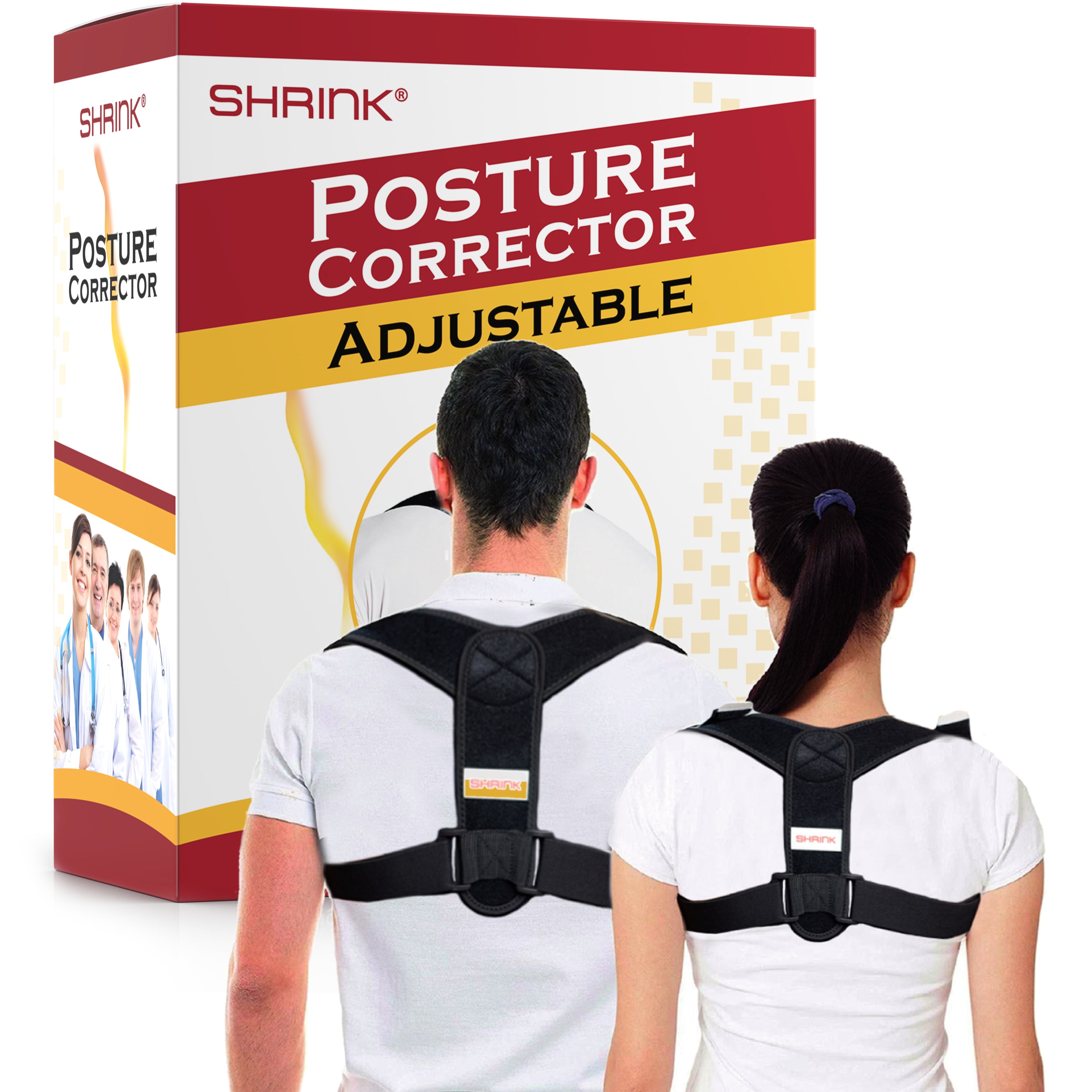
Figure-8 Shoulder Harnesses
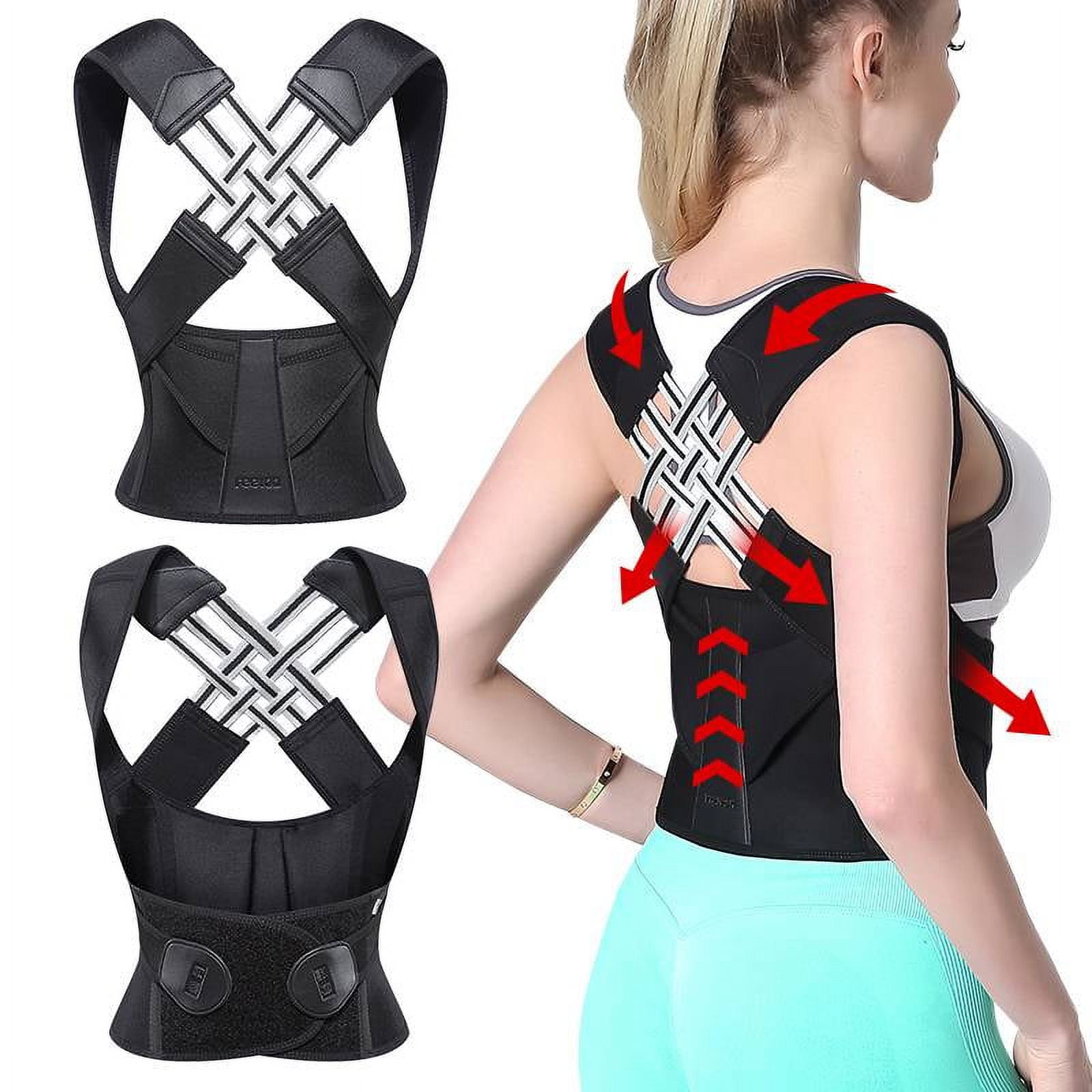
The figure-8 harness consists of two loops that fit over your shoulders and cross behind your shoulder blades (scapulae).
- Mechanism: It pulls the shoulders back into scapular retraction, physically restricting forward rounding (thoracic kyphosis).
- Pros: Highly visible under-armour support, simple to put on, widely available at local pharmacies.
- Cons: Can pinch under the armpits (axillary region) if tight; does not support the lower back.
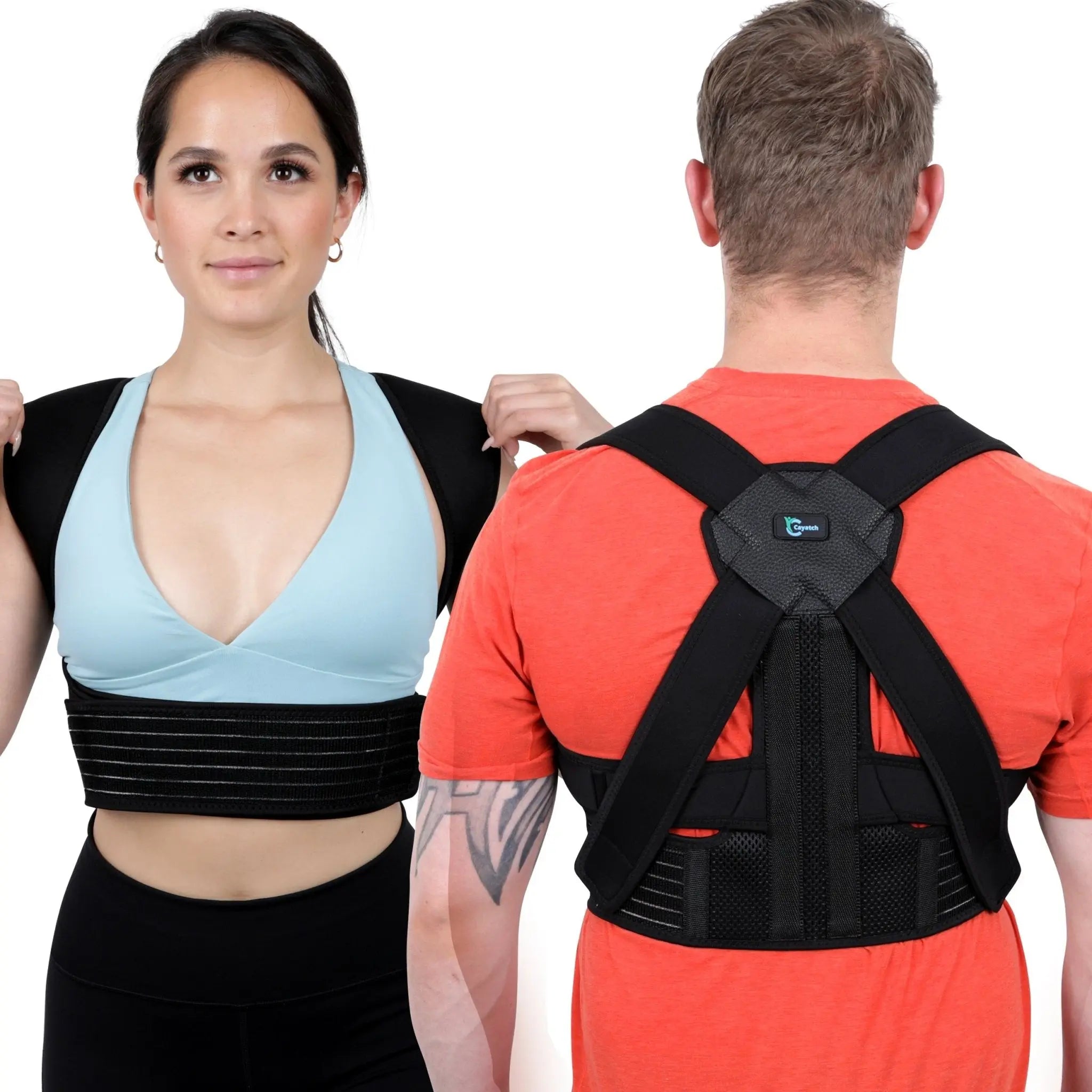
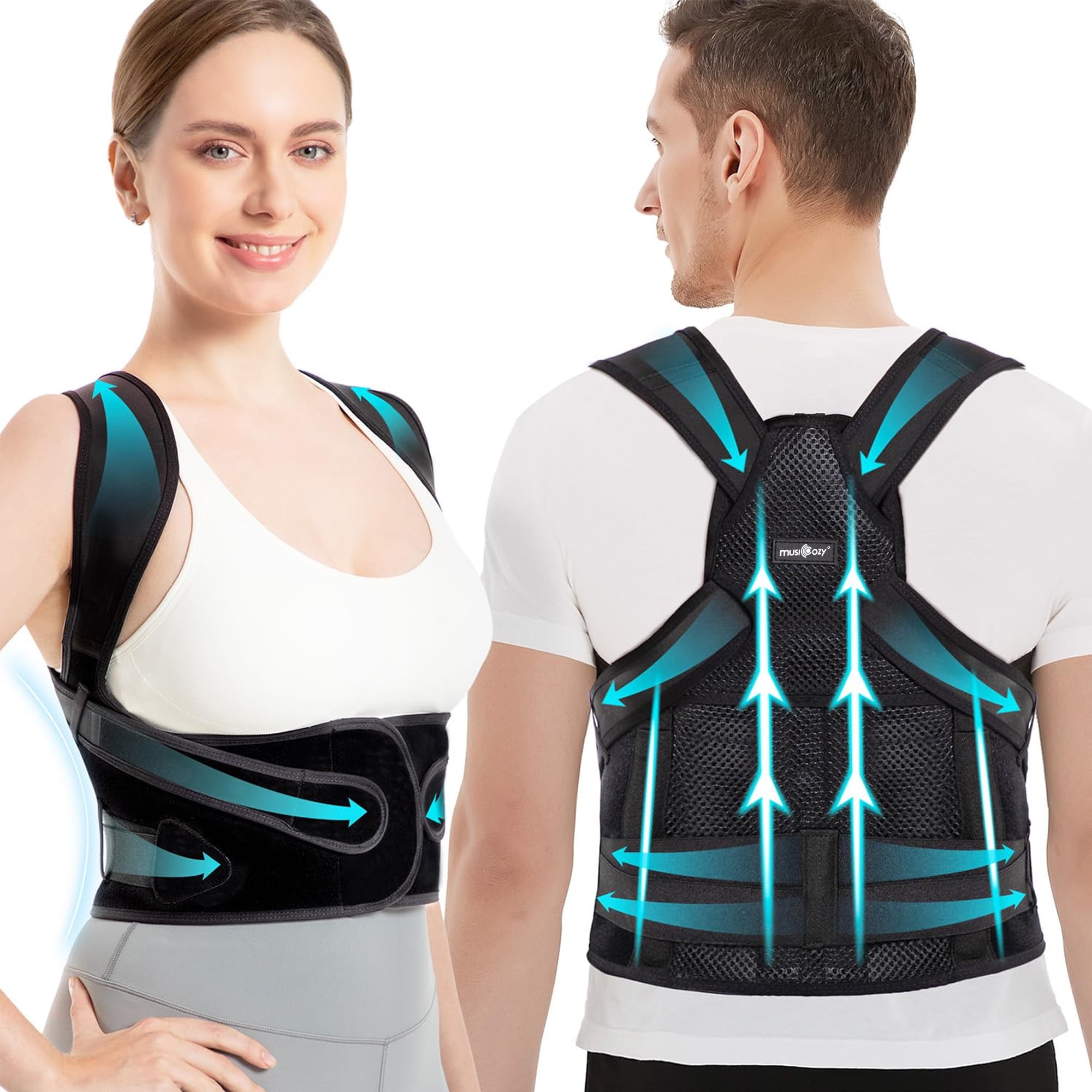
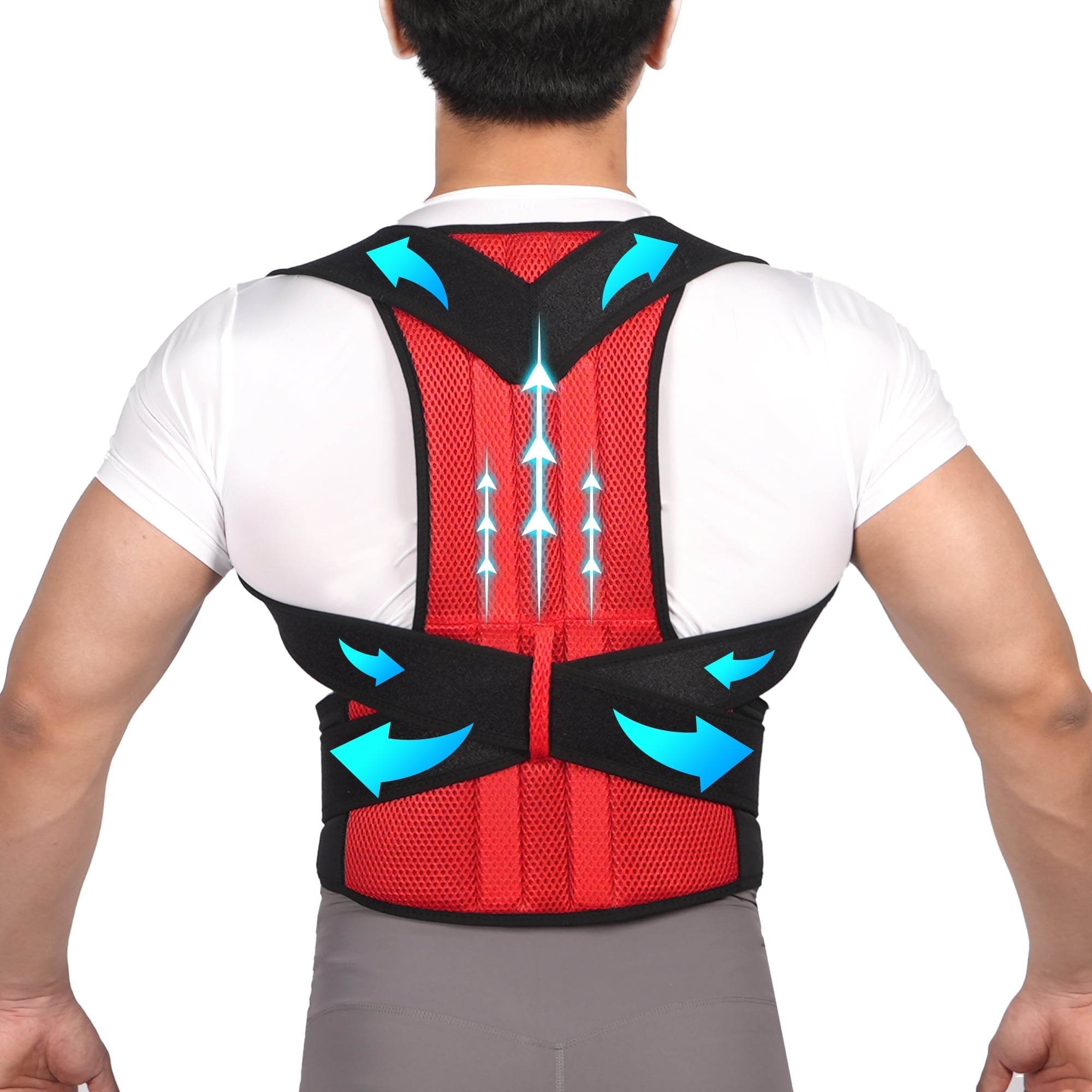
Elastic Lumbar-Thoracic Braces
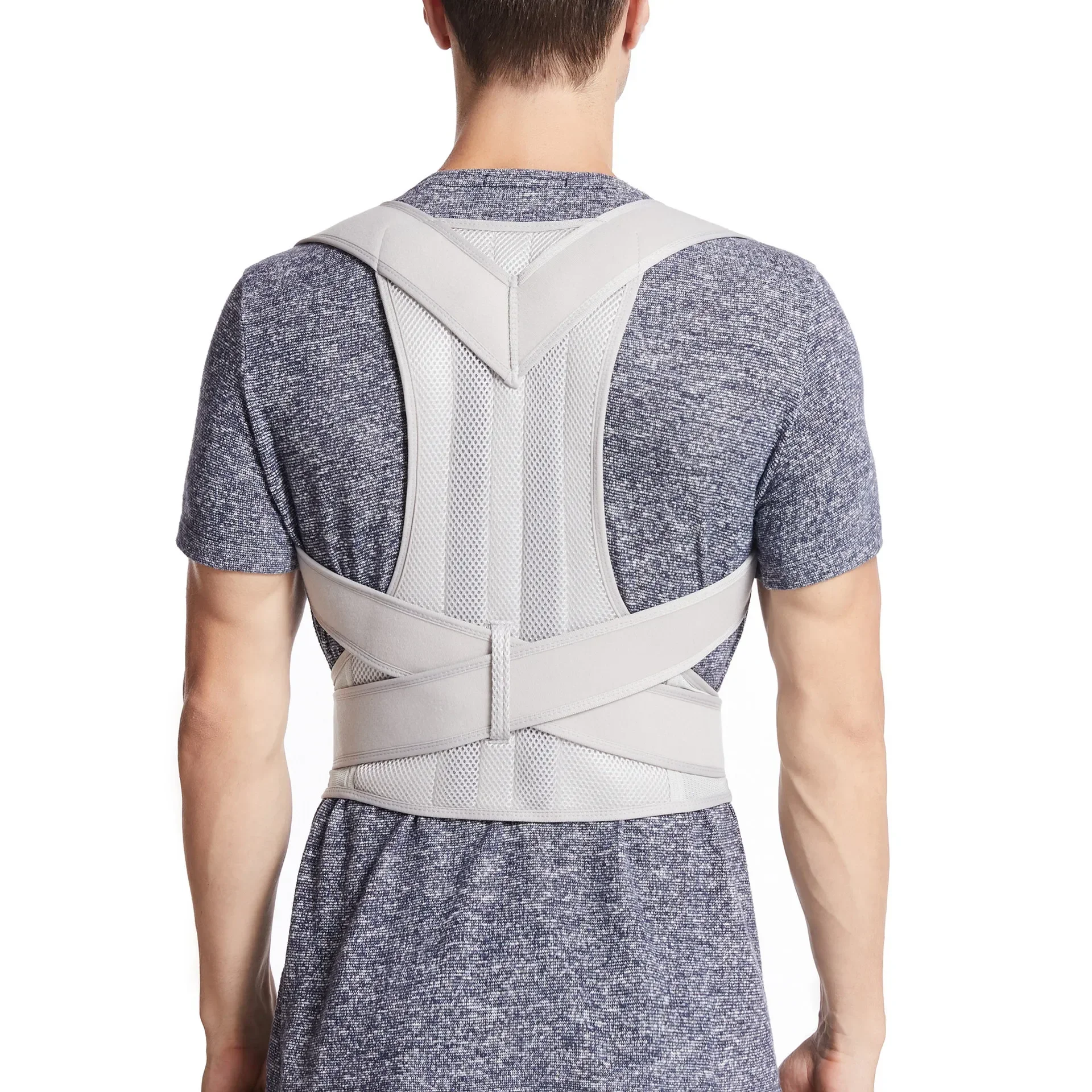
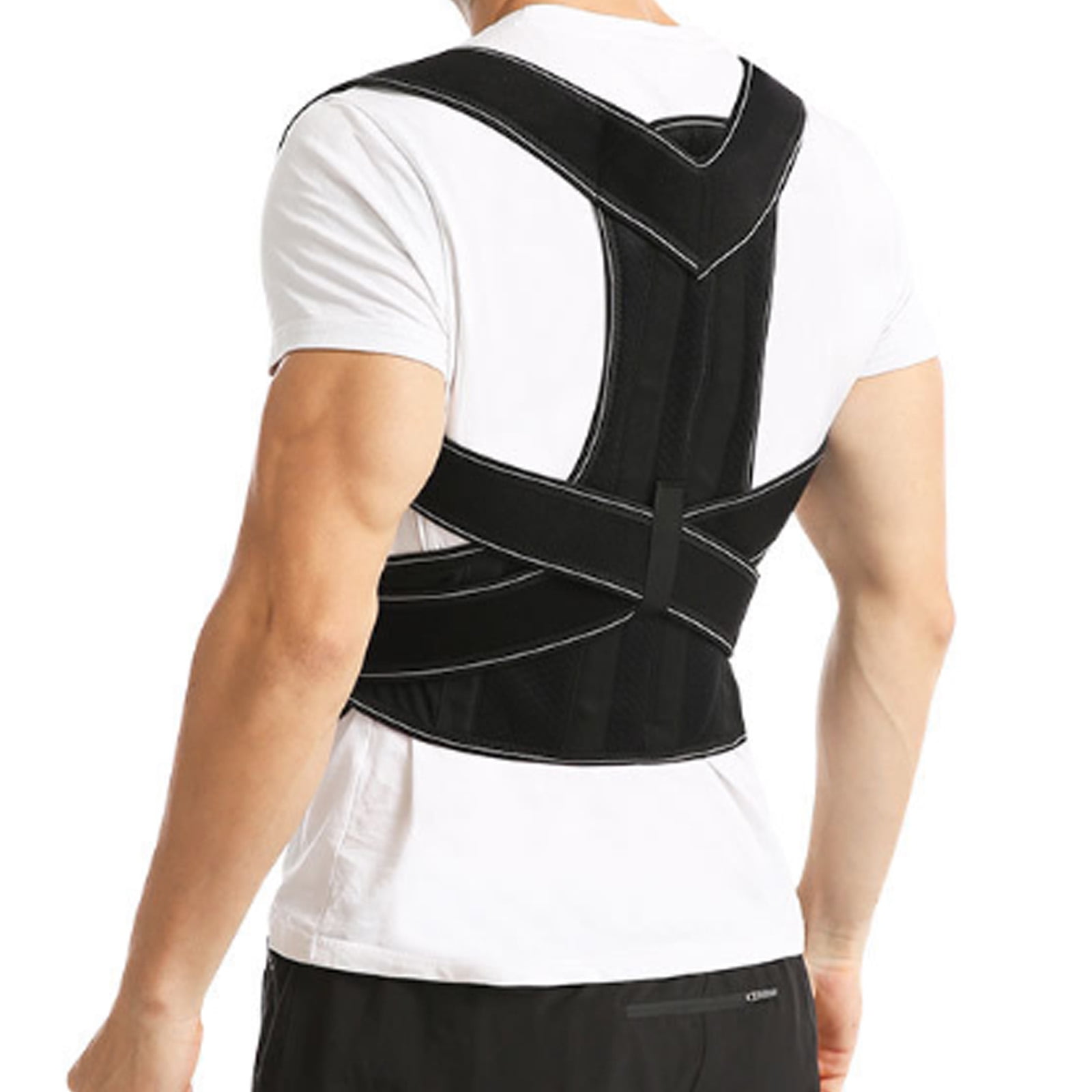
These larger braces wrap around the stomach and extend up the spine, combining a lumbar belt with upper shoulder straps.
- Mechanism: Integrates vertical plastic or metal stays along the spine to stabilize both the lumbar curve and thoracic region.
- Pros: Supports the full spine; reduces strain on both the lower back and shoulder girdle.
- Cons: Bulkier under clothing; can restrict movement if worn during physical activity.
Electronic Biofeedback (Smart) Posture Trainers
Small, battery-powered sensors adhere to the upper spine or clip onto clothing.
- Mechanism: Rather than physically holding your body in place, internal accelerometers detect when your spine slumps past a set angle and vibrate gently to remind you to engage your core and back muscles.
- Pros: Promotes active muscle strengthening rather than passive reliance; subtle and small.
- Cons: Requires regular charging and app synchronization; offers no mechanical support for severe weakness.
Posture-Cueing Compression Shirts
Form-fitting technical shirts constructed with variable-tension elastic bands woven into the back and shoulder panels.
- Mechanism: Applies tactile pressure to the skin, triggering nerve receptors (proprioception) so your brain naturally signals back muscles to contract.
- Pros: Comfortable for all-day athletic or office wear; invisible under clothing.
- Cons: Higher cost; offers subtle cueing rather than rigid structural correction.
Posture Corrector Comparison Guide
| Corrector Type | Primary Support Area | Mechanism | Local Retail Availability | Average Cost | Ideal User |
|---|---|---|---|---|---|
| Figure-8 Harness | Upper Back & Shoulders | Mechanical restriction | High (Pharmacies, Big-Box) | $15 – $40 | Desk workers with rounded shoulders |
| Lumbar-Thoracic Brace | Full Spine (Thoracic & Lumbar) | Mechanical stays & compression | Moderate (Medical Supply Stores) | $40 – $120 | People with lower back pain and upper posture issues |
| Electronic Smart Sensor | Upper Spine | Vibration biofeedback | Moderate (Electronics, Big-Box) | $50 – $100 | Tech-savvy users wanting active muscle training |
| Posture Compression Shirt | Torso & Shoulder Girdle | Proprioceptive tactile cueing | Low to Moderate (Sporting Goods) | $60 – $130 | Athletes and active professionals needing subtle reminders |
How to Measure, Fit, and Adjust Your Device
Buying a posture corrector locally allows you to check sizing before purchasing. An ill-fitting posture brace can cause skin breakdown, nerve impingement, or altered breathing patterns.
- MEASURE TORSO: Measure around chest directly under arms/sternum with a tape.
- ADJUST STRAPS: Shoulders gently pulled back. Able to slide 2 fingers under straps.
- GRADUAL WEAR: Start with 15–30 mins/day. Max out at 1–2 hours total daily use.
Sizing Guidelines
- Take an Accurate Measurement: Measure your chest circumference directly under the arms across your sternum using a soft measuring tape. For full-body or lumbar-thoracic braces, measure around your waist at the belly button.
- Check the Product Size Chart: Do not default to your standard shirt size. Bracing sizes differ between manufacturers. If you fall between sizes, select the larger size to avoid circulation restriction around the armpits.
Fitting Procedure
- Stand in a Neutral Position: Stand tall with your feet shoulder-width apart. Do not pull your shoulders unnaturally far back while putting the brace on.
- Fasten the Main Support First: For full-body braces, secure the waist belt first to anchor the device against your pelvis.
- Tighten Shoulder Straps Gently: Pull the straps until you feel a light tension that reminds you to stand straight. You should be able to easily slide two fingers under every strap.
- Check for Restraints: Ensure you can take a deep breath without chest constriction and move your arms fully without shoulder pinching.
Safe Usage Protocols: Preventing Muscle Dependency
A common misconception is that wearing a posture corrector longer leads to faster results. In reality, relying heavily on a mechanical brace can cause disuse muscle atrophy, where the postural muscles of your mid-back (such as the rhomboids and middle trapezius) weaken because the brace is doing their work.
- OPTIMAL DAILY WEARING SCHEDULE
- DAYS 1 TO 7: 15–30 Minutes/Day. Wear during active slouching triggers (e.g., computer work).
- DAYS 8 TO 14: 30–60 Minutes/Day. Split into two short daily sessions (morning/afternoon).
- DAY 15+: 1–2 Hours Max/Day. Use strictly as a biofeedback training cue during long tasks.
Recommended Daily Timeline
- Week 1: Wear the corrector for 15 to 30 minutes once a day while sitting at your desk or doing chores.
- Week 2: Increase usage to 30 to 60 minutes per day, split into two shorter sessions if desired.
- Week 3 and Beyond: Cap usage at 1 to 2 hours total per day. Use the brace as a teaching tool to build muscle memory, not as permanent structural support.
Over-the-Counter Devices vs. Clinical Orthotics and Physical Therapy
Before spending money on a retail posture corrector, consider whether your condition requires over-the-counter assistance or professional medical care.
- CHOOSE THE RIGHT CARE PATH
- OVER-THE-COUNTER CORRECTOR
- Mild forward shoulder slouching
- Need short-term postural awareness
- No structural spine deformity
- General desk-work strain
- CLINICAL MEDICAL CARE
- Sharp, radiating, or persistent back/neck pain
- Numbness, tingling, or arm weakness
- Diagnosed scoliosis, kyphosis, or stenosis
- Post-trauma or post-surgical recovery
- OVER-THE-COUNTER CORRECTOR
When Over-the-Counter Braces Are Appropriate
OTC correctors work best for postural kyphosis caused by habit (slouching while using smartphones or computers). They serve as physical reminders to keep your spine aligned while you actively build muscular endurance through targeted exercise.
When to See a Doctor or Physical Therapist
Consult a medical professional if you experience:
- Persistent, sharp, or radiating pain into your arms, hands, lower back, or legs.
- Numbness, tingling, or weakness in your extremities (which can indicate nerve compression in the neck or spine).
- Structural spinal conditions like idiopathic scoliosis, severe osteoporotic kyphosis, or spinal stenosis.
Physical therapists treat postural issues by addressing structural imbalances: stretching tight pectoralis muscles in the chest while strengthening weak rhomboids, serratus anterior, and deep cervical flexors. According to clinical guidance published by the American Physical Therapy Association (APTA), passive bracing alone does not alter underlying spinal mechanics without dedicated therapeutic exercise.
Health Insurance and HSA/FSA Coverage
- FSA/HSA Funds: Most over-the-counter posture correctors qualify as medical devices under Flexible Spending Accounts (FSA) and Health Savings Accounts (HSA). Keep your itemized store receipt for tax documentation.
- Health Insurance Claims: Standard retail braces bought at pharmacies are rarely reimbursed by commercial health insurance or Medicare. However, prescription-grade thoracolumbar orthoses fitted by a certified orthotist may be covered under durable medical equipment (DME) benefits when prescribed with a diagnostic ICD-10 code. You can research clinical orthotic standards through the MedlinePlus Health Topics index.
Common Pitfalls to Avoid When Using Posture Braces
Using a posture corrector incorrectly can lead to discomfort, skin irritation, or worsened spinal posture. Avoid these common mistakes:
1. Over-Tightening the Straps
Cranking shoulder straps as tight as possible forces your shoulders back artificially, but it can compress the brachial plexus—the network of nerves passing from the neck into the shoulder and arm. If you feel arm numbness, hand tingling, or skin discoloration, loosen the brace immediately.
2. Ignoring Core and Back Strengthening
A brace cannot replace muscle strength. If you wear a corrector without performing complementary exercises (like chin tucks, scapular squeezes, and prone Y-T-W lifts), your postural muscles may become weaker over time.
3. Wearing the Device directly Against Bare Skin
Neoprene and synthetic elastic materials trap heat and sweat, which can cause skin friction, irritation, or contact dermatitis. Always wear a thin, breathable cotton t-shirt under your posture corrector.
4. Relying on a Brace for Lower Back Pain
Standard figure-8 shoulder harnesses do not support the lower back (lumbar spine). Using an upper-back corrector to fix low-back discomfort can cause you to overextend your lower spine (hyperlordosis), exacerbating low-back pain.
Frequently Asked Questions
Can I wear a posture corrector while sleeping?
No. You should never wear a posture corrector while sleeping. When you lie down, your spine is relieved of vertical gravitational loading. Wearing a brace in bed restricts breathing, compresses tissue, and limits natural movement during sleep without providing any posture-retraining benefit.
How long does it take to fix posture using a posture corrector?
Most individuals notice improved postural awareness within 2 to 4 weeks of consistent, short-term daily use (20–60 minutes per day) combined with targeted back-strengthening exercises. However, permanent structural posture changes depend on long-term muscle strengthening and ergonomic adjustments to your workspace rather than the brace itself.
Will a posture corrector fit discreetly under regular clothes?
Lightweight figure-8 straps and posture-cueing compression shirts fit easily under button-down shirts, sweaters, or loose jackets. Thicker neoprene harnesses and semi-rigid thoracic braces with vertical stays are bulky and generally visible under thin or tight clothing.
Are smart electronic posture correctors better than classic elastic braces?
Smart electronic sensors offer a key physiological advantage: they rely on biofeedback. By vibrating when you slouch, they prompt your own muscles to lift your spine, building active muscle memory. Elastic braces physically hold you upright, which offers structural support but carries a higher risk of muscle laziness if overused.
Can I use a posture corrector if I have scoliosis?
Do not use an over-the-counter posture corrector for structural scoliosis without consulting an orthopedic specialist. Mild habit-based slouching differs from structural lateral curvature of the spine. Scoliosis often requires custom-molded rigid orthoses designed by a certified orthotist based on X-ray diagnostics.
Recommended Next Steps
- Assess Your Needs: Decide whether you need short-term tactile awareness (a figure-8 strap or smart sensor) or full-spine support (a lumbar-thoracic brace).
- Check Local Stores: Visit a local pharmacy (CVS/Walgreens) for basic strap options, a department store for smart sensors, or a specialty medical supply shop for professional fitting.
- Measure First: Use a flexible measuring tape around your upper chest before buying to ensure a secure fit without restricting your movement or breathing.
- Pair with Exercise: Integrate 10 minutes of daily upper-back strengthening (scapular retractions, door-frame chest stretches, and core exercises) so your body learns to hold proper alignment naturally without depending on the brace.
Image Gallery