The Symbolic Legacy of Michelle Pfeiffer in Popular Song Lyrics
Michelle Pfeiffer has become a ubiquitous lyrical shorthand in music, representing "ice-cold" elegance, classic Hollywood beauty, and the "white gold" aesthetic of the 1980s. Artists from Mark Ronson to Vance Joy use her name to evoke...
Michelle Pfeiffer has become a ubiquitous lyrical shorthand in music, representing "ice-cold" elegance, classic Hollywood beauty, and the "white gold" aesthetic of the 1980s. Artists from Mark Ronson to Vance Joy use her name to evoke specific imagery ranging from the cocaine-fueled glamour of Scarface to the fierce independence of her iconic Catwoman.
Contents
In the landscape of 2026, the "Pfeiffer reference" remains one of the most durable tropes in songwriting. While many actors are name-dropped for a fleeting season, Michelle Pfeiffer’s presence in lyrics spans genres from pop and hip-hop to indie-folk. Her name is rarely used just to fill a rhyme; instead, it serves as a technical device—a cultural "macro" that instantly communicates a complex set of visual and emotional attributes to the listener.
The "Uptown Funk" Phenomenon: Michelle Pfeiffer as "White Gold"
The most commercially significant mention of the actress occurs in the 2014 global hit "Uptown Funk" by Mark Ronson, featuring Bruno Mars. The line, "This hit, that ice cold / Michelle Pfeiffer, that white gold," serves as a rhythmic and thematic anchor for the track. By 2026, this lyric is still analyzed by musicologists for its multi-layered meanings.
The Scarface Connection
To understand why Pfeiffer is "white gold," one must look back to her breakout role as Elvira Hancock in the 1983 film Scarface. As the wife of drug kingpin Tony Montana, Pfeiffer’s character was the literal face of the "white gold" (cocaine) economy. Her wardrobe—consisting of plunging necklines and silk slip dresses—and her detached, icy demeanor created a template for "expensive cool" that has never gone out of style.
The Phonetic Appeal
Beyond the historical context, the name "Michelle Pfeiffer" possesses a specific phonetic "crunch" that songwriters find irresistible. The "sh" in Michelle followed by the "f" sounds in Pfeiffer allows for a sibilant, rhythmic delivery. In "Uptown Funk," the name is syncopated to match the bassline, proving that her name is as much a percussive instrument as it is a cultural reference.
The Catwoman Archetype: Empowerment and Danger
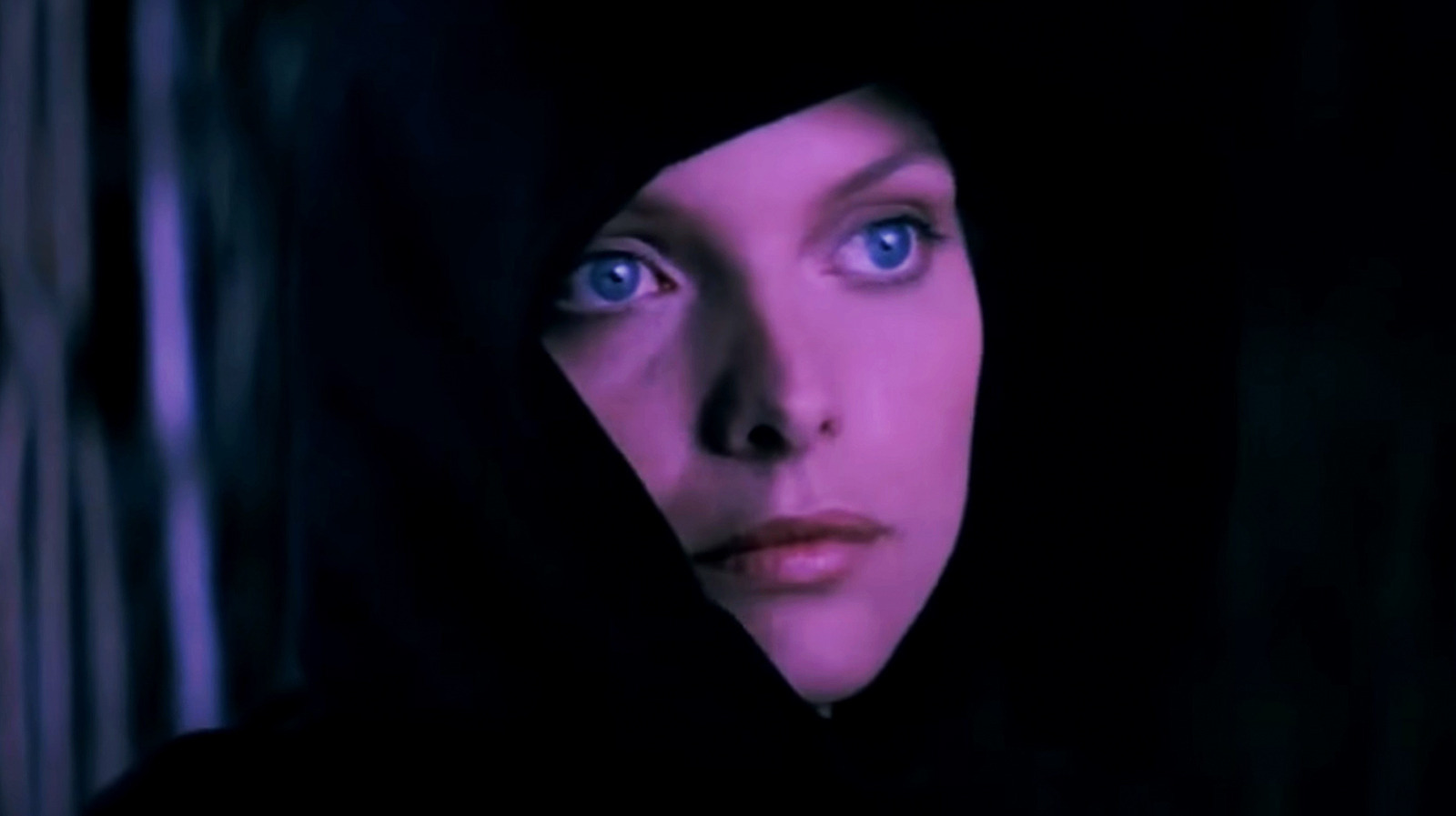
Another dominant pillar of the Pfeiffer lyrical canon is her portrayal of Selina Kyle/Catwoman in the 1992 film Batman Returns. This role redefined the "femme fatale" for a generation of artists who grew up watching her lick her own fur and wield a whip with surgical precision.
Jessie J and Doja Cat
In Jessie J’s 2010 hit "Do It Like a Dude," she sings, "I'm a Catwoman, call me Pfeiffer." Here, the reference is a declaration of gender-bending power and sexual agency. By invoking Pfeiffer’s Catwoman, Jessie J isn't just talking about a costume; she is referencing the transformation of a "secretary" into a dominant, unstoppable force.
More recently, Doja Cat utilized the same imagery in her 2022 song "Vegas," featured in the Elvis soundtrack. The lyrical association between Pfeiffer and the feline archetype has become a standard shorthand for a woman who is both dangerous and unattainable. In the 2026 retrospective of 2020s pop, these references are cited as foundational to the "bad girl" aesthetic that dominated the decade’s charts.
Michelle Pfeiffer as the Standard for Cinematic Beauty
In the realm of indie-pop and folk, the use of Michelle Pfeiffer’s name often shifts away from the "dangerous" and toward the "aspirational." She represents a level of beauty that feels "destined for the screen"—a classic, untouchable cinematic perfection.
Vance Joy’s "Riptide"
The Australian singer-songwriter Vance Joy immortalized this sentiment in his 2013 breakout hit "Riptide." The line "I swear she’s destined for the screen / Closest thing to Michelle Pfeiffer that you’ve ever seen" uses the actress as a benchmark. In this context, Pfeiffer is the gold standard of the "Star" (with a capital S).
Joy has noted in interviews that the reference was a childhood memory of seeing Pfeiffer in films and perceiving her as the ultimate movie star. This reinforces the "Pfeiffer Effect": her name doesn't just represent a person; it represents the very concept of Hollywood magic.
Modern Interpretations: The "Sad Girl" Aesthetic and Ethel Cain
As we move into the mid-2020s, the use of Pfeiffer’s name has evolved into more atmospheric and melancholic territory. This is best exemplified by the artist Ethel Cain and her 2021 track titled, simply, "Michelle Pfeiffer."
In this song, the name is used less as a direct comparison and more as a "vibe." It evokes a sense of nostalgia for a certain kind of American glamour that feels lonely and faded. The song doesn't focus on the "ice cold" success of Uptown Funk, but rather the internal world of the characters Pfeiffer often played—women who were beautiful but deeply isolated. This shift shows the versatility of the actress’s legacy; she can represent both the peak of a party and the quiet of the morning after.
Analyzing the "Pfeiffer Effect" vs. Other Hollywood Icons
Why Michelle Pfeiffer? Why not Meryl Streep, Julia Roberts, or Angelina Jolie? While those actresses are equally famous, they don't appear in song lyrics with nearly the same frequency or thematic consistency.
| Characteristic | Michelle Pfeiffer | Other Icons (e.g., Meryl Streep) |
|---|---|---|
| Lyrical Function | Shorthand for "Cool" and "Ice" | Shorthand for "Talent" or "Awards" |
| Primary Reference | Scarface / Batman Returns | The Devil Wears Prada / Sophie's Choice |
| Rhyme Suitability | High (f-sounds, sibilance) | Low (clunky syllables) |
| Visual Association | Satin, Neon, Leather, "White Gold" | Power Suits, Drama, Prestige |
| Genre Versatility | Hip-Hop, Pop, Indie, Folk | Mostly Theatre/Adult Contemporary |
Pfeiffer occupies a unique niche. She is "The Coolest Girl in the Room." In songwriting, "cool" is a more valuable currency than "prestige." Her roles in the 80s and 90s coincided with the birth of modern MTV culture, embedding her image into the visual DNA of the music industry.
Technical Analysis of Cultural Currency in Songwriting
From a technical SEO and music-editing perspective, "the use of Michelle Pfeiffer in song lyrics" is a study in Persistent Cultural Currency. Songwriters use celebrity names as "hooks" because they provide instant imagery without requiring lengthy descriptions.
The "Ice Cold" Metric
In hip-hop, "cold" refers to being detached, professional, and superior. Pfeiffer’s performance style—often characterized by a luminous but distant presence—aligns perfectly with this. When Lil Wayne mentions her in "Mona Lisa" ("Michelle Pfeiffer, 'cause a bitch is cold"), he is leveraging forty years of cinematic history to make a point about a character’s personality in just four words. This is the definition of lyrical efficiency.
FAQs About Michelle Pfeiffer in Music
Why is Michelle Pfeiffer mentioned in "Uptown Funk"?
Mark Ronson and Bruno Mars used the name to evoke the 1980s aesthetic of the film Scarface. Specifically, "white gold" is a double-entendre referring to both cocaine (the central plot point of the film) and Pfeiffer's blonde, high-status appearance as Elvira Hancock.
Does Michelle Pfeiffer actually sing in any of these songs?
No, the mentions are purely lyrical references. However, Pfeiffer is a trained singer herself, having performed all her own vocals in The Fabulous Baker Boys (1989) and Grease 2 (1982). Her musical background may be why she resonates so strongly with professional musicians.
Which song first name-dropped Michelle Pfeiffer?
While there were scattered mentions in the 80s and 90s, the "modern era" of Pfeiffer name-dropping began in earnest with Jessie J’s "Do It Like a Dude" (2010) and Vance Joy’s "Riptide" (2013), which set the stage for the massive success of "Uptown Funk."
What does the phrase "Michelle Pfeiffer, that white gold" mean?
It is a metaphor for something that is pure, expensive, and extremely "high-end." In the context of the song, it describes the "funk" itself as being a top-tier, addictive, and luxurious product, much like the characters and lifestyle Pfeiffer represented in 1980s cinema.
Are there any songs named after her?
Yes. The most notable is "Michelle Pfeiffer" by Ethel Cain (2021). Unlike "Uptown Funk," which uses her name as a quick punchline, Cain’s song uses the actress’s name to set a somber, cinematic mood for the entire track.
Summary of Impact and Future Outlook
As of 2026, the use of Michelle Pfeiffer in song lyrics has transitioned from a trend to a standard lyrical device. She has joined the ranks of Marilyn Monroe and James Dean as a permanent symbol of a specific American archetype. However, unlike Monroe (who represents tragic glamour), Pfeiffer represents Agency and Ice.
For songwriters, she is the ultimate "short-code" for a woman who is in control, visually stunning, and slightly dangerous. Whether it is the funk of the 2010s or the indie-shoegaze of the 2020s, her name continues to provide a rhythmic and symbolic richness that few other stars can match. As long as artists strive to describe the intersection of "cool" and "classic," Michelle Pfeiffer will remain a staple of the songwriter's vocabulary.
Next Action for Readers: To truly understand the "Pfeiffer Effect," listen to a curated playlist of these tracks while viewing her scenes in Scarface (1983) and Batman Returns (1992). This visual-auditory comparison reveals exactly why these specific lyrics resonate so deeply with global audiences.
Image Gallery