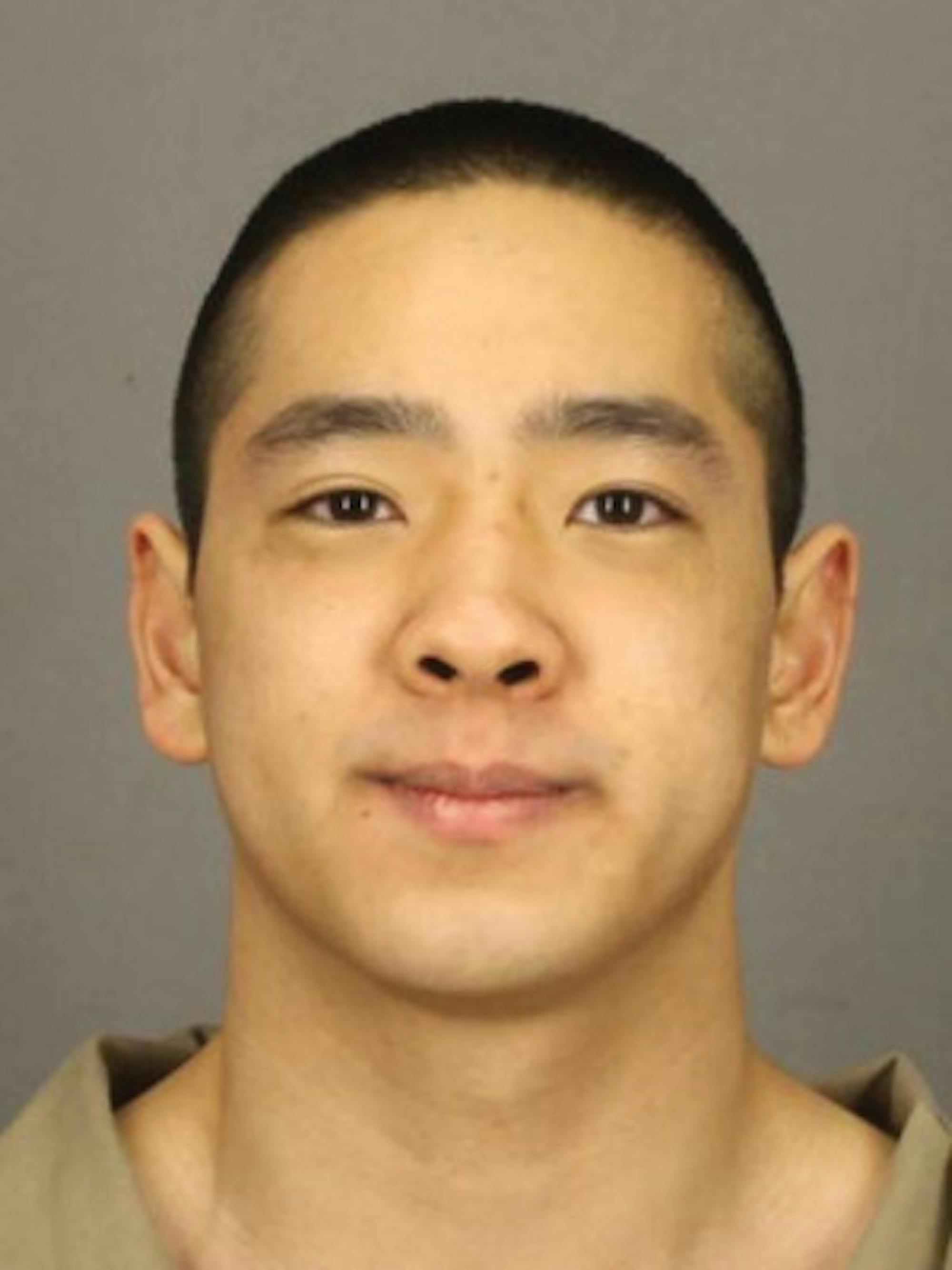
Comprehensive Analysis of the Charlie Tan Trial: Legal Precedents and Case Legacy in 2026
The Charlie Tan case involved the 2015 shooting death of his father, Ling "Jim" Tan, in Pittsford, New York, leading to a complex series of legal battles spanning state and federal jurisdictions. While the state murder trial ended in a...
The Charlie Tan case involved the 2015 shooting death of his father, Ling "Jim" Tan, in Pittsford, New York, leading to a complex series of legal battles spanning state and federal jurisdictions. While the state murder trial ended in a deadlock and a controversial dismissal by the presiding judge, Tan was later convicted on federal firearm charges and is currently serving a 20-year sentence in federal prison as of 2026.
Contents
The Genesis of the Charlie Tan Case: A Community in Shock
The legal saga of Charles Tan began on the evening of February 9, 2015, in the affluent suburb of Pittsford, a suburb of Rochester, New York. To understand the intricacies of the Charlie Tan trial, one must first look at the environment surrounding the incident. Charlie Tan was a highly regarded student at Cornell University, known for his leadership and academic prowess. His father, Jim Tan, was the president of Dynamax Imaging.
The discovery of Jim Tan’s body in his home office, having been shot multiple times with a shotgun, set off a chain of events that would challenge the boundaries of the American legal system. The defense’s narrative heavily emphasized a history of domestic violence within the Tan household, suggesting that the shooting was an act of protection or the result of long-term trauma. This context became the central pillar of the defense strategy throughout the various legal proceedings.
Key Figures in the Initial Investigation
- Charlie Tan: The defendant and Cornell University sophomore.
- Jean Tan: Charlie’s mother, who was present in the home during the events.
- Ling "Jim" Tan: The victim and Charlie’s father.
- Monroe County Sheriff’s Office: The primary investigating agency.
The 2015 State Murder Trial: A Legal Anomaly
The initial trial of Charlie Tan for second-degree murder began in late 2015. It remains one of the most discussed criminal trials in Western New York history due to its unprecedented conclusion. The prosecution argued that the killing was premeditated, highlighting that Tan had traveled from Ithaca to Pittsford specifically to carry out the act.
The defense, led by attorney James Nobles, argued that the evidence was circumstantial and that no one could definitively prove who pulled the trigger. They leaned into the "battered woman syndrome" defense on behalf of Jean Tan, suggesting a household pushed to the brink by Jim Tan's alleged abuse.
The Deliberation and the "Piampiano Dismissal"
After weeks of testimony, the jury deliberated for over 50 hours. On November 5, 2015, the jury remained deadlocked, and a mistrial appeared imminent. However, in a move that stunned the legal community, County Court Judge James Piampiano took the unilateral step of dismissing the charges entirely.
Legal Nuance: Trial Order of Dismissal Under New York Criminal Procedure Law, a judge can issue a trial order of dismissal if they determine the evidence is legally insufficient to support a conviction. Judge Piampiano ruled that the prosecution had failed to present a "prima facie" case, effectively ending the state’s ability to retry Tan for murder.
This decision was met with immediate backlash from the District Attorney’s office, but due to the principles of Double Jeopardy, the state could not appeal the factual determination of the dismissal to reinstate the murder charges.
The Shift to Federal Jurisdiction: The "Straw Purchase" Strategy
Following the dismissal of the state murder charges, the legal battle shifted to the federal level. Federal authorities, led by the U.S. Attorney’s Office for the Western District of New York, opened an investigation into the acquisition of the weapon used in the killing.
Because Charlie Tan was 19 at the time, he could not legally purchase a handgun or certain types of firearms, and more importantly, he was accused of using a "straw purchaser"—a friend from Cornell—to obtain the Remington 870 shotgun from a Walmart in Cortland, NY.
Federal Charges and Conviction
In 2017, Tan was arrested and charged with:
- Receiving a firearm with intent to commit a felony.
- Making false statements during the purchase of a firearm.
- Aiding and abetting the straw purchase of a firearm.
Unlike the state trial, the federal case resulted in a guilty plea. In 2018, as part of the plea negotiations, Tan admitted to the facts surrounding the gun purchase, acknowledging that he had directed a friend to buy the weapon for him just days before his father’s death.
| Legal Phase | Court Jurisdiction | Primary Charge | Outcome |
|---|---|---|---|
| State Trial (2015) | Monroe County Court | Second-Degree Murder | Dismissed by Judge (Hung Jury) |
| Federal Case (2018) | U.S. District Court | Firearm Crimes (Straw Purchase) | Guilty Plea / 20-Year Sentence |
| Appeals (2019-2022) | Second Circuit Court | Habeas Corpus/Sentencing | Appeals Denied / Sentence Affirmed |
| Current Status (2026) | Federal Bureau of Prisons | N/A | Serving Sentence (Incarcerated) |
The 20-Year Sentence and Sentencing Memorandums
The sentencing of Charlie Tan in 2018 was as controversial as the initial trial. U.S. District Judge Senior Judge Frederick Scullin Jr. sentenced Tan to 20 years in federal prison. This sentence was significantly higher than the federal sentencing guidelines suggested for mere firearm violations.
Judge Scullin justified the 20-year term by explicitly linking the firearm purchase to the death of Jim Tan. He noted that while Tan was not convicted of murder in state court, the federal court could consider the "relevant conduct"—the fact that the illegally obtained firearm was used to kill a human being—when determining the severity of the sentence.
The Role of the Sentencing Memorandum
The sentencing memorandum filed by the prosecution contained chilling details that were not fully explored in the state trial. It included evidence of Tan’s digital footprint, revealing searches for how to kill someone and the timing of his travel between Cornell and Pittsford. This evidence substantiated the "intent to commit a felony" charge that underpinned the federal case.
Legal Precedents and Regional Impact in 2026
As of 2026, the Charlie Tan case serves as a primary case study in law schools across the United States regarding the "dual sovereignty doctrine." This doctrine allows both state and federal governments to prosecute a defendant for the same act if that act violates both state and federal laws.
Impact on Judicial Conduct
The actions of Judge James Piampiano led to significant scrutiny and contributed to his eventual departure from the bench. His decision to dismiss the case after the jury failed to reach a verdict is often cited as an example of judicial overreach, prompting discussions in New York about potential reforms to the Criminal Procedure Law to prevent similar "interest of justice" dismissals from bypassing a jury's finality.
Domestic Violence Advocacy
Conversely, the case remains a touchstone for domestic violence advocacy groups. In 2026, the narrative of the "perfect student" pushed to the limit by an abusive father continues to fuel debates about how the legal system handles victims of long-term domestic trauma who resort to violence.
Detailed Timeline of the Charlie Tan Legal Proceedings
- February 5, 2015: Charlie Tan convinces a Cornell teammate to purchase a shotgun at a Cortland Walmart.
- February 9, 2015: Jim Tan is found dead in his Pittsford home. Charlie Tan and his mother are found outside.
- October 2015: The state murder trial begins in Rochester.
- November 5, 2015: Judge Piampiano dismisses all charges after a deadlocked jury.
- September 2017: Federal agents arrest Tan as he attempts to enter the U.S. from Canada.
- June 2018: Tan pleads guilty to three federal gun charges.
- November 2018: Tan is sentenced to 20 years in federal prison.
- 2020-2023: Various appeals and motions to vacate the sentence are filed and subsequently denied.
- 2026: Charlie Tan remains in federal custody, with his case continuing to influence legislation on straw purchases and judicial discretion.
Frequently Asked Questions Regarding the Charlie Tan Trial
Why wasn't Charlie Tan protected by Double Jeopardy in the federal trial?
Double jeopardy only prevents the same level of government (e.g., the State of New York) from trying a person twice for the same crime. Under the "dual sovereignty" doctrine, the federal government is considered a separate sovereign entity and can bring its own charges if the act violates federal law, such as the illegal purchase of a firearm.
Did Charlie Tan ever confess to killing his father?
While Tan never confessed during the state murder trial, his federal plea agreement and the subsequent sentencing phase involved an admission of the facts surrounding the illegal acquisition of the shotgun. In the federal sentencing memorandum, the prosecution presented evidence that Tan admitted to the shooting in private communications, which the judge used to justify the 20-year sentence.
Where is Charlie Tan being held in 2026?
Charlie Tan is serving his 20-year sentence within the Federal Bureau of Prisons (BOP) system. While specific facility assignments can change for administrative or security reasons, he has spent significant time in medium-security federal correctional institutions. His projected release date, accounting for "good time" credit, is currently estimated for the early 2030s.
What happened to the friend who bought the gun for Charlie Tan?
Whitney Knickerbocker, the friend and teammate who purchased the shotgun, was not criminally charged. It was determined through the investigation that he was manipulated into the purchase and did not have the criminal intent to facilitate a homicide, though the act of the straw purchase itself was the foundation of the federal case against Tan.
Can Charlie Tan appeal his 20-year sentence again in 2026?
By 2026, Charlie Tan has exhausted his standard direct appeals and most collateral attacks (such as 2255 motions). Unless significant new evidence or a landmark change in Supreme Court precedent regarding sentencing guidelines occurs, further legal avenues for reducing his sentence are extremely limited.
Analysis: The Intersection of Privilege and Justice
The Charlie Tan trial is often analyzed through the lens of socioeconomic privilege. Critics of the state court dismissal argue that a defendant with fewer resources or less community standing would not have received such a favorable ruling from a judge. On the other hand, supporters argue that the federal prosecution was an overreach designed specifically to "fix" a state court failure, highlighting a different kind of systemic aggression.
In 2026, the case is viewed as a landmark for:
- Straw Purchase Enforcement: Demonstrating how federal gun laws can be used to prosecute violent crimes when state murder charges fail.
- Judicial Accountability: Highlighting the risks of a single judge overriding the jury process.
- Sentencing Disparity: Exploring how "relevant conduct" can drastically increase a federal sentence beyond the immediate charge.
The legacy of the Charlie Tan trial remains a fixture in the Rochester community and the broader American legal landscape, representing the complex interplay between family tragedy, community support, and the dual layers of the U.S. justice system.
Image Gallery