Becoming a Junior DevOps Engineer: A Strategic Roadmap for 2026
A Junior DevOps Engineer serves as the bridge between software development and IT operations, focusing on automating infrastructure, streamlining deployment pipelines, and ensuring system reliability. This role requires a foundational...
A Junior DevOps Engineer serves as the bridge between software development and IT operations, focusing on automating infrastructure, streamlining deployment pipelines, and ensuring system reliability. This role requires a foundational grasp of Linux systems, cloud platforms, version control, and continuous integration/continuous deployment (CI/CD) methodologies to support scalable, efficient software delivery cycles in modern production environments.
Contents
The Core Mandate of the Junior DevOps Engineer
In the professional landscape of 2026, the Junior DevOps Engineer is not merely a "systems administrator with a script." The role is defined by the integration of cultural shifts and technical automation. The primary objective is to eliminate silos between developers, who want to release features quickly, and operations teams, who prioritize stability and uptime.
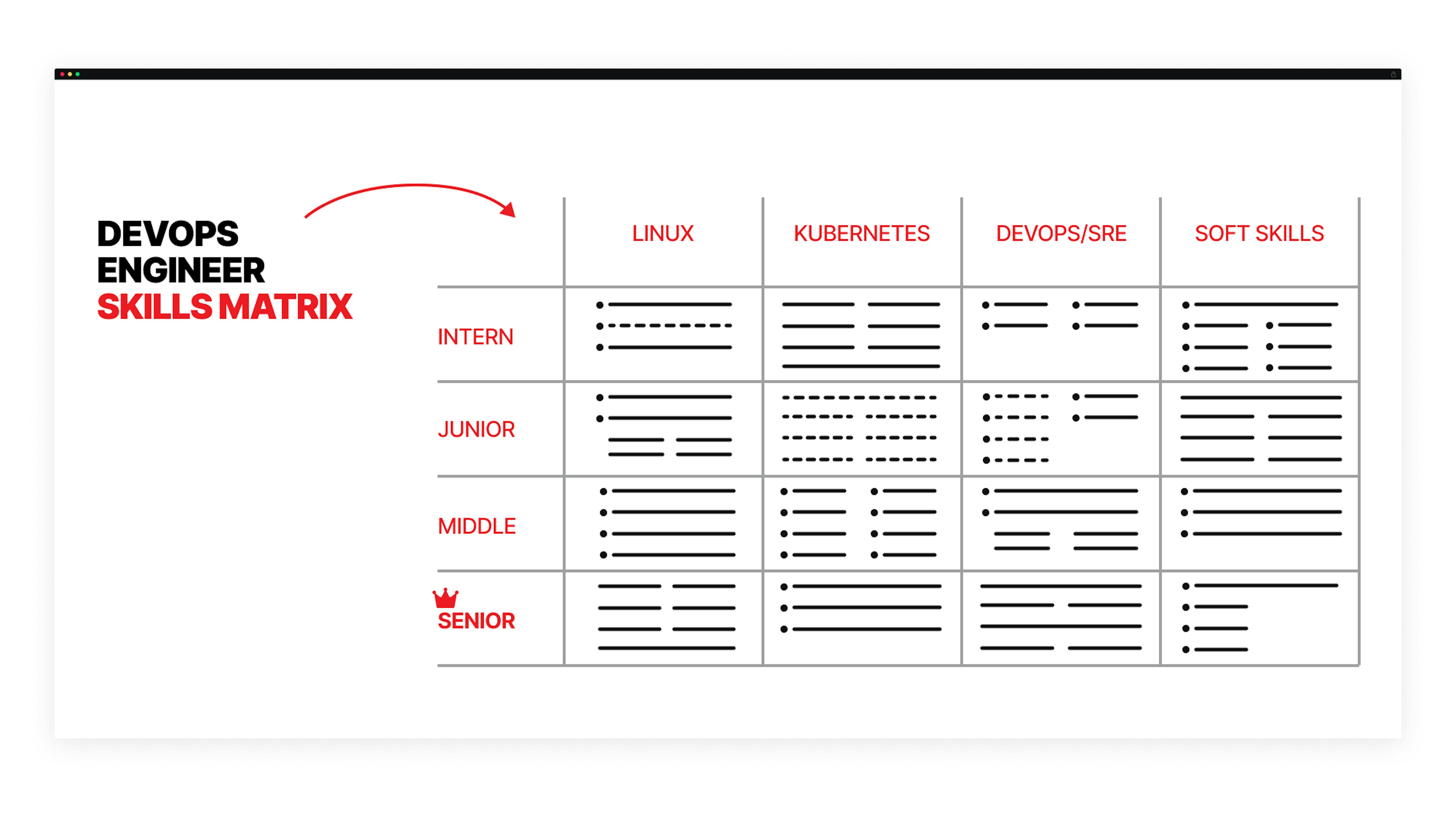
At the junior level, your impact is measured by your ability to maintain existing pipelines, troubleshoot minor infrastructure incidents, and learn the specific toolchain utilized by your organization. You are not expected to architect entire multi-cloud ecosystems from scratch; rather, you are expected to understand how your code changes affect the underlying server configurations and how automated tests validate those changes before they reach the customer.
Foundational Technical Requirements
To succeed as a Junior DevOps Engineer, you must cultivate a specific set of technical competencies. While the industry is vast, starting with these pillars ensures you have the necessary context to navigate more complex enterprise environments.
1. Operating System Proficiency (Linux)
Everything in DevOps is built on Linux. You should be comfortable navigating the command line, managing permissions, understanding system processes, and handling file system structures. Proficiency in shell scripting (Bash) is essential for automating repetitive tasks. If you cannot automate a task in Bash, you will struggle to understand how modern infrastructure-as-code (IaC) tools operate.
2. Version Control Systems (Git)
Git is the lifeblood of the software development lifecycle. As a junior, you must go beyond simple commits and pushes. You need to understand branching strategies (such as Gitflow or Trunk-Based Development), how to resolve merge conflicts, and how to use Pull Requests as a mechanism for peer review and quality control.
3. Cloud Platforms and Infrastructure-as-Code
Major cloud providers—such as AWS, Google Cloud Platform, and Microsoft Azure—are the standard hosting environments. You do not need to be a certified architect, but you should understand the basics of virtual machines (EC2/Compute Engine), object storage (S3/Cloud Storage), and identity management (IAM). This knowledge serves as the prerequisite for learning Infrastructure-as-Code (IaC) tools like Terraform or OpenTofu, which allow you to provision infrastructure through version-controlled files rather than manual clicks.
4. CI/CD Pipeline Fundamentals
CI/CD is the engine of DevOps. You must understand the lifecycle of a code change: commit, build, test, and deploy. Familiarity with tools like GitHub Actions, GitLab CI, or Jenkins is required. You should know how to read a pipeline configuration file (YAML), interpret build failures, and identify at which stage a deployment is failing.
Essential Toolchain Comparison
The following table outlines standard categories of tools you will encounter in 2026. While specific companies may use different vendors, the operational function remains consistent.
| Category | Typical Tooling | Operational Purpose |
|---|---|---|
| Version Control | Git, GitHub, GitLab | Managing code versions and collaborative workflows. |
| Infrastructure-as-Code | Terraform, Pulumi | Provisioning cloud resources through configuration files. |
| Containerization | Docker, Podman | Packaging applications with dependencies for consistency. |
| CI/CD Orchestration | GitHub Actions, CircleCI | Automating the testing and delivery of code. |
| Monitoring/Logging | Prometheus, Grafana, ELK | Observing system health and analyzing error logs. |
Moving Beyond the Basics: Containers and Orchestration
In the mid-2020s, containerization is ubiquitous. You should be able to create a Dockerfile that builds a small application, minimizes image size, and handles dependencies securely. Following Docker, the logical progression is understanding container orchestration, typically through Kubernetes.
While you may not be managing a massive Kubernetes cluster, you must understand the concepts of pods, deployments, services, and ingresses. A common mistake among junior engineers is attempting to master Kubernetes before fully grasping how a single container runs on a standard Linux server. Build your understanding from the ground up: start with the process, move to the container, and finally, look at the orchestrator.
Practical Steps to Building Competence
- Build a Lab Environment: Set up a free-tier cloud account. Do not rely solely on tutorials; build a project where you host a simple web application that updates automatically whenever you push code to a repository.
- Read the Logs: The most valuable skill for a junior engineer is debugging. When a pipeline fails, resist the urge to restart everything. Instead, trace the logs to identify the exact line or command that failed.
- Master YAML: Most DevOps tools use YAML for configuration. Learn to write it carefully, paying attention to indentation and syntax, as it is the most common source of "simple" errors in a DevOps workflow.
- Contribute to Open Source: Look for small DevOps tasks in open-source projects. Improving a
README.mdor fixing a CI script in a public repository provides tangible evidence of your skills to potential employers.
Common Pitfalls for Junior Engineers
The most frequent mistake for those entering the field is "tool fatigue"—the attempt to learn every tool on the market simultaneously. DevOps is a set of practices, not a collection of software packages. If you understand the concept of an automated pipeline, it matters little whether you are using Jenkins, GitHub Actions, or GitLab CI; the underlying logic remains the same. Focus on the principles of idempotency (the ability to run a task multiple times without changing the result beyond the initial application) and immutability (replacing infrastructure rather than modifying it in place).
Frequently Asked Questions (FAQ)
What is the most important programming language for a DevOps engineer? Python is the industry standard for DevOps scripting, automation, and interacting with cloud APIs. While Bash is necessary for shell tasks, Python’s versatility makes it the preferred tool for writing complex automation scripts and managing cloud infrastructure programmatically.
Do I need to be a developer to be a DevOps engineer? You do not need to be a software engineer, but you must understand how code is written, packaged, and executed. Being able to read the code written by your developers will help you troubleshoot why an application fails to build or why it crashes in production.
How does a Junior DevOps Engineer manage "on-call" duties? At a junior level, you should not be the primary responder for critical outages. Instead, use on-call rotations as a learning opportunity. Shadow senior engineers, ask questions about how they performed the root cause analysis, and focus on documenting the incidents to prevent them from recurring.
Is cloud certification necessary for a junior role? Certifications like the AWS Certified Solutions Architect or Google Cloud Associate Cloud Engineer provide a structured path to learning. They are excellent for resumes but do not replace hands-on experience. Use them as a learning framework, but supplement them by building projects in your own environment.
Final Recommendation
The role of a Junior DevOps Engineer is defined by consistent learning and high attention to detail. Start by mastering Linux and a single cloud provider’s fundamentals. Once you are comfortable, transition to automating your deployments using Git and CI/CD tools. Prioritize understanding the "why" behind the automation, document your experiments, and always seek to minimize the manual steps required to ship a feature. Your value to an organization is directly proportional to your ability to make the development process faster, safer, and more reliable.
Image Gallery