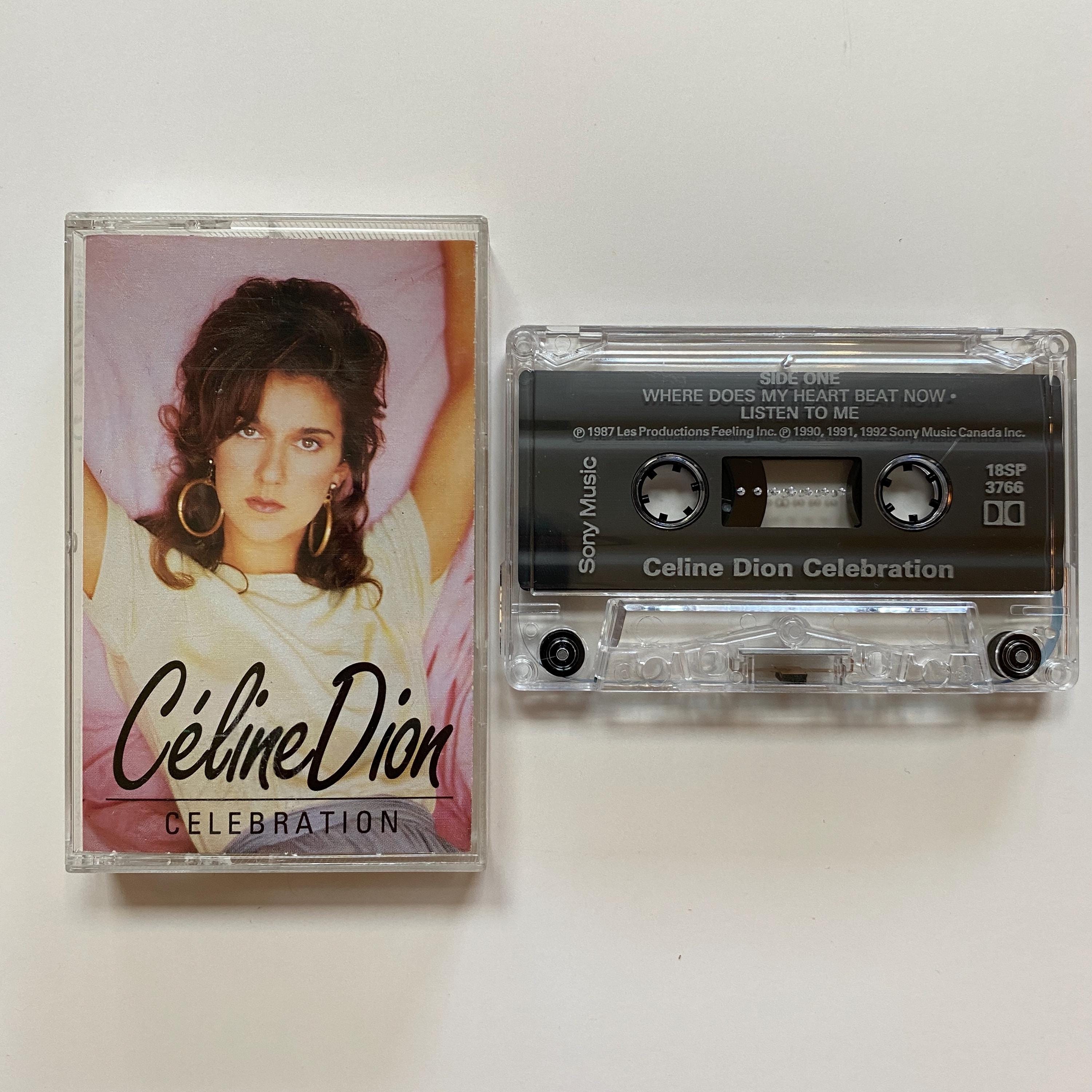
Why Early Celine Dion Mattered to Pop: The Architecture of the Modern Diva
Early Celine Dion redefined pop music by standardizing the high-technical, adult contemporary power ballad as a global commercial force. By bridging the gap between traditional French chanson and modern English pop, she established the...
Early Celine Dion redefined pop music by standardizing the high-technical, adult contemporary power ballad as a global commercial force. By bridging the gap between traditional French chanson and modern English pop, she established the "vocal trinity" alongside Whitney Houston and Mariah Carey, creating a blueprint for international crossover success and technical vocal perfection.
Contents
The French Foundation and the Mastery of Chanson (1981–1989)
Before Celine Dion became a fixture of American radio, she was a seasoned professional within the francophone world. This period is critical because it provided her with a level of discipline and stagecraft that most pop stars of the 1990s lacked at their debut. Starting at age 12, under the management of her future husband René Angélil, Dion released a series of successful French albums in Canada and France.
The significance of this early "French era" to the broader pop landscape cannot be overstated. It allowed Dion to master the art of the chanson—a lyrical, narrative-driven style of music that prioritizes emotional delivery and storytelling. While American pop was moving toward synthesized sounds and dance-pop in the late 1980s, Dion was perfecting the ability to hold an audience through pure vocal resonance and dramatic phrasing.
By the time she reached the international stage, she was not a "new" artist; she was a veteran with nearly a decade of experience. This maturity allowed her to navigate the high-pressure demands of the global music industry with a technical consistency that redefined what it meant to be a professional vocalist. Her victory at the 1988 Eurovision Song Contest, representing Switzerland with "Ne partez pas sans moi," served as the ultimate proof of concept: a French-speaking artist could command a continental audience through sheer talent and a singular, soaring voice.
The Strategic Crossover and the Globalization of Pop
The transition from a regional star to a global icon required more than just talent; it required a calculated linguistic and aesthetic overhaul. In 1990, Dion released Unison, her first English-language album. This move was a watershed moment for the industry, demonstrating how a non-Anglophone artist could be systematically "repackaged" for the global market without losing their core identity.
To achieve this, Dion famously attended the Berlitz School to learn English, a feat of dedication that highlights the labor-intensive nature of her early career. The success of Unison, and specifically the hit "Where Does My Heart Beat Now," signaled a shift in pop demographics. It proved that there was a massive, underserved market for Adult Contemporary (AC) music—songs that were sophisticated enough for older listeners but melodic enough for Top 40 radio.
Dion’s early English success opened the doors for future international stars like Shakira and Ricky Martin. She provided a roadmap for how to navigate cultural differences while maintaining a universal appeal. By the time her self-titled album Celine Dion arrived in 1992, featuring the Disney theme "Beauty and the Beast," she had successfully integrated herself into the cultural fabric of the United States, proving that vocal excellence could transcend linguistic barriers.
Technical Specifications of the Dion Voice
To understand why early Celine Dion mattered, one must analyze the technical precision of her instrument. In the early 1990s, the "Diva" was defined by three distinct vocal archetypes: Whitney Houston (the Gospel-infused Soul), Mariah Carey (the R&B-influenced Whistle Register), and Celine Dion (the Classical-adjacent Belter).
Dion’s voice was categorized as a lyric soprano with a three-octave range. Unlike many of her contemporaries, her technique was grounded in a "placement" that allowed for immense power without the immediate rasp or fatigue associated with rock or soul singing.
Key Technical Attributes:
- The Passaggio: Dion possessed an incredibly smooth transition between her chest voice and head voice. This allowed her to "belt" notes in the fifth octave (such as the high E in "All By Myself") with a clarity and sustain that became her signature.
- Vibrato Control: Her vibrato was fast and precise, a trait often associated with classical training. In the early 90s, this gave her pop records a sense of "prestige" and "timelessness."
- Nasality as a Tool: While some critics pointed to her slight nasality, Dion used it strategically to cut through the heavy, glossy production of the era, ensuring her voice was always the primary focus of the mix.
The Power Ballad as a Commercial Engine
The early 1990s saw the peak of the "Power Ballad," and Dion was its most effective practitioner. Working closely with producers like David Foster, she helped craft a specific sonic architecture: a quiet, piano-led verse that builds incrementally into a massive, orchestral-backed chorus.
This formula, perfected on tracks like "The Colour of My Love" (1993) and "The Power of Love" (1994), became the industry standard for commercial success. These songs were designed to be "event" records—music that demanded attention through its sheer scale. From a business perspective, these ballads were highly "exportable," performing just as well in Tokyo and London as they did in New York. This helped consolidate the power of major labels, showing that a single high-production ballad could sustain an entire global album campaign.
| Feature | Celine Dion (Early 90s) | Mariah Carey (Early 90s) | Whitney Houston (Peak Era) |
|---|---|---|---|
| Primary Genre | Adult Contemporary / Pop | R&B / Pop / Hip-Hop | Gospel / Soul / R&B |
| Signature Technique | Controlled Belting / Sustain | Whistle Register / Melisma | Power Phrasing / Vibrato |
| Linguistic Reach | Multi-lingual (FR/EN/ES) | English | English |
| Production Style | Orchestral / David Foster | Urban / Walter Afanasieff | Pop-Soul / Clive Davis |
| Cultural Archetype | The Virtuoso Professional | The Songwriter/Ingenue | The Voice of a Generation |
Impact on the "Diva" Archetype and Industry Standards
Celine Dion’s early career shifted the "Diva" archetype from a figure of temperament to a figure of industrial discipline. While the media often looked for "diva behavior" in female stars, Dion was consistently praised for her punctuality, her strict vocal rest regimens, and her technical preparation.
As we look back from 2026, we see this influence in the "athlete-artist" model followed by modern stars. Dion treated her voice like an elite athlete treats their body. This level of professionalism changed the expectations for pop stars. It was no longer enough to just have a "good" voice; one had to have a "reliable" voice that could perform 100 shows a year with identical precision.
Furthermore, her early work established the "Las Vegas Residency" as a viable future for pop stars, even if she didn't begin her own residency until 2003. The groundwork was laid in the early 90s through her massive, highly produced world tours that prioritized spectacle and vocal perfection over the raw, improvisational feel of 70s and 80s rock tours.
FAQ: Understanding Celine Dion's Early Impact
How did Celine Dion learn English for her crossover?
Dion enrolled in an intensive program at the Berlitz School of Languages in 1989. She spent several months immersed in the language to ensure she could not only sing in English but also handle interviews and connect with Anglophone audiences. This dedication was a key factor in her successful transition from a French star to a global icon.
What was Celine Dion’s first English hit?
Her first major English-language hit was "Where Does My Heart Beat Now," released in late 1990 from the album Unison. It reached number four on the Billboard Hot 100, proving that her vocal style had massive appeal in the United States and setting the stage for her 1990s dominance.
Why is she grouped with Mariah Carey and Whitney Houston?
Music critics and historians refer to them as the "Vocal Trinity." In the early 1990s, these three women dominated the charts with a style of "virtuoso pop" that prioritized extreme vocal range and technical skill. While their genres differed slightly, they collectively raised the bar for what a female pop vocalist was expected to achieve.
Who was the producer most responsible for her early sound?
While she worked with many, David Foster was instrumental in shaping her early English sound. He produced many of her biggest hits, focusing on the polished, dramatic, and "epic" arrangements that defined the Adult Contemporary era. His production allowed Dion’s voice to shine within a sophisticated musical framework.
How did her early work influence modern pop stars?
Her influence is seen in artists like Adele, Kelly Clarkson, and Ariana Grande, who prioritize vocal power and technical precision. Dion proved that a "traditional" vocalist could remain relevant in a changing musical landscape by focusing on high-quality songwriting and undeniable live performance capability.
Practical Recommendation for Listeners and Historians
To truly understand why early Celine Dion mattered, it is recommended to listen to the Celine Dion (1992) and The Colour of My Love (1993) albums in their entirety, rather than just the singles. Pay close attention to the dynamic range—the way she moves from a whisper to a full-voiced belt. For those interested in the technical side of music, compare her live performances from the 1994-1995 period to her studio recordings; the near-identical quality of the two highlights the professional discipline that made her a foundational figure in modern pop history.
Image Gallery