The St. Louis Rams in Super Bowl History: The Legacy of the Greatest Show on Turf
The St. Louis Rams appeared in two Super Bowls during their twenty-one-year tenure in Missouri (1995–2015). They won Super Bowl XXXIV following the 1999 season by defeating the Tennessee Titans 23–16 and lost Super Bowl XXXVI following...
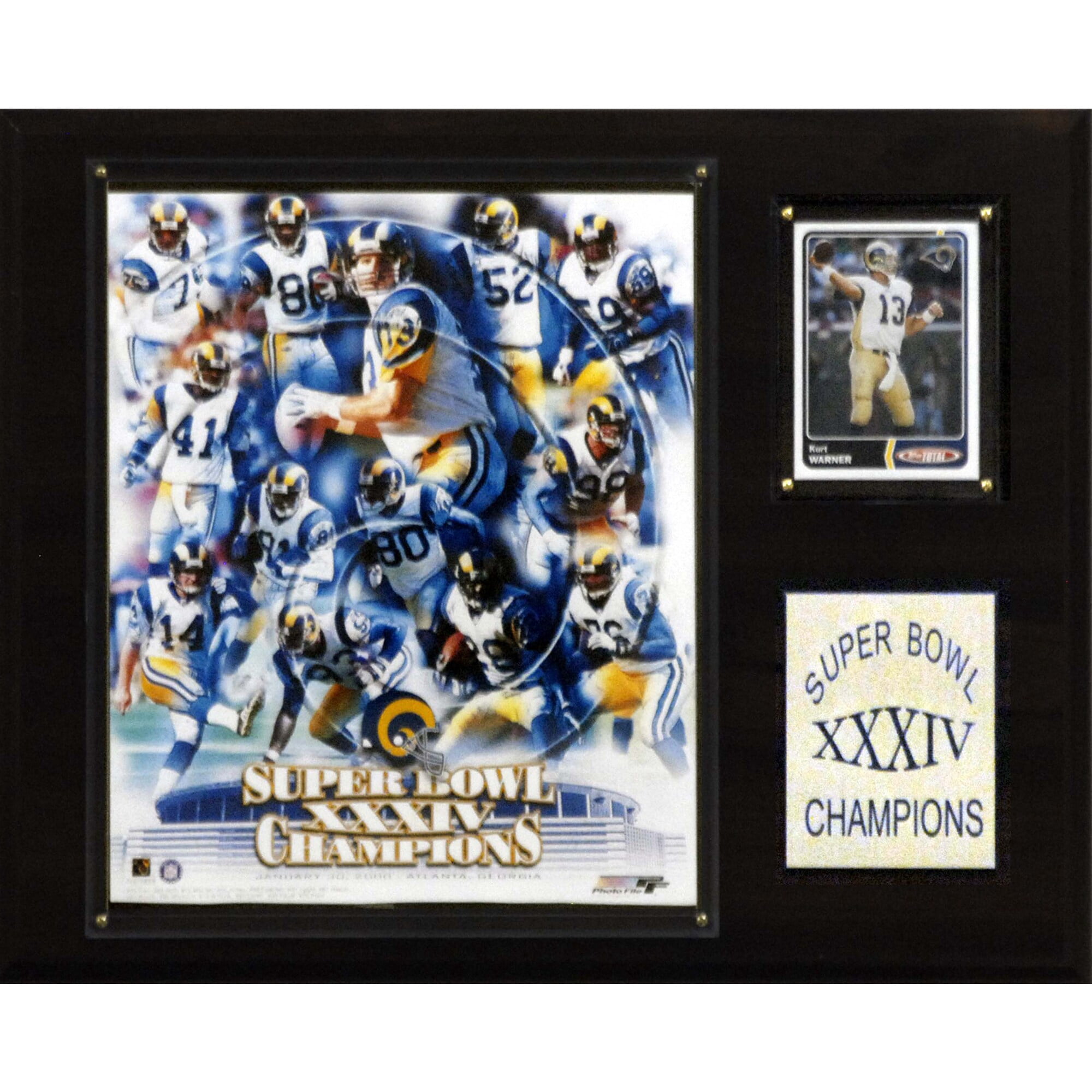
The St. Louis Rams appeared in two Super Bowls during their twenty-one-year tenure in Missouri (1995–2015). They won Super Bowl XXXIV following the 1999 season by defeating the Tennessee Titans 23–16 and lost Super Bowl XXXVI following the 2001 season to the New England Patriots with a score of 17–20.
Contents
The era of the St. Louis Rams remains one of the most statistically explosive periods in NFL history. Known for "The Greatest Show on Turf," the Rams transformed from a struggling franchise into a powerhouse that redefined offensive football. By 2026, football historians still look back at the 1999–2001 St. Louis Rams as the blueprint for the modern, high-flying passing attacks seen across the league today. This article examines the detailed history, pivotal plays, and lasting impact of the St. Louis Rams' two Super Bowl appearances.
The 1999 Season: From Anonymity to Super Bowl XXXIV Champions
The 1999 season began under a cloud of uncertainty. Starting quarterback Trent Green suffered a season-ending knee injury in the preseason, forcing head coach Dick Vermeil to turn to an unproven backup named Kurt Warner. Warner, who had famously spent time bagging groceries and playing in the Arena Football League, would go on to lead one of the greatest single-season turnarounds in sports history.
The Rise of the Greatest Show on Turf
The St. Louis Rams' offense in 1999 was a perfect storm of talent and coaching. Under offensive coordinator Mike Martz, the Rams employed a high-speed, vertical passing game that overwhelmed defenses. Key components included:
- Kurt Warner: The season MVP who threw for 4,353 yards and 41 touchdowns.
- Marshall Faulk: Acquired from the Colts, Faulk became the ultimate dual-threat weapon, recording 1,381 rushing yards and 1,048 receiving yards.
- Isaac Bruce and Torry Holt: A wide receiver duo that combined for over 1,900 receiving yards.
- Orlando Pace: The Hall of Fame left tackle who provided elite blindside protection.
The Rams finished the regular season 13–3, securing home-field advantage. After a high-scoring divisional win against Minnesota and a gritty 11–6 defensive battle against Tampa Bay in the NFC Championship, the Rams headed to Atlanta for Super Bowl XXXIV.
Super Bowl XXXIV: Rams vs. Titans
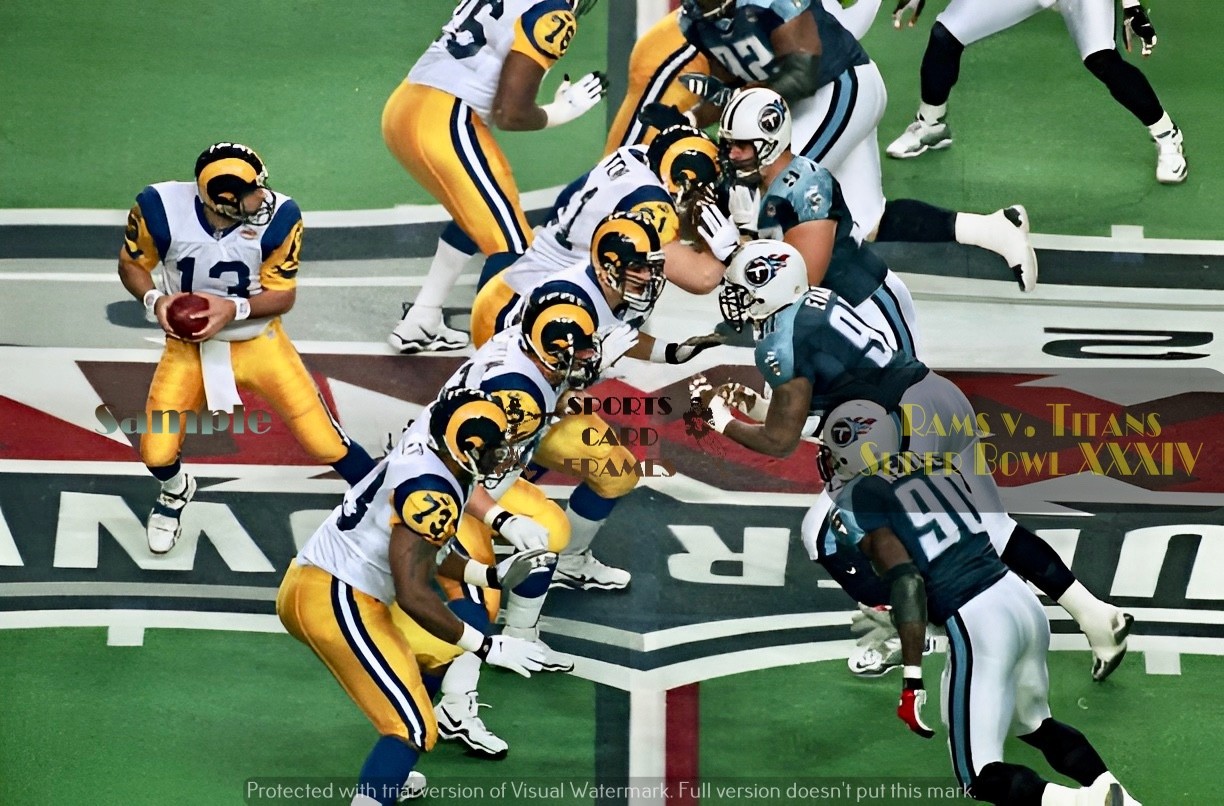
On January 30, 2000, the Rams faced the Tennessee Titans. The game was a tale of two halves. St. Louis dominated early but struggled to score touchdowns, settling for Jeff Wilkins field goals to take a 9–0 lead at halftime. When the Rams finally scored a touchdown in the third quarter to go up 16–0, the game seemed decided.
However, the Titans mounted a furious comeback, tying the game at 16–16 with only 2:12 remaining. On the very next play from scrimmage, Kurt Warner threw a 73-yard touchdown pass to Isaac Bruce, recapturing the lead at 23–16.
"The Tackle"
The final drive of Super Bowl XXXIV is etched in NFL lore. Titans quarterback Steve McNair drove his team down to the Rams' 10-yard line with six seconds left. On the final play, McNair passed to receiver Kevin Dyson. As Dyson turned toward the goal line, Rams linebacker Mike Jones made a perfect open-field tackle, stopping Dyson just one yard short of the end zone as time expired. This play preserved the Rams' first and only Super Bowl title while based in St. Louis.
The 2001 Season: The Quest for a Dynasty and Super Bowl XXXVI
By 2001, Mike Martz had taken over as head coach, and the Rams were even more dominant. They finished the regular season with a 14–2 record, leading the league in total yards and points. Kurt Warner won his second MVP award, and Marshall Faulk was named Offensive Player of the Year for the third consecutive time.
The Road to New Orleans
The Rams breezed through the NFC playoffs, defeating the Green Bay Packers and the Philadelphia Eagles. Entering Super Bowl XXXVI in New Orleans, the Rams were 14-point favorites over the New England Patriots, led by a second-year quarterback named Tom Brady and defensive-minded coach Bill Belichick.
The Strategic Shift in Super Bowl XXXVI
The Patriots’ strategy was built on physicality. They jammed the Rams' receivers at the line of scrimmage, disrupting the timing of the "Greatest Show on Turf." Additionally, the Patriots focused on punishing Marshall Faulk every time he leaked out for a pass.
St. Louis struggled with turnovers and uncharacteristic errors, falling behind 17–3 by the fourth quarter. True to their explosive nature, the Rams rallied. Kurt Warner ran for a touchdown and then threw a game-tying touchdown pass to Ricky Proehl with only 1:30 left on the clock.
The Birth of a New Dynasty
With no timeouts and 1:21 remaining, most analysts expected the Patriots to play for overtime. Instead, Tom Brady led a surgical drive into Rams territory. As time expired, Adam Vinatieri kicked a 48-yard field goal to give the Patriots a 20–17 victory. This game is widely cited as the beginning of the New England Patriots dynasty and the beginning of the end for the St. Louis Rams' peak dominance.
Comparative History of St. Louis Rams Super Bowl Appearances
The two Super Bowl appearances by the St. Louis Rams represented the highest peaks of the franchise's history in Missouri. While the 1999 team is remembered for its resilience and "The Tackle," the 2001 team is often remembered as one of the best teams to ever lose a Super Bowl.
| Feature | Super Bowl XXXIV (1999) | Super Bowl XXXVI (2001) |
|---|---|---|
| Date | January 30, 2000 | February 3, 2002 |
| Opponent | Tennessee Titans | New England Patriots |
| Final Score | 23–16 (Win) | 17–20 (Loss) |
| Rams MVP/Star | Kurt Warner (MVP) | Kurt Warner (365 pass yards) |
| Key Play | Mike Jones tackle at the 1-yard line | Adam Vinatieri 48-yard field goal |
| Regular Season Record | 13–3 | 14–2 |
| Venue | Georgia Dome (Atlanta, GA) | Louisiana Superdome (New Orleans, LA) |
| Betting Odds | Rams -7 | Rams -14 |
Technical Analysis of the St. Louis Offensive System
The success of the St. Louis Rams in these Super Bowls was predicated on a specific technical offensive philosophy known as the Air Coryell evolution. Unlike the ball-control West Coast Offense, the Rams focused on:
- Vertical Stretching: Using Torry Holt and Isaac Bruce to run deep routes that forced safeties to stay back, opening up the middle for Marshall Faulk.
- Timing and Precision: Kurt Warner was famous for releasing the ball before receivers made their breaks. This required immense trust and hundreds of hours of practice.
- Versatile Running Backs: Marshall Faulk was not just a runner; he often lined up as a wide receiver, creating defensive mismatches that linebackers could not cover.
- Indoor Advantage: Playing on the fast artificial turf of the Trans World Dome (later the Edward Jones Dome) allowed the Rams' speed players to outpace opponents who were used to slower, natural grass surfaces.
The Aftermath and Legacy
Following the loss in Super Bowl XXXVI, the Rams remained competitive for a few years but never returned to the championship game while in St. Louis. Injuries to Kurt Warner and the eventual departure of key figures like Marshall Faulk and Mike Martz led to a decline in the mid-2000s.
However, the legacy of the St. Louis Rams in Super Bowl history is secure. They were the first team to win a Super Bowl with a 4,000-yard passer, a 1,000-yard rusher, and two 1,000-yard receivers. They proved that a high-octane passing attack could win a championship, a philosophy that has since become the standard in the modern NFL.
Key Personnel of the St. Louis Super Bowl Era
- Dick Vermeil: The emotional heart of the 1999 championship team who retired immediately after the victory (later returning to coach the Chiefs).
- Mike Martz: The architect of the offense whose aggressive play-calling defined the era.
- The "Big Three": Warner, Faulk, and Bruce, all of whom are now enshrined in the Pro Football Hall of Fame.
Historical Context of the Relocation
The Rams' Super Bowl history in St. Louis is distinct from their time in Los Angeles. While the franchise won a championship in LA in 2021 and appeared in Super Bowls in 1979 and 2018, the "St. Louis era" is specifically defined by the lightning-in-a-bottle success of the late 90s and early 2000s. For the city of St. Louis, the 1999 championship remains a pinnacle of local sports history.
Frequently Asked Questions
How many Super Bowls did the Rams play in while in St. Louis?The Rams played in two Super Bowls while based in St. Louis: Super Bowl XXXIV (1999 season) and Super Bowl XXXVI (2001 season). They moved to St. Louis from Los Angeles in 1995 and returned to Los Angeles in 2016.
Who was the MVP of Super Bowl XXXIV?Quarterback Kurt Warner was named the MVP of Super Bowl XXXIV. He set a then-Super Bowl record with 414 passing yards and threw two touchdowns, including the game-winning 73-yard strike to Isaac Bruce.
Why were the St. Louis Rams called "The Greatest Show on Turf"?The nickname was coined by ESPN broadcaster Chris Berman. It referred to the team's record-breaking offensive output and their incredible speed, which was amplified by the artificial turf in their home stadium, the Trans World Dome. Between 1999 and 2001, they became the first team in NFL history to score over 500 points in three consecutive seasons.
Who did the St. Louis Rams lose to in Super Bowl XXXVI?The Rams lost to the New England Patriots. Despite being heavy favorites, the Rams were stifled by the Patriots' physical defense. The game ended on a last-second field goal by Adam Vinatieri, marking the first of many championships for the Brady-Belichick era.
Did Marshall Faulk win a Super Bowl MVP?No. While Marshall Faulk was a critical part of the Rams' victory in Super Bowl XXXIV, the MVP award went to Kurt Warner. Faulk had a productive game with 17 rushing yards and 90 receiving yards but did not score a touchdown in that specific contest.
What was "The Tackle" in St. Louis Rams history?"The Tackle" refers to the final play of Super Bowl XXXIV. St. Louis linebacker Mike Jones tackled Tennessee Titans receiver Kevin Dyson at the one-yard line as time expired, preventing a potential game-tying (or game-winning) touchdown.
Practical Recommendation: For fans or researchers looking to study the tactical evolution of the NFL, reviewing the full game film of Super Bowl XXXIV and XXXVI provides a masterclass in how defensive schemes (like the Patriots' "physical jam") were developed specifically to counter high-motion, vertical passing offenses. These games represent the transition from the "ball control" era of the 90s to the "explosive pass" era of the 21st century.
Image Gallery