Why a Disruptive Example Matters in Innovation
A disruptive example serves as a tangible, high-stakes benchmark that forces organizations to move beyond incremental improvements, exposing the limitations of current market models and catalyzing genuine structural change. By providin...
A disruptive example serves as a tangible, high-stakes benchmark that forces organizations to move beyond incremental improvements, exposing the limitations of current market models and catalyzing genuine structural change. By providing a clear reference point for how an industry standard can be fundamentally rewritten, these examples provide the necessary proof-of-concept that stakeholders require to justify the risk of radical innovation.
Contents
Defining Disruptive Innovation
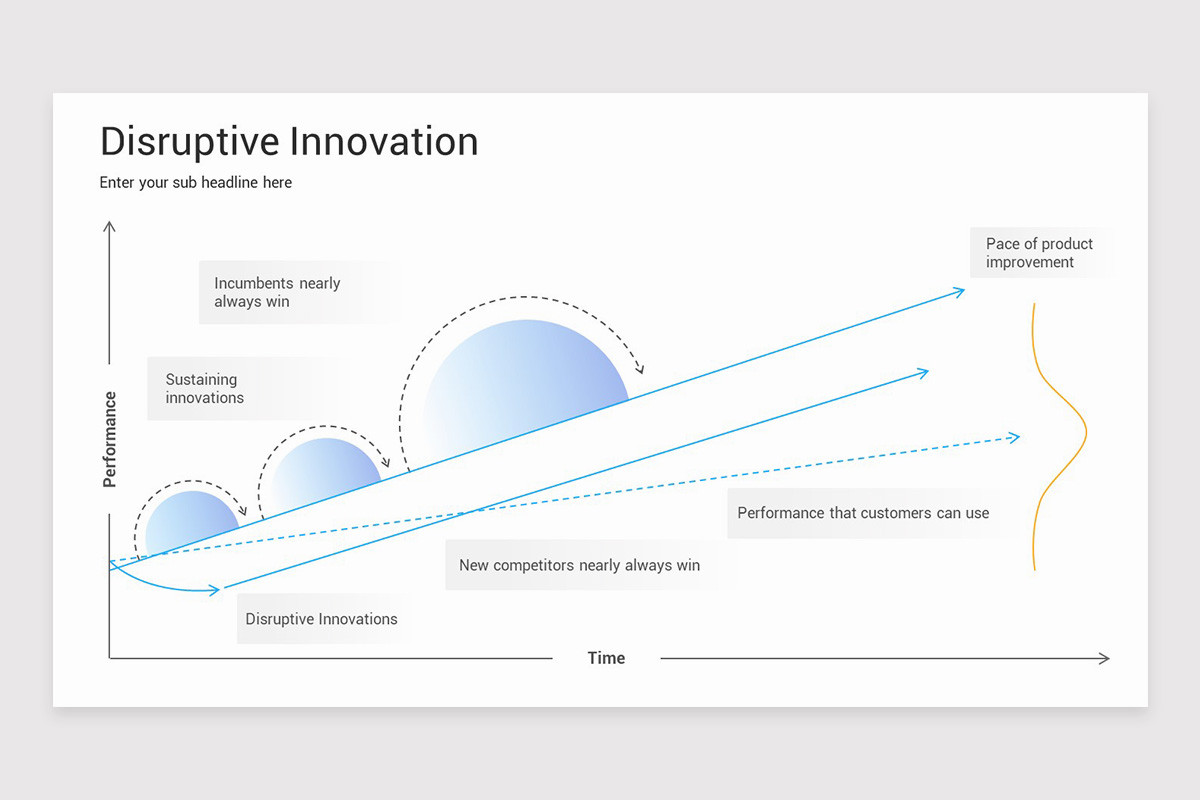
Disruptive innovation, a term popularized by Clayton Christensen, refers to a process by which a product or service takes root initially in simple applications at the bottom of a market and eventually moves up-market, eventually displacing established competitors. A "disruptive example" is a specific case study—such as the transition from film photography to digital imaging or the shift from retail banking branches to fintech-driven mobile platforms—that illustrates this mechanism in motion.
When leaders in an organization attempt to innovate, they often suffer from the "incumbent’s dilemma." They are pressured to satisfy current customers, which leads to sustaining innovations (improvements to existing products). A disruptive example acts as a mirror, allowing a firm to see how past market leaders failed because they prioritized their existing profit margins over the changing technological landscape. It provides the empirical evidence that "business as usual" is often the greatest threat to long-term survival.
The Psychological Impact of Tangible Examples
Human beings are wired to learn through narratives and case studies rather than abstract data. When a leadership team discusses the abstract concept of disruption, the response is often intellectual agreement followed by inaction. However, when an organization analyzes a specific disruptive example, the discussion shifts from "Is this possible?" to "How will we be affected?"
This shift is critical for several reasons:
- Reality Testing: Seeing a competitor or a parallel industry collapse due to a disruptive force makes the threat immediate.
- Resource Allocation: It is easier to justify R&D budgets when there is a documented precedent of how similar technology rendered legacy infrastructure obsolete.
- Strategic Alignment: A disruptive example provides a shared vocabulary for employees, helping them understand why the company is pivoting toward a new direction.
The Role of Examples in Risk Mitigation
One of the primary barriers to innovation is the fear of failure. Every major corporate shift carries significant financial and operational risk. By studying a disruptive example—specifically looking at the early-stage failures and the eventual pivots of those who succeeded—decision-makers can identify the "innovation traps."
For instance, companies that study the decline of the video rental industry in the face of streaming services often learn that the failure was not the technology itself, but the pricing model and the inability to adapt to consumer behavior changes. By isolating these variables, modern firms can build safeguards into their own innovation processes, ensuring they do not repeat the tactical errors of their predecessors.
Comparative Framework: Sustaining vs. Disruptive Innovation
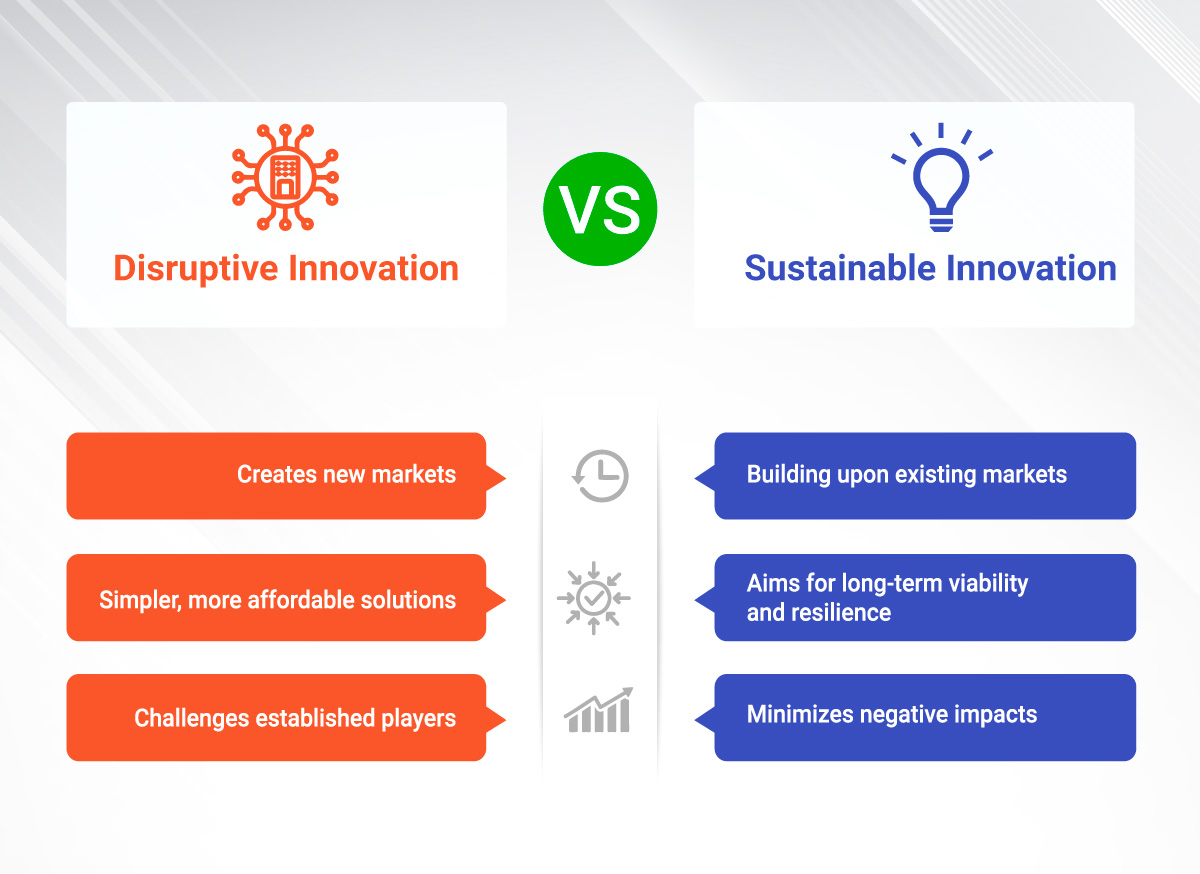
To understand why a disruptive example is so vital, one must contrast it with the standard, safer practice of sustaining innovation. The following table highlights the differences in approach and objective.
| Feature | Sustaining Innovation | Disruptive Innovation |
|---|---|---|
| Primary Target | Existing high-end customers | New or overlooked customer segments |
| Product Focus | Better performance and features | Accessibility, simplicity, and cost |
| Market Goal | Protect profit margins | Create new value networks |
| Reference Point | Internal historical performance | External market paradigm shifts |
| Execution Path | Optimization of current processes | Rebuilding the underlying business model |
Practical Application: Using Case Studies to Drive Strategy
To effectively utilize a disruptive example within an organization, leadership must move beyond passive observation. The process should involve active mapping of the example onto the firm's current portfolio.
Step 1: Contextual Matching Identify an industry or product that shares fundamental constraints with your own. If you are in logistics, do not look only at retail; look at how supply chain management in the tech sector was disrupted by real-time automated data.
Step 2: Identifying the "Catalyst of Change" Pinpoint the exact moment the disruption became inevitable. Was it a price drop? A regulatory change? A shift in user interface technology? Understanding the catalyst helps you predict where your own industry might be vulnerable.
Step 3: Internal Stress Testing Use the example as a basis for a "red team" exercise. Ask, "If this same technology were applied to our core service tomorrow, how would our existing revenue stream hold up?"
Step 4: Resource Decoupling Recognize that the team driving the new, disruptive idea must operate with different metrics than the core business. Disruptive units often fail when they are forced to compete for budget using the same ROI expectations as established, stable departments.
Common Pitfalls in Analyzing Disruptive Examples
A common mistake is the "copy-paste" fallacy, where leaders believe that because a model worked for another company, it will work for them. However, context is paramount. A disruptive example in a heavily regulated industry like medical devices or banking will have different barriers to entry than one in the software-as-a-service (SaaS) sector.
Another error is ignoring the "early-stage incompetence" of disruptive technologies. Early versions of disruptive innovations are often inferior in quality to the products they eventually replace. If a company evaluates a potential disruption purely on its current feature set rather than its trajectory, they will mistakenly dismiss it as a non-threat.
Frequently Asked Questions
Why are disruptive examples often dismissed by established companies? Established companies have a "success bias." They focus on the features that have historically brought them revenue. Because disruptive examples often start with products that seem lower-quality or less profitable, incumbents believe they are safe, failing to see the scalability of the new technology.
Is it possible to create a disruptive innovation without a precedent? Yes, but it is significantly more difficult. Having a precedent allows an organization to benchmark its progress. Without one, the team must operate entirely on hypothesis, which increases the likelihood of internal pushback and misalignment.
How often should we revisit our disruptive benchmarks? Market dynamics shift rapidly. An organization should conduct a formal review of its innovation benchmarks at least once annually. By 2026, the velocity of change has accelerated, making quarterly environmental scans a recommended practice for firms in competitive sectors.
What is the biggest sign that a disruptive example is relevant to my business? The most critical sign is a change in the "job to be done." If your customers start using a new, simpler tool to achieve the same end result as your high-end product, you are looking at a direct disruptive threat.
Next Steps for Implementation
If your organization is currently stagnant or struggling to justify innovative shifts, begin by selecting one industry-relevant case study from the past decade. Commission a cross-functional team—comprised of both technical staff and operations personnel—to document why that disruption succeeded. Use this document as the foundational text for a series of workshops designed to identify where your own company is most vulnerable to similar forces. By moving from theoretical innovation to concrete, example-based evidence, you provide your team with the logical and emotional mandate required to pursue change.
Image Gallery