California Toll Roads Guide 2026: Payment Methods, Maps, and FasTrak Regulations
Navigating California toll roads in 2026 requires a 100% electronic approach, as cash collections have been entirely phased out across the state. Drivers must use a FasTrak transponder, a localized ExpressAccount, or utilize "Pay-by-Pl...
Navigating California toll roads in 2026 requires a 100% electronic approach, as cash collections have been entirely phased out across the state. Drivers must use a FasTrak transponder, a localized ExpressAccount, or utilize "Pay-by-Plate" systems to avoid significant penalties. This guide covers the specific corridors in Orange County (The Toll Roads), the statewide Express Lanes, and Northern California’s bridge networks.
Contents
California’s tolling infrastructure is divided into three primary categories: the dedicated toll highways in Orange County (administered by the Transportation Corridor Agencies), the various Express Lanes integrated into existing freeways, and the major bridges in the San Francisco Bay Area. Understanding which system you are using is critical because payment requirements and carpool discounts vary significantly between agencies.
Major Toll Road Networks and Corridors in California
California’s tolling landscape is diverse, spanning from the Mexican border up to the North Bay. Each region utilizes specific infrastructure to manage traffic flow and fund maintenance.
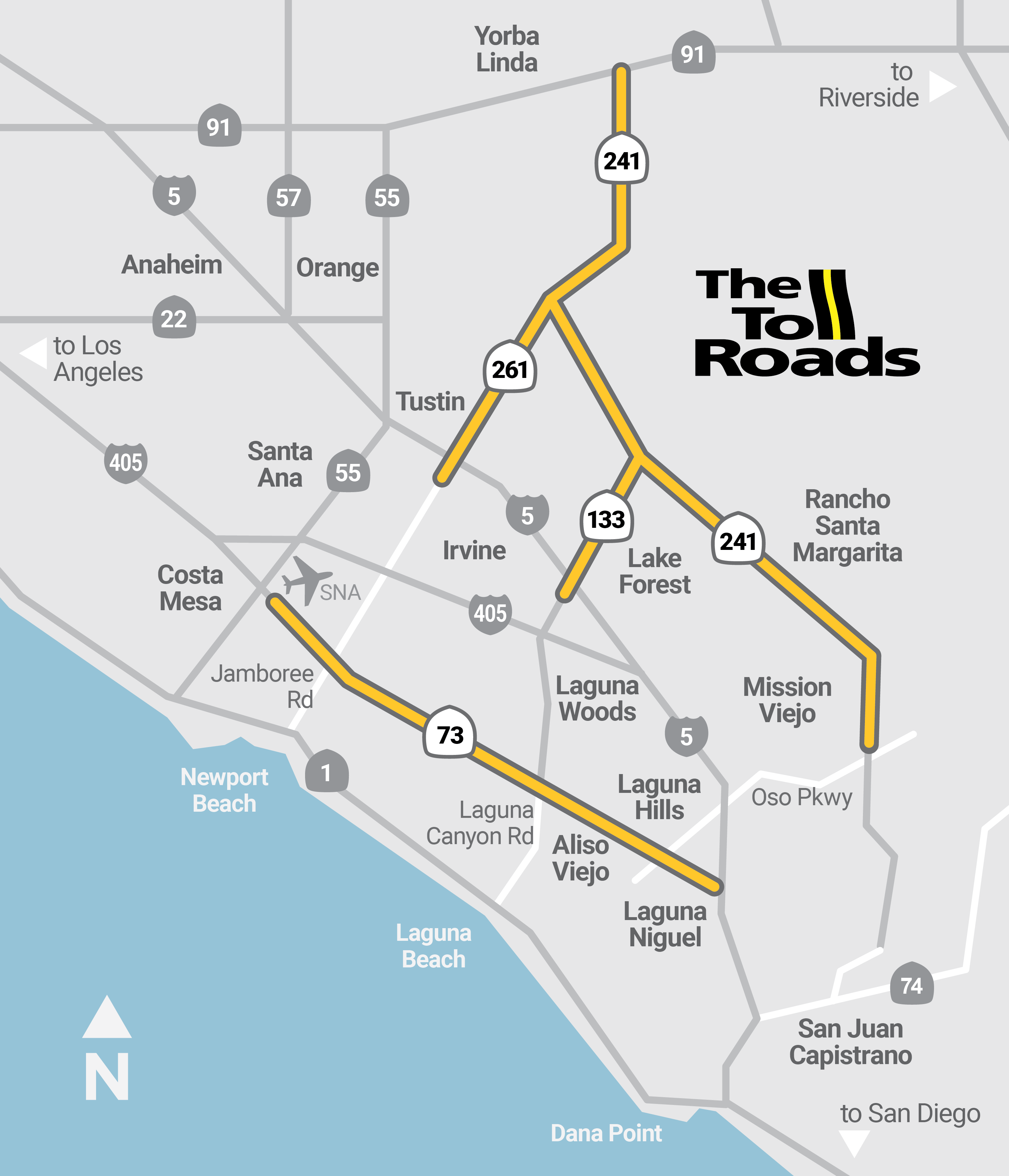
The Toll Roads (Orange County - SR 73, 133, 241, 261)
The "Toll Roads" refers specifically to a 51-mile network of public highways in Orange County managed by the Transportation Corridor Agencies (TCA).
- SR 73 (San Joaquin Hills): Runs from Newport Beach to San Juan Capistrano, serving as a primary alternative to the I-5.
- SR 133 (Eastern): Connects the 241 Toll Road to the I-5 and I-405 in Irvine.
- SR 241 (Foothill/Eastern): Provides a vital north-south link between Rancho Santa Margarita and the SR 91 Riverside Freeway.
- SR 261 (Eastern): Connects the 241 Toll Road to the I-5 in Irvine/Tustin.
Southern California Express Lanes
Unlike dedicated toll roads, Express Lanes allow solo drivers to pay a fee to use High Occupancy Vehicle (HOV) lanes.
- 91 Express Lanes: Spanning 18 miles between the SR-55/SR-91 junction in Anaheim and the I-15 in Riverside.
- I-405 Express Lanes: Located in Orange County between the SR-73 and the I-605.
- Metro ExpressLanes (I-110 and I-10): Located in Los Angeles County, requiring a FasTrak Flex transponder for all users.
- I-15 Express Lanes: Serving the Riverside and San Diego regions.
- I-5 Express Lanes: Expanding segments in Northern San Diego County.
Northern California Bridges and Express Lanes
In the Bay Area, all eight state-owned bridges and the Golden Gate Bridge are fully electronic.
- Bay Area Bridges: Including the San Francisco-Oakland Bay Bridge, San Mateo-Hayward, and others.
- Express Lanes: Extensive networks on I-880, I-680, and US-101 facilitate faster transit for commuters in the Silicon Valley and East Bay regions.
2026 Payment Systems and Transponder Technology
To drive on any CA toll road in 2026, you must utilize one of the approved electronic payment methods. California uses the Title 21 and 6C RFID protocols, ensuring that a single FasTrak transponder works statewide.
FasTrak: The Statewide Standard
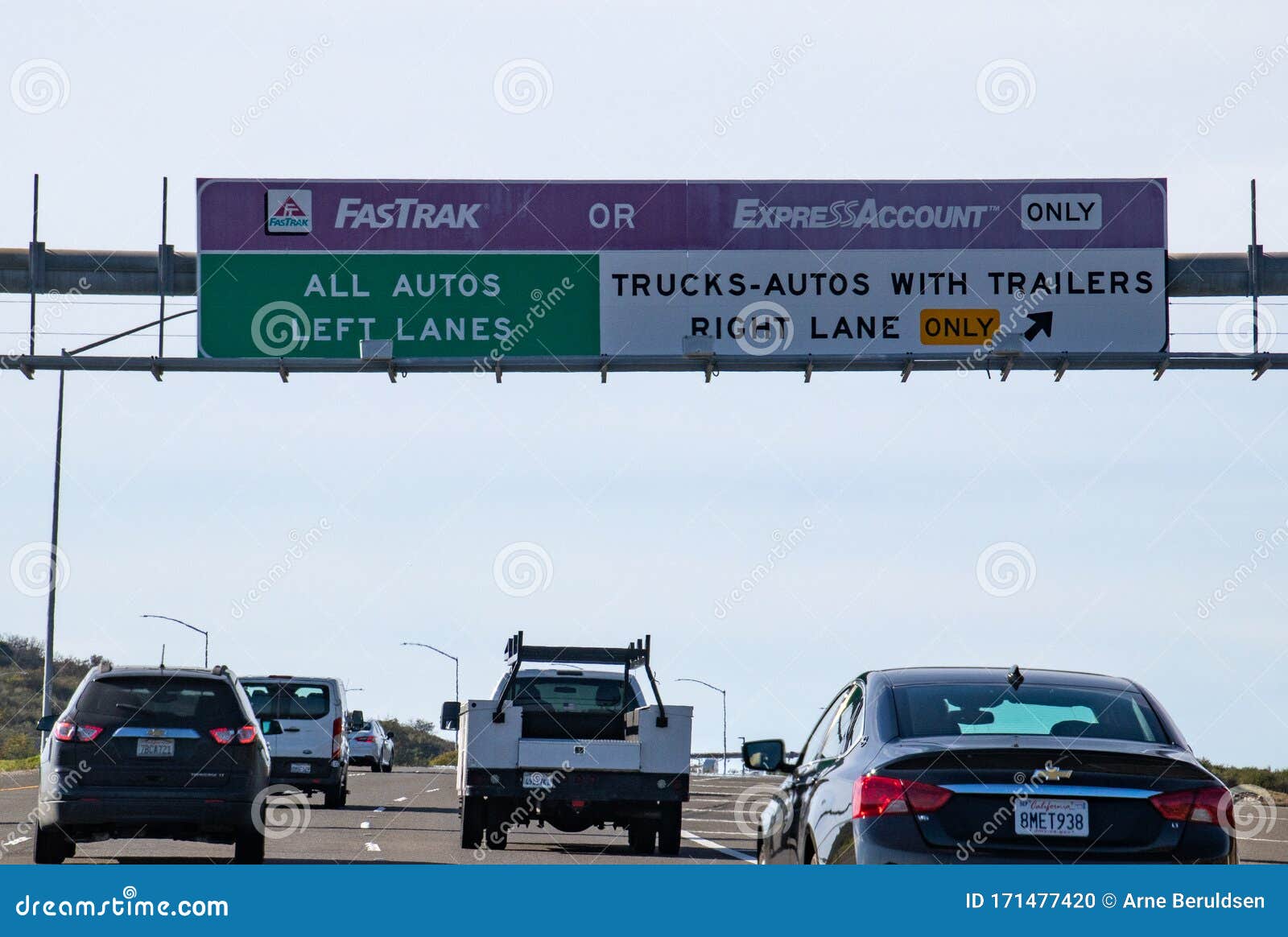
FasTrak is the primary electronic toll collection system. There are two main types of transponders available in 2026:
- FasTrak Standard: A sticker-based or hard-case transponder that deducts tolls automatically. Best for solo drivers.
- FasTrak Flex: Features a three-position switch (1, 2, 3+). This is mandatory for claiming carpool discounts on Express Lanes. If you have three people in the car but your switch is set to "1," you will be charged the full toll.
ExpressAccount (Orange County Specific)
The TCA offers "ExpressAccounts" for those who primarily use the 73, 133, 241, and 261 roads. These are plate-based accounts that do not require a transponder, though they do not offer the $1.00 discount per toll that FasTrak users receive.
Pay-by-Plate and One-Time Payments
For visitors or infrequent users, most agencies offer a "One-Time-Toll" or "Pay-by-Plate" option.
- Direct Online Payment: Users can visit the specific agency website (e.g., thetollroads.com or bayareafastrak.org) within 5 days of their trip.
- Invoiced Tolls: If no account is found, a toll invoice is sent to the registered owner of the vehicle. In 2026, these invoices carry a small administrative processing fee but are not considered "violations" if paid by the initial due date.
Comparative Overview of Payment Methods
| Feature | FasTrak (Sticker/Flex) | ExpressAccount | One-Time Toll / Pay-by-Plate |
|---|---|---|---|
| Statewide Compatibility | Yes (All CA Roads/Bridges) | Orange County Roads Only | Specific to Agency |
| Transponder Required | Yes | No (License Plate) | No (License Plate) |
| Carpool Discounts | Yes (With Flex Switch) | No | No |
| Base Toll Discount | Typically $1.00 per toll | No | No |
| Pre-paid Balance | Required ($25 minimum) | Optional (Pre-paid or Charge) | None (Post-paid) |
| Maintenance Fees | Usually $0 - $2/month | $0 | Administrative fees may apply |
2026 Fee Structures and Congestion Pricing
Toll rates in California are rarely static. In 2026, most Express Lanes utilize "Dynamic Pricing," or congestion pricing, where the cost of the toll fluctuates based on real-time traffic volume.
How Dynamic Pricing Works
As the number of vehicles in the Express Lanes increases, the toll price rises to discourage more entries and maintain a minimum speed (typically 45-50 mph).
- Off-Peak: Tolls may be as low as $0.50 to $2.00.
- Peak Rush Hour: On high-demand corridors like the SR-91 or I-405, peak tolls can reach $15.00 to $25.00 during extreme congestion.
Orange County Fixed-Schedule Rates
Unlike Express Lanes, the dedicated TCA Toll Roads (73, 133, 241, 261) use a "Fixed-Schedule" rate system. Rates vary by time of day and day of the week but are predictable. Users can download the 2026 Rate Card from the official TCA website to see exactly what they will pay at each gantry based on their axle count.
Rules for Rental Cars and Out-of-State Visitors
Driving a rental car on California toll roads in 2026 requires caution to avoid excessive "convenience fees" from rental agencies.
Using Your Own FasTrak
The most cost-effective method is to bring your own FasTrak transponder. You must add the rental car’s license plate to your account temporarily. Once the plate is registered in your FasTrak portal, the tolls will be deducted from your personal balance rather than the rental agency’s fleet account.
Rental Agency Toll Programs
Most major agencies (Hertz, Enterprise, Avis) offer "TollPass" programs.
Warning on Rental Fees While convenient, these programs often charge a daily fee (ranging from $5.99 to $12.99) for every day of the rental, even on days you do not use a toll road. It is often cheaper to pay the tolls directly via the "One-Time-Toll" option online if the rental agency allows it. Ensure you opt-out of the rental agency’s transponder by closing the shield box on the device.
Violation Penalties and Dispute Resolution
Failure to pay a toll results in a violation notice. In 2026, the California Vehicle Code has streamlined the penalty process, but the costs remain steep.
The Violation Timeline
- First Notice: Sent to the vehicle owner. Includes the original toll plus a penalty (typically $20.00 - $30.00).
- Second Notice: If the first is ignored, the penalty can increase by an additional $40.00 plus a DMV hold fee.
- DMV Registration Hold: If violations remain unpaid, the California DMV will withhold your annual vehicle registration until all tolls and penalties are cleared.
How to Dispute a Violation
If you believe a violation was issued in error (e.g., you sold the car or the transponder failed to read), you must submit a "Contest of Notice" within 21 days. Documentation such as a Bill of Sale or a FasTrak statement showing a healthy account balance is usually required for a successful appeal.
Technical Requirements for Transponder Placement
Proper installation of your RFID transponder is essential for the overhead gantries to read your signal accurately. In 2026, signal interference from newer vehicle features can be a common issue.
Placement Guidelines
- Standard Windshields: Place the sticker or hard-case transponder in the top center of the windshield, behind or near the rearview mirror.
- Athermic Windshields: Some luxury or electric vehicles have metallic coatings that block RFID signals. In these cases, you must identify the "clear zone" (usually a dotted area near the mirror) or use a bumper-mounted transponder.
- Motorcycles: Transponders should be placed on the headlamp or a flat surface on the fairing.
Frequently Asked Questions
Can I use my FasTrak in other states like Washington or New York?
No, California’s FasTrak system is not currently interoperable with E-ZPass (East Coast) or Good To Go! (Washington State). It only works on toll roads and bridges within the state of California.
What happens if my FasTrak battery dies?
Modern sticker transponders do not have batteries; they are passive RFID tags. If you have an older "hard-case" transponder with a battery, it may eventually fail. Most agencies will replace these for free, and in the interim, the system will use your license plate to look up your account (a process called "image-based tolling").
Is the Golden Gate Bridge part of the same system?
The Golden Gate Bridge uses FasTrak but is managed by the Golden Gate Bridge, Highway and Transportation District. While your FasTrak transponder works there, you must ensure your account has sufficient funds, as the bridge is 100% electronic and does not have toll booths.
How do I get a carpool discount?
To receive a carpool discount on most Express Lanes (like I-10, I-110, or I-405), you must have a FasTrak Flex transponder set to the 2 or 3+ position. On the 91 Express Lanes, HOV-3+ drivers must still use a designated lane to have their toll waived or discounted.
Do Clean Air Vehicles (CAVs) get a discount?
Yes, in 2026, vehicles with valid DMV Clean Air decals still receive discounts on many toll facilities. However, you must typically have a FasTrak account and, in some cases, a specific "CAV" transponder or settings to trigger the discount automatically.
Summary of Technical Specifications for California Drivers
To ensure a seamless experience on California's toll infrastructure, adhere to the following technical and operational requirements:
- Account Maintenance: Keep a minimum pre-paid balance (usually $25) to ensure your account remains "Active." An "Involved" status can lead to immediate violations.
- Plate Registration: Always keep your vehicle license plate information updated in your portal. This serves as a secondary backup if your transponder is not read by the gantry.
- Transponder Selection: If you frequently carpool or drive a motorcycle, opt for the FasTrak Flex rather than the sticker, as the sticker cannot be toggled for HOV discounts.
- Electronic Only: Remember that no toll road in California accepts cash in 2026. If you find yourself on a toll road without a transponder, visit the agency's website within 48 hours to pay the toll manually and avoid penalties.
Driving on California toll roads significantly reduces travel time in high-traffic corridors. By maintaining a FasTrak account and understanding the specific rules of the corridor you are traveling, you can navigate the state efficiently while avoiding unnecessary fees and penalties.
Image Gallery