Main Characters of Titanic: Key Figures on the Ship and Historical Passengers
When discussing the main characters of the Titanic, interest generally splits between the fictional protagonists created for cinematic storytelling and the real-life historical figures who commanded, designed, and traveled on the ill-f...
When discussing the main characters of the Titanic, interest generally splits between the fictional protagonists created for cinematic storytelling and the real-life historical figures who commanded, designed, and traveled on the ill-fated ocean liner in 1912. The most prominent fictional characters include Jack Dawson and Rose DeWitt Bukater, while the key historical figures include Captain Edward J. Smith, shipbuilder Thomas Andrews, White Star Line managing director J. Bruce Ismay, and American socialite Margaret "Molly" Brown.
Contents
Fictional Protagonists: The Cinematic Narrative of the Titanic
James Cameron’s 1997 film Titanic introduced fictional characters to anchor a human narrative within a meticulously recreated historical disaster. These characters reflect the rigid social stratification, romantic ideals, and cultural tensions of the Edwardian era.
Jack Dawson and Rose DeWitt Bukater
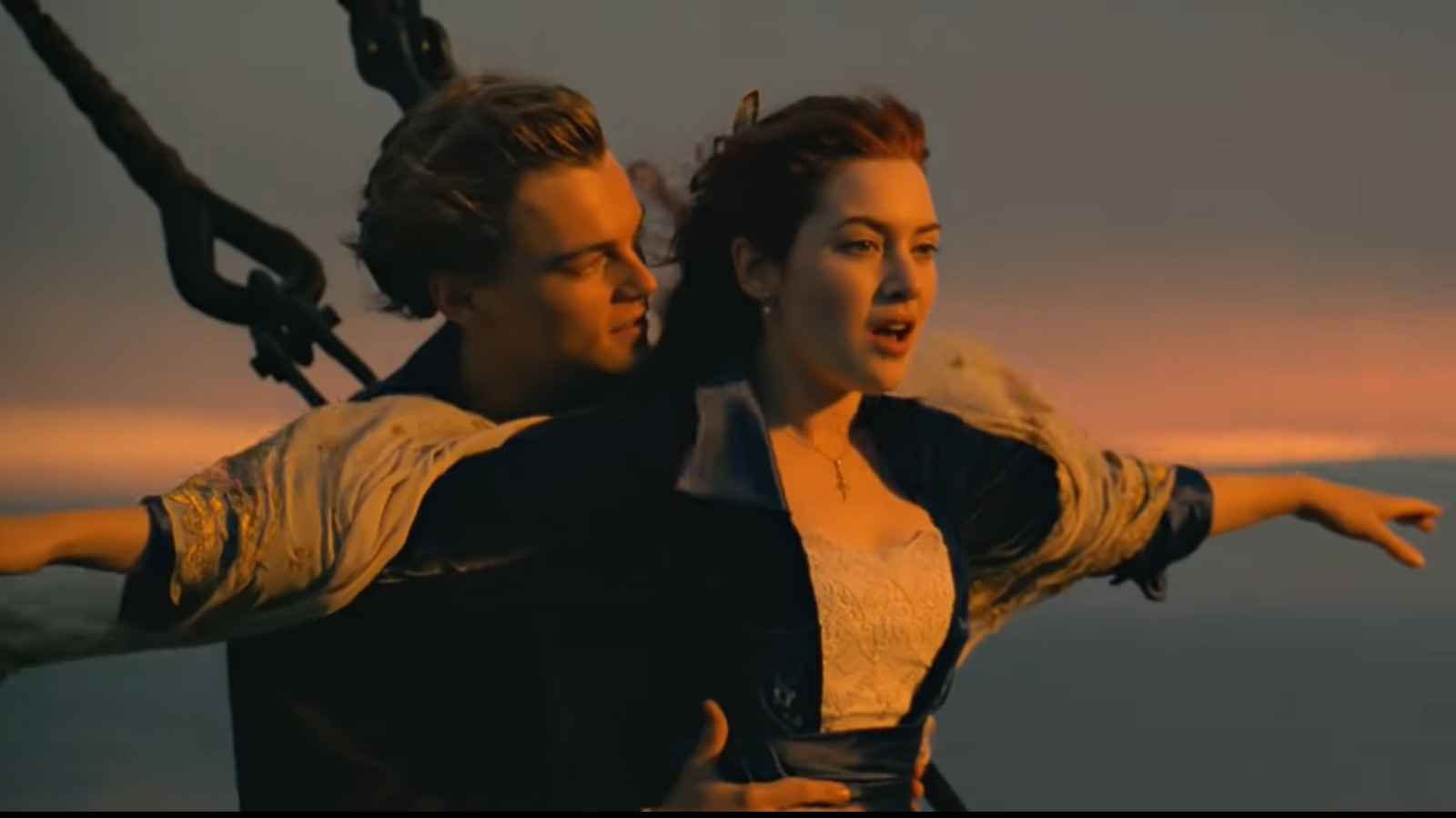
Jack Dawson (portrayed by Leonardo DiCaprio) is depicted as an impoverished, itinerant American artist who wins a third-class ticket aboard the RMS Titanic in a poker game. Jack represents the artistic freedom and social mobility often associated with early 20th-century America.
Rose DeWitt Bukater (portrayed by Kate Winslet as a young woman and Gloria Stuart as an older survivor) is a 17-year-old first-class passenger. Trapped by the financial ruin of her family following her father's death, Rose is pressured by her mother to marry into wealth. The relationship between Jack and Rose serves as a narrative lens through which viewers experience the vast differences between first-class luxury and third-class (steerage) accommodation aboard the ship.
While both Jack and Rose are entirely fictional creations, their experiences mirror verified historical accounts of passenger life. The cramped steerage quarters, open deck areas, and lavish first-class accommodations they inhabit were reconstructed based on original blueprints provided by Harland and Wolff, the shipbuilders of the Titanic.
Caledon Hockley and Ruth DeWitt Bukater
Caledon "Cal" Hockley (Billy Zane) functions as the primary antagonist in the dramatic depiction of the voyage. As the son of a wealthy Pittsburgh steel tycoon, Cal embodies the arrogance and entitlement of the Gilded Age elite. His character highlights the financial dependency of upper-class women during the era.
Ruth DeWitt Bukater (Frances Fisher), Rose's mother, represents traditionalist social pressures. Her character underscores the precarious economic status of aristocratic families whose wealth was diminishing at the turn of the century, contrasting sharply with the emerging industrial fortunes of the era.
Real-Life Historical Figures: Key Crew Members and Officers
Behind the fictional drama were real men responsible for operating, managing, and navigating the world’s largest ocean liner during her maiden voyage from Southampton to New York City.
| RMS Titanic Leadership | Role |
|---|---|
| Captain Edward J. Smith | Ship Commodore |
| Thomas Andrews | Chief Designer |
| J. Bruce Ismay | White Star Line MD |
| First Officer William Murdoch | Officer on Watch |
| Second Officer Charles Lightoller | Senior Survivor |
Captain Edward John Smith
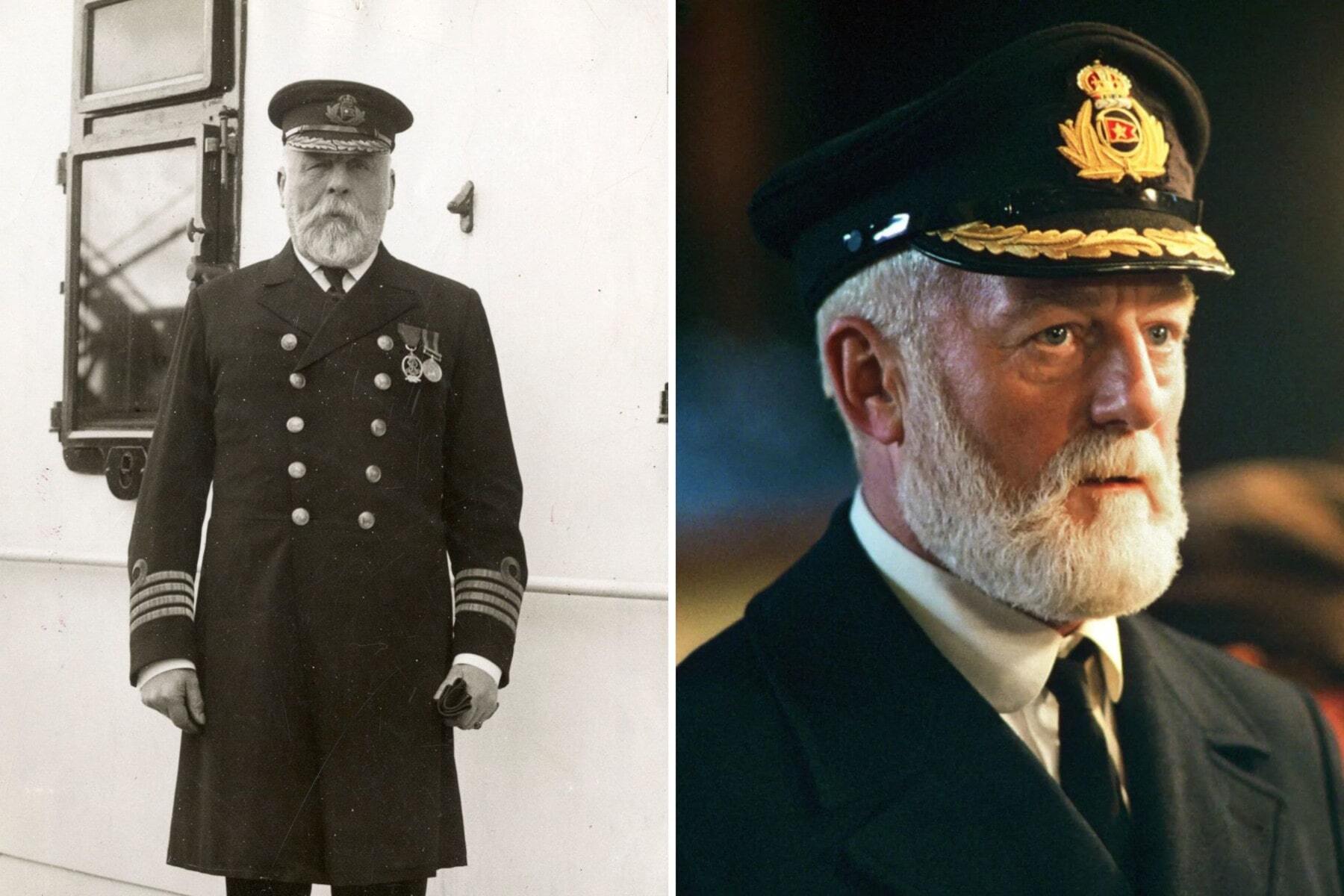
Captain Edward John Smith was the commodore of the White Star Line and one of the most experienced ship captains of his era. Known as the "Millionaires' Captain" due to his popularity among wealthy transatlantic travelers, Smith had commanded several major vessels, including the RMS Olympic.
The Titanic’s maiden voyage was intended to be Smith's final journey before retirement. On the night of April 14, 1912, Captain Smith received several ice warnings from other vessels. While he altered the ship's course slightly south, he maintained a speed of approximately 22 knots—standard maritime practice for clear weather at the time. After the collision with the iceberg at 11:40 PM, Smith ordered the lifeboats uncovered and initiated distress signals. Captain Smith went down with the ship, and his exact actions in his final hours remain a subject of historical analysis.
Thomas Andrews: The Ship's Designer
Thomas Andrews was the Managing Director and head of the drafting department at the Harland and Wolff shipyard in Belfast, Northern Ireland. As the primary naval architect of the Titanic, Andrews traveled on the maiden voyage as head of the "guarantee group"—a team of engineers and mechanics tasked with observing ship operations and identifying necessary adjustments.
Following the impact with the iceberg, Andrews conducted a thorough damage assessment alongside Captain Smith. After examining the flooded forward compartments, Andrews determined that the vessel was mathematically doomed to sink, calculating that she had only one to two hours before going under. Accounts from survivors, including passengers and crew, record that Andrews spent his final hours helping passengers into lifeboats, throwing deck chairs overboard to serve as flotation devices, and calmly waiting in the First Class Smoking Room as the ship sank.
J. Bruce Ismay: White Star Line Managing Director
Joseph Bruce Ismay was the chairman and managing director of the International Mercantile Marine Company and the White Star Line. Ismay had conceived the Olympic-class liners alongside Lord Pirrie of Harland and Wolff to compete with the Cunard Line's speed-focused liners, Lusitania and Mauretania. The White Star strategy prioritized unprecedented luxury, size, and passenger comfort over sheer speed.
During the disaster, Ismay boarded Lifeboat C, one of the last collapsible lifeboats launched from the starboard side. His survival made him the target of intense public scrutiny and criticism, particularly in the British and American press. Critics labeled him a coward for surviving while women and children perished, although British official inquiries concluded that Ismay had assisted in loading lifeboats and entered a boat only when no other passengers were in the immediate vicinity.
First Officer William Murdoch and Second Officer Charles Lightoller
First Officer William McMaster Murdoch was the senior officer on watch on the bridge when lookout Frederick Fleet spotted the iceberg. Murdoch immediately issued the command "Hard a-starboard" (to turn the ship to port) and ordered the engine room to reverse engines ("Full Astern"). Historical debates continue over whether this maneuver minimized or worsened the collision impact. During the evacuation, Murdoch led the loading of lifeboats on the starboard side, interpreting the "women and children first" protocol to allow men to board if no women were waiting. Murdoch died in the sinking.
Second Officer Charles Lightoller was the highest-ranking officer to survive the disaster. Stationed on the port side during the evacuation, Lightoller enforced a strict "women and children only" interpretation of the Captain's order. Lightoller survived by clinging to overturned Collapsible Lifeboat B after being washed off the deck as the ship submerged. His testimony during the British and American inquiries provided critical insights into the ship's final hours and led to sweeping safety reform across the maritime industry, as recorded by the U.S. Senate Inquiry into the Titanic Disaster.
Prominent Historical Passengers Aboard the RMS Titanic
The Titanic carried over 2,200 passengers and crew on its maiden voyage. The passenger list represented a cross-section of early 20th-century society, from multi-millionaire industrialists to emigrants seeking new lives in North America.
| Historical Figure | Primary Role / Background | Voyage Outcome |
|---|---|---|
| Captain E.J. Smith | Ship Commander | Perished |
| Thomas Andrews | Chief Naval Architect | Perished |
| J. Bruce Ismay | White Star Line MD | Survived |
| Margaret "Molly" Brown | Socialite & Philanthropist | Survived |
| John Jacob Astor IV | Real Estate Investor | Perished |
| Isidor Straus | Co-owner of Macy's | Perished |
| Ida Straus | Spouse of Isidor Straus | Perished |
| Wallace Hartley | Bandmaster / Musician | Perished |
Margaret "Molly" Brown
Margaret Brown (née Tobin), posthumously known as "The Unsinkable Molly Brown," was an American socialite, philanthropist, and activist. Raised in a working-class family in Missouri, she moved to Leadville, Colorado, where her husband, James Joseph Brown, struck gold and oil wealth.
Aboard Lifeboat No. 6, Margaret Brown took an active leadership role. She argued vehemently with Quartermaster Robert Hichens, demanding that the lifeboat return to the debris field to search for survivors. After being rescued by the RMS Carpathia, Brown organized the 48-Hour Executive Committee among first-class survivors to provide basic necessities, medical assistance, and financial relief to destitute steerage survivors.
John Jacob Astor IV and Madeleine Astor
Colonel John Jacob Astor IV was the wealthiest person aboard the Titanic, with an estimated net worth of over $87 million (equivalent to several billion dollars today). Astor had built his fortune in real estate, hotel development (including the Waldorf-Astoria), and patent inventions.
Astor was traveling with his 18-year-old second wife, Madeleine, who was pregnant. When the call to load lifeboats came, Astor assisted his wife into Lightboat No. 4. He requested to join her due to her condition, but Officer Lightoller refused, adhering strictly to the women-and-children-only rule on the port side. Astor remained on deck and perished in the sinking; his body was later recovered by the cable ship MacKay-Bennett.
Isidor and Ida Straus
Isidor Straus was a former U.S. Congressman and co-owner of the Macy's department store chain. He was traveling with his wife, Ida. The couple had been married for over 40 years and were known for their close devotion to one another.
When offered a seat in Lifeboat No. 8 alongside his wife, Isidor refused to step ahead of younger men while women and children remained on board. Ida Straus refused to leave her husband, stating, "We have lived together for many years. Where you go, I go." She handed her fur coat to her maid, Ellen Bird, and assisted her into the lifeboat. The couple were last seen sitting together on deck chairs on the boat deck.
Wallace Hartley and the Titanic Orchestra
Wallace Hartley led the eight-member shipboard orchestra hired through the C.W. & F.N. Black agency. As the Titanic sank, Hartley and his fellow musicians assembled on the boat deck and played music to minimize panic among the passengers crowding the lifeboats.
Survivors reported that the band continued playing even as the deck tilted severely and water approached their position. While popular culture often associates their final song with the hymn "Nearer, My God, to Thee," historical debate continues over whether they played this tune or the popular waltz "Song d'Automne." None of the eight band members survived the disaster, and their selflessness became one of the enduring symbols of the event.
Historical Reality vs. Cinematic Portrayal
James Cameron's dramatic retelling mixed historical evidence with artistic license to heighten theatrical tension. The table below outlines how key figures were represented in real life compared to their fictionalized or dramatized portrayals on screen.
| Figure / Character | Historical Status | Cinema Portrayal Accuracy | Historical Outcome | Key Actions During Disaster |
|---|---|---|---|---|
| Jack Dawson | Fictional | N/A (Fictional protagonist) | Dies of hypothermia | Represents steerage passenger experiences. |
| Rose DeWitt Bukater | Fictional | Inspired in part by artist Beatrice Wood | Survives in Lifeboat 14 | Highlights upper-class constraints and survival. |
| Captain E.J. Smith | Historical | High visual accuracy; debated actions | Perished at sea | Issued distress commands; seen on bridge before collapse. |
| Thomas Andrews | Historical | High historical accuracy | Perished at sea | Calculated sinking time; assisted passengers with lifebelts. |
| J. Bruce Ismay | Historical | Controversial; portrays him as pushy | Survived in Collapsible C | Helped load boats; stepped into collapsible as it lowered. |
| William Murdoch | Historical | Controversial (depicted shooting passenger) | Perished at sea | Navigated collision; loaded starboard lifeboats efficiently. |
| Margaret Brown | Historical | High dramatic accuracy | Survived in Lifeboat 6 | Commanded lifeboat crew; organized survivor relief funds. |
| Isidor & Ida Straus | Historical | High historical accuracy | Perished together | Refused to separate; gave lifeboat seat to servant. |
The Impact of Class Structure on Titanic Figures
The social hierarchy aboard the RMS Titanic affected the survival rates of both real passengers and fictional characters. The ship was divided into three distinct passenger classes, separated by physical barriers and enforced by White Star Line policies to comply with U.S. immigration laws regarding quarantine and sanitation.
| Survival Rates by Passenger Class | Outcome |
|---|---|
| First Class Women & Children | ~97% Survived |
| Second Class Women & Children | ~86% Survived |
| Third Class (Steerage) Women & Child | ~49% Survived |
| First Class Men | ~33% Survived |
| Third Class Men | ~16% Survived |
First Class: Luxury and Priority Access
First-class passengers occupied the highest decks of the ship, giving them immediate proximity to the boat deck where lifeboats were stored and loaded. Key figures such as Margaret Brown, the Astors, and the Strauses had prompt access to clear information and evacuation routes. First-class accommodations included grand dining saloons, squash courts, a Turkish bath, and private promenade decks.
Second Class: Middle-Class Comfort
Second-class passengers included educators, clergy, middle-class tourists, and engineers. Their accommodations rivaled first-class conditions on older transatlantic vessels. While located lower in the ship than first class, second-class passengers still had straightforward access to upper decks compared to steerage passengers.
Third Class (Steerage): Emigrants and Barriers
Third-class passengers were housed in the lower decks at the forward and aft sections of the ship. Many were emigrants from Ireland, Scandinavia, Great Britain, and Eastern Europe traveling to North America.
During the disaster, steerage passengers faced several major obstacles:
- Complex Navigation: Finding the way through narrow corridors and multiple stairwells up to the boat deck proved difficult, especially for non-English speakers.
- Locked Gates: Physical gates separating third-class areas from upper decks were mandated by immigration law to prevent the spread of infectious disease. While crew members opened many of these gates during the evacuation, delays contributed to lower survival rates among steerage passengers.
- Lifeboat Scarcity: The Titanic carried 20 lifeboats (16 wooden lifeboats and 4 collapsible boats) with a total capacity of 1,178 people—far below the ship's maximum capacity of over 3,300 people, though compliant with British Board of Trade safety regulations of the era.
Detailed analyses of maritime safety standards are documented by the National Maritime Museum, detailing how the loss of life on the Titanic prompted international regulations mandating lifeboats for all passengers on ocean vessels via the original SOLAS (Safety of Life at Sea) treaty.
Frequently Asked Questions
Were Jack Dawson and Rose DeWitt Bukater real people aboard the Titanic?
No, Jack Dawson and Rose DeWitt Bukater were entirely fictional characters created by director James Cameron for the 1997 film. However, after the film's script was completed, it was discovered that a real passenger named Joseph Dawson had died aboard the Titanic. Joseph Dawson was an Irish coal trimmer working in the ship's engine rooms, entirely unrelated to the fictional character portrayed by Leonardo DiCaprio.
Who was the real-life richest person on the Titanic?
John Jacob Astor IV was the wealthiest person aboard the vessel. His fortune was estimated at approximately $87 million in 1912. He perished in the sinking after helping his pregnant wife, Madeleine, board Lifeboat No. 4.
Did First Officer William Murdoch actually shoot a passenger as shown in the movie?
There is no definitive historical evidence confirming that First Officer Murdoch shot any passengers or committed suicide. While several survivor accounts mentioned an officer firing a weapon to control crowds near lifeboats, witness identities varied widely. Relatives of Murdoch and historians objected to his depiction in the 1997 film, prompting production executives to issue a formal apology to Murdoch's living family members in Scotland.
Did the ship's band really play until the Titanic sank?
Yes, historical witness accounts confirm that Wallace Hartley and his seven band members played music on the boat deck during the evacuation to calm passengers. None of the musicians survived the sinking, and their actions remain among the most widely documented acts of bravery from the disaster.
Why did J. Bruce Ismay receive so much public criticism after surviving?
As managing director of the White Star Line, Ismay was held publicly responsible by press outlets (particularly newspapers owned by William Randolph Hearst) for the ship's lack of sufficient lifeboats and high speed in ice-prone waters. Despite official legal exoneration by both American and British investigative boards, Ismay's decision to enter Lifeboat C while passengers remained aboard destroyed his public reputation.
Recommended Resources for Further Research
To explore primary sources, crew manifests, and detailed passenger biographies from the RMS Titanic, consult official archives and maritime research repositories:
- The National Archives (UK): Access original Board of Trade inquiry transcripts, ship registration papers, and official crew lists.
- Encyclopedia Titanica: A comprehensive online repository containing verified biographical details, deck plans, and survivor testimonies.
- U.S. Senate Inquiry Records: Review line-by-line testimonies from survivors, officers, and White Star Line executives conducted immediately following the rescue in April 1912.
EDITORIAL CATEGORY METADATA:
Image Gallery