How to Tell If Your Crown Is Thinning: A Practical Guide to Monitoring Scalp Health
Identifying if your crown—the area at the top and back of the head—is thinning involves looking for subtle shifts in hair density, scalp visibility, and hair caliber. While some degree of natural scalp visibility is normal, a progressi...
Identifying if your crown—the area at the top and back of the head—is thinning involves looking for subtle shifts in hair density, scalp visibility, and hair caliber. While some degree of natural scalp visibility is normal, a progressive expansion of the parting area or a noticeable change in the texture and diameter of hairs in this region often signals the onset of androgenetic alopecia or other forms of hair loss.
Contents
Understanding the Crown Anatomy and Natural Density
The crown, often referred to as the vertex, is a common site for male and female pattern baldness. It is characterized by a whorl pattern where hair growth radiates outward. Because this area naturally exposes the scalp depending on how the hair is parted or styled, many individuals mistakenly perceive thinning when the hair is simply swept in a specific direction.
To assess your crown accurately, you must distinguish between natural hair parting and actual miniaturization. Miniature hairs are thinner, shorter, and less pigmented than the terminal hairs that make up a healthy scalp. When follicles in the crown undergo miniaturization—a process driven by hormonal sensitivity, primarily to dihydrotestosterone (DHT)—the hair shaft diameter shrinks over time, leading to reduced coverage even if the total count of follicles remains the same.
The Mirror Test: Standardized Monitoring
The most accessible way to monitor your crown is through a standardized visual check. Stand in a well-lit room with a primary mirror and a handheld secondary mirror. Position yourself so the back of your head is reflected clearly.
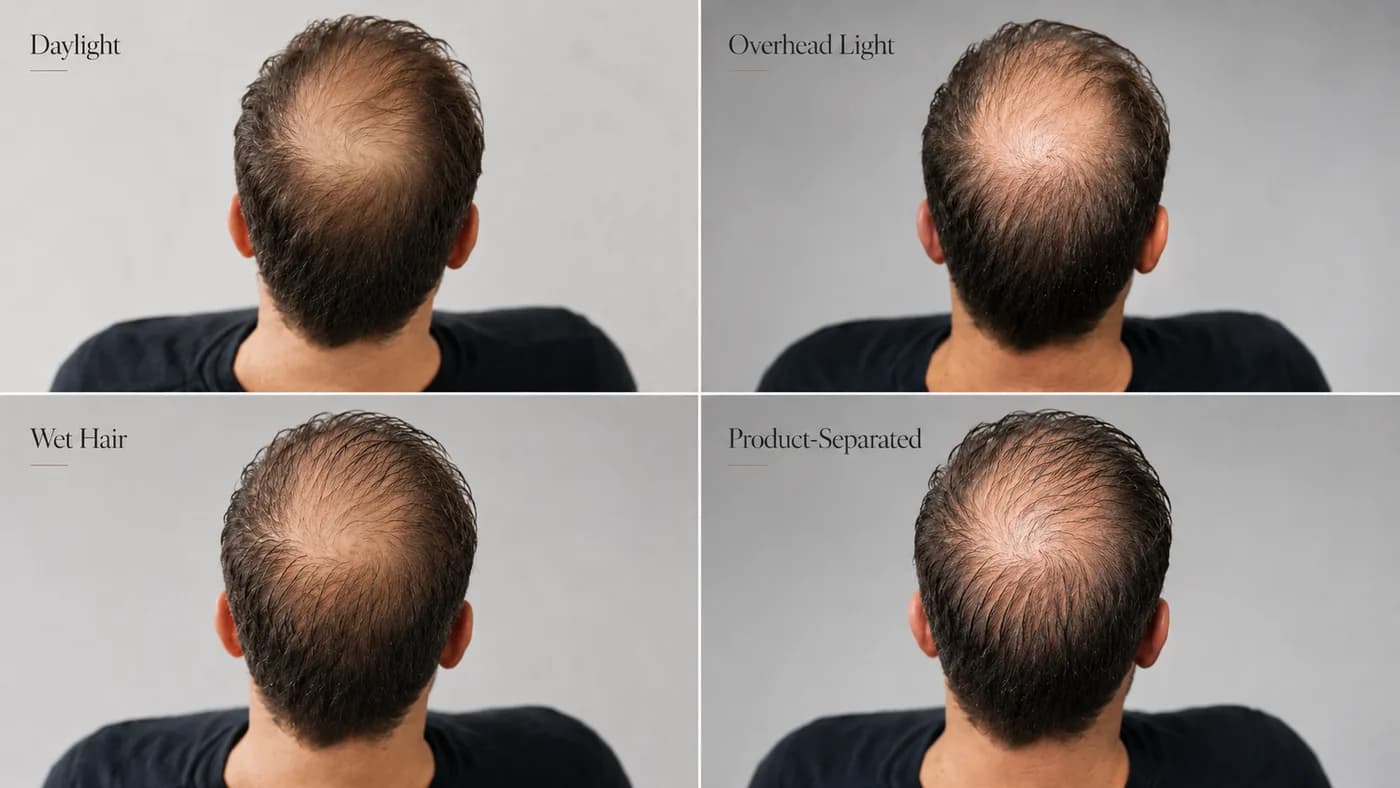
- Consistent Lighting: Ensure you are not standing directly under a harsh, focused spotlight, which can create a "glowing" effect on the scalp that mimics thinning. Use ambient, overhead light.
- Dry Hair Analysis: Always perform checks on dry, unstyled hair. Hair that is damp or saturated with styling products like pomade or wax will clump together, artificially exposing the scalp and creating an illusion of density loss.
- Regular Photography: Take a high-resolution photograph of the crown under identical lighting conditions once every three months. Comparison over time is significantly more reliable than subjective daily observation. Look for the "widening of the whorl"—if the area where the hair radiates from seems larger than it did six months ago, this warrants closer investigation.
Identifying Signs of Miniaturization
Thinning is not always about losing hair strands; it is frequently about the quality of the hair remaining. You can often feel the difference before you see the visual loss.
- Changes in Texture: Healthy hair feels robust and consistent in thickness. If the hair at the crown feels finer, more brittle, or "wispy" compared to the hair at the back of your head (the occipital region), this is a classic indicator of androgenetic thinning.
- Reduced Scalp Coverage: Place a comb against the crown. If you can see significantly more of the scalp skin through the hair than you could a year ago, you may be experiencing a reduction in density.
- The Pull Test: While not a diagnostic for pattern baldness, a gentle pull test can determine if hair is in a resting or shedding phase. If you pull a small section of hair with moderate pressure and come away with more than three or four strands regularly, you may be experiencing telogen effluvium, a form of temporary shedding, rather than permanent pattern thinning.
Comparison of Potential Hair Status Indicators
| Indicator | Normal Condition | Potential Thinning Signal |
|---|---|---|
| Scalp Visibility | Visible only when parted | Visible through undisturbed hair |
| Hair Caliber | Consistent diameter across head | Thinner, wispy hair at the vertex |
| Whorl Diameter | Tight, defined center point | Expanding area of diffuse exposure |
| Shedding | 50–100 hairs per day | Noticeable increase in clumped shedding |
Differentiating Between Pattern Thinning and Other Causes
It is critical to distinguish between hereditary pattern hair loss and transient hair loss. If you notice a sudden, rapid onset of thinning across the entire scalp, including the crown, it is less likely to be androgenetic alopecia and more likely to be related to physiological stress, nutritional deficiencies, or thyroid dysfunction.
- Telogen Effluvium: Often triggered by high stress, surgery, or drastic dietary changes. This results in diffuse shedding rather than the localized thinning characteristic of the crown.
- Nutritional Deficiencies: Low levels of iron, ferritin, vitamin D, or zinc can weaken hair shafts. Unlike hereditary thinning, this is often reversible once the underlying nutritional status is corrected.
- Scalp Conditions: Seborrheic dermatitis or psoriasis can cause itching and inflammation. Chronic inflammation of the scalp can hinder hair growth and contribute to the appearance of thinning.
Professional Evaluation: When to See a Specialist
If you suspect your crown is thinning, a consultation with a dermatologist or a hair restoration specialist provides the most accurate assessment. Specialists use a tool called a dermatoscope—a high-magnification lens—to visualize the scalp skin.
A professional will look for "hair miniaturization ratios." If more than 20% of the hairs in the crown area are significantly thinner than the hairs in the donor area (the back and sides of the head), this is a clinical confirmation of androgenetic alopecia. Do not rely solely on store-bought hair density scans or unverified mobile apps, as these often lack the clinical precision required to distinguish between simple shedding and true follicular miniaturization.
Managing Expectations and Next Actions
If you confirm that thinning is occurring, focus on evidence-based management. First-line treatments typically involve FDA-approved topical treatments like minoxidil or oral medications that inhibit DHT.
- Document the Baseline: Start your photographic journal today.
- Consult a Professional: A dermatologist can rule out autoimmune conditions like alopecia areata, which requires entirely different treatment protocols than common pattern thinning.
- Avoid Unverified Remedies: Be wary of supplements or "natural" oils that claim to reverse balding. While scalp health can be supported by good nutrition, there is no high-quality clinical evidence that these substances can stop the genetic process of follicle miniaturization.
- Consider Styling Adjustments: As you navigate this, lighter-weight styling products can help hair appear fuller, whereas heavy, greasy products weigh down individual strands and emphasize scalp visibility.
The crown is one of the most difficult areas to monitor because it is in your blind spot. By maintaining a consistent, objective approach—using photography and focusing on hair caliber rather than just hair count—you can gain a clear understanding of your hair’s health and take appropriate, timely action.
Frequently Asked Questions
How quickly does crown thinning progress? Thinning at the crown is typically a slow, progressive process that occurs over years rather than months. If you notice rapid, overnight thinning, it is likely caused by an external factor like extreme stress or illness, not hereditary androgenetic alopecia.
Does washing my hair make it fall out faster? No. Washing your hair removes hair that has already detached from the follicle during the normal shedding phase. It does not cause healthy hair to fall out. However, if you are experiencing thinning, ensure you are using gentle, non-stripping shampoos to avoid unnecessary breakage.
Is it normal to see my scalp in the crown area? Yes. Everyone has a natural parting or whorl at the crown. If you have fine or light-colored hair, your scalp will be more visible than someone with coarse, dark hair. Comparison to your past self is a better metric than comparison to others.
Can stress cause thinning specifically at the crown? While general stress can cause widespread shedding, it rarely targets the crown exclusively. Pattern-specific thinning is almost always linked to hormonal factors and genetics rather than environmental stress.
Image Gallery