How to Start Creating Your Own Business: A Step-by-Step Guide
To start creating your own business, validate your business idea through market research, draft a detailed business plan, select an appropriate legal entity (such as an LLC or C-Corp), register with relevant tax authorities, establish...
To start creating your own business, validate your business idea through market research, draft a detailed business plan, select an appropriate legal entity (such as an LLC or C-Corp), register with relevant tax authorities, establish separate business banking, secure startup financing, and execute an actionable operational and marketing strategy.
Contents
Step 1: Clarify Your Business Idea and Conduct Market Research
Starting a successful business requires moving beyond a passion or rough concept to address a verified demand in the market. Every commercial venture succeeds by solving a specific problem for a defined group of customers better, faster, or more cost-effectively than existing alternatives.
Identifying the Core Value Proposition
Begin by defining your value proposition: the specific benefit your product or service delivers to buyers. Formulate your idea around three key elements:
- The Customer Problem: What friction, inefficiency, or unmet need exists in the market?
- Your Proposed Solution: How does your product or service resolve this issue?
- Your Competitive Advantage: Why will customers choose your offering over existing alternatives or doing nothing?
Executing Primary and Secondary Market Research
Market research converts assumptions into empirical data. Divide your research into primary and secondary categories:
- Primary Research: Engage directly with prospective customers. Conduct qualitative interviews, deploy targeted surveys, and host focus groups. Ask open-ended questions regarding their current workflows, pain points, pricing expectations, and existing brand loyalties.
- Secondary Research: Analyze industry trends, government publications, economic census reports, and trade association data. Calculate your Total Addressable Market (TAM), Serviceable Addressable Market (SAM), and Serviceable Obtainable Market (SOM) to confirm your market size supports a viable commercial enterprise.
Perform a structured competitor analysis by mapping direct and indirect competitors against key dimensions: pricing, market share, customer support, feature sets, and operational weaknesses.
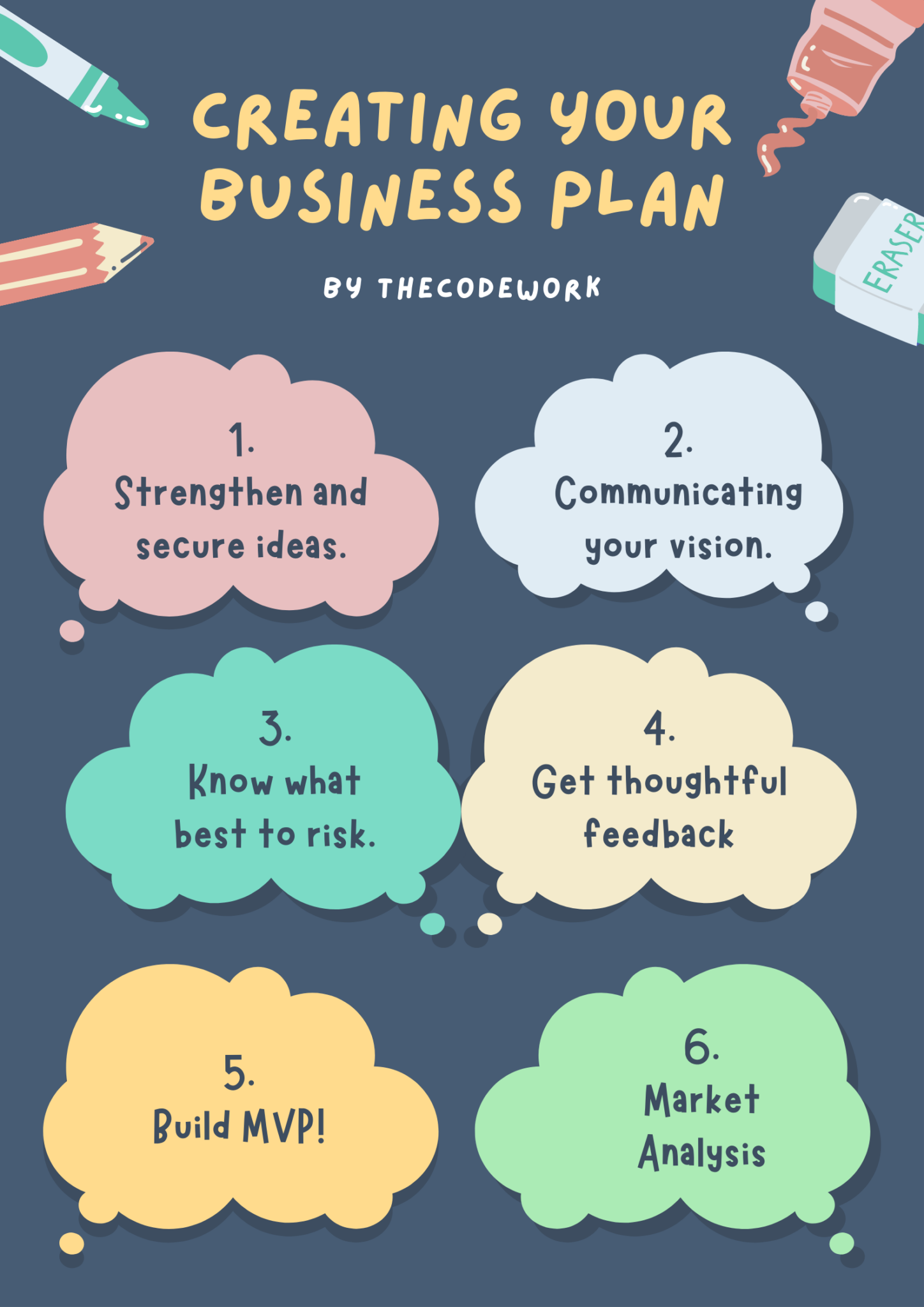
Step 2: Develop a Strategic Business Plan
A business plan serves both as an operational roadmap for your leadership team and as a requirement when seeking external financing from lenders or investors.
| Core Business Plan Sections | |
|---|---|
| Executive Summary | Financial Projections |
| Company Description | Operations Plan |
| Market & Competitor Analysis | Marketing & Sales Strategy |
Essential Components of a Business Plan
A complete business plan includes the following core sections:
- Executive Summary: A high-level synthesis of your company mission, business model, product line, target demographic, financial highlights, and funding requirements.
- Company Description: A detailed overview of the legal structure, history, vision, and core capabilities of the enterprise.
- Market Analysis: Strategic evidence demonstrating industry growth patterns, target persona demographics, and competitor benchmarks.
- Organization and Management: An organizational chart outlining equity distribution, corporate governance, key executive credentials, and staffing roadmaps.
- Products or Services: Comprehensive descriptions of your offerings, manufacturing or service delivery processes, intellectual property status, and product lifecycle strategy.
- Marketing and Sales Strategy: Acquisition channels, promotional strategies, sales cycle mechanics, and customer retention programs.
- Financial Projections: Pro forma income statements, balance sheets, cash flow statements, and break-even analyses covering three to five years.
Step 3: Choose the Right Legal Business Structure
Selecting your legal structure affects your personal liability, tax obligations, governance requirements, and ability to raise external capital.
Legal and Financial Disclaimer: Business organization rules and tax obligations vary by jurisdiction. Consult a qualified corporate attorney and Certified Public Accountant (CPA) before establishing your legal business structure or filing tax elections.
Comparing Common Business Structures
| Legal Structure | Personal Liability Protection | Taxation Model | Governance & Complexity | Capital Raising Ability |
|---|---|---|---|---|
| Sole Proprietorship | None (Personal assets fully exposed) | Pass-through taxation (Self-employment tax applies) | Low (Minimal regulatory compliance) | Limited (Personal loans or cash reserves only) |
| Partnership | None (General partners retain joint liability) | Pass-through taxation | Low-Medium (Requires partnership agreement) | Limited (Partner contributions or debt) |
| Limited Liability Company (LLC) | High (Protects personal assets from business debt) | Pass-through (Default) or corporate taxation | Medium (Operating Agreement required) | Moderate (Member equity or bank loans) |
| C Corporation | High (Complete corporate veil protection) | Double taxation (Corporate tax + dividend tax) | High (Board of directors, bylaws, annual meetings) | Maximum (Can issue multiple share classes) |
| S Corporation (Tax Status) | High (Maintains underlying LLC or Corp veil) | Pass-through taxation (Avoids double taxation) | Medium-High (Ownership limits apply) | Restricted (Maximum 100 U.S. shareholders) |
For most early-stage founders seeking simplicity with asset protection, a Limited Liability Company (LLC) provides an ideal balance. However, if you plan to seek venture capital funding, forming a C Corporation is usually standard practice due to share structures and institutional investor requirements.
Step 4: Register Your Business and Ensure Regulatory Compliance
Once you select your entity type, formalize your business status with local, state, and national government authorities.
State and Federal Registration Steps
- Name Reservation and Filing: Register your official business name with your state's Secretary of State or corporate registration agency. Ensure your chosen entity name is distinguishable from existing registered entities.
- Articles of Organization / Incorporation: File your formation documents (Articles of Organization for an LLC or Articles of Incorporation for a corporation) and pay the required state filing fees.
- Employer Identification Number (EIN): Obtain an EIN free of charge directly from the Internal Revenue Service. An EIN is required for tax reporting, opening business bank accounts, and hiring employees.
- Local Licensing and Permits: Check with your municipality and county clerk for zoning permits, occupational licenses, sales tax permits, and health department certificates appropriate for your operational site.
- Intellectual Property (IP) Protection: File trademark applications with the United States Patent and Trademark Office or your regional IP registrar to safeguard your brand name, logo, and proprietary technologies.
Step 5: Determine Startup Costs and Secure Financing
Under-capitalization is a primary reason early-stage businesses fail. Calculating your startup runway and funding requirements early helps preserve business stability.
- Bootstrapping: Retain 100% Equity, Slower Growth Rate
- Debt Financing: Retain Full Ownership, Requires Debt Service & Collateral
- Equity Capital: Dilute Ownership, Accelerates Scale & Resources
Calculating Startup Costs
Distinguish between fixed one-time setup costs and recurring operating expenses:
- CapEx (Capital Expenditures): Initial equipment, website development, intellectual property filings, facility lease deposits, and initial inventory purchases.
- OpEx (Operating Expenditures): Recurring costs including payroll, software subscriptions, utility fees, marketing budgets, insurance premiums, and professional legal/accounting retainers.
Maintain a minimum liquidity reserve covering 6 to 12 months of fixed operating overhead before launching commercial activities.
Primary Funding Channels
- Bootstrapping: Funding operations using personal savings and reinvesting early revenues. This maintains total ownership and equity control but limits speed of growth.
- Small Business Loans: Debt financing options like U.S. Small Business Administration (SBA) guaranteed loans provide competitive interest rates while preserving equity, though they require strong personal credit and collateral.
- Angel Investors and Venture Capital: Equity funding sources that supply substantial capital and industry networks in exchange for equity ownership shares and board seats.
- Crowdfunding: Utilizing rewards-based or equity crowdfunding platforms to pre-sell products or secure micro-investments while validating consumer demand.
Step 6: Set Up Financial Infrastructure and Accounting
Maintaining clear accounting practices isolates business risk, ensures tax compliance, and provides clear visibility into financial performance.
Establishing Separate Commercial Accounts
Never commingle personal and business funds. Commingling risks invalidating the corporate liability protections offered by LLCs and corporations.
- Open a Commercial Checking Account: Present your official formation documents, EIN, and business resolution to establish corporate banking.
- Establish Corporate Credit Lines: Apply for a dedicated business credit card to build an independent corporate credit profile and separate corporate purchasing.
- Select Accounting Software: Implement double-entry accounting tools like QuickBooks, Xero, or FreshBooks. Configure your chart of accounts to track revenues, direct cost of goods sold (COGS), operating expenses, and tax liabilities.
- Establish Payment Gateway Operations: Set up merchant accounts using payment processors (such as Stripe or Square) to handle credit card payments, online checkout flows, and recurring subscription billing securely.
Step 7: Build Your Brand Identity and Digital Presence
Your brand identity communicates your company's values, professionalism, and distinct market positioning to prospective buyers.
Brand Strategy Fundamentals
- Visual Identity System: Develop a cohesive visual guidelines document specifying primary and secondary color palettes, logo lockups, typography scales, and imagery standards.
- Core Messaging Matrix: Define your brand voice, taglines, positioning statements, and key messaging pillars tailored to each targeted customer segment.
Building Your Digital Infrastructure
- Domain Name Acquisition: Secure a concise domain name matching your registered business name or primary target keywords.
- Website Development: Construct a fast, secure (HTTPS), mobile-responsive website optimized for conversion. Ensure clear calls-to-action (CTAs) are visible across landing pages.
- Search Engine Optimization (SEO): Structure on-page metadata, technical architecture, and editorial content to rank for intent-focused commercial search terms.
- Multi-Channel Presence: Claim social media profiles across channels frequented by your primary target demographic (such as LinkedIn for B2B, or Instagram and TikTok for consumer brands).
Step 8: Operationalize and Execute Launch Strategy
With your legal structure, capital, and brand identity in place, shift your focus toward operational delivery and customer acquisition.
- Vendor Selection
- Quality Control
- Beta Testing
- Commercial Launch
Supply Chain and Operational Readiness
- Vendor Management: Establish formal vendor contracts specifying quality control thresholds, payment terms (such as Net 30 or Net 60), delivery timelines, and liability terms.
- Standard Operating Procedures (SOPs): Document step-by-step internal processes for customer fulfillment, support ticket resolution, quality assurance, and invoicing.
Go-to-Market (GTM) Execution
Execute a phased go-to-market plan to minimize risk and gather operational feedback:
- Soft Launch Phase: Introduce your offering to a controlled segment of users or early adopters. Use this window to identify product issues, refine customer support processes, and validate transaction processing.
- Feedback Integration: Optimize product features and delivery workflows based on early customer feedback. Collect early testimonials, case studies, and user reviews.
- Hard Launch Phase: Initiate multi-channel digital marketing campaigns, public relations outreach, direct sales, and promotional offers to maximize initial conversion momentum.
Common Mistakes to Avoid When Starting a Business
- Underestimating Cash Burn Rates: Projecting overly optimistic sales velocity while underestimating working capital requirements can lead to operational cash crunches.
- Failing to Validate Demand: Investing capital in full product development prior to testing real willingness to pay often results in building products the market does not want.
- Neglecting Legal Documentation: Operating without clear founder vesting schedules, customer terms of service, or written vendor contracts creates significant exposure to legal disputes.
- Broad Marketing Targeting: Attempting to sell to a broad audience dilutes marketing efficiency. Concentrate resources on a clear, well-defined niche first.
Frequently Asked Questions
How much capital is required to start a new business?
Startup costs vary depending on the industry and business model. Digital service businesses or consulting practices can often launch for under $1,000 using basic software subscriptions, domain registration, and initial entity filing fees. Conversely, inventory-heavy retail, manufacturing, or brick-and-mortar operations typically require $25,000 to over $100,000 in upfront capital for lease agreements, equipment, inventory, and regulatory licensing.
Can I launch a business while working a full-time job?
Yes, starting a business as a side project is a practical way to validate demand and generate initial sales without forfeiting income stability. Ensure your work does not violate employment agreements, non-compete clauses, or intellectual property assignment terms with your current employer. Avoid using your employer's equipment, time, software accounts, or proprietary assets for your business activities.
What is the primary operational difference between an LLC and a C Corp?
An LLC offers operational simplicity, flexible management structures, and pass-through taxation by default, where profits and losses flow directly to the owner's personal tax return. A C Corporation operates as a completely separate tax entity, requires formal governance procedures (such as a board of directors, corporate officers, and annual meetings), and incurs corporate-level tax. However, C Corporations are preferred by venture capital firms because they can issue standardized stock shares.
How do I protect my business name and original product ideas?
You protect your business name by filing for trademark protection with national intellectual property offices like the USPTO. Protect proprietary inventions by filing patent applications, safeguard confidential processes using Non-Disclosure Agreements (NDAs), and maintain brand assets through copyrighted materials and distinctive trade dress filings.
When is the correct time to open a dedicated business bank account?
You should open a business bank account immediately after receiving your state entity formation approval and IRS Employer Identification Number (EIN), before making any commercial transactions. Establishing separate accounts from day one prevents personal liability issues, simplifies tax preparation, and creates a clear audit trail for regulators and lenders.
Strategic Next Steps
To begin building your business effectively, focus on executing clear, sequential actions rather than trying to manage every operational detail at once:
- Validate Your Concept: Complete at least 15 to 20 target customer interviews this week to test your core value proposition and pricing assumptions.
- Draft Your Operating Model: Write a simple 1-to-2 page strategic brief outlining your target customer, pricing structure, acquisition channels, and projected monthly fixed expenses.
- Secure Your Brand Assets: Verify domain name availability and perform state business name availability searches to ensure your chosen company identity is clear of registration conflicts.
Image Gallery