When Was The Sandman Released? A Complete Timeline of Neil Gaiman’s Masterpiece
Neil Gaiman’s The Sandman first reached readers as a comic book on November 29, 1988, with a cover date of January 1989. The landmark Netflix live-action adaptation premiered its first season on August 5, 2022, followed by a surprise b...
Neil Gaiman’s The Sandman first reached readers as a comic book on November 29, 1988, with a cover date of January 1989. The landmark Netflix live-action adaptation premiered its first season on August 5, 2022, followed by a surprise bonus episode on August 19, 2022, while the Audible audio drama series debuted on July 15, 2020.
Contents
The release history of The Sandman is not a single event but a multi-decade rollout across various media. From its origins in the late 1980s as a revolutionary graphic novel series to its eventual transformation into a global streaming phenomenon, the timeline of Dream of the Endless is as complex and layered as the stories themselves. Understanding when each iteration was released provides essential context for its evolution from a niche DC Comics title to a pillar of modern mythology.
The Original Comic Book Era (1988–1996)
The primary "birth" of The Sandman occurred in the late 1980s during a period of significant creative upheaval at DC Comics. Following the success of Alan Moore’s Swamp Thing, DC editor Karen Berger sought out British writers to bring a sophisticated, "mature" sensibility to their titles.
The Debut: Issue #1
While the cover of The Sandman #1 famously bears the date January 1989, the physical issue actually arrived in comic book shops on November 29, 1988. Written by Neil Gaiman with art by Sam Kieth and Mike Dringenberg, this first issue, titled "Sleep of the Just," introduced Morpheus, the King of Dreams, as he is captured by an occult ritual intended for his sister, Death.
The 75-Issue Run
The original series ran for 75 issues, concluding in March 1996 (cover date). Throughout this eight-year span, the series transitioned from a standard DC title into the flagship of the Vertigo imprint, which launched in 1993. Vertigo became the home for creator-driven, sophisticated horror and fantasy, a shift largely credited to the critical and commercial success of Gaiman’s work.
Key Publication Milestones
- The Doll's House (Issues #9–16): Released throughout 1989 and 1990, this arc cemented the series' popularity and shifted the tone from traditional horror to dark fantasy.
- Season of Mists (Issues #21–28): Released in 1990 and 1991, this story saw Morpheus return to Hell and is often cited as the point where the series reached its peak creative stride.
- The Wake (Issues #70–75): The final monthly issues, released between 1995 and 1996, provided a definitive ending—a rarity in the world of American superhero comics.
The Expansion of the Dreaming (Post-1996 Releases)
Even after the main series concluded in 1996, the world of The Sandman continued to expand through prequels, spinoffs, and anniversary editions.
Spin-offs and Short Stories
Before the main series even ended, Gaiman released two highly successful spinoffs featuring Dream’s sister:
- Death: The High Cost of Living: Released in 1993, this three-issue miniseries focused on Death taking human form once every century.
- Death: The Time of Your Life: Released in 1996, continuing the exploration of the most popular character in the "Endless" family besides Morpheus.
The Sandman: Dream Hunters (1999)
To celebrate the 10th anniversary of the series, Gaiman released The Dream Hunters in October 1999. Unlike previous entries, this was an illustrated novella (with art by Yoshitaka Amano) rather than a traditional comic, though a comic adaptation by P. Craig Russell was later released in 2008.
The Sandman: Endless Nights (2003)
In September 2003, DC released Endless Nights, a graphic novel consisting of seven stories—one for each member of the Endless. It was notable for being the first graphic novel to ever appear on the New York Times Best Seller list.
The Sandman: Overture (2013–2015)
To mark the 25th anniversary of the original debut, Gaiman returned for a six-issue prequel miniseries titled The Sandman: Overture. The first issue was released on October 30, 2013, with the final issue arriving on September 30, 2015. Featuring psychedelic, intricate art by J.H. Williams III, Overture explained the events immediately preceding Morpheus’s capture in the 1988 debut.
The Audible Audio Drama (2020–Present)
For decades, many believed The Sandman was "unfilmable." This led to the development of a faithful, star-studded audio adaptation directed by Dirk Maggs.
Act I: July 15, 2020
The first installment of the audio drama was released exclusively on Audible in mid-2020. It covered the first three graphic novel volumes (Preludes & Nocturnes, The Doll’s House, and Dream Country). James McAvoy voiced Morpheus, leading a cast that included Kat Dennings, Michael Sheen, and Andy Serkis.
Act II: September 22, 2021
The second act expanded the scope, covering Season of Mists, A Game of You, and the "Distant Mirrors" and "Convergence" stories from Fables & Reflections.
Act III: September 28, 2022
The third act arrived shortly after the Netflix series premiere, adapting Brief Lives and Worlds’ End. As of 2026, the audio series remains one of the most successful scripted podcasts in history, praised for its adherence to the original text.
The Netflix Live-Action Series (2022)
The most significant modern release in the franchise's history was the Netflix adaptation. After nearly 30 years of failed movie attempts (including a high-profile effort by Joseph Gordon-Levitt in the mid-2010s), the series finally found a home on streaming.
Season 1 Release
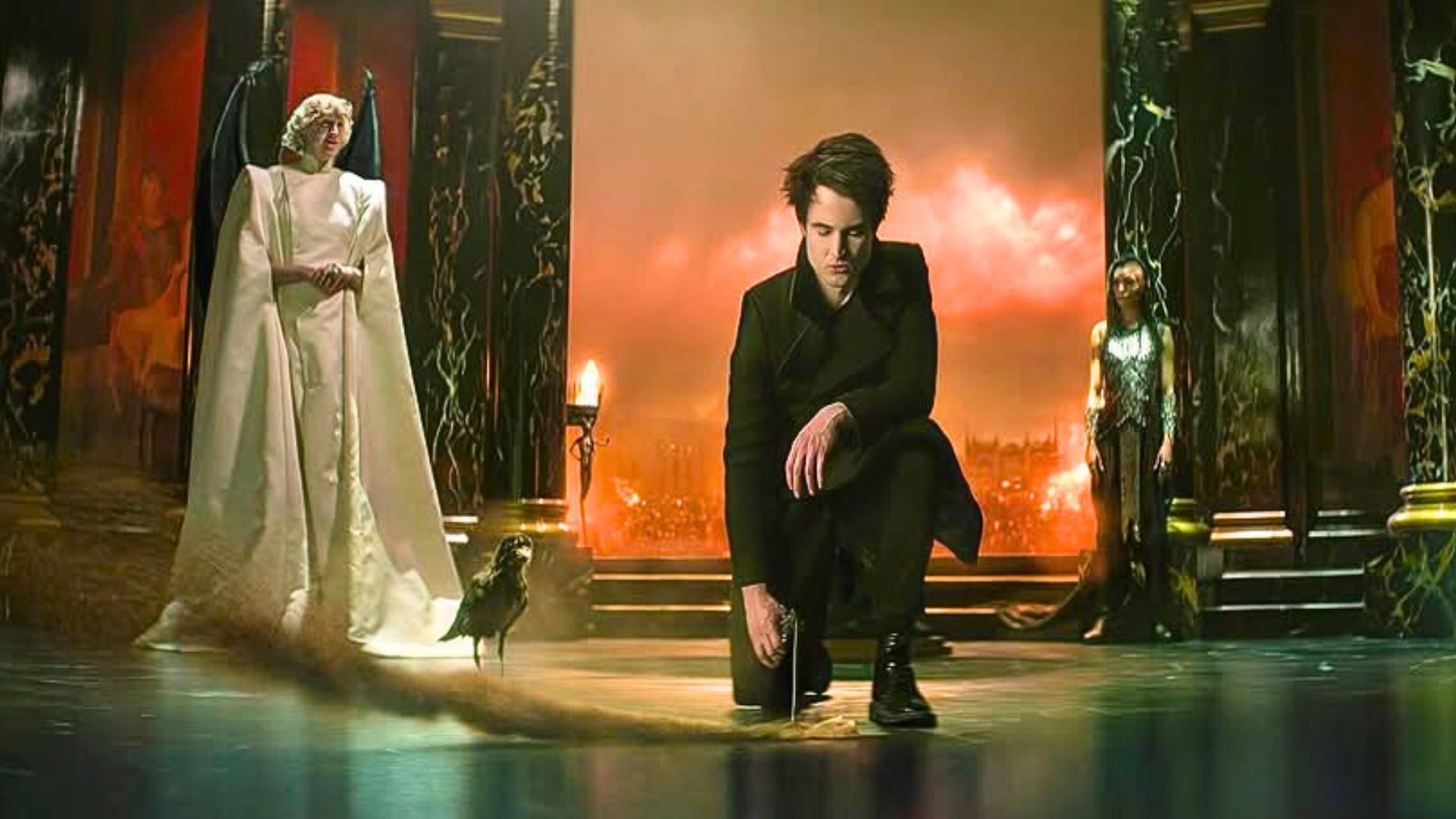
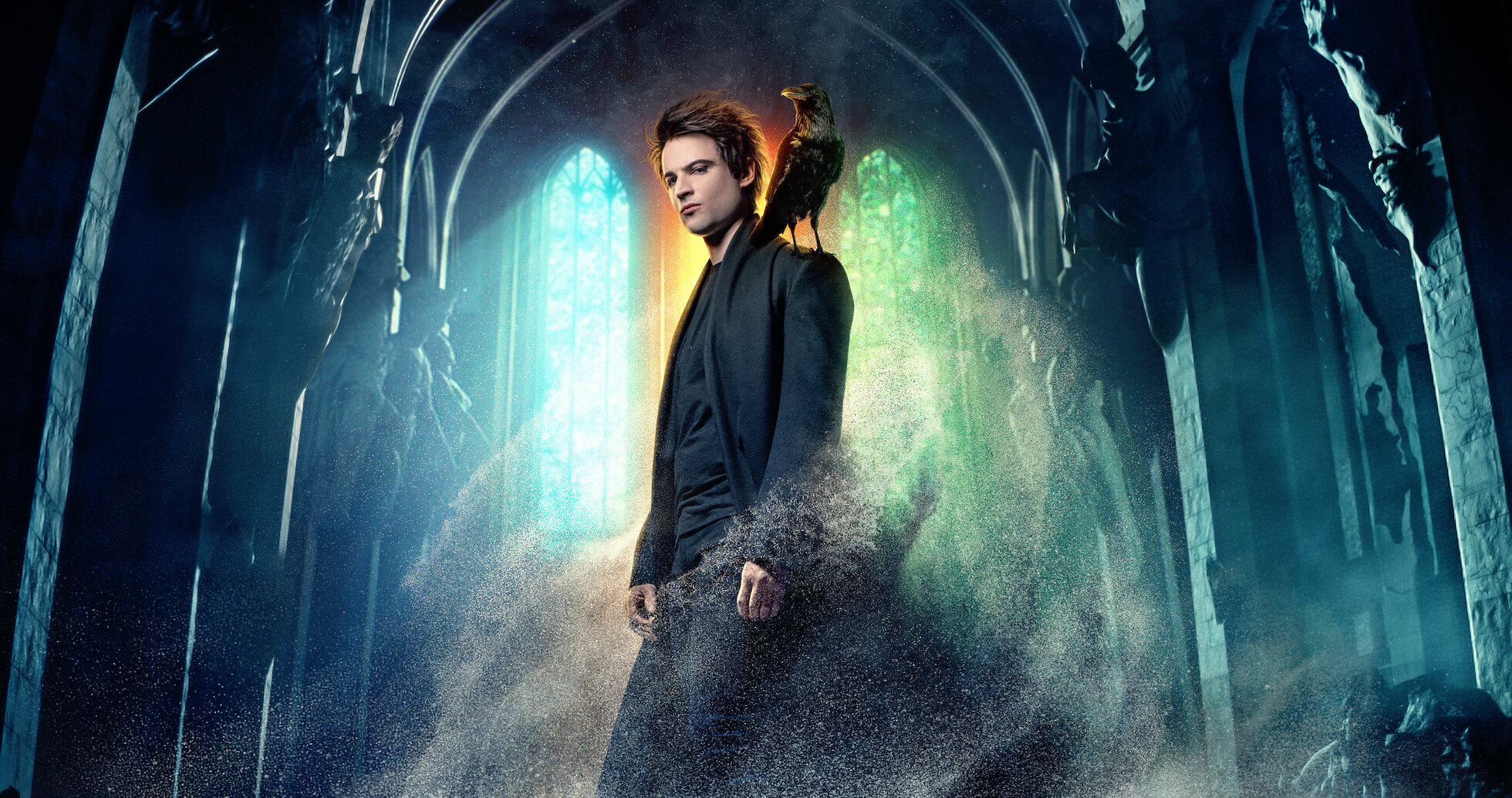
The first ten episodes of The Sandman Season 1 were released on August 5, 2022. Developed by Neil Gaiman, David S. Goyer, and Allan Heinberg, the show starred Tom Sturridge as Dream. The release was a massive global success, reaching the #1 spot in over 80 countries within its first week.
The Surprise Bonus Episode
On August 19, 2022, two weeks after the initial launch, Netflix released a surprise 11th episode. It consisted of two parts: an animated adaptation of "A Dream of a Thousand Cats" and a live-action adaptation of "Calliope." This unexpected release helped maintain the show's momentum and demonstrated the creators' commitment to the "anthology" feel of the original comics.
Summary of Key Release Dates
| Media Type | Title / Segment | Release Date | Format |
|---|---|---|---|
| Comic Book | The Sandman #1 | November 29, 1988 | Monthly Comic |
| Comic Book | The Sandman #75 (Finale) | March 1996 | Monthly Comic |
| Graphic Novel | Endless Nights | September 2003 | Hardcover/TPB |
| Comic Book | The Sandman: Overture #1 | October 30, 2013 | Limited Series |
| Audio Drama | The Sandman: Act I | July 15, 2020 | Audible Original |
| Streaming TV | Season 1 (Episodes 1-10) | August 5, 2022 | Netflix Series |
| Streaming TV | Bonus Episode ("Calliope") | August 19, 2022 | Netflix Series |
Contextualizing the Timeline: Why the Long Wait?
The gap between the 1988 comic release and the 2022 Netflix release is notable. For over three decades, The Sandman lived in "developmental hell." In the late 1990s, Warner Bros. attempted to produce a feature film, but the scripts were notoriously poor—one famously included a plot where the Corinthian was Morpheus’s brother and the story culminated in a massive mechanical spider fight (a trope later used in Wild Wild West).
Neil Gaiman famously resisted many of these early adaptations, preferring that no movie be made rather than a bad one. It wasn't until the "Golden Age of Streaming" that technology and budget allowed for a faithful reproduction of the comic's surreal visuals and sprawling narrative structure. By 2026, looking back at the series' history, the 2022 release is viewed as the pivotal moment when The Sandman moved from a literary cult classic to a mainstream household name.
Frequently Asked Questions
Was there a Sandman movie released before the Netflix show?
No, a feature-length Sandman movie was never officially released. While there were several high-profile attempts to make one in the 1990s and 2010s, all of them were cancelled in pre-production. The 2022 Netflix series is the first successful live-action adaptation of the primary source material.
When was the "Sandman Universe" comic line released?
In August 2018, DC Comics launched the "Sandman Universe" imprint to celebrate the 30th anniversary of the original series. This included several new titles not written by Gaiman but overseen by him, such as The Dreaming, House of Whispers, Lucifer, and Books of Magic.
Is the Netflix series a reboot of the 1988 comic?
The Netflix series is a faithful adaptation rather than a reboot. While the setting was updated from 1989 to the 2020s (altering the timeline of Dream’s imprisonment to 105 years instead of 70), the core plot, characters, and themes remain identical to the original November 1988 release.
When was the spin-off "Dead Boy Detectives" released?
The Dead Boy Detectives, who first appeared in The Sandman #25 (released in April 1991), received their own Netflix series adaptation which premiered on April 25, 2024. This series exists within the same continuity as the 2022 Sandman show.
Practical Recommendations for New Fans
If you are just discovering The Sandman in 2026, the best way to experience the saga is chronologically by media type to appreciate its evolution.
- Start with the Comics: Begin with the 30th Anniversary Edition trade paperbacks. Volume 1, Preludes & Nocturnes, contains the material released in late 1988 and early 1989.
- The Audible Experience: If you prefer listening, the Audible Act I is a word-for-word audio companion to the first 20 issues of the comic.
- The Netflix Series: For visual learners, Season 1 (2022) is an excellent entry point, though it is recommended to watch the bonus episode ("Calliope") last, as it functions as an anthology piece.
- Verification: Always ensure you are looking for the "Neil Gaiman" Sandman. DC has other characters with the same name (such as Wesley Dodds and Hector Hall), but Gaiman's version remains the most culturally significant.
Image Gallery