Foundation Repair Near Columbus, IN: 2026 Homeowner’s Guide to Structural Stability
Property owners seeking foundation repair near Columbus, IN, typically face issues stemming from the region’s expansive clay and silty loam soils. In 2026, most structural repairs involve installing helical or push piers for settlement...
Property owners seeking foundation repair near Columbus, IN, typically face issues stemming from the region’s expansive clay and silty loam soils. In 2026, most structural repairs involve installing helical or push piers for settlement, or carbon fiber reinforcement for bowing walls. Professional interventions generally range from $3,500 for minor stabilization to over $30,000 for comprehensive perimeter piering, depending on the severity of the displacement.
Contents
Understanding the Columbus, Indiana Soil Profile
The geological composition of Bartholomew County plays a primary role in foundation health. Columbus sits within the Wabash and White River basins, characterized by a mix of glacial till and alluvial deposits. The local soil profile often includes Miami Silt Loam and various clay-heavy compositions that are highly reactive to moisture.
In Southern Indiana, these soils undergo significant volume changes. During wet spring seasons, the clay absorbs water and expands, exerting "hydrostatic pressure" against basement walls. Conversely, during the hot, dry summers typical of the mid-2020s, the soil shrinks and pulls away from the foundation. This constant "accordion effect" creates voids beneath the concrete footer, leading to differential settlement—where one part of the home sinks faster than another.
Furthermore, the proximity to the Flatrock and Driftwood rivers means many homes in the Columbus area deal with a high water table. This saturation reduces the soil’s load-bearing capacity, making even relatively new constructions in suburbs like Tipton Lakes or Northbrook susceptible to shifting if drainage systems are not meticulously maintained.
Identifying Symptoms of Foundation Failure
Recognizing the early warning signs of structural distress is critical for Columbus homeowners to prevent exponential repair costs. While some cosmetic settling is normal in the first few years of a home's life, the following symptoms in 2026 indicate a need for professional evaluation:
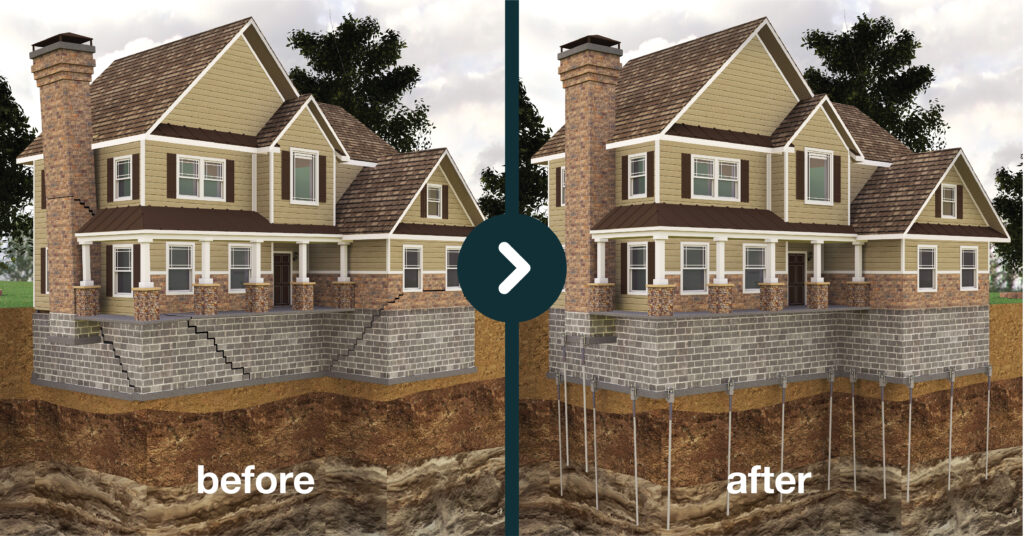
- Stair-Step Cracking: Most common in brick veneer or concrete block walls, these cracks follow the mortar joints and usually indicate that one corner of the foundation is sinking.
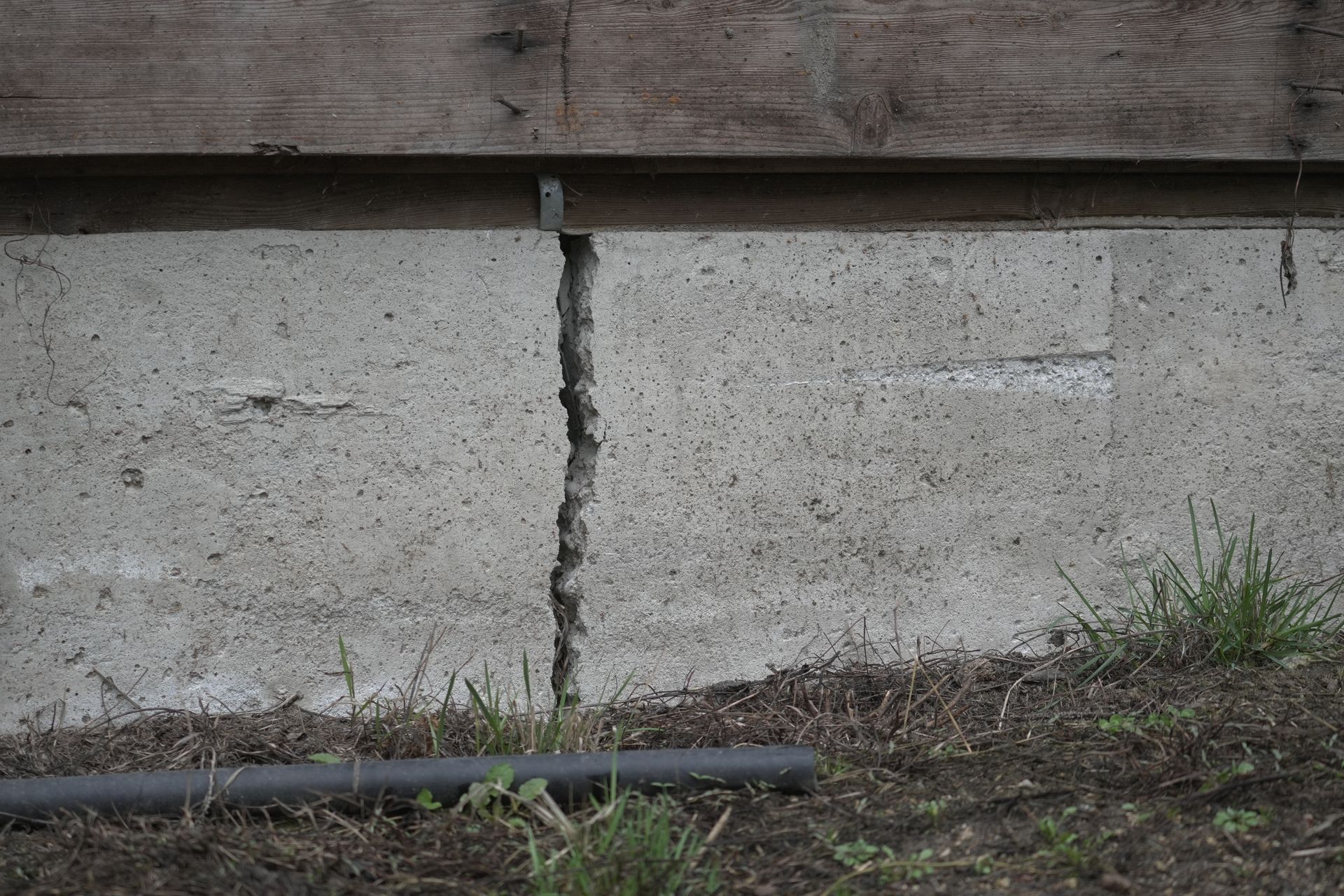
- Horizontal Basement Cracks: Unlike vertical hairline cracks (often caused by curing), horizontal cracks suggest that hydrostatic pressure from the outside soil is pushing the wall inward, leading to eventual "bowing."
- Interior Drywall Fractures: Watch for diagonal cracks emanating from the corners of door frames and windows. If these cracks reappear after being patched, the structure is actively moving.
- Separation of Frieze Boards: On the exterior, if the trim at the top of a brick wall (the frieze board) begins to pull away from the soffit, the wall is likely rotating outward or sinking.
- Uneven or Sloping Floors: A floor that slopes more than one inch over a 10-foot span is generally considered a sign of significant structural deflection.
Technical Methods for Foundation Repair in 2026
Modern structural engineering has moved toward minimally invasive, "permanent" solutions. When you contact a foundation specialist near Columbus, they will likely propose one of the following systems based on the soil density and the weight of the structure.
Helical Piers vs. Push Piers
Piering is the process of extending a home’s load-bearing support down to stable strata or bedrock.
- Helical Piers: These resemble large screws and are mechanically "wound" into the ground. They are ideal for the silty soils of the Indiana river valleys because they provide immediate load-bearing capacity without requiring the weight of the house to drive them down. They are the preferred choice for lighter structures like porches or single-story ranch homes.
- Push Piers: Also known as resistance piers, these use the weight of the building itself and hydraulic pressure to be driven deep into the earth until they hit a "refusal" point (solid rock or extremely dense soil). These are typically used for heavy multi-story brick homes or commercial buildings in the Columbus downtown area.
Bowing Wall Stabilization
For basements under pressure, two primary methods dominate the 2026 market:
- Carbon Fiber Straps: This is a low-profile solution where high-tensile strength straps are bonded to the interior basement wall with epoxy. It prevents further inward movement without the need for excavation.
- Wall Anchors: This involves burying an "anchor" plate in the yard and connecting it to a plate on the interior wall via a steel rod. By tightening the rod over time, contractors can often pull a bowing wall back toward its original position.
Polyjacking (Concrete Leveling)
For sinking sidewalks, driveways, or garage floors—which are common in Bartholomew County’s fluctuating climate—polyjacking has largely replaced traditional mudjacking. It involves injecting a high-density polyurethane foam through small holes in the concrete. The foam expands, lifting the slab and compressing the loose soil beneath it.
Average Foundation Repair Costs Near Columbus, IN (2026 Estimates)
Costs vary significantly based on the linear footage of the repair and the depth required to reach stable soil. The following table provides a breakdown of estimated costs for the Columbus, Indiana region.
| Repair Type | Unit of Measure | Est. Cost (2026) | Primary Use Case |
|---|---|---|---|
| Helical/Push Piers | Per Pier | $1,800 – $3,200 | Correcting sinking foundations/settlement |
| Wall Anchors | Per Anchor | $900 – $1,600 | Stabilizing bowing or leaning basement walls |
| Carbon Fiber Straps | Per Strap | $700 – $1,300 | Reinforcing cracked or slightly bowing walls |
| Crack Injection | Per Crack | $500 – $1,200 | Sealing non-structural leaks (Epoxy/Urethane) |
| Polyjacking | Per Area | $1,200 – $4,500 | Leveling concrete slabs, patios, or driveways |
| Encapsulation | Per Sq. Ft. | $5 – $12 | Moisture control in crawl spaces |
Note: These figures are estimates. Extensive repairs involving total perimeter piering for a standard 1,500 sq. ft. home can exceed $25,000–$40,000.
Choosing a Contractor: Verification and Standards
In Indiana, foundation repair is a specialized trade that often falls under general contracting but requires specific engineering knowledge. When vetting a company "near me" in Columbus, homeowners should follow a strict verification process.
Licensing and Permitting
The Bartholomew County Department of Technical Code Enforcement requires permits for structural alterations. A reputable contractor will handle the permitting process and ensure that a city or county inspector reviews the work. Avoid contractors who ask the homeowner to pull the permit, as this places the legal liability for code compliance on the resident.
Warranty Portability
Since foundation issues significantly impact resale value, the warranty must be transferable. In 2026, the industry standard is a "Lifetime Transferable Warranty" on piering systems. Ensure the contract explicitly states that the warranty stays with the structure, not the owner, which is a vital selling point for future buyers.
Engineering Oversight
For significant structural work, it is often wise to hire an independent structural engineer before calling a repair company. An engineer provides an unbiased "Scope of Work" for a flat fee (usually $500-$1,000). This prevents "upselling" by contractors who might recommend more piers than are scientifically necessary.
The Role of Water Management
Many foundation failures in Columbus could have been prevented with proper drainage. The Indiana Geological and Water Survey highlights the importance of managing surface water in high-clay areas.
- Gutters and Downspouts: Ensure downspouts discharge at least 10 feet away from the foundation. In Columbus, many older homes have downspouts that dump water directly at the base of the footer, accelerating soil erosion.
- Grading: The ground should slope away from the house at a rate of 6 inches over the first 10 feet.
- Sump Pumps: Given the high water table near the East Fork White River, a battery-backup sump pump is a non-negotiable requirement for Columbus basements in 2026 to prevent hydrostatic pressure buildup.
FAQ
Does homeowners insurance cover foundation repair in Columbus?Generally, no. Most standard policies exclude "earth movement" or "settlement." However, if the foundation damage was caused by a covered peril, such as a sudden pipe burst or a vehicle crashing into the home, you may have a claim. Always review your specific policy for "slab leak" endorsements.
How long does a typical foundation repair take?Most residential piering or wall stabilization projects in the Columbus area take between 2 to 5 days. Complex projects involving internal piering (which requires breaking through the basement floor) may take longer.
Will foundation repair ruin my landscaping?Piering requires excavation at each pier location, typically a 3x3 foot hole. While modern contractors use specialized equipment to minimize impact, you should expect some disruption to bushes or flower beds located directly against the house.
Can I sell my home after foundation repair?Yes, and in many cases, it is easier to sell a home with a documented, warrantied repair than one with visible, unaddressed cracks. Lenders for FHA and VA loans often require structural repairs to be completed and certified by a licensed engineer before approving a mortgage.
What is the difference between mudjacking and polyjacking?Mudjacking uses a heavy slurry of cement and soil, which adds significant weight to already unstable ground. Polyjacking uses a lightweight, waterproof foam that doesn't add stress to the subgrade and lasts longer in Indiana’s wet climate.
Final Recommendation for Columbus Residents
If you suspect your foundation is failing, the first step is to document the cracks with photos and dates to see if they are actively growing. Do not settle for the cheapest quote; in structural repair, the quality of the steel and the depth of the pier are the only things preventing a recurrence of the problem. Contact a specialist who offers a free inspection and, if the damage appears significant, consider investing in an independent engineer’s report to ensure the proposed solution is both necessary and sufficient.
Image Gallery