Master Your League with a 2026 Mock Simulator Draft Strategy
A mock simulator draft is a high-speed, AI-driven tool designed to emulate a real-life fantasy sports draft, primarily for the NFL, NBA, or MLB. Utilizing 2026 data points like Expert Consensus Rankings (ECR) and live Average Draft Pos...
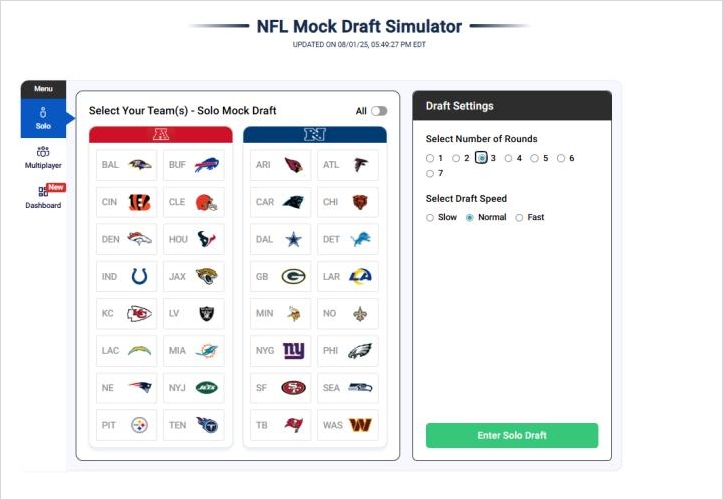
A mock simulator draft is a high-speed, AI-driven tool designed to emulate a real-life fantasy sports draft, primarily for the NFL, NBA, or MLB. Utilizing 2026 data points like Expert Consensus Rankings (ECR) and live Average Draft Position (ADP), these simulators allow managers to practice various roster constructions against realistic computer opponents to optimize their strategy. While the term can occasionally refer to military or corporate training scenarios, in the context of digital sports management, it refers almost exclusively to fantasy sports preparation.
Contents
The Evolution of Draft Simulation Technology in 2026
The landscape of fantasy sports has shifted dramatically as we enter the 2026 season. Mock simulator drafts have evolved from simple "best-available" logic to sophisticated neural networks that mimic the specific tendencies of human drafters. Modern simulators now account for "positional runs," where several managers draft the same position consecutively, and "homerism," where AI picks reflect local team biases.
Understanding the underlying mechanics of these simulators is crucial for any competitive manager. These tools operate on Monte Carlo simulations, running thousands of draft permutations in seconds to provide you with a "Draft Grade" and projected standings. This data is no longer static; it integrates real-time social media sentiment, injury reports from training camps, and coaching staff tendencies to ensure the AI opponents act as unpredictably as your league mates.
The Role of Machine Learning in 2026 Simulators
By 2026, the leading simulation platforms have integrated machine learning models that analyze millions of real-world drafts from the previous three years. This allows the simulator to recognize patterns, such as the increasing value of "Dual-Threat Quarterbacks" or the "Zero-RB" trend. When you enter a mock simulator draft today, you are not just playing against a list of players; you are playing against a synthesized version of the collective fantasy football psyche.
Strategic Frameworks for Simulator Practice
To get the most out of a mock simulator draft, you must approach it with a specific goal. Entering a draft without a plan is the fastest way to achieve a mediocre roster. In 2026, three primary strategies dominate the high-stakes landscape, and simulators are the only safe place to master them before your money is on the line.
1. The Hero-RB Approach
In this strategy, you select one elite, high-volume running back in the first or second round and then ignore the position until the middle rounds. The simulator allows you to see how your wide receiver depth looks when you pass on those mid-tier "dead zone" running backs. You can test if your roster can survive if your "Hero" suffers a three-week injury based on 2026 historical injury probabilities.
2. The Zero-QB/Late-Round QB Pivot
While the 2026 meta has leaned toward early elite quarterbacks, the late-round QB strategy remains a viable contrarian play. Using a simulator, you can determine exactly which round the "tier break" occurs. If the simulator shows a massive drop-off in production after the top seven QBs are gone, you know you need to adjust your real-world draft timing.
3. Structural Drafting and Positional Scarcity
Simulators excel at teaching managers about positional scarcity. For example, if you are drafting in a "Tight End Premium" league, a simulator will show you the devastating effect of missing out on a top-three TE. You can run 20 different mocks in under an hour to see the mathematical difference between drafting a TE in Round 2 versus Round 7.
Comparison of Top 2026 Mock Simulator Platforms
Choosing the right platform is as important as the strategy itself. Different simulators use different data feeds, which can drastically alter the results.
| Platform | Algorithm Type | Best For | 2026 Accuracy Rating | Key Feature |
|---|---|---|---|---|
| FantasyPros Draft Wizard | Consensus-Based (ECR) | General Accuracy | 98% | Multi-user sync & manual entry |
| Sleeper Interactive | Community-Trend Based | Dynasty/Keepers | 94% | Realistic "Reach" logic |
| Underdog Fantasy | Best Ball Weighted | High-Stakes Prep | 96% | Real-money ADP integration |
| ESPN/Yahoo Standard | Platform-Specific ADP | Casual Public Leagues | 89% | Mimicking "Auto-pick" behavior |
| Draft Dominator (Footballguys) | Customizable Rules | Hardcore/Deep Leagues | 97% | Dynamic VBD (Value Based Drafting) |
Step-by-Step Guide to Conducting an Effective Mock Draft
To ensure your simulation sessions translate to league titles, follow this structured process.
- Configure League Settings Precisely: Before starting, ensure the simulator matches your league’s scoring (PPR, Half-PPR, Standard) and roster requirements (Superflex, 3-WR, IDP). Even minor differences can render a mock useless.
- Set Opponent Difficulty: Most 2026 simulators offer "Expert" or "Casual" modes. Practice on "Expert" to prepare for the toughest scenarios.
- Draft from Every Slot: Do not just practice from the 1.01 position. Run mocks from the early, middle, and late turns. This prepares you for the psychological shift of waiting 20+ picks between selections.
- Test "What-If" Scenarios: If your primary target is taken one pick before you, how do you react? Use the "Undo" or "Restart" functions in the simulator to explore alternative paths when your primary plan fails.
- Analyze the Post-Draft Report: Review the projected points and strength of schedule. If the simulator consistently flags your wide receiver corps as "weak," it is time to adjust your early-round priority.
Advanced Metrics to Monitor During Simulation
When using a mock simulator draft in 2026, you should look beyond just the names of the players. Focus on these technical metrics provided by the software:
Value Over Replacement Player (VORP) This metric calculates how much better a player is than the highest-rated player available on the waiver wire. Simulators use this to tell you if you should take a high-end Quarterback or a mid-tier Wide Receiver.
Average Draft Position (ADP) Variance This shows the range of where a player is being taken. If a player has high variance, they are a "volatile" pick. Simulators help you identify these players so you can decide if you want to take the risk in your real draft.
Strength of Schedule (SoS) Integration 2026 simulators now overlay the 17-week NFL schedule onto your draft results. A team that looks great on paper might have a brutal playoff schedule (Weeks 15-17). The simulator identifies these landmines before you commit.
Common Pitfalls and How to Avoid Them
Even with the best technology, managers often fall into traps during the simulation process.
- Over-Reliance on the "A" Grade: Simulators grade you based on their own internal rankings. If you draft a "sleeper" player that the AI doesn't value highly yet, it might give you a "C" grade. Trust your research over the AI's letter grade if you have a high-conviction breakout candidate.
- Ignoring the Human Element: Simulators are logical, but humans are emotional. A simulator won't "rage-pick" a player because they are a fan of a specific team, but your league mate might. Always leave a buffer for human unpredictability.
- Drafting Against the Same AI Settings: If you only use one platform, you get used to that platform's specific biases. Cross-train on at least two different simulators to get a broader view of player values.
Troubleshooting Your Draft Strategy
If your mock drafts are consistently resulting in poor projected finishes, consider these failure remedies:
- The "Reach" Remedy: If you keep missing out on your targets, you are likely following ADP too strictly. In 2026, "reaching" half a round early for a "must-have" player is often better than settling for a player you don't want.
- The Depth Correction: If your starters are elite but your bench is non-existent, the simulator will project a low finish due to bye weeks and injuries. Focus on high-upside "handcuff" players in the final three rounds.
- The Scoring Alignment Check: Double-check that you aren't using Standard scoring logic in a Point Per Reception (PPR) simulation. This is the most common technical error managers make, leading to undervalued Wide Receivers.
Frequently Asked Questions
Why does my mock draft grade differ between platforms?
Different platforms use different data sources for their rankings. One might use a "Wisdom of the Crowd" approach from thousands of public mocks, while another might use a small panel of industry experts. These differing perspectives result in different valuations for the same player.
Can a simulator predict mid-season trades in 2026?
While no simulator has a crystal ball, advanced tools in 2026 incorporate "Trade Rumor Probability" into their algorithms. If a star player is in a contract dispute, the simulator may discount their ADP or suggest drafting their backup as a high-priority insurance policy.
How many mock drafts should I do before the real thing?
Expert consensus for the 2026 season suggests a minimum of 15 to 20 mocks. This volume allows you to see enough variance to remain calm when a "chaos" pick happens in your actual league.
Is the "Auto-Draft" feature in simulators realistic?
In 2026, yes. Auto-draft logic has been updated to follow specific team needs rather than just taking the next best player. It will now avoid drafting three Quarterbacks in a row, making the simulated environment much closer to a real draft room.
Should I use a simulator for Auction drafts?
Absolutely. Auction simulators are perhaps more valuable than snake draft simulators because they teach you "price discovery." You learn when to bid up an opponent and when to save your "budget" for the late-game value players.
Does the simulator account for 2026 rookie class volatility?
Yes, most premium simulators include a "Rookie Adjustment" toggle. This allows you to simulate a world where the rookie class underperforms or one where they have an immediate 2024-style breakout, helping you weigh the risk of drafting unproven talent.
To maximize your success this season, start your preparation early. Use the mock simulator draft as a laboratory—experiment with wild strategies, test your limits, and find the roster construction that feels most comfortable. When the real draft clock starts ticking, you won't be guessing; you'll be executing a plan you've already perfected a dozen times over.
Image Gallery