How to Choose an Auto Scrubber Floor Machine
Choosing an auto scrubber floor machine requires evaluating your facility's total square footage, floor surface type, aisle dimensions, and power source requirements to match cleaning capacity with operational constraints. Selecting th...
Choosing an auto scrubber floor machine requires evaluating your facility's total square footage, floor surface type, aisle dimensions, and power source requirements to match cleaning capacity with operational constraints. Selecting the correct unit reduces labor overhead, prevents premature equipment wear, and ensures consistent facility hygiene across diverse commercial and industrial environments.
Contents
Facility managers evaluating commercial floor care equipment must look past initial purchase prices and analyze total cost of ownership, maneuverability, and battery chemistry. Whether you operate a 50,000-square-foot warehouse, a bustling retail supermarket, or a quiet healthcare facility, finding the right commercial floor scrubber hinges on a structured alignment between facility characteristics and machine specifications.
Understanding Facility Metrics and Square Footage
The foundation of choosing an auto scrubber floor machine lies in a precise calculation of cleanable square footage. Facilities are rarely 100% open space; shelving, furniture, inventory staging, and architectural columns reduce the net cleaning area.
When mapping facility metrics, divide your spaces into distinct categories: open areas, congested aisles, and multi-level zones requiring transport. A machine's theoretical cleaning productivity (measured in square feet per hour) is calculated by multiplying the scrub path width by the maximum operating speed. However, real-world productivity is typically 70% to 80% of theoretical output due to turns, emptying tanks, and recharging.
- Small Spaces (Under 10,000 sq. ft.): Restrooms, convenience stores, and boutique retail environments require compact walk-behind scrubbers with narrow profiles.
- Medium Spaces (10,000 to 50,000 sq. ft.): Supermarkets, schools, and mid-sized warehouses benefit from standard walk-behind units with cleaning paths ranging from 20 to 28 inches.
- Large Spaces (50,000+ sq. ft.): Distribution centers, manufacturing plants, and large airports demand ride-on auto scrubbers with cleaning paths of 30 inches or more to maximize operator endurance and cleaning speed.
Walk-Behind Versus Ride-On Configurations
Machine configuration dictates operator posture, maneuverability, and physical footprint. The choice between a walk-behind and a ride-on unit directly impacts cleaning efficiency and operator fatigue over extended shifts.
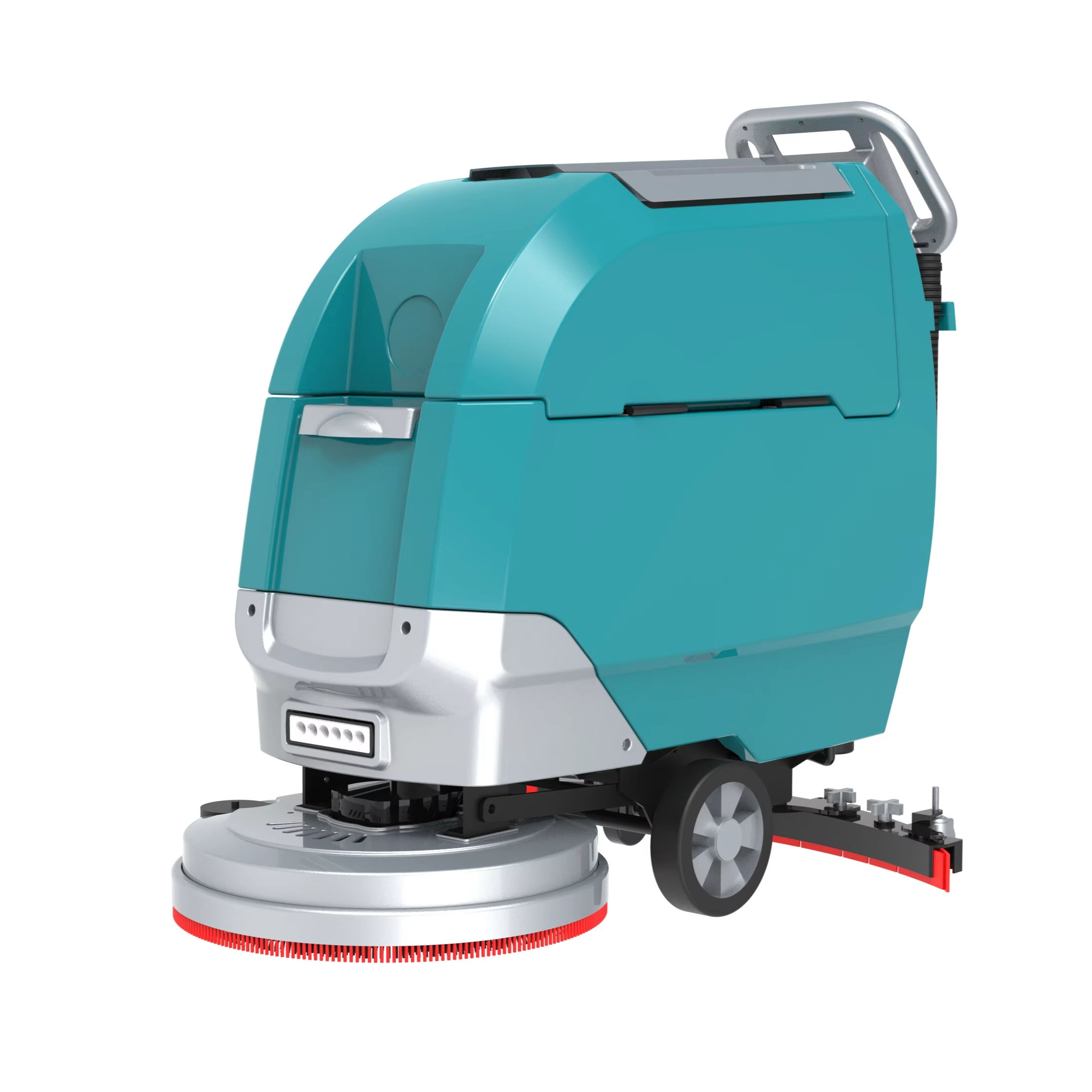
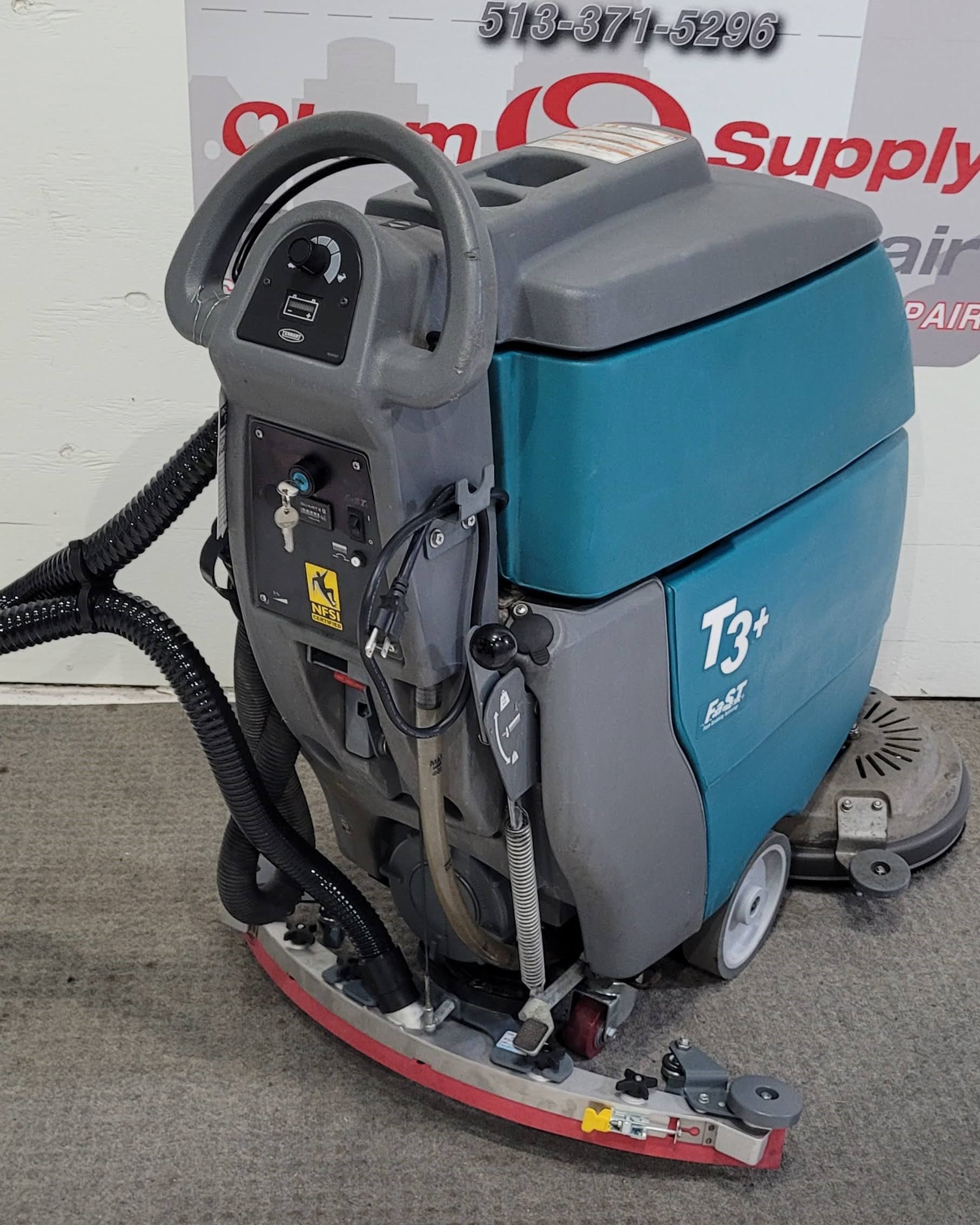
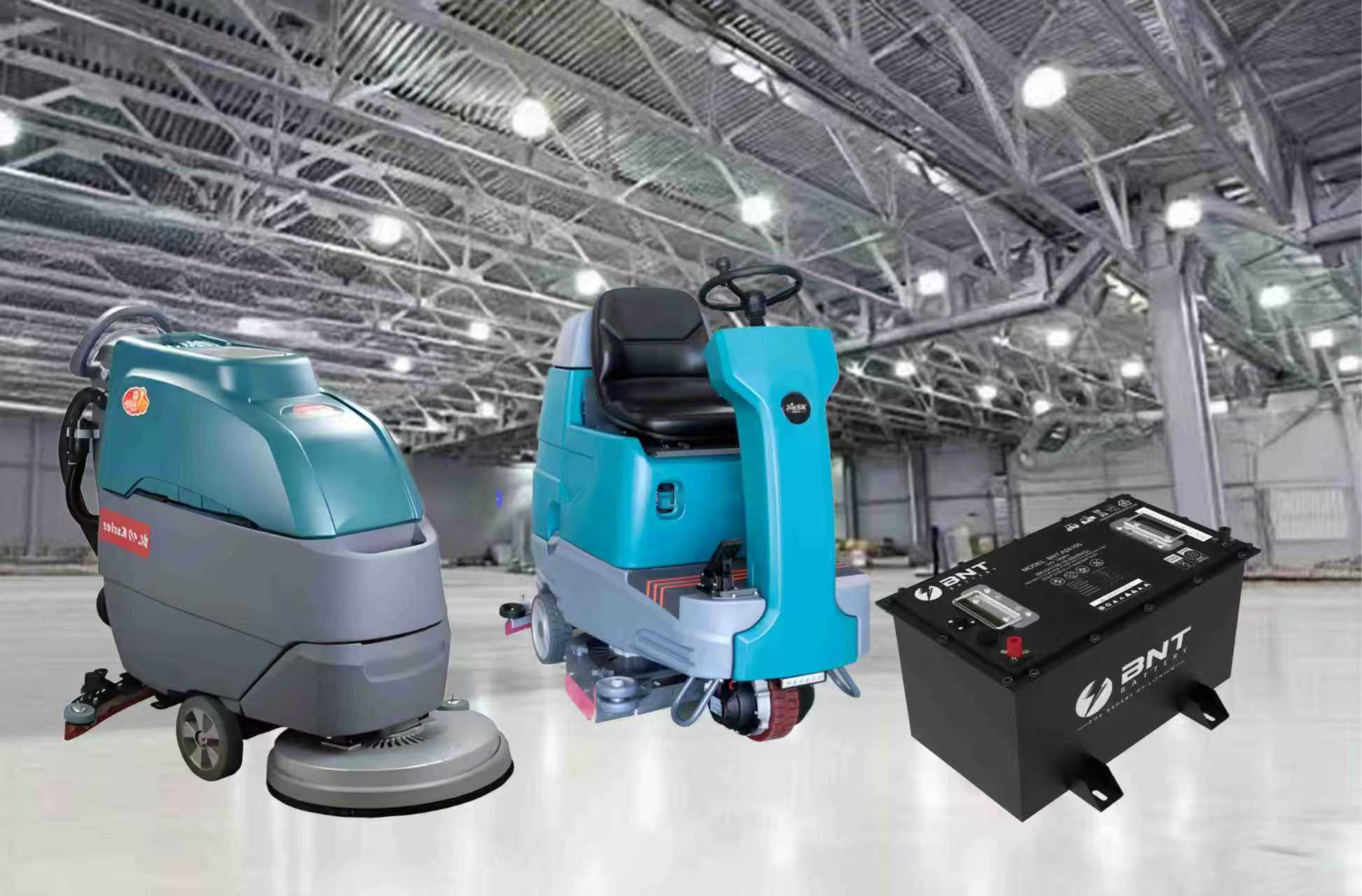
Walk-behind scrubbers provide exceptional maneuverability in tight corners and narrow aisles. Operators guide the machine manually, granting immediate control in heavily obstructed environments. These units are generally lighter, simpler to transport between facility zones, and feature a lower initial capital investment.
Ride-On scrubbers transform the cleaning process for expansive facilities by allowing the operator to sit comfortably while traversing large expanses. Increased travel speeds significantly reduce cleaning times in open-floor layouts. Furthermore, ride-on models reduce physical fatigue, making them ideal for multi-hour continuous cleaning operations. However, they require wider doorways, turning radiuses, and adequate elevator weight capacities if multi-story cleaning is required.
| Feature | Walk-Behind Scrubbers | Ride-On Scrubbers |
|---|---|---|
| Best Facility Size | Under 30,000 sq. ft. | 30,000+ sq. ft. |
| Maneuverability | High; ideal for congested aisles and tight turns | Moderate; requires wider aisles and turning space |
| Operator Fatigue | Moderate to high during long shifts | Low; seated operation reduces physical strain |
| Initial Investment | Lower price point | Higher price point, offset by labor savings |
| Training Complexity | Minimal; intuitive controls | Moderate; requires safety training for vehicle operation |
Evaluating Floor Surfaces and Scrub Deck Types
Different floor substrates—such as polished concrete, epoxy, VCT (vinyl composition tile), ceramic tile, and rubber—interact uniquely with cleaning mechanisms. Choosing the wrong scrub deck or pad pressure can damage specialized flooring or fail to extract embedded grime.
Scrub decks generally fall into three design categories: disk, cylindrical, and orbital (or rectangular). Each serves specific cleaning profiles and maintenance routines.
Disk Scrub Decks
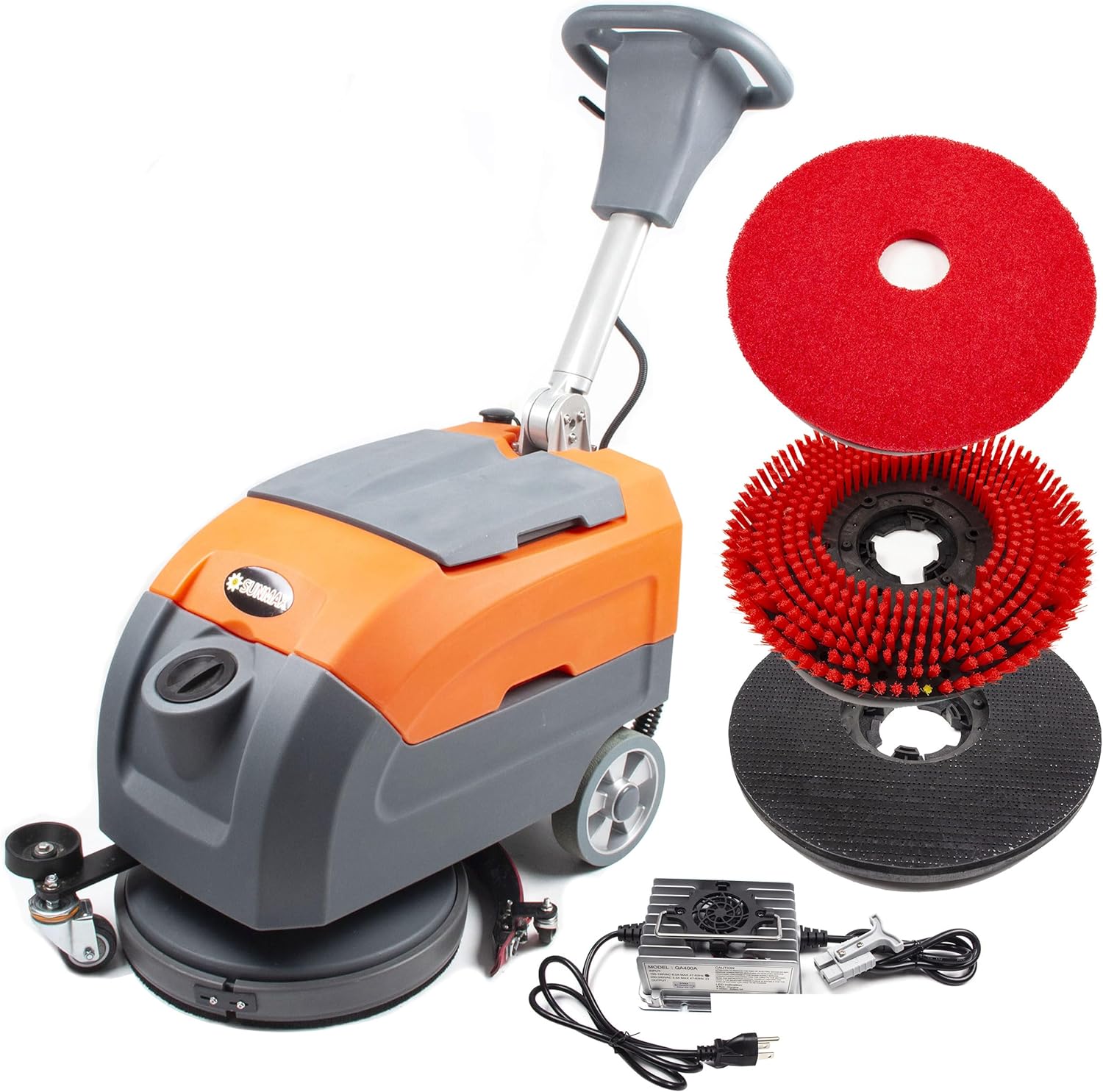
Disk decks are the industry standard, utilizing circular pads or brushes mounted independently. They excel on smooth, flat floors and offer higher down-pressure capabilities, making them effective for stripping old floor finishes or tackling heavy grease in industrial settings. Brushes and pad holders are easy to swap without tools.
Cylindrical Scrub Decks
Cylindrical decks use high-speed rotating roller brushes that sweep and scrub simultaneously. This design eliminates the need to pre-sweep small debris, as a built-in hopper collects loose dirt while the brushes scrub. Cylindrical decks are ideal for grouted tile or uneven floors where disk brushes skip over low points.
Orbital Scrub Decks
Orbital or rectangular decks vibrate at high frequencies rather than rotating. This micro-scrubbing action uses less water and chemical solution while delivering uniform contact across the entire pad surface. Orbital machines can strip floor finish using water alone, chemical-free, reducing slip hazards and chemical purchasing costs.
Power Sources: Battery Chemistry and Run Times
Auto scrubbers rely on batteries for mobility, and selecting the correct chemistry dictates daily run times, charging protocols, and long-term maintenance overhead.
- Wet Lead-Acid Batteries: These traditional flooded batteries offer a lower upfront cost but require regular water level monitoring and terminal cleaning to prevent sulfation. They emit hydrogen gas during charging, necessitating a well-ventilated charging station.
- AGM (Absorbent Glass Mat) Batteries: Sealed, maintenance-free, and spill-proof, AGM batteries eliminate daily watering requirements and safely vent minimal gas. They represent a reliable middle ground for standard commercial applications.
- Lithium-Ion Batteries: Representing the pinnacle of modern commercial cleaning technology, lithium-ion batteries charge rapidly, support opportunistic charging (plugging in during breaks without degrading cell life), and maintain consistent power output until total depletion. While carrying a higher initial purchase price, their extended lifespan and zero maintenance make them highly cost-effective over a multi-year lifecycle.
Solution Tank Capacity, Water Management, and Sustainability
Water management defines both cleaning effectiveness and operational downtime. A well-balanced machine features matching solution and recovery tank capacities, preventing operators from frequently halting work to empty dirty water while holding excess clean water.
Modern auto scrubbers increasingly incorporate chemical-reduction and water-recycling technologies. Eco-friendly features reduce environmental impact and lower consumable chemical budgets:
- On-Demand Chemical Injection: Mixes water and detergent at the scrub deck rather than in the primary tank, allowing operators to adjust chemical dilution ratios on the fly or switch to plain water for light maintenance.
- Closed-Loop Water Filtration: Advanced machines filter and recycle recovered water multiple times, extending operational run times up to five times longer per tank fill and conserving municipal water resources.
- Variable Solution Flow: Automatically modulates water output based on machine travel speed, preventing puddling when turning or stopping.
Ergonomics, Controls, and Safety Compliance
An auto scrubber must be intuitive and safe for operators of varying experience levels. Complex dashboards lead to user error, missed maintenance routines, and potential facility damage.
Look for machines featuring ergonomic handle designs, clear digital battery and solution gauges, and straightforward one-touch operation buttons. Safety features such as emergency stop buttons, automatic squeegee lift upon reversing, and speed reduction during tight turns protect both personnel and physical assets. Sound pressure levels (measured in decibels) are another crucial consideration; noise-sensitive environments like hospitals and schools require quiet-mode operations running below 70 dB.
Common Mistakes to Avoid When Buying
Purchasing floor care equipment involves significant capital expenditure, making it vital to avoid common missteps that diminish return on investment.
- Underestimating Squeegee Performance: A machine can scrub exceptionally well, but if the rear squeegee fails to pick up solution completely, it leaves wet, slippery floors behind. Test the vacuum suction and squeegee contour on your specific flooring type.
- Ignoring Doorway and Elevator Constraints: Buying a massive ride-on scrubber without measuring doorway widths, corridor turns, or freight elevator weight limits renders the machine unusable.
- Failing to Factor Maintenance Accessibility: Maintenance tasks like changing squeegee blades, cleaning recovery tanks, and inspecting vacuum motors should require minimal tools and straightforward access to prevent deferred maintenance.
Making the Final Decision
Choosing an auto scrubber floor machine requires balancing facility dimensions, floor substrates, power requirements, and operator ergonomics into a cohesive equipment strategy. Map your facility's net cleaning areas, calculate expected daily operating hours, and request onsite demonstrations from certified equipment dealers before finalizing an acquisition. Evaluating how a machine performs in your actual environment ensures long-term reliability and pristine facility hygiene.
Image Gallery