Choosing the Right Auto Insurance for SR-22 Coverage
Selecting the right auto insurance for SR-22 coverage requires identifying a carrier that specializes in high-risk drivers and provides electronic filing with your state’s DMV. Because an SR-22 is a certificate of financial responsibil...
Selecting the right auto insurance for SR-22 coverage requires identifying a carrier that specializes in high-risk drivers and provides electronic filing with your state’s DMV. Because an SR-22 is a certificate of financial responsibility—not a policy type itself—you must ensure your chosen insurer can accommodate the administrative filing while maintaining the specific liability limits mandated by your state.
Contents
Understanding the SR-22 Requirement
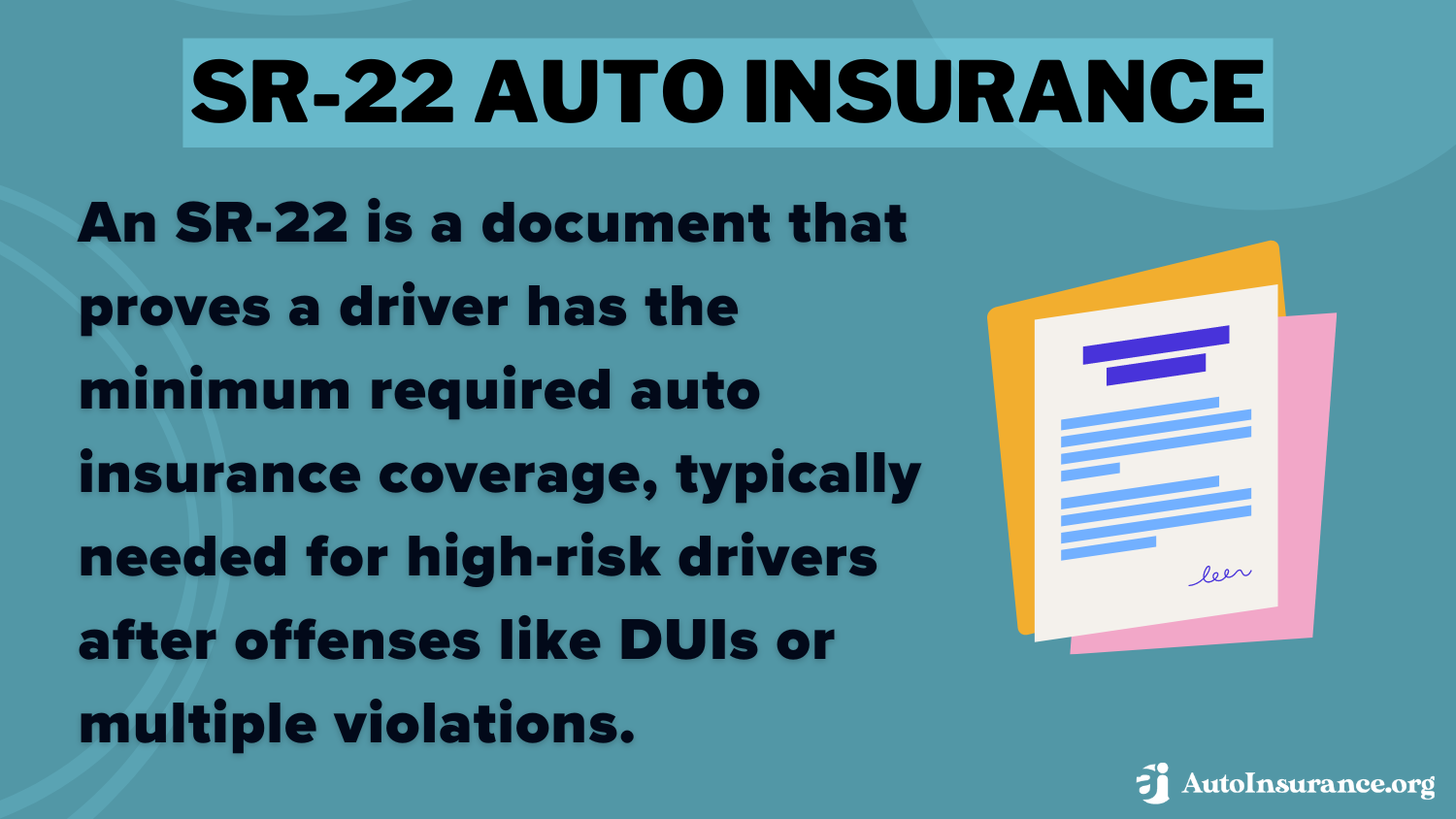
An SR-22 is a legal document often required by a state’s Department of Motor Vehicles (DMV) or a similar regulatory body. It serves as verified proof that a driver is carrying the minimum required liability insurance. Contrary to popular belief, an SR-22 is not a specialized "type" of insurance; rather, it is an endorsement or a "filing" attached to a standard or non-standard auto insurance policy.
As of 2026, the demand for SR-22 filings remains steady, often triggered by serious traffic violations such as Driving Under the Influence (DUI), Driving While Intoxicated (DWI), reckless driving, or operating a vehicle without insurance. In some jurisdictions, a series of smaller infractions accumulating too many points on a license can also trigger the requirement. Once the court or state mandates an SR-22, the driver’s license is typically suspended until the certificate is successfully filed by an insurance company.
The duration of an SR-22 requirement is usually three years, though this can vary from two to five years depending on the severity of the offense and state-specific statutes. During this period, the insurance company is legally obligated to inform the state if the policy lapses. If a policy is cancelled or not renewed, the state will immediately suspend the driver’s license again, often resetting the clock on the multi-year requirement.
Types of SR-22 Policies: Owner vs. Non-Owner
When choosing the right coverage, you must first determine which type of policy fits your current situation. Insurance companies generally offer three variations of SR-22 certificates based on vehicle ownership and usage.
Operator's Policy (Non-Owner SR-22)
If you do not own a vehicle but still need to reinstate your driver’s license, a non-owner SR-22 policy is the most appropriate and cost-effective choice. This coverage provides liability protection for the driver when they are operating a vehicle owned by someone else (with permission). It does not cover vehicles owned by members of the same household or vehicles used for commercial purposes. Because the insurer is not covering a specific vehicle, the premiums are typically lower than standard policies.
Owner's Policy
This is the most common form of SR-22. It covers a driver for the specific vehicle or vehicles they own and operate. The filing is attached to a standard auto policy that includes at least the state-mandated minimum liability limits.
Operator-Owner Policy
This comprehensive filing covers all vehicles owned by the driver as well as any vehicles the driver might operate but does not own. This is often required for individuals who have multiple vehicles or frequently borrow cars from others outside their household.
Key Factors in Selecting an Insurance Provider
Not all insurance companies are willing to file an SR-22. Standard carriers—often referred to as "preferred" insurers—may decline to renew a policy if an SR-22 requirement is triggered, as the driver no longer fits their risk profile. Consequently, many drivers must look toward non-standard insurance carriers that specialize in high-risk coverage.
Financial Stability and Reputation
When a license reinstatement is on the line, you need an insurer that is reliable. Use resources like A.M. Best to check the financial strength ratings of a carrier. A company with poor financial health may struggle to process claims or maintain the necessary state integrations for seamless filing.
Filing Efficiency
In 2026, most SR-22 filings are handled electronically. Choosing a provider that can file the form immediately with the state is critical. Some smaller, local agencies may still rely on manual processes, which can delay your license reinstatement by several days or even weeks. Look for companies that advertise "instant electronic SR-22 filing."
Transitioning Coverage
If your current "preferred" carrier (such as State Farm, Allstate, or GEICO) agrees to keep you as a customer, they are often the most convenient choice. However, be prepared for a significant premium increase. If they drop your coverage, you must secure a new policy before the old one terminates to avoid a "gap" in coverage, which states view very unfavorably during an SR-22 period.
The Cost of SR-22 Insurance in 2026
The SR-22 filing itself is relatively inexpensive, usually involving a one-time administrative fee ranging from $15 to $50. The primary financial impact comes from the recalculated insurance premiums. Because the SR-22 signals to the insurer that you are a high-risk driver, your rates can increase by 40% to 100% or more.
Several factors influence these costs:
- The Nature of the Violation: A DUI generally results in a higher surcharge than a series of speeding tickets or a "driving without insurance" conviction.
- Geographic Location: Rates vary wildly by state and even by zip code.
- Credit History: In states where it is legally permitted, insurance companies use credit-based insurance scores to help determine risk, which can further elevate costs if your credit is poor.
- Coverage Limits: While the SR-22 only requires state-minimum liability, you may choose (or be required by a lienholder) to carry higher limits or comprehensive and collision coverage, which adds to the total premium.
Comparison of SR-22 Providers and Costs (Estimated for 2026)
| Provider Type | Typical Target Audience | Filing Speed | Relative Premium Cost | Best For |
|---|---|---|---|---|
| Standard Carriers | Drivers with one minor lapse or first-time offense | Same-day (Electronic) | Moderate-High | Keeping existing multi-policy discounts |
| Non-Standard Specialists | Drivers with multiple DUIs or serious records | Instant (Electronic) | High | Guaranteeing acceptance and fast filing |
| Non-Owner Specialists | Drivers who do not own a car | Same-day | Low-Moderate | License reinstatement on a budget |
| Regional Mutuals | Localized drivers with unique state requirements | Varies (1-3 days) | Moderate | Personalized service and local expertise |
State-Specific Variations: SR-22 vs. FR-44
While the SR-22 is the standard certificate in the majority of U.S. states, it is important to distinguish it from the FR-44. As of 2026, Florida and Virginia are the primary states utilizing the FR-44 for alcohol-related offenses.
The FR-44 is similar to the SR-22 in that it is a certificate of financial responsibility. However, the FR-44 requires significantly higher liability limits than the state minimum. For example, in Virginia, an FR-44 requirement might demand liability limits of double the standard minimums. When choosing insurance in these states, you must specifically request an FR-44 filing, as a standard SR-22 policy will not satisfy the legal mandate for a DUI conviction.
Steps to Choosing and Filing Your Coverage
To ensure a smooth process and avoid further legal complications, follow these steps:
- Verify Your Requirements: Contact your state DMV to confirm the exact filing type required (SR-22 or FR-44), the necessary liability limits, and the duration of the filing.
- Shop Specifically for High-Risk Coverage: When requesting quotes, be transparent about the SR-22 requirement. Failing to disclose this will result in an inaccurate quote or a canceled policy later.
- Confirm Electronic Filing: Ensure the carrier can file the certificate electronically with your state’s DMV. This is the fastest way to get back on the road.
- Pay the Filing Fee and Premium: Most insurers require the SR-22 filing fee and at least the first month’s premium (or a significant down payment) upfront before they will issue the certificate.
- Obtain a Copy of the SR-22: Once the insurer files the form, ask for a digital or physical copy (Form SR-22) for your personal records. You may need to present this if you are pulled over before the DMV’s system fully updates.
- Maintain Continuous Coverage: Set up auto-pay. A single day’s lapse in coverage can trigger an automatic notification to the DMV, leading to immediate license suspension and potentially extending the number of years you are required to carry the SR-22.
Common Pitfalls to Avoid
The most frequent mistake drivers make is assuming the SR-22 is a one-time task. It is a continuous obligation. If you decide to switch insurance companies midway through your requirement period, you must ensure the new policy—complete with the new SR-22 filing—is active before you cancel the old one. There should be at least a 24-hour overlap to prevent any data "pings" to the DMV indicating a lapse.
Another common error is failing to update the SR-22 when moving out of state. If you move from a state where you are required to have an SR-22, you usually must still fulfill that state's requirements, even if your new state does not require one. You will need to find an insurer licensed in both states or one that can file "out-of-state" SR-22s.
Professional Advice Limitation
The information provided in this article is for educational purposes and does not constitute legal or financial advice. Insurance laws and DMV regulations vary significantly by jurisdiction and are subject to change. Always consult with a licensed insurance agent or a qualified attorney in your specific state to ensure compliance with local statutes.
Frequently Asked Questions
Can I get an SR-22 without owning a car?
Yes, you can obtain a "Non-Owner SR-22" policy. This is designed for drivers who need to reinstate their license but do not own a vehicle. It provides the state-mandated liability coverage and fulfills the filing requirement. It is often the cheapest way to satisfy the SR-22 mandate.
How long does an SR-22 stay on my insurance?
In most states, the requirement lasts for three consecutive years. However, this can range from two to five years depending on the severity of the violation and the specific state laws. If you maintain a clean driving record and continuous insurance during this time, the requirement will eventually expire, and you can return to standard insurance rates.
Will my insurance company cancel my policy if I need an SR-22?
It depends on the company's "underwriting guidelines." Many standard or "preferred" carriers will non-renew or cancel a policy if a driver is classified as high-risk due to a DUI or a series of major violations. If this happens, you will need to seek coverage from a "non-standard" insurance carrier that specializes in SR-22 filings.
Does an SR-22 cover damage to my own car?
No, the SR-22 itself does not provide any coverage; it is merely a certificate. The insurance policy it is attached to must meet state-minimum liability requirements, which cover damage you cause to others. If you want coverage for your own vehicle, you must add "Comprehensive" and "Collision" coverage to the policy, which will increase your premium.
What happens if I move to a different state?
If you have an SR-22 requirement in one state and move to another, you generally must continue to satisfy the filing requirements of the state where the violation occurred. You will need to find an insurance company that is licensed in your new state and capable of filing the SR-22 with your former state's DMV.
Practical Recommendation
To find the best rate, start by contacting your current insurer to see if they can accommodate an SR-22 filing. If they cannot, or if the quoted premium is unaffordable, use an independent insurance agent who has access to multiple non-standard carriers like Dairyland, The General, or Progressive. For those without a vehicle, a non-owner policy is almost always the most efficient path to license reinstatement. Prioritize providers that offer instant electronic filing to minimize the time your license remains suspended.
Image Gallery