Andreas Almgren Weight and Height: Physical Profile, Biometrics, and Running Performance
Swedish distance runner Andreas Almgren stands 184 centimeters (6 feet 0.5 inches) tall and maintains a competition weight of approximately 66 kilograms (145.5 pounds). This physical profile gives him a Body Mass Index (BMI) of roughly...
Swedish distance runner Andreas Almgren stands 184 centimeters (6 feet 0.5 inches) tall and maintains a competition weight of approximately 66 kilograms (145.5 pounds). This physical profile gives him a Body Mass Index (BMI) of roughly 19.5 kg/m², providing an exceptional power-to-weight ratio that supports his transition from a world-class 800-meter specialist to one of Europe's premier 5,000-meter, 10,000-meter, and half-marathon record holders.
Contents
Physical Profile and Biometric Overview of Andreas Almgren
Understanding the biometric footprint of an elite endurance athlete provides crucial insight into their biomechanics, energy expenditure, and event adaptability. Andreas Almgren's physical dimensions set him apart from the traditional archetype of distance runners, who historically lean toward shorter, lower-mass frames.
At 184 cm, Almgren is noticeably taller than the average international distance runner. His baseline body mass fluctuates slightly depending on the training phase—peaking during heavy strength work in the base season and leaning out during competitive track periods.
- Height: 184 cm (6 ft 0.5 in)
- Competition Weight: 66 kg (145.5 lbs)
- Off-Season Weight: 67.5 kg – 69 kg (148.8 – 152 lbs)
- Body Mass Index (BMI): ~19.5 kg/m² (Competition state)
- Primary Events: 1,500m, 3,000m, 5,000m, 10,000m, Half Marathon
- Nationality: Swedish
Almgren's lean body mass is paired with exceptionally low essential body fat, tailored to optimize physiological efficiency. In long-distance track events, every excess kilogram of body weight increases the metabolic cost of transport by approximately 1%. For an athlete competing at sub-13-minute 5,000-meter speeds, maintaining optimal mass without sacrificing muscular force output is a delicate balancing act.
Comparative Analysis: Almgren's Frame vs. Global Elite Distance Runners
The classic profile of East African and global long-distance champions often leans toward smaller statures, averaging between 165 cm and 175 cm. However, modern distance running has seen a resurgence of taller athletes who leverage extended stride length and high aerobic capacity to break records.
| Athlete | Height | Weight | BMI (kg/m²) | Primary Event Focus |
|---|---|---|---|---|
| Andreas Almgren (SWE) | 184 cm (6'0.5") | 66 kg (145.5 lbs) | 19.5 | 5,000m / 10,000m / Half Marathon |
| Jakob Ingebrigtsen (NOR) | 186 cm (6'1") | 74 kg (163 lbs) | 21.4 | 1,500m / 5,000m |
| Eliud Kipchoge (KEN) | 167 cm (5'6") | 52 kg (115 lbs) | 18.6 | Marathon |
| Joshua Cheptegei (UGA) | 167 cm (5'6") | 52 kg (115 lbs) | 18.6 | 5,000m / 10,000m / Marathon |
| Grant Fisher (USA) | 178 cm (5'10") | 61 kg (134 lbs) | 19.3 | 5,000m / 10,000m |
| Mohamed Katir (ESP) | 182 cm (5'11.5") | 64 kg (141 lbs) | 19.3 | 1,500m / 5,000m |
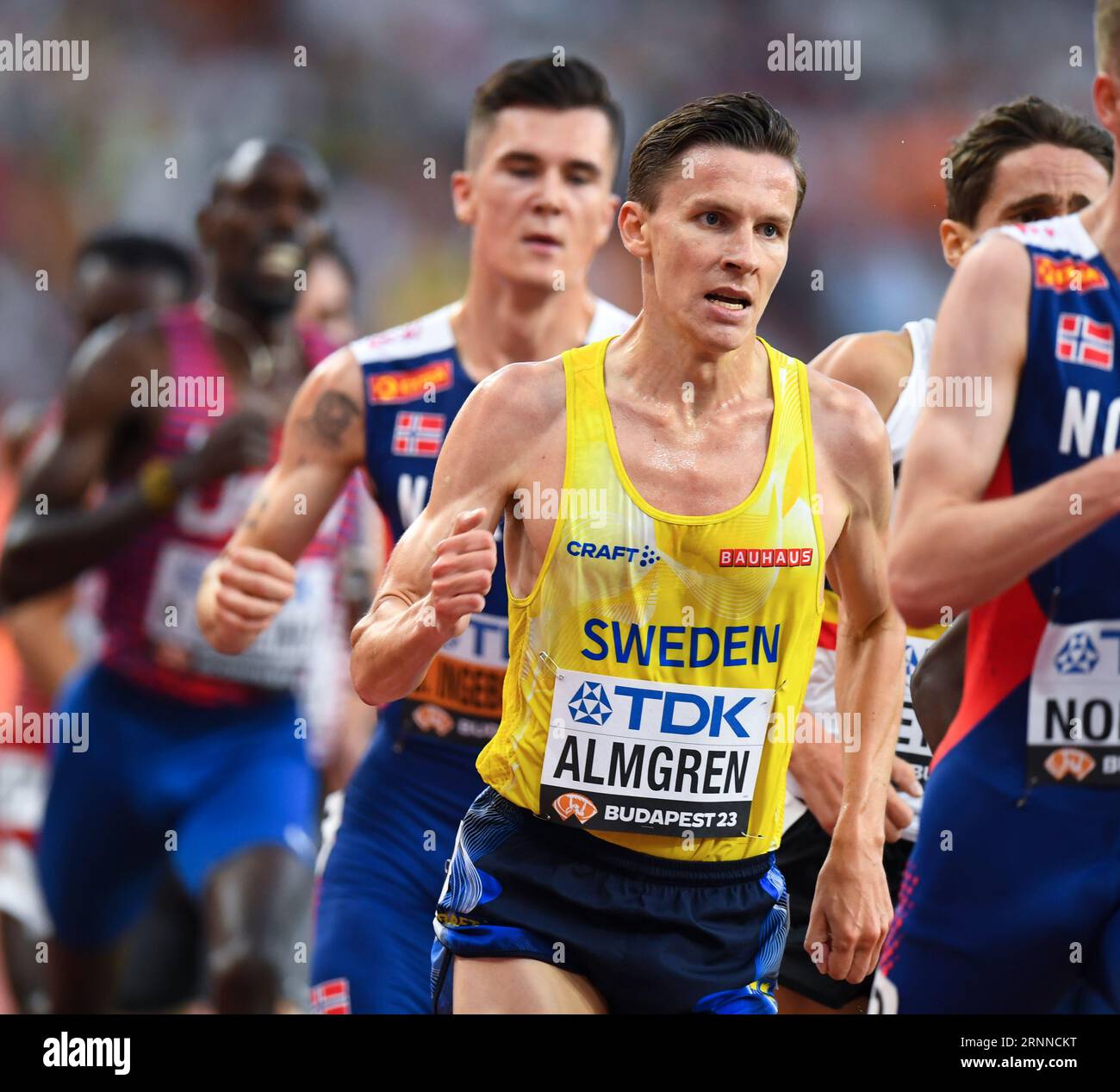
As highlighted in the comparison, Almgren shares structural similarities with athletes like Jakob Ingebrigtsen and Mohamed Katir—taller European runners who utilize tall lever mechanics. While shorter runners like Kipchoge benefit from reduced energy costs associated with moving smaller limbs, taller runners compensate through greater ground coverage per stride when paired with elite range of motion and core stability.
The Mechanics of Height and Weight in Distance Running
The interaction between height, mass, and running economy is governed by biomechanical and physiological principles. In elite distance running, performance relies heavily on VO2 max (maximum oxygen uptake), fractional utilization of VO2 max, and running economy (the energy cost for a given running speed).
Power-to-Weight Ratio and VO2 Max Dynamics
VO2 max is conventionally measured in milliliters of oxygen consumed per kilogram of body weight per minute (ml/kg/min). Because the denominator is body weight, reducing non-functional mass automatically raises relative VO2 max values, provided muscle strength and blood volume remain uncompromised. Almgren's 66 kg frame allows him to maximize his relative aerobic power while retaining the skeletal muscle mass necessary to generate explosive force during the final lap kick.
Stride Dynamics and Kinetic Energy
A taller stature presents both advantages and physiological demands:
Long levers (femurs and tibias) generate substantial stride length, allowing a taller runner to cover more ground per foot strike without requiring an abnormally high cadence. However, moving longer limbs requires greater mechanical work from the hip flexors and hamstrings to overcome rotational inertia.
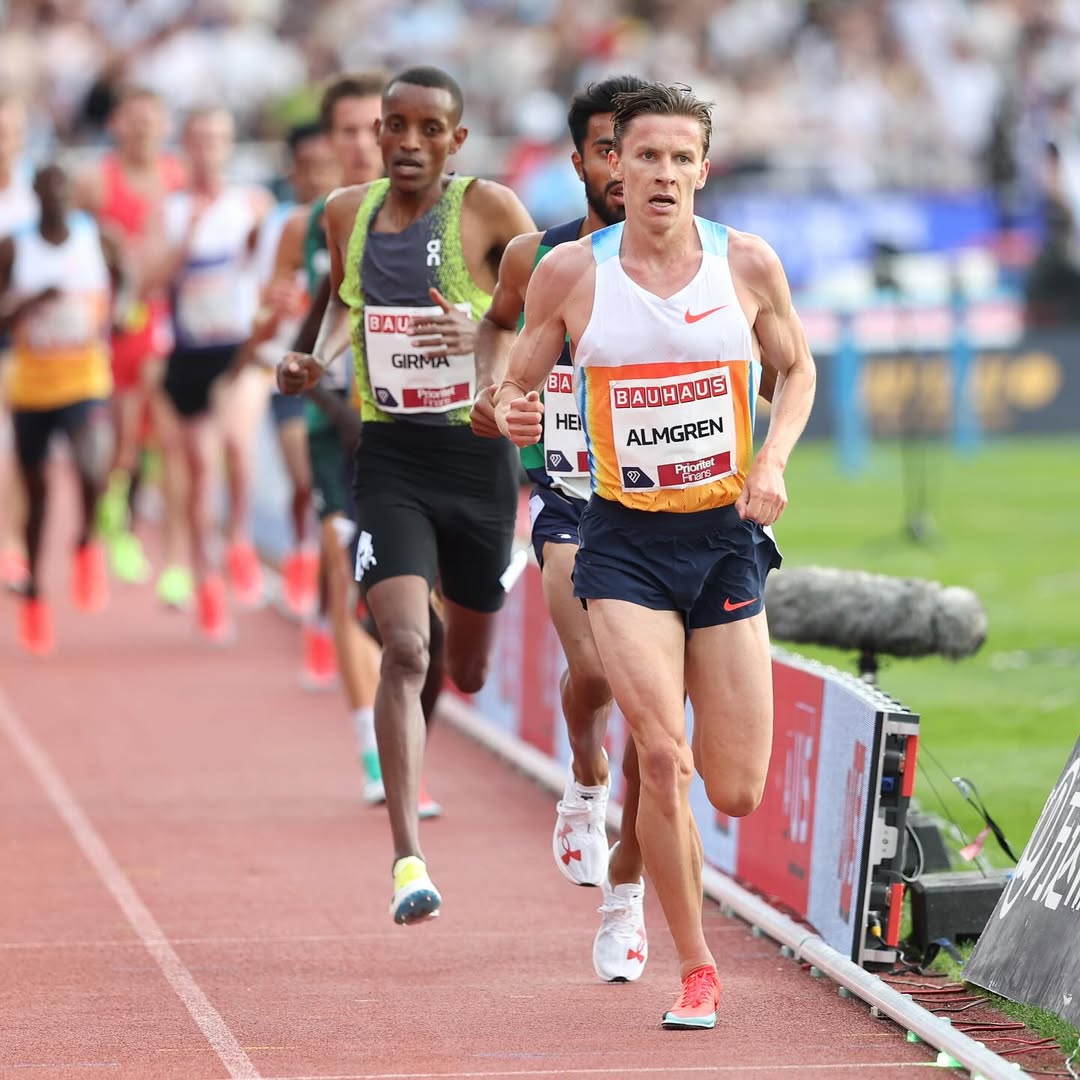
To mitigate the mechanical cost of longer legs, tall runners must maintain exceptional hamstring flexibility and calf tendon stiffness. Almgren's stride displays low vertical oscillation—meaning he projects his body forward rather than wasting energy bouncing upward—which minimizes the impact forces absorbed by his joint cartilage during high-volume training blocks.
Tactical Evolution: From 800m Specialist to Long-Distance Record Holder
Andreas Almgren’s career trajectory is unique. He originally gained international prominence by winning a bronze medal in the 800 meters at the 2014 World Junior Championships. Over the subsequent decade, he transformed his physiological profile to dominate longer distances.
Physical Adaptations Across Distances
Transitioning from a 1:45 800-meter runner to a national record holder in the 10,000 meters and half marathon required deliberate structural and neuromuscular shifts:
- Fiber Type Utilization: Early in his career, Almgren relied heavily on intermediate (Type IIa) muscle fibers for fast-twitch glycolytic speed. Years of high-volume aerobic conditioning expanded his mitochondrial density, training those fibers to function with high oxidative capacity.
- Body Composition Refinement: Shifting up in distance required shedding upper-body muscular volume typical of middle-distance sprinters while maintaining lower-body structural strength to endure high weekly mileage.
- Aerobic Efficiency: Building an engine capable of running sub-13-minute 5k races demands thousands of kilometers at sub-lactate threshold paces. This training thins peripheral fat stores while improving capillary density around working muscles.
This structural adaptation allowed Almgren to establish Swedish national records across multiple track and road surfaces, proving that tall runners can excel at half-marathon distances when their energy systems are fully developed.
Training, Load Management, and Injury Resilience for Tall Runners
Taller athletes face higher mechanical stress on their joints, tendons, and spine due to larger leverage forces. For an athlete of Almgren’s height running over 140 to 180 kilometers per week, managing mechanical load is essential for longevity.
Durability and Strength Protocols
To keep his 184 cm frame resilient against stress fractures and tendinopathy, Almgren incorporates heavy resistance training alongside his running volume.
- Posterior Chain Activation: Target exercises like deadlifts, single-leg Romanian deadlifts, and hip thrusts reinforce the gluteal and hamstring complex, reducing stress on the lower back.
- Tendon Stiffness Work: Plyometric routines and calf raises build stiffness in the Achilles tendons, enhancing elastic energy return during foot contact.
- Core Anti-Rotation: A tall torso creates a longer moment arm during arm swing; core stabilization exercises prevent excess lateral torque, keeping energy vectoring forward.
Nutritional Strategy and Mass Maintenance
Maintaining a low competition mass without dipping into energy deficiency (REDs - Relative Energy Deficiency in Sport) requires high caloric intake. Almgren’s metabolic throughput during peak training demands high carbohydrate availability to fuel long threshold sessions while providing adequate protein synthesis for muscular recovery.
Frequently Asked Questions About Andreas Almgren
What is Andreas Almgren's official height?
Andreas Almgren stands 184 centimeters (6 feet 0.5 inches) tall, making him taller than the average international long-distance track athlete.
How much does Andreas Almgren weigh?
His competition weight is approximately 66 kilograms (145.5 pounds), though his weight may increase by 1 to 3 kilograms during base-building off-season periods.
What is Andreas Almgren's BMI?
Almgren has an estimated Body Mass Index (BMI) of approximately 19.5 kg/m² during his competitive season, which fits the lean, low-mass profile required for world-class distance running.
How does Almgren's height affect his running style?
His 184 cm frame gives him an extended natural stride length. By focusing on low vertical oscillation and high tendon stiffness, he maximizes forward momentum and ground coverage while minimizing metabolic waste.
What national records does Andreas Almgren hold for Sweden?
Almgren holds several Swedish national records across multiple distances, including the 1,500m, 3,000m, 5,000m, 10,000m, and the Half Marathon.
Optimizing Endurance Performance Through Physical Awareness
Andreas Almgren’s success demonstrates that world-class endurance performance is not restricted to a single body shape. While a taller frame brings biomechanical challenges in leverage and weight management, combining high aerobic power, structural strength, and refined running economy allows athletes of Almgren’s height to compete against the best in the world. Monitoring biometrics, maintaining healthy energy availability, and building tendon durability remain the foundational pillars for any distance runner targeting peak efficiency.
Image Gallery