Why the Duck Dodgers Intro Still Matters in Modern Animation History
The Duck Dodgers television series intro matters because it established a high-water mark for stylistic homage, blending mid-century modern design, cinematic space opera tropes, and iconic vocal performances into a compact sixty-second...
The Duck Dodgers television series intro matters because it established a high-water mark for stylistic homage, blending mid-century modern design, cinematic space opera tropes, and iconic vocal performances into a compact sixty-second thesis statement that still influences animation title sequence design today.
Contents
When Warner Bros. Animation launched Duck Dodgers in 2003, adapting the classic 1953 Chuck Jones theatrical short Duck Dodgers in the 24½th Century, the creative team understood that the title sequence needed to accomplish multiple tasks simultaneously. It had to honor the original Looney Tunes legacy while establishing an independent, serialized science-fiction identity. By examining its visual composition, musical arrangement, and structural storytelling, we can understand why this particular opening sequence remains a masterclass in television animation direction.
The Context and Heritage of Duck Dodgers in the 24½th Century
To understand the weight carried by the 2003 intro, one must look back at the source material. The original 1953 theatrical short directed by Chuck Jones is widely recognized as a foundational piece of animation history. Pitting Daffy Duck against Marvin the Martian over the fictional element Illudium Pew Q-36 (the explosive space-modulator), the short parodied the radio and television serials of the era, such as Buck Rogers and Flash Gordon.
When the character was resurrected for the 2003 Cartoon Network series starring Joe Alaskey as Dodgers and Bob Bergen as Porky Pig, the production team faced a distinct challenge. They were expanding a seven-minute cartoon gag into a half-hour episodic format. The intro sequence acted as the crucial bridge between the old theatrical DNA and the new television reality. It signaled to the audience that while the characters were familiar, the scope was significantly larger.
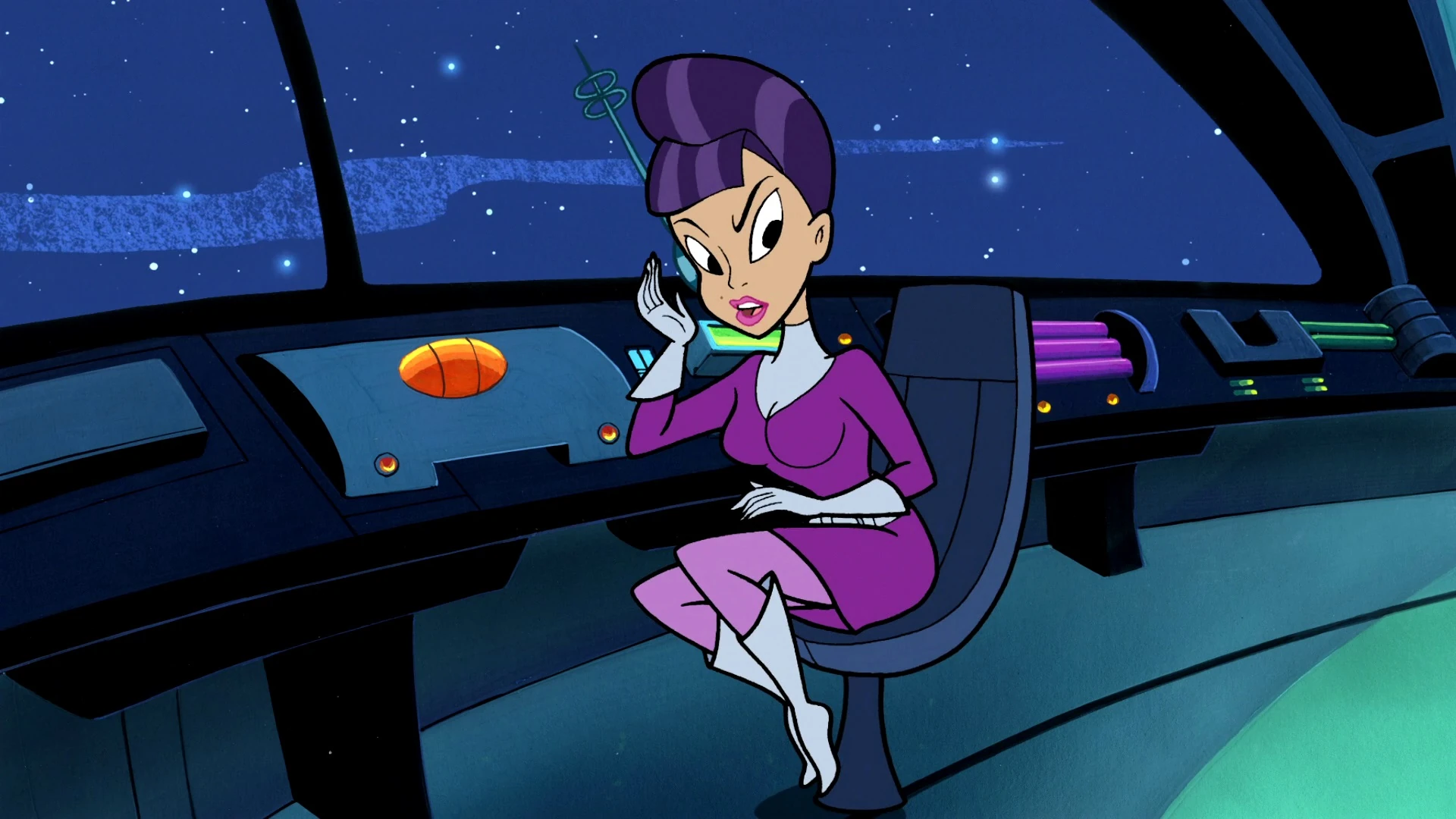
The choice to lean into a retro-futuristic aesthetic was not accidental. Mid-century modern design, with its sharp geometric lines, atomic-age starbursts, and bold, flat-color palettes, defined the original 1950s shorts. The 2003 intro captured this visual language and amplified it with dynamic digital compositing, proving that historical animation styles could be revitalized without losing their tactile charm.
Visual Composition and Mid-Century Modern Sci-Fi Aesthetics
The visual rhythm of the Duck Dodgers intro relies heavily on pacing, color theory, and spatial depth. Unlike modern animated title sequences that often lean toward complex 3D rendering or gritty photorealism, the Duck Dodgers sequence utilizes stylized 2D animation blended with retro-futuristic styling.
Key Visual Elements of the Sequence
- Atomic-Age Typography: The title card utilizes bold, slanted, sans-serif typography reminiscent of 1950s pulp sci-fi paperback covers, instantly setting a nostalgic tone.
- Dynamic Color Palettes: High-contrast color choices—specifically deep space blacks and purples set against vibrant yellows, oranges, and teals—draw the viewer's eye across the frame.
- Slapstick Integration: Even within a grand space-opera framework, physical comedy dictates the movement. Dodgers is rarely heroic in a traditional sense; his cape catches fire, his ship wobbles, and his confident poses are immediately undercut by operational failure.
This visual dichotomy is central to why the intro works. It treats the science fiction genre with immense cinematic reverence while simultaneously setting up the inevitable humiliation of its protagonist. The juxtaposition of sweeping starfields and dramatic laser fire with Daffy Duck's incompetent swagger creates a comedic tension that sustains the entire runtime of the sequence.
The Musical Score: Establishing Tone Through Sound
An animated intro is only as strong as its audio landscape. The musical composition for Duck Dodgers played a vital role in grounding the spoof in genuine cinematic weight. Rather than relying on simple cartoon sound effects and whimsical woodwinds alone, the theme song incorporates booming brass, driving percussion, and theremin-esque electronic flourishes that evoke classic 1950s sci-fi film scores like The Day the Earth Stood Still or Forbidden Planet.
The orchestration demands attention from the first second. It communicates that viewers are about to witness an epic space adventure, only for the visual narrative to immediately subvert those expectations by showing Dodgers crashing his spaceship or fumbling his ray gun. This audio-visual counterpoint—grand, sweeping orchestration paired with cartoon calamity—is a textbook example of comedic timing executed through musical scoring. Furthermore, the inclusion of spoken-word interstitial lines adds character flavor, ensuring that the audience understands Daffy's inflated ego before a single line of dialogue is spoken in the actual episode.
Comparison of Classic Looney Tunes Intro Structures
To appreciate the structural ambition of the Duck Dodgers sequence, it is helpful to compare it to other iterations of Looney Tunes title cards across different eras.
| Feature / Element | Classic Looney Tunes (Theatrical) | Duck Dodgers (2003 Series) | Modern Warner Bros. Shorts (2020s) |
|---|---|---|---|
| Primary Focus | Establishing studio identity (Looney Tunes/Merrie Melodies) | Introducing a serialized narrative premise | Quick gags and rapid character branding |
| Musical Style | Carl Stalling orchestral arrangements with signature theme ("The Merry-Go-Round Broke Down") | Cinematic 1950s sci-fi orchestral suite with brass and electronic notes | Modernized orchestration keeping classic motifs |
| Runtime | 5 to 10 seconds | Approximately 45 to 60 seconds | 15 to 30 seconds |
| Narrative Goal | Transition viewer into an anthology short format | Frame the episodic conflict between Dodgers and the Martian Empire | Deliver instant recognition for streaming platforms |
As demonstrated above, the Duck Dodgers intro occupies a unique space. It functions less like a traditional studio bumper and more like a miniature cinematic trailer, setting up stakes, characters, antagonists, and tone within a compressed timeframe.
Why Modern Animation Design Can Learn from Duck Dodgers
In contemporary animation, title sequences are frequently shortened or skipped entirely to accommodate streaming platform UI patterns and fast-paced viewing habits. Many modern shows rely on brief, minimalist title cards or drop the intro entirely after the pilot episode.
However, the endurance of sequences like Duck Dodgers highlights what is lost when title cards are treated as optional administrative necessities rather than creative opportunities. A well-crafted intro serves three vital functions that benefit a series over its lifetime:
- Ritualistic Engagement: A strong musical and visual cue prepares the viewer's mindset, creating a Pavlovian anticipation for the story to begin.
- World-Building shorthand: In sixty seconds, the Duck Dodgers intro establishes the Martian Empire, the Earth Protectorate, the retro-futuristic technology, and the galactic stakes without requiring expositional dialogue in the episode proper.
- Brand Preservation: It proves that intellectual property can be adapted into new genres—shifting from traditional theatrical shorts to serialized television space comedy—without abandoning the core aesthetic integrity of the original characters.
Common Misconceptions About Retro Homages in Animation
When analyzing works like Duck Dodgers, critics sometimes mistake nostalgic homage for a lack of originality. However, creative execution requires distinct technical skill. Replicating a mid-century modern animation style using digital tools requires a deep understanding of traditional line weight, cel-shading principles, and timing that respects the physics of classic character animation.
Another common misunderstanding is that the success of the sequence relies solely on the strength of the original 1953 short. While the source material provided a strong conceptual foundation, the 2003 creative team had to reinvent the pacing for a longer television format. They updated the sound design, refined the color grading for digital broadcast standards, and integrated computer-generated starship models with traditional 2D character animation—a hybrid pipeline that was technically demanding for television production standards of the early 2000s.
Practical Takeaways for Creators and Animators
For modern animators, storyboard artists, and directors examining the mechanics of title sequence design, the Duck Dodgers intro offers several enduring lessons:
- Embrace Genre Contradictions: Pair high-stakes atmospheric music with low-stakes comedic action to generate instant comedic irony.
- Commit Fully to an Aesthetic: If choosing a historical design style—such as 1950s atomic-age sci-fi—carry it through typography, color palettes, and background art rather than relying on half-measures.
- Prioritize Character Motivation Over Plot: Show the protagonist's primary flaw or ambition immediately so the audience knows what drives the comedy before the narrative begins.
By maintaining these standards, animation directors can craft title sequences that transcend their utilitarian purpose and become memorable cultural artifacts in their own right.
Frequently Asked Questions
Is the Duck Dodgers intro a shot-for-shot remake of the 1953 short?
No. While it draws heavy visual inspiration from Chuck Jones's original theatrical short Duck Dodgers in the 24½th Century, the 2003 sequence is an entirely new composition designed for a serialized television format. It expands the scope of the universe, introduces updated digital compositing techniques, and features an original orchestral arrangement tailored for a half-hour animated series.
Why is the mid-century modern aesthetic so prominent in Duck Dodgers?
The mid-century modern art style, characterized by clean geometric shapes, asymmetric lines, and atomic-age motifs, was the dominant design language of the 1950s when the original short was created. The 2003 series utilized this aesthetic to immediately evoke the retro-futuristic pulp magazine vibe of classic space opera serials.
What instruments are used in the Duck Dodgers theme song?
The score heavily features soaring brass sections, driving percussion, and electronic elements like the theremin to mimic classic 1950s science fiction film scores. This creates a humorous contrast with Daffy Duck's incompetent and cowardly on-screen behavior.
Does the Duck Dodgers intro contain any hidden references?
Yes, the sequence pays homage to numerous classic sci-fi tropes, including vintage ray guns, bubbling laboratory flasks, primitive rocket designs, and dramatic pulp-fiction title card layouts popularized in mid-century comics and serial films.
Where can I watch the Duck Dodgers series today?
Availability changes based on regional streaming rights and digital storefront updates. Fans should check official digital purchase platforms or Warner Bros. Discovery streaming services depending on their current geographic region.
Conclusion and Next Action
The Duck Dodgers intro remains relevant because it represents a rare alignment of art direction, character writing, and musical scoring that honors its historical source material while establishing a distinct identity. To explore this topic further, revisit the original 1953 Chuck Jones short Duck Dodgers in the 24½th Century alongside the 2003 series pilot. Comparing the two side-by-side reveals how animation artists successfully translate theatrical gags into long-form television storytelling without losing the kinetic energy that made the characters iconic in the first place.
Image Gallery