Ilie Nastase Net Worth: Career Earnings, Endorsements, and Financial Legacy
Former tennis World No. 1 Ilie Năstase has an estimated net worth of approximately $15 million as of 2026. While his official ATP tournament prize money totaled $2,076,761 during the 1970s, his total wealth stems from pioneering Adidas...
Former tennis World No. 1 Ilie Năstase has an estimated net worth of approximately $15 million as of 2026. While his official ATP tournament prize money totaled $2,076,761 during the 1970s, his total wealth stems from pioneering Adidas endorsement deals, post-retirement business ventures, Romanian real estate investments, and public appearance roles.
Contents
Overview of Ilie Năstase’s Financial Profile
Ilie Năstase remains one of the most iconic figures in international tennis history. As the first player to hold the official ATP World No. 1 ranking following its introduction in August 1973, Năstase defined an era of professional sports characterized by charismatic play, high-stakes competition, and the rapid commercialization of tennis.
Estimates from financial tracking outlets, European media reports, and sports biography audits place Năstase’s net worth in the $10 million to $15 million range. Assessing the wealth of elite athletes from the 1970s requires evaluating both historical prize purses and long-term asset accumulation, as baseline compensation during that era was a fraction of modern tour payouts.
| Financial Metric | Verified Figures & Estimates |
|---|---|
| Estimated Net Worth (2026) | $10 Million – $15 Million |
| Official ATP Career Prize Money | $2,076,761 |
| Peak Career Era | 1970–1985 |
| Primary Endorsement Partners | Adidas, Dunlop, local European brands |
| Key Asset Categories | Residential/Commercial Real Estate (Romania), Apparel Royalties |
| Highest ATP Singles Ranking | No. 1 (August 23, 1973) |
Disclaimer: Net worth figures for public figures and retired athletes are based on historical prize money registries, public asset disclosures, reported commercial contracts, and secondary financial analyses. These figures represent estimates rather than audited private financial statements.
Tennis Prize Money: The 1970s Golden Era Context
During his competitive prime in the 1970s, Năstase was among the highest earners on the international circuit. He accumulated $2,076,761 in official ATP singles and doubles prize money. While this number appears modest when compared to modern multi-million-dollar Grand Slam payouts, it represented extraordinary earning power for his era.
Historical ATP Earnings Context (1970s vs Modern Era):
- Năstase Career ATP Prize Money: ~$2.08 Million
- 1972 US Open Men's Singles Winner Purse: ~$25,000
- 1973 French Open Men's Singles Winner Purse: ~$24,000
- Adjusted for Inflation & Market Expansion: Equivalent to top-tier modern earnings capacity
Grand Slam Titles and Major Tournament Purses
Năstase captured two Grand Slam singles titles during his career:
- 1972 US Open: Defeated Arthur Ashe in a five-set final, earning the tournament's top prize of approximately $25,000.
- 1973 French Open: Won the singles crown without dropping a single set throughout the tournament, securing the winner’s check of roughly 120,000 French francs (approx. $24,000 at the time).
In addition to his Grand Slam singles victories, Năstase won three Grand Slam men's doubles titles (Wimbledon 1970, US Open 1975, French Open 1970) and two Grand Slam mixed doubles titles.
His consistency at year-end championships further bolstered his earnings. Năstase won the prestigious Masters Grand Prix (now known as the ATP Finals) four times—in 1971, 1972, 1973, and 1975. Winning these year-end events against top-ranked opposition generated substantial bonuses and guaranteed entry fees that significantly boosted his annual income beyond standard tournament prize funds.
The Adidas Contract and Sponsorship Pioneer Era
While tournament earnings provided a strong base, endorsement deals formed the cornerstone of Năstase’s long-term commercial success. He was among the earliest professional tennis players to secure major global brand sponsorships.
The Landmark Adidas Partnership
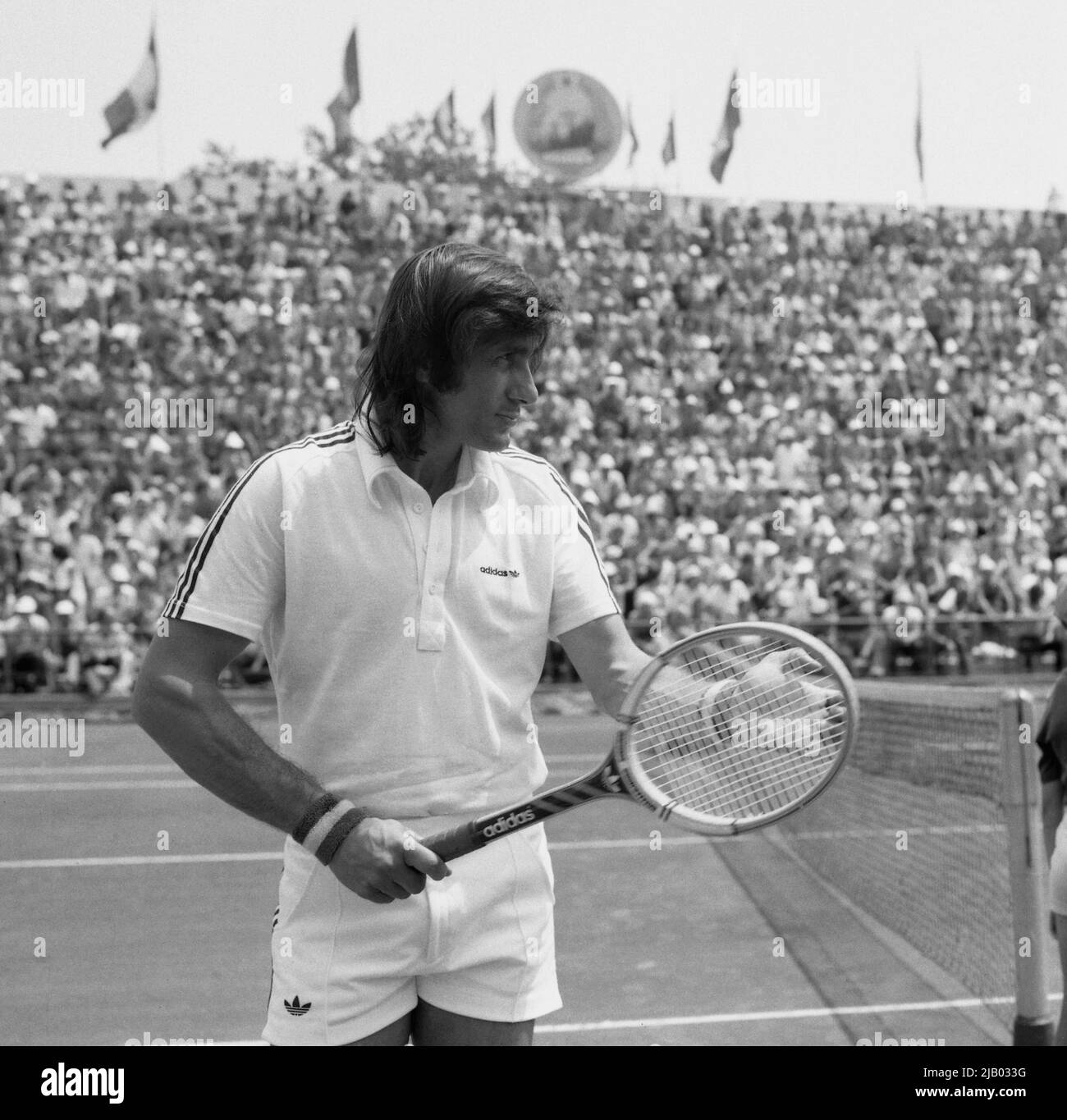
In 1972, Năstase became one of the first professional athletes to sign a dedicated endorsement agreement with German sportswear giant Adidas. Recognizing his international popularity and distinctive personality, Adidas launched the signature Adidas Nastase tennis shoe.
The Adidas Nastase became one of the most recognizable and commercialized footwear models of the 1970s and early 1980s. Key aspects of this commercial relationship included:
- Royalty Structure: Unlike fixed-rate equipment contracts common at the time, Năstase secured royalty rights on units sold, yielding continuous passive income across multiple decades.
- Global Distribution: The shoe saw extensive sales across Europe, North America, and Australia, introducing Năstase to markets well beyond active sports followers.
- Brand Legacy: Adidas continued releasing classic retro editions of the Nastase canvas and leather models long after his competitive retirement, extending his financial relationship with the brand.
Racket and Equipment Contracts
Alongside footwear and apparel deals, Năstase maintained lucrative equipment agreements throughout his career. He primarily used Maxply wooden rackets manufactured by Dunlop during his peak years. Equipment manufacturers paid top players retainer fees for product placement, stringing licensing, and promotional tour appearances across Europe and the Americas.
Post-Retirement Ventures, Real Estate, and Public Life
Following his retirement from professional singles tennis in 1985, Năstase transitioned into business, sports administration, and public governance in Romania. His financial trajectory post-retirement reflects diversification across several distinct sectors.
Năstase Commercial & Asset Portfolio:
- Corporate Endorsements & Apparel Royalties (Adidas retro lines)
- Real Estate Assets (Bucharest residential & commercial holdings)
- Sports Governance & Federation Roles (Romanian Tennis Federation)
- Political & Civic Engagements (Romanian Parliament, public roles)
Real Estate Investments in Romania
Following the political transitions in Romania in the early 1990s, Năstase invested heavily in domestic real estate. His portfolio has included commercial units, residential properties, and land holdings in high-value districts of Bucharest and near the Black Sea coast.
Real estate values in major Romanian urban centers experienced substantial appreciation after the country’s accession to the European Union in 2007. Năstase’s early property acquisitions formed a substantial portion of his modern net worth, providing asset stability alongside recurring rental and development revenues.
Political Career and Public Roles
Năstase leveraged his national celebrity to enter politics and sports administration:
- Mayor Candidate (1996): Ran for Mayor of Bucharest as a candidate for the Social Democratic Party (PDSR).
- Romanian Senate (2014–2016): Served as an elected member of the Romanian Senate representing Bucharest.
- Romanian Tennis Federation: Served as President of the Romanian Tennis Federation for several terms during the late 1990s and 2000s, overseeing player development programs and international tournament logistics.
While parliamentary salaries in Romania are modest relative to private enterprise returns, these leadership roles provided institutional access, oversight of major infrastructure initiatives, and sustained public prominence.
Media, Coaching, and Appearance Fees
Throughout the 1990s, 2000s, and 2010s, Năstase was a regular presence on the international exhibition circuit. Exhibition matches, corporate speaking engagements, and international tennis galas provided steady supplemental earnings. Additionally, publication of his autobiography and television guest commentary roles across European sports networks expanded his income streams.
Comparative Financial Analysis
To understand Năstase's financial standing relative to his peers and modern compensation structures, it helps to analyze how earnings mechanisms evolved between the early professional open era and modern sports management.
| Era / Category | Primary Revenue Sources | Relative Financial Impact | Longevity & Growth Potential |
|---|---|---|---|
| Active Tour Years (1969–1985) | ATP Prize Money, Exhibition Appearance Fees | High (Top 1% of era earners) | Dependent on ongoing tournament play |
| Signature Apparel (1972–Present) | Adidas Nastase Royalties, Brand Licensing | Very High | Multi-decade passive income stream |
| Real Estate Portfolio (1990s–2026) | Property acquisitions in Bucharest & coastal areas | High | Asset appreciation tied to EU market expansion |
| Governance & Media (1996–Present) | Administrative stipends, media appearances, memoirs | Moderate | Maintains public relevance and network access |
During the early Open Era (which began in 1968), total tournament prize pools were smaller than single-round compensation at contemporary Grand Slam events. A player of Năstase's caliber generated the majority of lifetime wealth not from official prize checks, but from leveraging global fame into long-term commercial licensing and real asset investments during the post-communist economic transition in Eastern Europe.
Key Factors Impacting Modern Wealth Status
Several specific economic variables influence Năstase's net worth calculation as of 2026:
- Asset Liquidity vs. Valuation: Much of Năstase's wealth is tied up in physical property in Romania. While real estate holds significant market value, valuation fluctuates based on national economic conditions and regional property demand.
- Royalty Renewal Terms: Earnings from historic signature shoe lines diminish over time as brand focus shifts toward active athletes, though periodic retro runs generate lump-sum royalty distributions.
- Legal and Personal Expenses: Over decades in the public eye, personal life transitions—including multiple marriages and high-profile legal or administrative disputes—involve significant financial settlements and legal costs that impact net asset reserves.
- Inflation and Currency Conversion: Historical earnings recorded in US dollars or pre-Euro European currencies must be contextualized against current purchasing power and exchange rates between the Romanian Leu (RON), Euro, and US Dollar.
Frequently Asked Questions
What is Ilie Năstase’s estimated net worth in 2026?
Ilie Năstase’s net worth is estimated between $10 million and $15 million. This valuation accounts for historic ATP prize money, long-standing Adidas apparel royalties, real estate investments in Romania, and earnings from public and business appearances.
How much prize money did Ilie Năstase earn during his tennis career?
Official ATP records state that Ilie Năstase earned $2,076,761 in singles and doubles prize money during his career. While modest by today’s multi-million-dollar standards, this sum placed him among the highest-earning tennis professionals of the 1970s.
What was the Adidas Nastase deal, and is it still active?
Signed in 1972, the Adidas deal was one of the first major signature shoe contracts in professional tennis. The Adidas Nastase shoe featured a custom logo and styling. Năstase earned substantial royalties from global sales. Adidas continues to release limited retro editions of the shoe, generating ongoing licensing returns.
What Grand Slam titles did Ilie Năstase win?
Năstase won two Grand Slam singles titles: the 1972 US Open (defeating Arthur Ashe) and the 1973 French Open (defeating Niki Pilić). He also won three Grand Slam men's doubles titles and two mixed doubles titles, alongside four year-end Masters Grand Prix championships.
Did Ilie Năstase hold political office in Romania?
Yes. Năstase ran for Mayor of Bucharest in 1996 and later served as an elected member of the Romanian Senate from 2014 to 2016. He also served multiple terms as President of the Romanian Tennis Federation.
Summary & Key Takeaways
Ilie Năstase’s overall net worth reflects a classic transition from early professional sports achievement to post-career asset accumulation. While his on-court prize money totaled just over $2 million, his foresight in establishing signature apparel partnerships with Adidas and acquiring premium real estate in post-1990 Romania enabled him to build and sustain a multi-million-dollar fortune.
For readers examining historic sports earnings, Năstase’s financial profile serves as an instructive case study: in the early decades of professional tennis, lasting wealth depended less on tournament purses and far more on commercial licensing, global brand equity, and disciplined private asset investment.
Image Gallery