The Impact of Athletes from Argentina on Global Sports
Athletes from Argentina have fundamentally reshaped global sports through competitive dominance, tactical innovation, and profound cultural influence across multiple disciplines. From football legends like Diego Maradona and Lionel Mes...
Athletes from Argentina have fundamentally reshaped global sports through competitive dominance, tactical innovation, and profound cultural influence across multiple disciplines. From football legends like Diego Maradona and Lionel Messi to Olympic basketball pioneers, world-class rugby squads, tennis Grand Slam champions, and polo masters, Argentina consistently delivers extraordinary international athletic impact.
Contents
Historical Foundations of Argentina’s Athletic Global Presence
The international footprint of Argentine sports was established in the late 19th and early 20th centuries. Introduced largely by British immigrants who brought football, rugby, tennis, and polo to the ports of Buenos Aires and Rosario, these games were quickly adopted and transformed by local culture. Rather than simply mimicking European athletic frameworks, Argentine athletes developed distinct stylistic traits characterized by high technical skill, spatial creativity, and intense psychological resilience—often summarized locally as pícaro flair combined with competitive garra (grit).
In early international competitions, Argentine pioneers demonstrated that South American athletes could outmaneuver traditional sporting powers. Motor racing icon Juan Manuel Fangio set an early global benchmark by winning five Formula One World Drivers' Championships in the 1950s with four different manufacturers (Alfa Romeo, Maserati, Mercedes, and Ferrari)—a record of multi-team dominance that stood for decades. Fangio’s technical mastery and calm under extreme pressure established Argentina as a crucible for elite athletic talent long before the modern era of sports science.
Furthermore, the unique organizational structure of the Argentine club social y deportivo (neighborhood social and sports club) served as an incubator for youth development. Unlike commercialized youth academies in Europe or school-based athletic pipelines in the United States, Argentine clubs integrated athletic training into neighborhood social life. This structure allowed young athletes across socioeconomic backgrounds to develop versatility and mental fortitude under the pressure of community expectations.
Football: Tactical Evolution and Global Stardom
Football (soccer) remains the primary vehicle through which Argentina exerts its global influence. The nation’s three FIFA World Cup victories—in 1978, 1986, and 2022—highlight a historical trajectory of continuous elite performance at the international level. However, Argentina’s impact extends far beyond national team trophies; it encompasses individual talent, coaching philosophies, and tactical frameworks adopted across every major league globally.
Individual icons from Argentina have repeatedly redefined the peak of global football performance:
- Alfredo Di Stéfano: The engine of Real Madrid’s five consecutive European Cup victories in the 1950s, Di Stéfano revolutionized the role of the total footballer, moving seamlessly between defense, midfield, and attack.
- Diego Maradona: Maradona’s performance at the 1986 FIFA World Cup in Mexico captivated a global audience. His combination of dribbling perfection, improvisational genius, and fierce national pride reshaped the global image of South American sportsmanship.
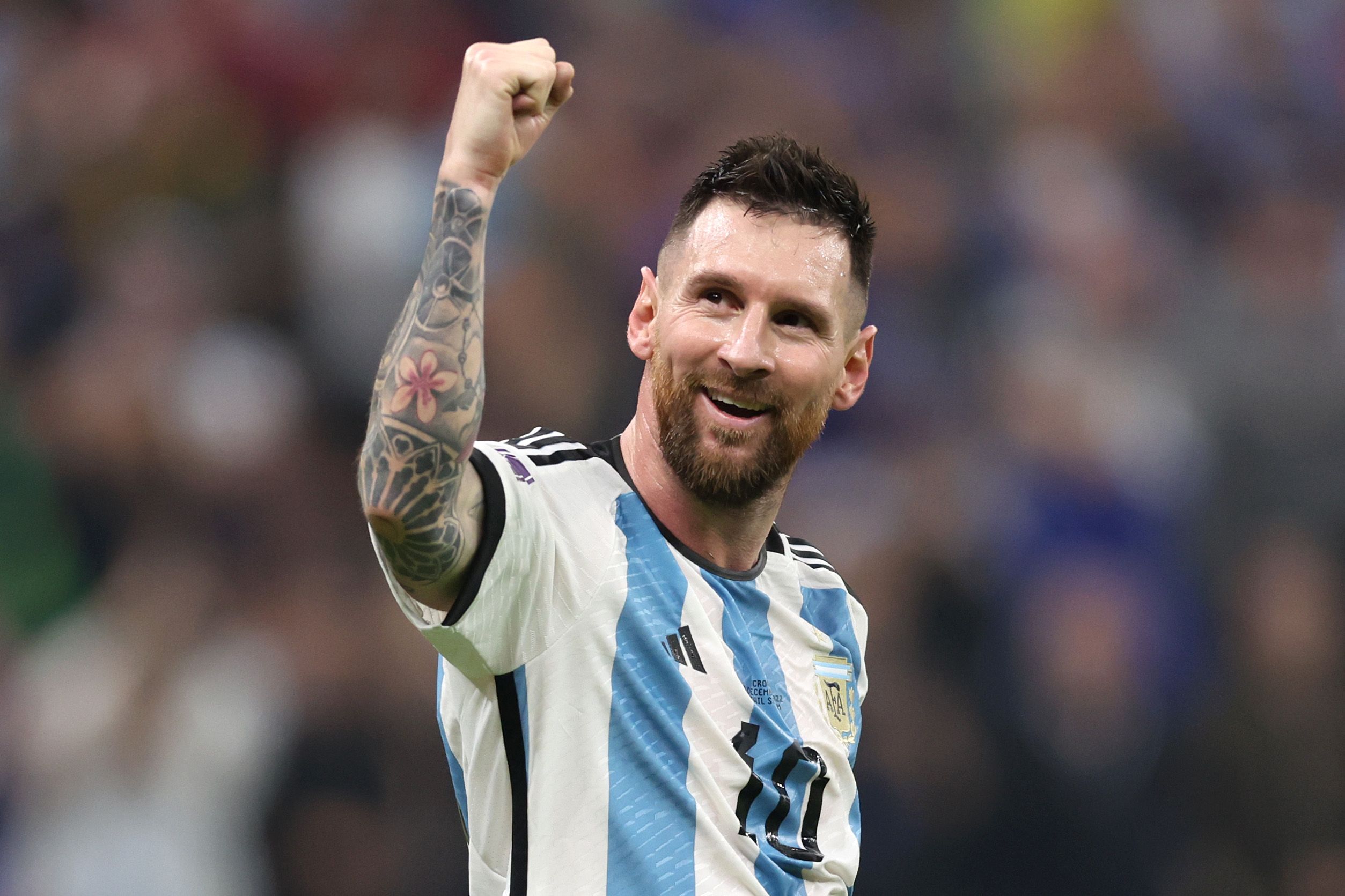
- Lionel Messi: Winning eight Ballon d'Or awards and leading Argentina to the 2022 FIFA World Cup title in Qatar, Messi redefined statistical standards for scoring, playmaking, and longevity. His global popularity accelerated the international expansion of European club football and Major League Soccer (MLS).
Beyond players, Argentine tactical minds have fundamentally altered global coaching strategies. Marcelo Bielsa popularized high-intensity pressing, positional rotation, and relentless attacking transitions, influencing world-class managers such as Pep Guardiola, Mauricio Pochettino, and Diego Simeone. The tactical pragmatism and defensive organization perfected by Simeone at Atlético Madrid demonstrated how Argentine managers could break established European duopolies. Similarly, Lionel Scaloni’s modern adaptability delivered Argentina's third World Cup title in 2022, proving the efficacy of flexible, player-centric tactical management.
The Basketball Revolution: The "Generación Dorada" and the NBA
While football remains the nation's passion, Argentina’s impact on global basketball during the early 21st century represents one of the most remarkable achievements in team sports history. The emergence of the Generación Dorada (Golden Generation) proved that structured ball movement, high basketball IQ, and unselfish play could defeat teams boasting vastly superior individual athleticism.
The defining moment came at the 2004 Athens Olympic Games, where the Argentine men’s basketball team captured the gold medal after defeating the United States Men’s National Team—composed entirely of NBA All-Stars—in the semifinals. This victory shattered decades of absolute American dominance in international basketball and accelerated the global scouting transformation within the National Basketball Association (NBA).
Key figures of this golden era left permanent marks on international basketball:
- Emanuel "Manu" Ginóbili: A four-time NBA champion with the San Antonio Spurs, Ginóbili popularized the "Eurostep" in North America, a footwork technique now standard across global basketball. His acceptance of a sixth-man role redefined team-first sacrifice in modern professional sports.
- Luis Scola: Celebrated for his longevity and post footwork, Scola became one of the most prolific scorers in FIBA World Cup history, leading Argentina to silver medals in both 2002 and 2019.
- Andrés Nocioni and Fabricio Oberto: Brought elite defensive toughness, rebounding, and screen-setting to both European leagues and the NBA, establishing a blueprint for international role players.
The success of the Golden Generation forced North American basketball analysts to re-evaluate the importance of passing, off-ball movement, and tactical versatility over raw physical metrics.
Global Dominance in Polo, Rugby, Tennis, and Field Hockey
Argentina’s sporting impact reaches into individual disciplines and niche team sports, where the nation frequently establishes international standards of excellence.
Polo Mastery
Argentina stands as the undisputed global capital of polo. The country consistently produces almost all of the world's 10-handicap players (the highest attainable rating). The Argentine Polo Triple Crown—comprising the Tortugas, Hurlingham, and Argentine Open Championships—is universally regarded as the peak of professional polo. Figures like Adolfo Cambiaso have not only dominated competition for decades but have also revolutionized polo horse breeding and cloning technology, setting new scientific standards for equine sports worldwide.
Rugby Union: Los Pumas
The Argentine national rugby team, Los Pumas, built an international reputation for unmatched scrummaging power and intense physical defense. Their landmark third-place finish at the 2007 Rugby World Cup forced World Rugby to integrate Argentina into top-tier annual competitions, leading to the creation of The Rugby Championship alongside Australia, New Zealand, and South Africa. This integration elevated Southern Hemisphere rugby and accelerated the professionalization of the sport across South America.
Tennis Pioneers
In tennis, Argentina has produced Grand Slam champions who redefined court strategies, particularly on clay:
- Guillermo Vilas: Popularized heavy topspin from the baseline in the 1970s, winning four Grand Slam singles titles and laying the tactical groundwork for modern clay-court play.
- Gabriela Sabatini: Won the 1990 US Open and captured global fanbases with her touch, athleticism, and powerful serve-and-volley variations.
- Juan Martín del Potro: Equipped with one of the most powerful forehands in tennis history, del Potro broke the "Big Four" Grand Slam monopoly by winning the 2009 US Open.
Field Hockey: Las Leonas and Los Leones
The women’s national field hockey team, Las Leonas, became a global power in the 2000s, winning multiple World Cups and Olympic medals behind the play of Luciana Aymar—eight-times FIH Player of the Year and widely considered the greatest female field hockey player in history. In 2016, the men's team (Los Leones) captured Olympic gold in Rio de Janeiro, establishing Argentina as a dual-gender power in international field hockey.
Comparative Overview of Argentine Influence Across Major Sports
The following table synthesizes the impact, key figures, and core legacy of Argentine athletes across primary global sports disciplines.
| Sport | Key Global Figures | Major International Milestones | Tactical & Cultural Legacy |
|---|---|---|---|
| Football (Soccer) | Lionel Messi, Diego Maradona, Alfredo Di Stéfano, Marcelo Bielsa | 3 FIFA World Cups (1978, 1986, 2022); 16 Copa América titles | High-intensity pressing, technical dribbling, improvisational play (gambeta) |
| Basketball | Manu Ginóbili, Luis Scola, Andrés Nocioni | 2004 Olympic Gold Medal; 2 FIBA World Cup Silver Medals | Popularization of the Eurostep, ball-movement offense, team-first synergy |
| Polo | Adolfo Cambiaso, Gonzalo Pieres, Facundo Pieres | Universal dominance in 10-handicap rankings and Triple Crown | Equine breeding innovations, high-speed tactical ball control |
| Tennis | Guillermo Vilas, Gabriela Sabatini, Juan Martín del Potro | Multiple Grand Slam Titles; 2016 Davis Cup Champions | Baseline topspin mechanics, powerful flat forehands, clay-court mastery |
| Rugby Union | Agustín Pichot, Hugo Porta, Felipe Contepomi | 3rd Place 2007 Rugby World Cup; Inclusion in The Rugby Championship | Physical scrummaging, defensive resistance, global expansion leadership |
| Field Hockey | Luciana Aymar, Gonzalo Peillat | 2016 Men's Olympic Gold; Multiple Women's World Championships | Advanced stick-handling, drag-flick specialization, press execution |
| Motorsport | Juan Manuel Fangio, Carlos Reutemann | 5 F1 World Drivers' Championships (1951, 1954–1957) | Multi-constructor championship winning, precision driving under pressure |
Key Factors Driving Argentina’s International Sports Success
Understanding why a nation of roughly 46 million people produces an outsized proportion of global sports icons requires examining systemic, cultural, and psychological factors.
The Social Club Infrastructure
The foundational building block of Argentine sports is the non-profit club social y deportivo. Unlike commercial gyms or elite private academies that require high tuition fees, these community-owned institutions provide affordable multi-sport access to youth. A child joining a neighborhood club often plays football, basketball, and tennis in the same facility, encouraging broad motor-skill development before specializing.
Psychological Resilience (La Garra)
Argentine athletes frequently cite la garra—an intense emotional commitment to victory combined with psychological resilience under stress—as a key differentiator. Operating within fluctuating domestic economic environments, sports federations and athletes learn to maximize limited training resources. This fosters adaptability, resourcefulness, and emotional toughness when competing against heavily funded opponents on international stages.
Tactical Intelligence and Adaptability
Due to early competitive exposure in crowded club settings, Argentine athletes are trained to read spatial relationships and anticipate opponent movements rather than relying solely on raw athletic metrics like height or sprinting speed. This tactical intelligence enables players to transition smoothly into complex professional systems in Europe, North America, and Asia.
Frequently Asked Questions
What makes Argentine athletes uniquely successful in international team sports?
Argentine athletes excel in team sports due to early development in community social clubs, which emphasize tactical intelligence, teamwork, and ball movement over individual physical metrics. Combined with strong psychological resilience (garra) and deep emotional cohesion within national squads, this culture enables teams to perform at peak levels during international knockout competitions.
How did Lionel Messi and Diego Maradona change the global perception of football?
Diego Maradona and Lionel Messi demonstrated that individual technical brilliance and improvisational vision could overcome physical and defensive hurdles. Maradona popularized South American expressive play on the European stage during the 1980s, while Messi established unprecedented standards of scoring consistency, playmaking, and career longevity, expanding the global fanbase of modern football.
What was the historical significance of Argentina’s 2004 Olympic basketball gold medal?
Argentina's gold medal at the 2004 Athens Olympics marked the first time a team defeated a roster composed of active U.S. NBA players in Olympic competition. This victory accelerated the global revolution in basketball scouting, demonstrating that ball movement, player spacing, and high tactical IQ could triumph over superior individual athleticism.
Why is Argentina considered the absolute authority in world polo?
Argentina dominates world polo due to a combination of ideal geography for horse breeding, a deep equestrian tradition stemming from the gaucho culture, and unmatched youth training infrastructure. The country produces nearly all the world's highest-rated (10-handicap) players and leads the industry in equine cloning and high-performance horse breeding technology.
How do Argentine coaches influence global tactical strategies in football?
Argentine coaches such as Marcelo Bielsa, Mauricio Pochettino, and Diego Simeone have shaped modern global football tactics. Their emphasis on high-intensity pressing, rapid transitions, defensive compactness, and positional discipline has been adopted by elite clubs across Europe's top domestic leagues and international tournaments.
Strategic Takeaways and Future Horizon for Argentine Athletics
The enduring impact of Argentine athletes on global sports provides valuable lessons for sports administrators, youth development directors, and talent scouts worldwide. By prioritizing community-based club access, tactical creativity, and mental resilience, Argentina maintains a steady pipeline of world-class talent despite economic constraints.
For global sports organizations seeking to replicate this success, the Argentine model highlights several core principles:
- Prioritize Spatial Intelligence over Pure Athleticism: Early youth development should emphasize quick decision-making and ball mastery before focusing on physical strength or speed metrics.
- Protect Community-Based Sporting Hubs: Broad access to multi-sport community clubs creates a wider, more diverse talent pool than expensive, specialized academies.
- Cultivate Leadership and Mental Fortitude: Building emotional cohesion and psychological resilience allows teams to overperform against opponents with superior financial and technological resources.
As global sports become increasingly data-driven and commercialized, Argentina’s unique blend of technical passion, tactical innovation, and competitive grit will remain a vital force shaping international athletic competition.
Image Gallery