Managing and Processing Routier Crime Scene Photos: A 2026 Technical Guide
The term "routier crime scene photos" refers to evidentiary photographic documentation captured at the sites of vehicular accidents or transportation-related criminal investigations. These images serve as the critical visual record for...
The term "routier crime scene photos" refers to evidentiary photographic documentation captured at the sites of vehicular accidents or transportation-related criminal investigations. These images serve as the critical visual record for legal proceedings, insurance claims, and forensic reconstruction, requiring strict adherence to chain-of-custody protocols and high-resolution imaging standards to remain admissible in 2026 judicial environments.
Contents
The Role of Forensic Imaging in Routier Investigations
In the context of transportation and traffic-related incidents, crime scene photography is not merely about capturing images; it is about preserving a three-dimensional environment in a two-dimensional format. Forensic photographers follow established protocols to ensure that every photograph provides a verifiable representation of the scene at the time of the event.
In 2026, the reliance on high-fidelity visual evidence has increased due to the prevalence of sophisticated defense strategies that challenge the interpretation of scene dynamics. The primary goal is to establish the spatial relationships between vehicles, debris, road markings, and environmental conditions.
Essential Components of Forensic Scene Documentation
- Overall Views: Capturing the scene from various vantage points to establish the relative location of the incident to permanent landmarks or intersections.
- Mid-Range Views: Focus on specific pieces of evidence, such as tire marks, fluid leaks, or points of impact, showing their proximity to other evidence.
- Close-Up Views: Detailed shots of specific damage or forensic indicators, typically utilizing scales (such as ABFO scales) to provide size context.
- Perspective Correction: Ensuring camera sensors are parallel to the subject to prevent keystone distortion, which can inaccurately represent vehicle crush depth or skid mark lengths.
Technical Specifications and Hardware Standards
For evidence to be admissible in court, the metadata and the physical quality of the image must be beyond reproach. Forensic agencies in 2026 utilize equipment that exceeds basic consumer standards to ensure dynamic range and color accuracy.
| Feature Category | Professional Forensic Standard | Consumer Grade Alternative |
|---|---|---|
| Sensor Resolution | 30+ Megapixels (Full Frame) | 12-24 Megapixels |
| Data Integrity | Raw/Uncompressed formats only | Compressed JPEG/HEIC |
| Lens Geometry | Fixed Prime (low distortion) | Variable zoom (barrel distortion) |
| Metadata | Embedded GPS and DateTime | Basic EXIF only |
| Chain of Custody | Encrypted hash verification | Standard file storage |
The Importance of Metadata (EXIF and Beyond)
Digital images in 2026 must contain immutable metadata. This includes the precise GPS coordinates of the camera, the orientation of the device, and the exact timestamp. When "routier" or road-related crime scene photos are presented, the investigator must be prepared to testify to the "digital fingerprint" of the file. If an image is processed or cropped, a derivative copy must be created, and the original must be archived in an unaltered state.
Procedural Workflow for Evidence Collection
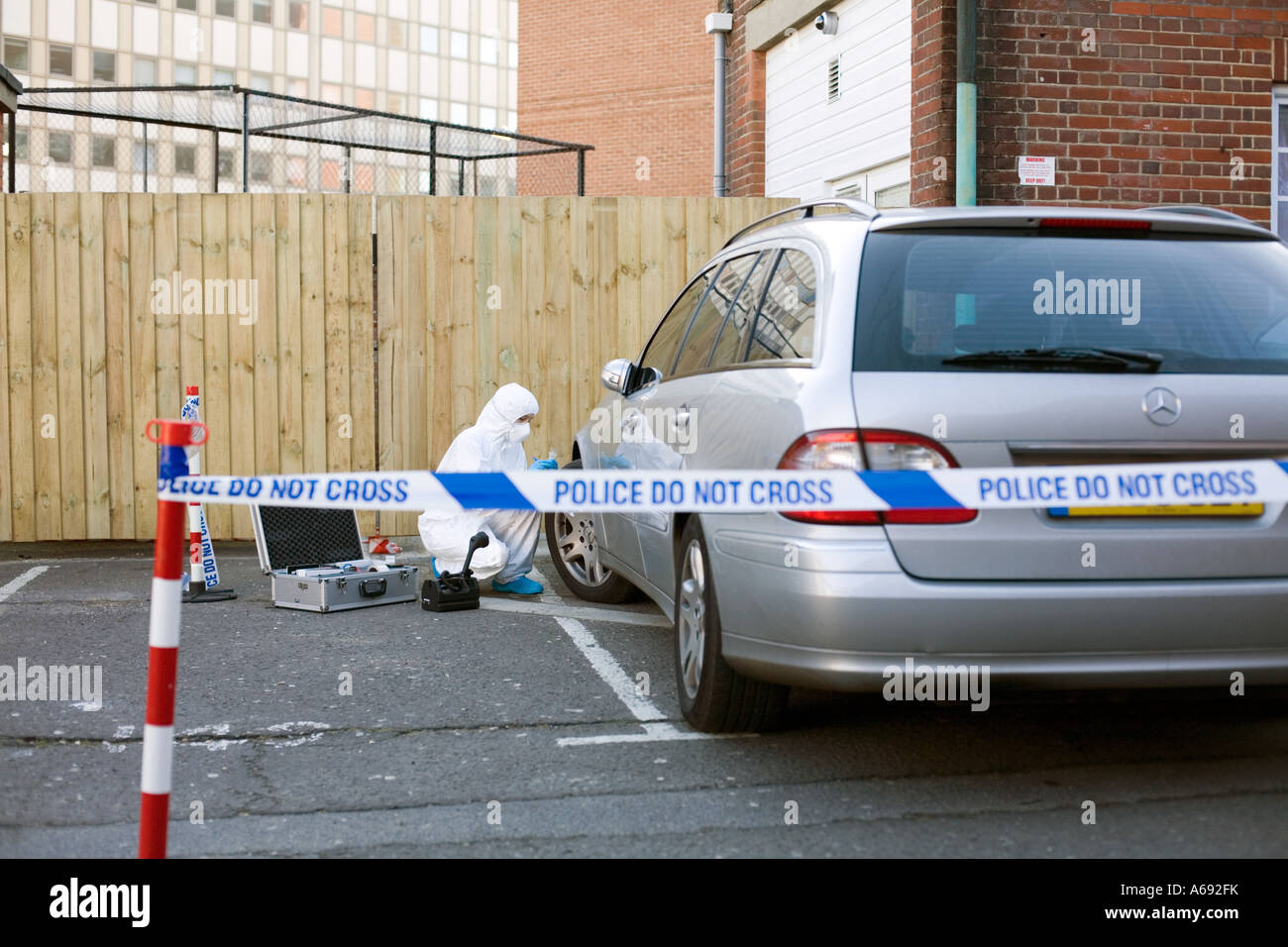
Effective crime scene management follows a linear progression to prevent the loss of fragile evidence. In vehicular incidents, the scene is often dynamic, with debris fields potentially covering large areas of a roadway.
- Scene Survey: Before any photography begins, the lead investigator identifies the "hot zone" and marks evidence markers.
- Establishment of Baseline: Photos are taken from the periphery moving toward the center of the incident.
- Measurement Documentation: Placing tape measures or measuring devices within the frame to verify skid mark lengths or crush measurements.
- Lighting Conditions: Utilizing artificial fill-light for night-time scenes to avoid "black holes" in shadows, which can conceal critical evidence like roadway gouges.
- Secure Storage: Transferring raw files from camera memory to a read-only secure server, ensuring a cryptographic hash is generated to prove the file has not been altered since the moment of capture.
Legal Admissibility Guidelines
Authentication: The photographer must testify that the photographs accurately and fairly represent the scene.
Relevance: Evidence must be material to the investigation, such as showing vehicle contact points or the absence of braking skid marks.
Lack of Prejudice: Images must not be inflammatory; they are tools for factual reconstruction rather than emotional impact.
Challenges in Modern Roadside Forensics
The evolution of vehicular technology has introduced new complexities. Modern vehicles are equipped with Event Data Recorders (EDRs), and forensic investigators must now correlate physical crime scene photos with digital data retrieved from the vehicle's Control Area Network (CAN) bus.
Common Pitfalls to Avoid
- Failure to Use Scales: A photograph of a tire mark without a reference scale is often excluded from expert testimony due to the inability to verify the scale of the impression.
- Over-reliance on Auto-Exposure: In high-contrast environments (e.g., a dark road with bright headlights), auto-exposure often results in the loss of detail in shadowed areas. Manual bracketing is the industry standard for 2026.
- Inadequate Documentation of Witnesses: Failing to photograph the lines of sight of potential witnesses from their exact vantage point.
Comparing Documentation Methods
When analyzing the effectiveness of documentation, investigators often compare traditional photography with emerging spatial capture technologies.
- Standard Photography: High speed, low cost, essential for jury communication and visual storytelling.
- Photogrammetry: Using overlapping photos to create 3D models. Highly accurate for measuring crush damage but requires specialized software and precise, high-overlap photography.
- 3D Laser Scanning: Provides sub-millimeter accuracy of the entire scene. While superior in precision, it is significantly more time-consuming and often reserved for fatal incidents or complex multi-vehicle collisions.
Frequently Asked Questions
Are cell phone photos acceptable for professional crime scene documentation? Generally, no. While a smartphone can capture an image, it lacks the sensor quality, lens consistency, and metadata security required for rigorous forensic standards. In 2026, judicial standards demand equipment that can be authenticated through forensic metadata software.
How do you ensure the chain of custody for digital photos? The chain of custody is maintained through secure, hashed storage. Every file is assigned a cryptographic checksum; if a single bit of the file changes, the checksum will not match, alerting the court to potential tampering or unauthorized modifications.
What is the best way to photograph skid marks in low light? The most effective method involves "painting with light." Using a long exposure (on a tripod) and a portable high-lumen LED light, the photographer moves the light source at a low angle across the skid marks to create highlights and shadows that emphasize the texture of the tire rubber on the asphalt.
Can crime scene photos be edited? Basic adjustments like brightness or contrast are generally allowed if they are used to clarify the image and are disclosed. However, any content-aware filling, object removal, or significant manipulation is strictly prohibited and constitutes a violation of forensic integrity.
How long should forensic photos be archived? Industry standards for 2026 suggest that photographic evidence for serious traffic offenses should be archived for the duration of the statute of limitations, plus any period of potential appeal, which often results in a minimum 10-year retention policy for digital master copies.
Final Recommendations for Investigators
To maintain high standards in the documentation of "routier" incidents, agencies should mandate annual training on sensor physics and digital evidence management. Investigators must prioritize the use of prime lenses to avoid distortion and ensure that all evidence is logged within a central, auditable database immediately upon the conclusion of the scene survey. Adherence to these technical requirements ensures that your documentation remains the foundation of a successful legal case.
Image Gallery