Mastering Bulk Trash Pick Up Dates: A Complete 2026 Scheduling Guide
Identifying your specific bulk trash pick up dates is essential for maintaining community sanitation and avoiding costly municipal fines. Most residential waste management programs operate on a recurring cycle, typically tied to your d...
Identifying your specific bulk trash pick up dates is essential for maintaining community sanitation and avoiding costly municipal fines. Most residential waste management programs operate on a recurring cycle, typically tied to your designated collection zone or specific service calendar for 2026, which requires proactive verification through your local public works department or private waste hauler.
Contents
Understanding the Municipal Waste Collection Framework
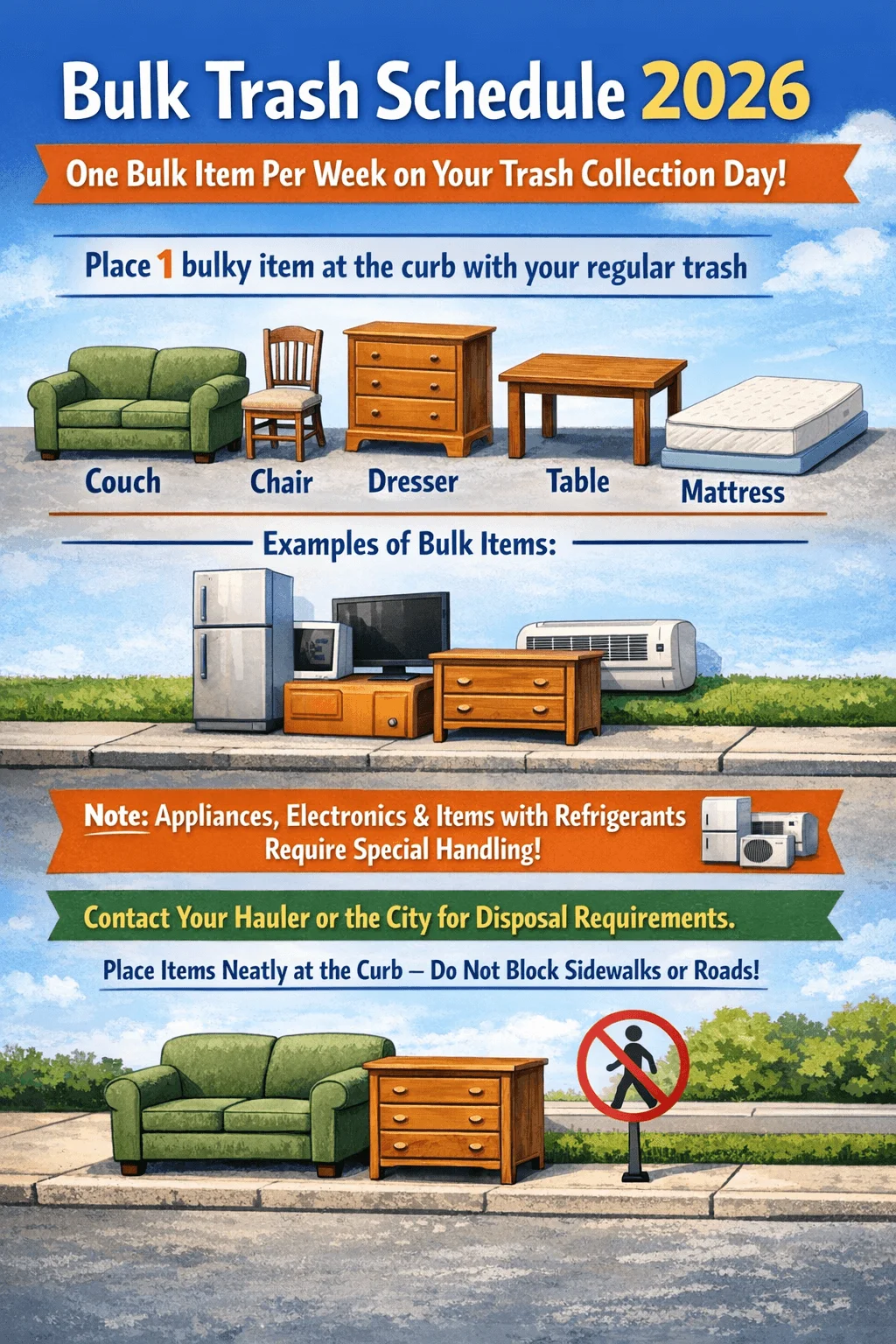
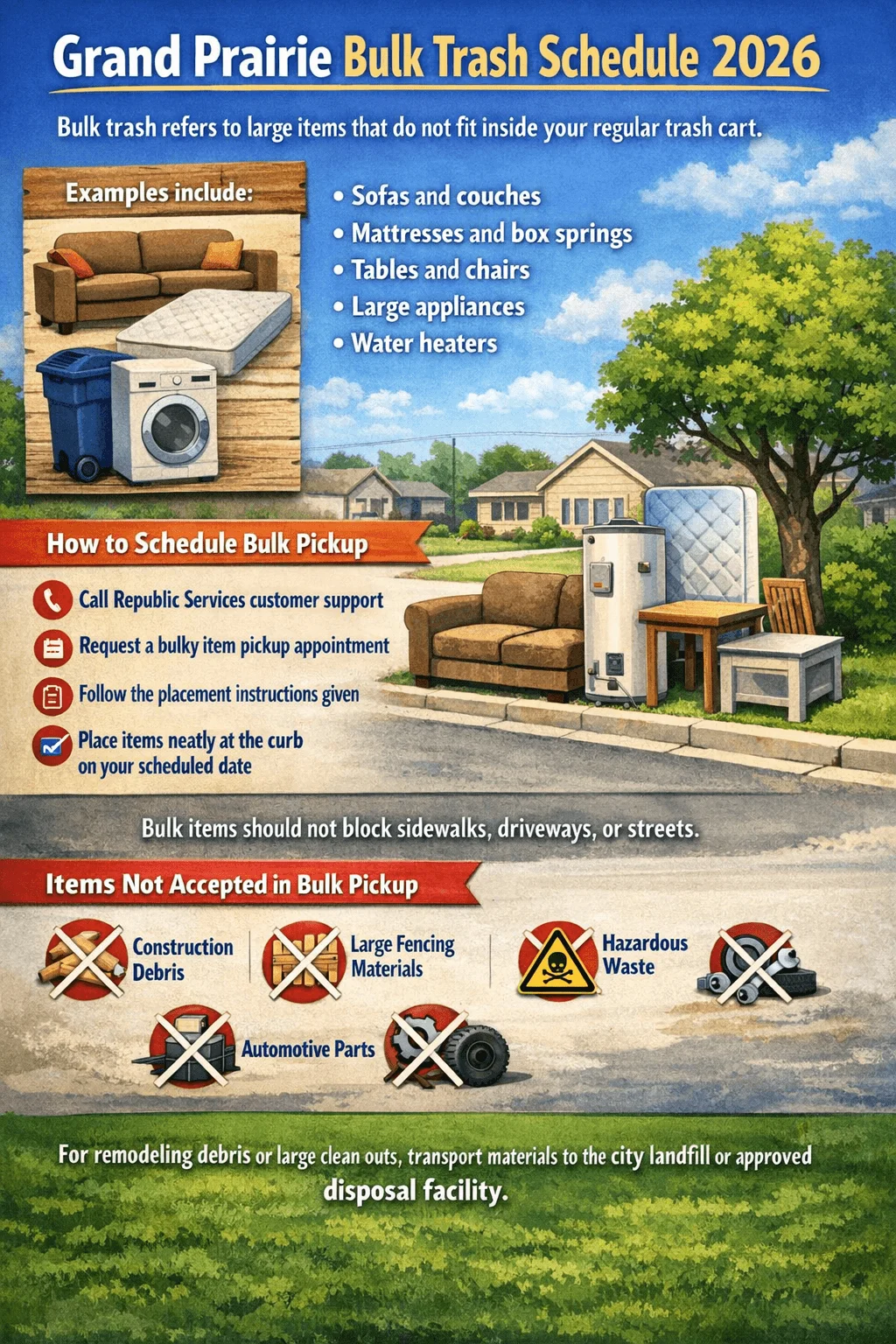
Bulk trash, often categorized as "white goods" or "heavy refuse," includes items that do not fit into standard curbside bins, such as furniture, mattresses, large appliances, and tree limbs. Understanding how these collections function requires looking at the regulatory framework of your local jurisdiction. In 2026, most cities utilize one of three primary service models:
- Scheduled Quarterly Collection: Residents are assigned a specific week per quarter to place bulk items curbside.
- On-Demand Scheduling: Residents must call or submit an online request through a municipal portal at least 48 hours prior to their desired pickup date.
- Monthly Routine Rotation: Similar to standard waste collection, bulk pickup occurs on a specific day of the month, such as the second Friday of each cycle.
Failure to adhere to these windows often leads to "blight" citations. Local ordinances in most major regions now include automated enforcement, where code enforcement officers utilize GIS-tagged reporting tools to identify items left on curbside outside of authorized windows.
Navigating 2026 Collection Schedules and Service Requirements
To ensure your items are picked up without incurring penalties, you must verify your specific zone requirements. Many jurisdictions have updated their guidelines for 2026 regarding the volume and type of materials permitted.
Operational Compliance Standards Preparation Guidelines Items must be placed at the curb no earlier than 6:00 PM the night before your scheduled date and no later than 7:00 AM on the day of collection. Measurement Limits Most municipal services restrict bulk piles to a maximum size of 4 cubic yards (approximately the size of a standard pickup truck bed). Hazardous Materials Under no circumstances are electronics, lithium-ion batteries, motor oil, or construction debris (drywall/concrete) permitted in standard bulk pickup. These require specialized hazardous waste drop-off events.
Comparing Collection Options: Municipal vs. Private Haulers
Choosing between municipal services and private disposal can significantly impact your budget and convenience. Municipal services are typically funded through property taxes or fixed monthly utility fees, whereas private haulers operate on a per-load basis.
| Feature | Municipal Bulk Pickup | Private Junk Removal |
|---|---|---|
| Cost | Included in taxes/fees | Per-load or per-item pricing |
| Flexibility | Fixed, rigid dates | On-demand availability |
| Scope | Limited to standard furniture | Full service (attic/garage clearing) |
| Accountability | Public record/government | Private contract |
| Sustainability | Baseline recycling | Often prioritize donation/recycling |
Step-by-Step Guide to Confirming Your Pickup Date
If you are uncertain about your current status, follow these steps to secure your collection date efficiently:
- Locate Your Utility Account Number: Most municipal websites require an account number or a precise property address to pull your specific collection schedule.
- Visit the Official Portal: Navigate to your city’s official ".gov" website. Avoid third-party waste aggregator sites, as they often contain outdated 2024 or 2025 data.
- Verify Service Zone: Use the interactive mapping tool provided by the Department of Public Works to confirm your specific collection zone.
- Submit a Service Request: If your city utilizes an on-demand system, confirm the submission via email or portal notification. Retain the service request number as proof in the event the crew misses your stop.
- Placement Validation: Ensure your items are not obstructing sidewalks, fire hydrants, or drainage grates, as these are common reasons for service refusal by collection crews.
Addressing Common Missed Pickup Scenarios
There are several reasons why a scheduled collection might be bypassed. Understanding these technical failures allows for quick resolution:
- Inaccessible Placement: Trucks require at least 15 feet of overhead clearance and cannot safely operate if items are under low-hanging tree limbs or power lines.
- Prohibited Items: If your pile contains restricted materials (e.g., car tires on rims, hazardous liquids, or commercial construction debris), the entire pile will often be tagged with a rejection notice rather than being partially collected.
- Placement Timing: If you placed the items out after the collection vehicle passed your street, the city will not return until the next scheduled cycle.
If your items were missed despite following all guidelines, contact the Public Works dispatch office within 24 hours of the failed collection. Most departments have a "return trip" protocol for verified errors.
Frequently Asked Questions
How do I find my specific bulk pickup date for 2026? You should visit your municipality’s official government website and search for the "Waste Collection Schedule" or "Sanitation Map." Inputting your address into these tools will yield the most accurate and up-to-date collection calendar specific to your neighborhood.
Can I leave electronics for bulk pickup? Generally, no. Electronics—often categorized as E-Waste—contain toxic substances like mercury and lead that are prohibited in standard bulk collections. You must take these to a designated municipal recycling center or a manufacturer-sponsored take-back event.
What is the penalty for putting bulk items out on the wrong day? Penalties vary by region, but most ordinances treat premature placement as "illegal dumping" or a "code violation." Fines can range from $50 to over $500 depending on the volume of debris and whether it is a repeat offense.
Does my homeowner association (HOA) influence these dates? Yes. In some master-planned communities, the HOA contracts private waste management services, which may follow a completely different schedule than the surrounding city. Always check your HOA bylaws if you reside in a managed community.
Are there size limits on what I can leave at the curb? Yes. Most cities enforce a volume limit, usually defined in cubic yards. If you exceed this, you may be required to schedule multiple pickups or hire a private service to prevent the city from leaving your excess refuse behind.
Proactive Waste Management for 2026
Maintaining your property and adhering to local waste guidelines ensures that your community remains clean and functional. By prioritizing proper sorting and scheduling your bulk trash pick up dates through official municipal channels, you eliminate the risk of fines and contribute to a more efficient local infrastructure. If you are preparing for a significant renovation or estate clearance that exceeds standard bulk volume, consider engaging with a licensed professional waste disposal service early in your project timeline to ensure compliance and avoid sanitation disputes.
Image Gallery