Clomid vs Letrozole for Ovulation Induction: Efficacy, Mechanism, and Clinical Guidelines
When treating ovulatory dysfunction or unexplained infertility, Clomid (clomiphene citrate) and Letrozole (Femara) are the primary first-line oral medications used for ovulation induction. While Letrozole yields higher live birth rates...
When treating ovulatory dysfunction or unexplained infertility, Clomid (clomiphene citrate) and Letrozole (Femara) are the primary first-line oral medications used for ovulation induction. While Letrozole yields higher live birth rates and ovulation success in individuals with Polycystic Ovary Syndrome (PCOS), Clomid remains a widely utilized alternative, particularly for unexplained infertility.
Contents
Medical Disclaimer
The following content is for informational and educational purposes only and does not constitute formal medical advice, diagnosis, or treatment. Decisions regarding ovulation induction medications should always be made in consultation with a board-certified reproductive endocrinologist or qualified healthcare provider.
Understanding Ovulation Induction: How Clomid and Letrozole Work
Ovulation induction aims to stimulate the ovaries to develop and release a mature egg (or eggs) in women who ovulate irregularly, do not ovulate at all (anovulation), or have unexplained infertility. Both Clomid and Letrozole stimulate the pituitary gland to increase the secretion of Follicle-Stimulating Hormone (FSH) and Luteinizing Hormone (LH), but they accomplish this through distinct pharmacological mechanisms.
- Hypothalamus / Pituitary Action
- Clomid (SERM): Blocks Receptors — Estrogen receptors blocked in hypothalamus; senses fake "low"
- Letrozole (AI): Inhibits Synthesis — Aromatase enzyme inhibited, reducing circulating estrogen
- Increased FSH & LH Secretion
- Ovarian Follicle Development
Clomid (Clomiphene Citrate): The Selective Estrogen Receptor Modulator
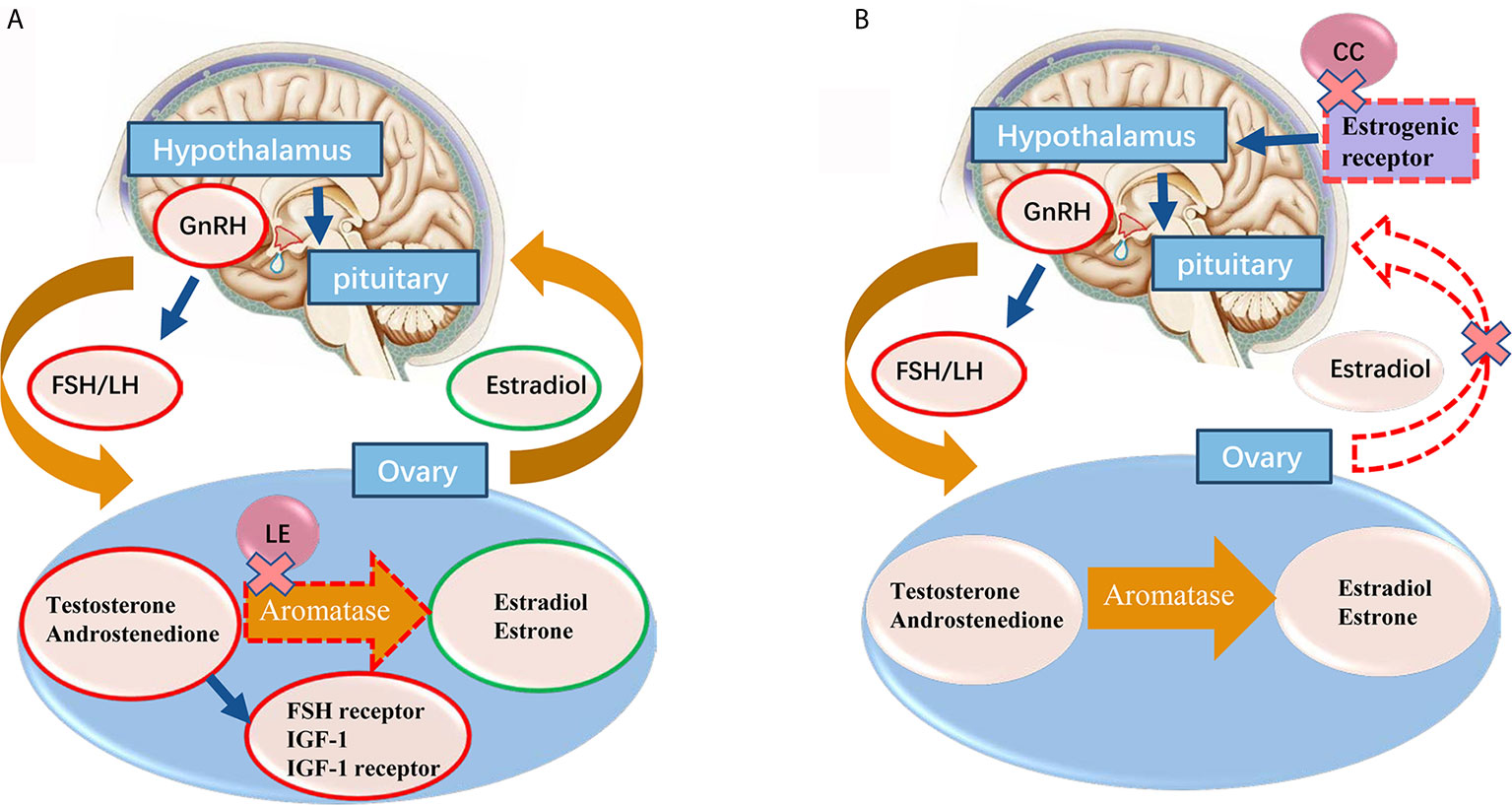
Clomid is a Selective Estrogen Receptor Modulator (SERM). It acts primarily by binding to estrogen receptors in the hypothalamus and pituitary gland, competing with endogenous estrogen. By occupying these receptor sites without fully activating them, Clomid tricks the brain into perceiving that circulating estrogen levels are abnormally low.
In response to this perceived estrogen deficiency, the hypothalamus releases Gonadotropin-Releasing Hormone (GnRH) in pulsed bursts, signaling the anterior pituitary gland to produce and secrete higher levels of FSH and LH. This hormonal surge stimulates the recruitment and maturation of ovarian follicles.
However, because Clomid depletes estrogen receptors throughout the body for an extended period (its half-life is approximately 5 to 7 days), it can exert anti-estrogenic peripheral side effects. Most notably, it may thin the endometrium (uterine lining) and cause cervical mucus to become thick and hostile to sperm, potentially impeding implantation or sperm transit.
Letrozole (Femara): The Aromatase Inhibitor
Letrozole belongs to a class of medications called Aromatase Inhibitors (AIs). Originally developed and approved for treating hormone-receptor-positive breast cancer in postmenopausal women, Letrozole is widely prescribed off-label as a first-line treatment for ovulation induction.
Instead of blocking estrogen receptors, Letrozole inhibits the enzyme aromatase, which is responsible for converting circulating androgens (such as testosterone and androstenedione) into estrogens (estrone and estradiol). By blocking this enzymatic pathway, Letrozole temporarily reduces systemic estrogen production.
The resulting drop in systemic estrogen releases the pituitary gland from negative feedback, triggering an increase in endogenous FSH output. Unlike Clomid, Letrozole does not block estrogen receptors in the brain or peripheral tissues. As estrogen levels rise naturally from developing ovarian follicles, the pituitary negative feedback loop remains intact, typically resulting in mono-follicular development (a single dominant follicle) rather than multi-follicular growth. Furthermore, because peripheral estrogen receptors are unimpeded, Letrozole rarely compromises endometrial thickness or cervical mucus quality.
Clomid vs Letrozole: Comparative Overview
The key pharmacological, clinical, and physiological differences between Clomid and Letrozole are summarized below:
| Feature / Metric | Clomid (Clomiphene Citrate) | Letrozole (Femara) |
|---|---|---|
| Drug Class | Selective Estrogen Receptor Modulator (SERM) | Aromatase Inhibitor (AI) |
| Primary Mechanism | Blocks central estrogen receptors in hypothalamus | Suppresses estrogen synthesis by inhibiting aromatase |
| FDA Approval Status for Fertility | Approved for treatment of ovulatory failure | Off-label use (FDA-approved for oncology) |
| First-Line Indication | Unexplained infertility, non-PCOS anovulation | PCOS-related anovulation (recommended by ASRM/ESHRE) |
| Live Birth Rate in PCOS | ~19% - 20% per cycle | ~27% - 28% per cycle |
| Multiple Pregnancy Rate (Twins+) | ~5% - 12% | ~3% - 8% (lower risk of higher-order multiples) |
| Impact on Endometrial Lining | Anti-estrogenic effect can cause thinning (<7 mm) | Neutral/positive effect; preserves lining integrity |
| Impact on Cervical Mucus | May thicken or reduce cervical mucus | Maintains normal, receptive cervical mucus |
| Elimination Half-Life | Long (~5 to 7 days; remnants persist weeks) | Short (~48 hours; cleared rapidly) |
| Standard Dosing | 50 mg to 150 mg daily for 5 days | 2.5 mg to 7.5 mg daily for 5 days |
Clinical Indications and Efficacy: Who Benefits Most?
Selecting between Clomid and Letrozole depends primarily on the underlying diagnosis, patient metabolic profile, prior response history, and treatment goals.
- Patient Evaluation
- PCOS Diagnosis
- First-Line Therapy: LETROZOLE (Femara) (Higher Live Birth Rates, Lower Multiple Gestation)
- Non-PCOS / Unexplained
- First-Line Therapy: CLOMID or LETROZOLE (Often combined with IUI; similar efficacy profiles)
- PCOS Diagnosis
Polycystic Ovary Syndrome (PCOS)
For women with PCOS, Letrozole is widely accepted as the first-line pharmacotherapy for ovulation induction.
This clinical consensus is largely driven by landmark trials, including the landmark study conducted by the National Institutes of Health (NIH) Reproductive Medicine Network published in the New England Journal of Medicine (Legro et al., 2014). The multi-center randomized controlled trial demonstrated that women with PCOS treated with Letrozole achieved significantly higher cumulative live birth rates (27.5%) compared to those treated with Clomid (19.1%). Additionally, ovulation rates were higher in the Letrozole group (61.7% vs. 48.3%), and the rate of twin pregnancies was lower.
The superior efficacy of Letrozole in PCOS is attributed to several physiological factors:
- Bypassing Estrogen Resistance: Women with PCOS often display altered hypothalamic sensitivity to estrogen. Letrozole bypasses receptor blockade entirely by directly lowering circulating estrogen.
- BMI Responsiveness: Clinical sub-analyses indicate that Letrozole maintains superior ovulation and live birth efficacy in women with elevated Body Mass Index (BMI), a demographic where Clomid resistance occurs more frequently.
- Reduced Risk of Ovarian Hyperstimulation: Because the central estrogen feedback mechanism remains functional, Letrozole typically leads to the development of a single dominant follicle, reducing the risk of high-order multiple gestations.
Unexplained Infertility
In couples with unexplained infertility—where ovulatory function, tubal patency, and semen parameters are normal—both Clomid and Letrozole are frequently combined with Intrauterine Insemination (IUI).
For this population, comparative evidence shows similar pregnancy and live birth rates between the two medications. The Choice of drug in unexplained infertility often depends on:
- Endometrial Response: If a patient develops a thin uterine lining (<7 mm) during a Clomid cycle, transitioning to Letrozole is common.
- Provider Preference and Protocol: Some fertility clinics prefer Clomid for controlled ovarian hyperstimulation (COH) when targeting 2–3 mature follicles to maximize IUI success, whereas Letrozole may yield fewer follicles.
Hypothalamic Amenorrhea and Severe Hypogonadism
Neither Clomid nor Letrozole is typically effective for primary hypothalamic amenorrhea (WHO Group I anovulation), characterized by low baseline gonadotropins (FSH/LH) and low serum estrogen. Because both drugs rely on an intact hypothalamic-pituitary-ovarian (HPO) axis to trigger FSH release, treatment for WHO Group I anovulation generally requires direct administration of injectable gonadotropins or pulsatile GnRH.
Dosage Regimens and Monitoring Protocols
Both medications are administered orally for a 5-day duration early in the follicular phase of the menstrual cycle.
- Phase (Cycle Days 1–5): Menses
- Dosing (Cycle Days 3–7 or CD 5–9): 5-Day Dosing Window
- Monitoring (Cycle Days 10–14): Ultrasound & LH
- Ovulation (Cycle Day 14): Peak
Standard Clomid Regimens
- Starting Dose: 50 mg taken once daily for 5 consecutive days, usually starting on Cycle Day 3, 4, or 5 (where Cycle Day 1 is the first day of full menstrual flow).
- Dose Titration: If ovulation does not occur, the daily dosage is increased in subsequent cycles by 50 mg increments, up to a typical maximum of 150 mg per day.
- Max Usage Limits: Clinical practice guidelines generally recommend limiting Clomid therapy to 3 to 6 ovulatory cycles. Continued use beyond 6 cycles provides diminishing returns and may carry incremental risks.
Standard Letrozole Regimens
- Starting Dose: 2.5 mg taken once daily for 5 consecutive days, starting on Cycle Day 3, 4, or 5.
- Dose Titration: If ovulation is not achieved, the dose is increased in step-wise fashion to 5.0 mg daily, and subsequently to a maximum of 7.5 mg daily for 5 days.
- Step-Up Protocols: In cases of initial non-response, some protocols utilize an immediate "stair-step" protocol—increasing the dose within the same cycle after verifying via ultrasound that no dominant follicle has developed—avoiding the need to wait for a induced withdrawal bleed.
Cycle Monitoring and Ovulation Verification
Proper monitoring optimizes timing for timed intercourse or IUI while reducing risks:
- Transvaginal Ultrasound: Performed around Cycle Days 10–14 to evaluate follicular growth (aiming for mature follicle diameters of 18–22 mm) and measure endometrial thickness.
- Ovulation Detection: Tracked via home Urinary LH surge kits, serum progesterone levels (measured approximately 7 days post-ovulation, typical target >10 ng/mL), or hCG trigger shot administration once follicles reach maturity.
Side Effects, Safety Profiles, and Clinical Considerations
While both drugs are well tolerated, their safety profiles reflect their differing mechanisms of action.
- Clomid (SERM)
- Hot Flashes & Mood Alterations
- Endometrial Thinning (<7mm)
- Cervical Mucus Changes
- Ovarian Enlargement / Cysts
- Visual Disturbances (Rare)
- Letrozole (AI)
- Mild Headaches & Fatigue
- Joint Discomfort / Arthralgia
- Preserved Endometrial Lining
- Lower Overall Multiple Risk
- Rapid Metabolic Clearance
Side Effect Profiles
- Clomid: Common adverse effects stem from estrogen receptor blockade and include hot flashes (occurring in ~10% of patients), mood swings, irritability, pelvic discomfort due to ovarian enlargement, breast tenderness, and nausea. A rare but serious side effect is visual disturbance (scotomas, blurred vision, or photophobia); if visual changes occur, the medication should be discontinued immediately.
- Letrozole: Side effects are generally mild and transient, linked to temporary estrogen suppression. They include fatigue, dizziness, mild headaches, hot flashes, and occasional joint stiffness or arthralgia.
Endometrial Receptivity
A key clinical difference is the effect on the endometrial lining. Because Clomid accumulates in tissues due to its long half-life, it can cause prolonged downregulation of endometrial estrogen receptors. An endometrial thickness of less than 7 mm near the time of ovulation is associated with lower implantation rates. Letrozole, having a short half-life (~48 hours) and no receptor-blocking effect, leaves the endometrium undisturbed, allowing normal thickening in response to rising follicular estradiol.
Teratogenicity and Off-Label Status
In the early 2000s, concerns were raised regarding the potential teratogenicity of Letrozole when administered during early pregnancy. However, subsequent large-scale population studies, including a landmark study published in Fertility and Sterility (Tulandi et al., 2006), confirmed that Letrozole use for ovulation induction does not increase the risk of congenital malformations compared to Clomid or natural conception.
Because Letrozole is administered strictly during the early follicular phase (days 3 to 9) and is cleared from the body prior to fertilization and implantation, fetal exposure does not occur. Nonetheless, patients should be informed that Letrozole's fertility use remains off-label in many jurisdictions, despite being formally endorsed by professional societies such as the American College of Obstetricians and Gynecologists (ACOG) and the American Society for Reproductive Medicine (ASRM).
Key Factors to Consider When Choosing Treatment
When formulating an ovulation induction strategy, reproductive endocrinologists weigh several patient-specific parameters:
- Primary Diagnosis: Women diagnosed with PCOS should generally start with Letrozole due to higher live birth rates documented in clinical trials.
- Prior Response: Patients who fail to ovulate on maximum doses of Clomid (Clomid Resistance) frequently respond to Letrozole, making it an effective second-line option before escalating to injectable gonadotropins.
- Endometrial History: Patients with a history of thin uterine lining during baseline evaluations or prior fertility cycles benefit from Letrozole's neutral impact on the endometrium.
- Multiple Pregnancy Risk: Couples seeking to minimize the risk of twin or triplet pregnancies may prefer Letrozole due to its higher rate of mono-follicular development.
- Cost and Availability: Both medications are generic, widely available, and relatively inexpensive, making treatment decisions primarily dependent on clinical efficacy and tolerance rather than cost.
Frequently Asked Questions
Can Clomid and Letrozole be combined in the same cycle?
Yes. Combined protocols using both Clomid and Letrozole (or combining either agent with low-dose injectable gonadotropins) are sometimes prescribed for patients who demonstrate poor follicular response to either medication alone. These protocols must be managed under close ultrasound monitoring by a reproductive endocrinologist.
How many cycles of Letrozole or Clomid should be attempted before moving to IVF?
Clinical guidelines generally recommend 3 to 6 ovulatory cycles of treatment with oral agents (with or without intrauterine insemination). If pregnancy is not achieved within 3 to 6 successful ovulatory cycles, further treatment with the same agent yields lower success rates, and escalating to gonadotropin therapy or In Vitro Fertilization (IVF) is recommended.
Does Letrozole cause fewer mood swings than Clomid?
Many patients report fewer severe mood swings, emotional volatility, and hot flashes with Letrozole compared to Clomid. This difference occurs because Letrozole does not block central estrogen receptors in the brain, preserving normal neurological receptor function as estrogen levels recover.
What is "Clomid Resistance" and how is it managed?
Clomid resistance occurs when a patient fails to ovulate despite escalating the dose to 150 mg daily for 5 days. Management strategies include switching to Letrozole, adding adjuvant treatments such as Metformin (particularly in insulin-resistant PCOS patients), or moving to injectable gonadotropin therapy.
Is a trigger shot (hCG) necessary when taking Clomid or Letrozole?
A human Chorionic Gonadotropin (hCG) trigger shot is not strictly mandatory, as many women produce a natural endogenous LH surge once the follicle reaches maturity. However, clinicians frequently utilize an hCG trigger shot to precisely time intercourse or intrauterine insemination (IUI) and ensure predictable follicular rupture.
Summary and Next Steps
Both Clomid and Letrozole are effective oral medications for ovulation induction, but clinical evidence strongly supports Letrozole as the first-line choice for patients with PCOS due to higher ovulation and live birth rates and a lower risk of multiple gestations. For unexplained infertility, both agents offer comparable efficacy and are frequently combined with IUI.
If you are planning to initiate ovulation induction therapy:
- Complete a comprehensive diagnostic evaluation, including tubal patency testing (HSG), baseline hormone panel, and a semen analysis for your partner.
- Review your baseline endometrial thickness and ovulatory history with your clinician to select the most appropriate agent.
- Ensure your treatment cycle includes baseline scanning and mid-cycle monitoring to confirm follicle development and safeguard against multiple pregnancy risks.
Image Gallery