5 Realities About the 2nd Amendment Militia Movement
The modern 2nd Amendment militia movement is a decentralized network of private paramilitary organizations that interpret the "militia" clause as a mandate for citizen-led defense. Understanding its reality requires distinguishing betw...
The modern 2nd Amendment militia movement is a decentralized network of private paramilitary organizations that interpret the "militia" clause as a mandate for citizen-led defense. Understanding its reality requires distinguishing between historical legal definitions, modern state anti-paramilitary laws, the diversity of group ideologies, and the impact of digital mobilization on contemporary organizational structures.
Contents
The Evolution of the American Militia Concept
To understand the current state of the 2nd Amendment militia movement in 2026, one must first reconcile the historical definition of a "militia" with modern private organizations. At the time of the Bill of Rights' ratification in 1791, the militia was generally understood to be the body of the people, capable of bearing arms, but strictly organized and called forth by the government. The Militia Act of 1792 further codified this, requiring every "free able-bodied white male citizen" between 18 and 45 to be enrolled.
However, the 20th century brought a massive shift. The Militia Act of 1903, also known as the Dick Act, formally split the "militia" into two groups: the Organized Militia (the National Guard) and the Unorganized Militia (all other males eligible for service). Modern militia groups often point to the "unorganized" status as their legal justification. Yet, legal scholars and historical records indicate that even the unorganized militia was intended to be a pool of potential recruits for the state, not an independent military force operating outside of government command.
By 2026, the movement has diverged significantly from these 18th-century roots. While many members view themselves as the spiritual successors to the Minutemen, the legal and operational frameworks they function under have changed. The movement is now defined more by its ideological stance against perceived government overreach than by its integration into a state-sanctioned defense strategy.
1. The Legal Reality: Private Militias Are Not Protected by the 2nd Amendment
One of the most persistent misconceptions within the movement is the belief that the Second Amendment grants private citizens the right to form independent paramilitary units. However, Supreme Court precedent and state laws established long before 2026 consistently state otherwise.
In the landmark case District of Columbia v. Heller (2008), while the Court recognized an individual right to possess a firearm for self-defense, it did not extend that right to the formation of private armies. Writing for the majority, Justice Antonin Scalia noted that the Second Amendment does not prevent the prohibition of private paramilitary organizations. This built upon the 1886 decision in Presser v. Illinois, where the Court held that states have the authority to prohibit bodies of men from associating together as military organizations or drilling and parading with arms in cities and towns.
As of 2026, all 50 U.S. states have constitutional or statutory provisions that prohibit private paramilitary activity. These laws typically fall into three categories:
- Constitutional Subordination Clauses: Requirements that the military must always be under the strict subordination of civil power.
- Anti-Paramilitary Training Statutes: Laws that prohibit groups from practicing with firearms or explosives for the purpose of civil disorder.
- Prohibitions on Unauthorized Parading: Restrictions on groups of people appearing in public as an organized military body without state authorization.
These legal realities mean that while individual gun ownership is a protected right, the collective, organized "militia" activity practiced by private groups often operates in a legal grey area—or in direct violation of state law—when it involves organized training for combat or law enforcement functions.
2. Ideological Diversity: The Movement Is Not a Monolith
The 2nd Amendment militia movement is often portrayed as a single, cohesive entity. In reality, it is a highly fragmented spectrum of ideologies, ranging from local "prepper" defense groups to highly political national networks.
At one end of the spectrum are the Constitutionalists. These groups focus heavily on a strict, often originalist, interpretation of the Constitution. They view themselves as a "check" on government tyranny and often focus their activities on disaster relief training and firearms proficiency. They typically seek to work alongside local law enforcement, although this relationship is often fraught with tension.
At the other end are more radicalized factions, including those influenced by the Boogaloo movement or accelerated ideologies. These groups may not align with traditional conservative values and are often characterized by an anti-government or anti-police stance, preparing for what they believe is an inevitable civil collapse.
Between these poles lie groups like the remnants of the Three Percenters or Oath Keepers. Following the legal ramifications of the early 2020s, these national "brands" have largely dissolved into smaller, autonomous local chapters. This decentralization makes the movement harder to track but also less capable of coordinated national action. In 2026, most participants are involved in "Constitutional Defense Forces" that emphasize local sovereignty and community protection over national political agendas.
3. The Digital Reality: Decentralization and "Leaderless" Mobilization
The structure of the militia movement has been radically transformed by digital communication technology. In the 1990s, the movement relied on shortwave radio, faxes, and gun shows. By 2026, the primary drivers are encrypted messaging apps (such as Telegram and Signal) and decentralized social media platforms.
This technological shift has created a "leaderless" organizational model. Instead of a central command structure, individuals and small cells interact through shared digital spaces. They share training manuals, tactical advice, and ideological propaganda without ever meeting in person. This has led to several key developments:
- Rapid Mobilization: Groups can organize "call-outs" for protests or "security details" at events in a matter of hours.
- Information Echo Chambers: The lack of central leadership allows for the rapid spread of conspiracy theories, which often serve as the primary recruitment tool for the movement.
- Operational Security (OPSEC): The use of encrypted tools makes it increasingly difficult for federal and state law enforcement to monitor the movement’s planning phases.
While this decentralization protects the movement from being "decapitated" by the arrest of a few leaders, it also leads to significant internal conflict. Without a clear hierarchy, different factions often disagree on tactics, goals, and the definition of "patriotism," leading to the frequent splintering of groups.
4. The Interaction with Law Enforcement and "Constitutional Sheriffs"
A critical reality of the modern movement is its complex relationship with local law enforcement, specifically the concept of the "Constitutional Sheriff." This ideology holds that the county sheriff is the highest legal authority in the United States, possessing the power to "interpose" and block federal or state laws they deem unconstitutional.
Many militia groups seek to align themselves with local sheriffs, offering themselves as a "posse" or reserve force. In some rural jurisdictions in 2026, this has led to a symbiotic relationship where the militia provides unofficial support for a sheriff’s agenda. However, this creates significant legal and liability risks:
- Liability for the County: If an unauthorized militia member acting in an unofficial capacity violates a citizen's rights, the county can be held liable for millions in damages.
- Chain of Command Issues: Law enforcement officers are trained and vetted professionals. Militias lack standardized training, background checks, and clear rules of engagement, creating dangerous unpredictability during civil unrest.
- Conflict of Interest: When a sheriff favors a particular militia group, it can alienate other segments of the community, leading to a breakdown in public trust.
Despite these risks, the "Constitutional Sheriff" movement remains the primary bridge between the private militia movement and formal government structures.
5. Societal Impact and the "Security Dilemma"
The fifth reality is the societal impact of the movement, which often triggers what political scientists call a "security dilemma." This occurs when one group increases its security (by forming a militia or increasing arms) and other groups perceive this as a threat, responding by increasing their own arms.
By 2026, the visible presence of armed militia groups at public demonstrations has frequently led to counter-mobilizations by opposing groups. This escalation increases the likelihood of accidental or "reactive" violence. The movement’s focus on "community defense" often results in the following societal outcomes:
- Chilling Effect on Speech: The presence of armed groups at political rallies can intimidate others from exercising their First Amendment rights.
- Legislative Pushback: High-profile militia activity often leads to stricter state-level "red flag" laws or enhanced anti-paramilitary statutes, which the movement then uses as further evidence of government tyranny, creating a feedback loop.
- Normalization of Paramilitarism: The frequent appearance of tactical gear and long rifles in domestic political settings has shifted public perception, making paramilitary aesthetics a common feature of American political discourse.
Comparison of Militia Classifications
The following table clarifies the legal and operational differences between the various entities often confused within the militia movement as of 2026.
| Feature | Historical Militia (1792) | National Guard | Private Militia Groups |
|---|---|---|---|
| Legal Authority | State/Federal Statutes | Title 32 (State) / Title 10 (Federal) | None (Self-Appointed) |
| Command Structure | Governor / President | Governor / President | Internal Leadership |
| Funding | Government | Government | Private / Dues |
| Training Standards | Minimal/Prescribed | Rigorous/Standardized | Unregulated/Varies |
| Constitutional Basis | Article I, Section 8 | Article I, Section 8 | Disputed Interpretation of 2nd Amdt |
| Public Function | Suppression of insurrection | Defense / Disaster Relief | Ideological/Private Security |
Frequently Asked Questions
Is it legal to join a militia in 2026?
Technically, it is legal to join a group that calls itself a militia for the purposes of social gathering, political advocacy, or legal firearms training. However, it is illegal in all 50 states to engage in "paramilitary activity," which includes training for civil disorder, parading as a military unit, or attempting to perform law enforcement functions (like "patrolling" or "detaining" individuals) without state authorization.
What is the difference between a militia and a prepper group?
While there is significant overlap, "prepper" groups focus primarily on self-sufficiency and survivalism (food storage, medical training, off-grid living) in the event of a disaster. Militia groups focus more on organized defense, tactical maneuvers, and political "activation." Many individuals belong to both, but their primary goals differ.
Can a Governor activate a private militia?
No. In 2026, a Governor’s authority to activate a militia is strictly limited to the National Guard and, in some states, a "State Defense Force" (or State Guard) which is a state-sanctioned, uniformed volunteer organization that is legally separate from private militia groups. Private groups have no standing to be "activated" by the state.
Why does the 2nd Amendment mention a "well-regulated militia"?
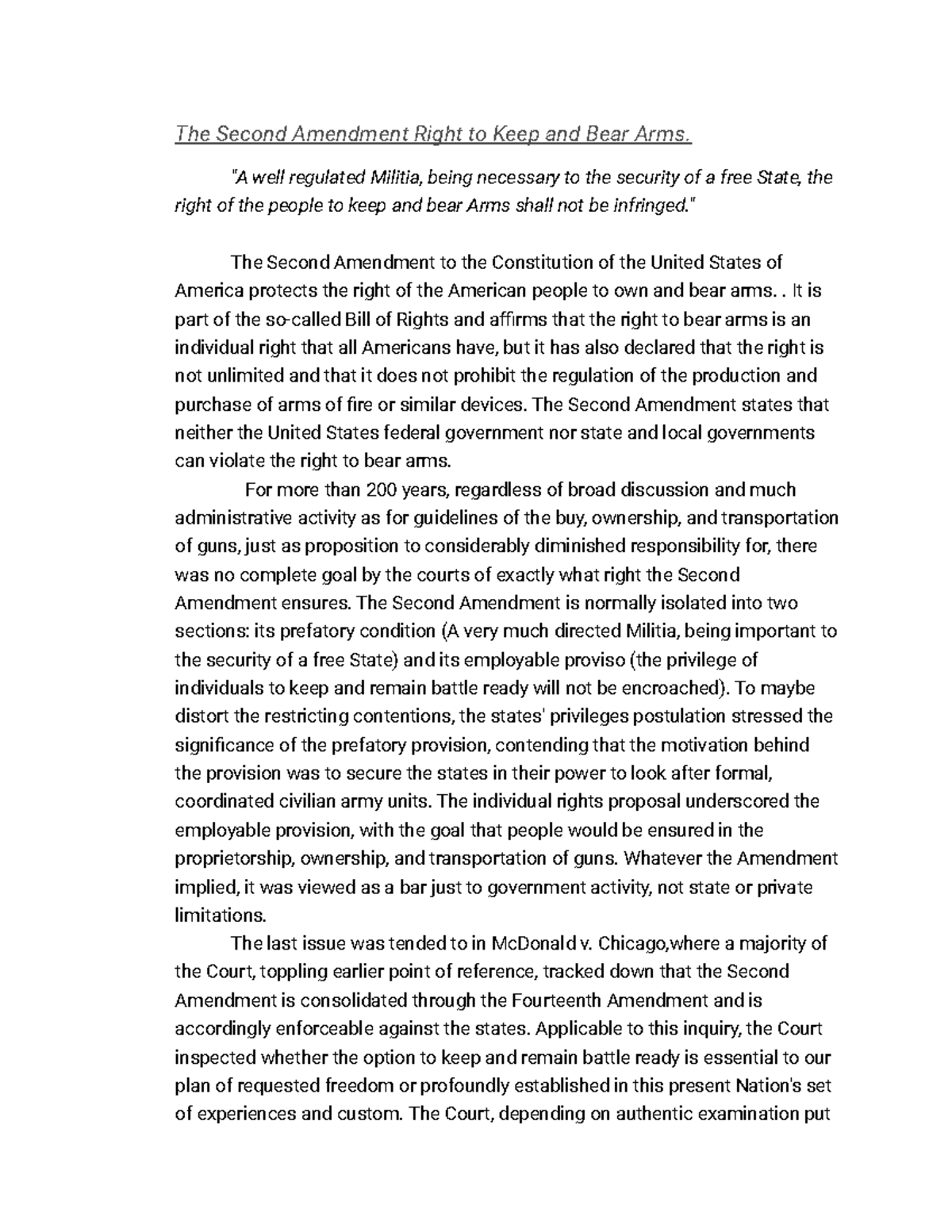
Legal historians debate the "Prefatory Clause" (the militia part) versus the "Operative Clause" (the right to bear arms part). In the 18th century, "well-regulated" meant "properly functioning" or "disciplined." The Supreme Court in Heller ruled that while the militia clause provides historical context, the right to bear arms belongs to the individual, regardless of militia service.
How do militia groups recruit in 2026?
Recruitment has shifted away from public forums and toward private "vetting" processes. Initial contact often happens on decentralized social media platforms or at gun rights rallies. Prospective members are usually vetted through background checks and "probationary" periods to ensure they are not law enforcement infiltrators and to gauge their ideological alignment.
Do militias have a "right" to patrol public protests?
No. There is no legal right for private armed groups to "patrol" or provide security in public spaces unless they are licensed private security contractors hired by the property owner. In many jurisdictions, "patrolling" with firearms can lead to charges of brandishing, harassment, or operating an unauthorized paramilitary organization.
Practical Guidance for Understanding the Movement
If you are researching the militia movement or its presence in your community, the most effective next step is to consult the Institute for Constitutional Advocacy and Protection (ICAP) at Georgetown Law. They provide detailed fact sheets on state-by-state laws regarding private paramilitaries.
Understanding the distinction between individual gun rights and collective paramilitary action is essential for navigating the legal and social landscape of 2026. While the Second Amendment protects the right of the people to keep and bear arms, it does not provide a legal shield for groups to assume the powers of the state or the military. Engaging with local law enforcement to understand how they view and interact with these groups can provide further clarity on the specific dynamics in your region.
Image Gallery